Can You Eat Beef Jerky While Pregnant Safely?
Most pregnant people who eat a small amount of commercially packaged, shelf-stable beef jerky and feel well do not need to worry. However, jerky can pose food-safety concerns if it is homemade, improperly stored, past its date, contaminated after opening, or made from meat that was not adequately heated during processing.
Can You Eat Beef Jerky While Pregnant?
In many cases, pregnant people can eat commercially packaged, shelf-stable beef jerky in moderation when it is unopened or properly stored after opening, within its use-by date, and clearly labeled as ready to eat. If a person has eaten a small amount and feels well, it is usually reassuring; there is generally no need for urgent testing or treatment based on that exposure alone.
The main concern is not pregnancy itself, but whether the jerky has been processed, stored, and handled safely. Meat that is undercooked, contaminated, spoiled, or made under uncertain conditions can occasionally carry germs that cause foodborne illness. Pregnancy changes the immune system, so some infections may be more serious for the pregnant person or developing baby than they are for other adults.
It is sensible to avoid homemade jerky unless its preparation is known to have included safe heating and drying methods, as well as jerky sold without clear labeling or storage information. Refrigerated products, products with damaged packaging, and meat that smells unusual, looks moldy, or has been kept at room temperature when refrigeration was required should also be avoided.
Why Food Safety Matters More During Pregnancy
Beef jerky is made by salting, seasoning, drying, and often heating meat. These steps can reduce moisture and help preserve the product, but safety depends on the full manufacturing process. Commercial producers use controlled methods intended to reduce harmful bacteria, while home preparation or informal production may not reliably reach or maintain the temperatures needed to make meat safe.
Undercooked or inadequately processed meat can be associated with bacteria such as Salmonella, E. coli, or Listeria, as well as parasites such as Toxoplasma gondii. The risk from an individual serving cannot be determined by appearance or taste alone. This is why pregnancy food-safety advice emphasizes choosing products from reliable sources and following storage instructions carefully.
There is also a nutritional consideration. Beef jerky can provide protein, iron, zinc, and vitamin B12, but many varieties contain substantial amounts of sodium. Regularly eating high-sodium processed foods may be unhelpful for people who have high blood pressure, swelling, or pregnancy-related blood pressure concerns. A prenatal clinician can provide individualized dietary advice if these issues are present.
Which Types of Beef Jerky Are Lower or Higher Risk?
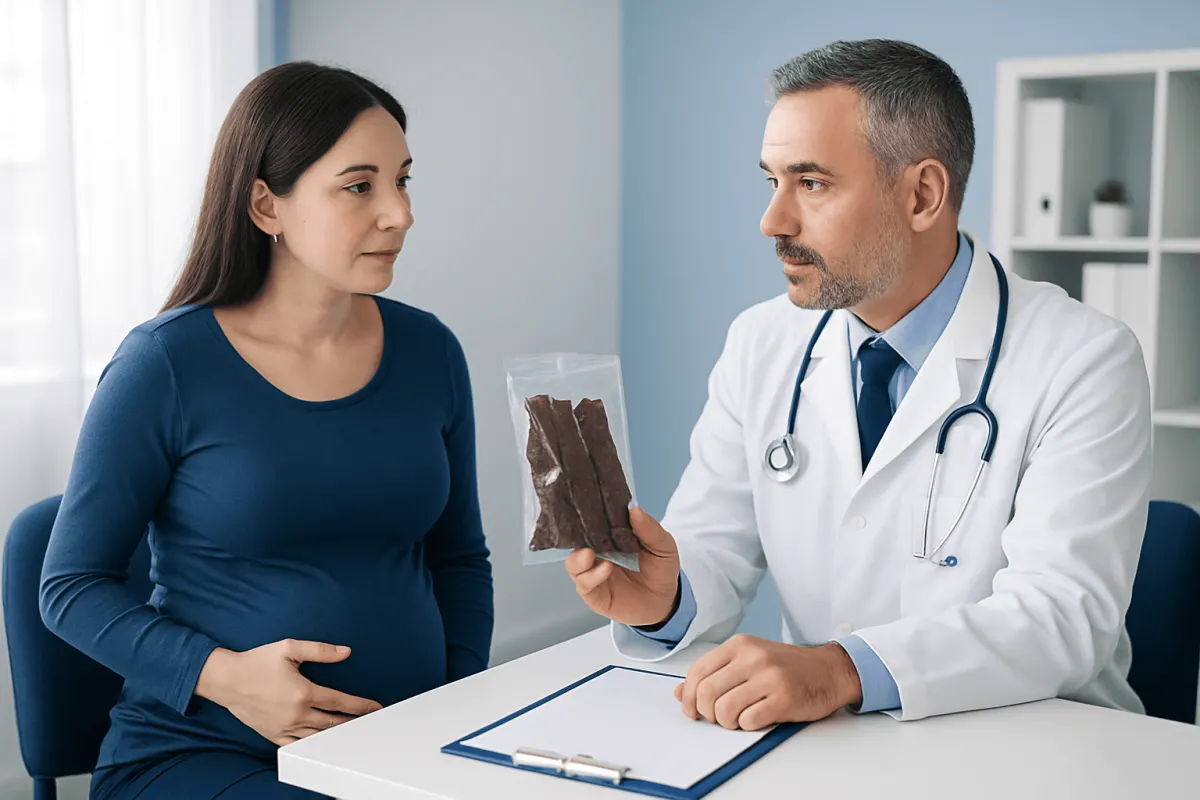
A sealed package of shelf-stable jerky from a reputable commercial manufacturer is generally the more cautious option. The label should identify the product, list an expiration or best-by date, and provide storage directions. Before opening, it should be stored as directed; once opened, it should be consumed within the time stated on the package and refrigerated if the label instructs this.
Higher-risk choices include homemade jerky, meat dried in a dehydrator without a verified heating step, jerky purchased from an unknown source, and products from damaged or swollen packages. Products that require refrigeration can be safe when handled correctly, but they should not be left out for long periods and should be discarded if their storage history is uncertain.
Pregnant people may also wish to check ingredient labels. Some jerky contains unpasteurized flavorings, alcohol-based marinades, or very high amounts of salt, sugar, or additives. These ingredients do not automatically make a product unsafe, but choosing a plainly labeled product with moderate sodium can make it easier to include as an occasional snack within a balanced pregnancy diet.
- Choose sealed, commercially prepared products labeled ready to eat.
- Check the date, package condition, and storage instructions.
- Refrigerate after opening when the label recommends it.
- Avoid jerky that has an unusual odor, discoloration, visible mold, or uncertain storage history.
What to Do After Eating Beef Jerky During Pregnancy
If the jerky was commercially packaged, in date, and stored correctly, and there are no symptoms, the usual next step is simply to continue normal pregnancy care. There is no need to induce vomiting, take antibiotics, or undergo testing solely because beef jerky was eaten. Drinking fluids and maintaining a varied diet can help support general wellbeing.
If the product was homemade, undercooked, expired, improperly refrigerated, or from an uncertain source, it is still important not to panic. Most exposures do not lead to illness. The helpful step is to monitor for symptoms over the following days and contact a maternity care provider or doctor if symptoms develop or if the person is worried about a specific exposure.
Symptoms of foodborne illness can include nausea, vomiting, diarrhea, stomach cramps, fever, chills, muscle aches, or feeling generally unwell. Some symptoms can overlap with common pregnancy discomforts, but fever, significant diarrhea, worsening abdominal pain, or flu-like illness deserve particular attention. Keeping the package or noting the brand, purchase date, and time eaten can be useful if medical advice is needed.
How Doctors Assess Possible Foodborne Illness
A doctor will usually begin by asking about symptoms, when they started, foods eaten, other people who may have eaten the same food, medical history, and stage of pregnancy. They may check temperature, blood pressure, pulse, hydration, and abdominal symptoms. The aim is to identify whether the illness is likely mild and self-limited or whether there are signs of an infection needing closer assessment.
Testing is not routinely needed after an asymptomatic food exposure. When a pregnant person has fever, persistent diarrhea, signs of dehydration, or symptoms suggesting a more significant infection, a clinician may arrange blood tests, stool testing, urine tests, or other investigations based on the situation. If listeriosis is suspected, blood cultures may be considered; testing and treatment decisions are individualized.
For concern about toxoplasmosis after potentially undercooked meat, clinicians consider the nature of the exposure, symptoms, gestational age, and local guidance. Blood testing may be appropriate in selected situations, but it is not usually performed automatically after one uncertain food exposure in a person without symptoms. Early medical advice can help determine the most appropriate next step.
Safer Snack Choices and Everyday Prevention
Food safety during pregnancy does not require avoiding all convenience foods. The most useful approach is to select foods from reliable sources, observe use-by dates, wash hands before eating or preparing food, and keep refrigerated foods cold. Cook raw meat thoroughly, avoid tasting meat before it is fully cooked, and use separate utensils and cutting boards for raw meat and ready-to-eat foods.
For protein-rich snacks, alternatives may include pasteurized yogurt or cheese, fully cooked eggs, nut butter, hummus, beans, roasted chickpeas, nuts, seeds, or freshly prepared chicken and meat that have been cooked thoroughly. Choices can be adapted for nausea, heartburn, diabetes, anemia, vegetarian diets, allergies, or other individual needs.
Jerky may fit into a balanced eating pattern as an occasional option, especially when paired with a lower-sodium food such as fruit, vegetables, or whole-grain crackers. People with high blood pressure, kidney disease, significant swelling, or a history of pregnancy-related hypertension should ask their clinician about an appropriate sodium intake for their circumstances.
When to Seek Medical Care
Prompt medical advice is recommended during pregnancy if fever develops after eating questionable meat, particularly with chills, muscle aches, headache, diarrhea, vomiting, or a flu-like feeling. Contact a doctor or maternity unit as soon as possible for a temperature of 38°C (100.4°F) or higher, persistent symptoms, or concern that a product was clearly spoiled or improperly prepared.
Urgent assessment is important for signs of dehydration, including inability to keep fluids down, very little urination, fainting, marked dizziness, or severe weakness. Severe or worsening abdominal pain, bloody diarrhea, confusion, reduced fetal movement later in pregnancy, Common Causes and How Doctors Evaluate It" class="ahp-ilk">vaginal bleeding, fluid leakage, or contractions should also be assessed without delay through the appropriate maternity service.
For non-urgent concerns, a prenatal clinician can review the food exposure and provide tailored guidance. Acıbadem Health Point’s multidisciplinary specialists and JCI-accredited hospitals can assess pregnancy-related foodborne illness concerns and coordinate care for Myomectomy Recovery: Healing Time, Activity Limits, and Fertility Planning" class="ahp-ilk">Myomectomy Recovery for International Patients: The Usual Travel Timeline" class="ahp-ilk">international patients when needed.
Frequently asked questions
01Can eating beef jerky cause miscarriage?
Eating commercially prepared, properly stored beef jerky does not by itself cause miscarriage. The concern is the uncommon possibility of a foodborne infection from contaminated or inadequately processed meat. Anyone who develops fever or significant illness after eating questionable meat should contact a pregnancy care provider promptly.
02Is homemade beef jerky safe during pregnancy?
Homemade beef jerky is best avoided during pregnancy unless it was prepared with a validated process that adequately heated the meat and was stored safely. Drying meat alone may not reliably eliminate all harmful germs. Commercially packaged, shelf-stable products with clear labels are generally the more cautious choice.
03What symptoms should be watched for after eating questionable jerky?
Watch for fever, chills, vomiting, diarrhea, persistent stomach cramps, muscle aches, or feeling flu-like. Mild short-lived stomach upset may resolve with fluids and rest, but fever or ongoing symptoms in pregnancy should be discussed with a doctor. Urgent care is needed for severe dehydration, severe pain, or other pregnancy warning signs.
04Should a pregnant person get tested after eating beef jerky?
Testing is not usually needed when a person feels well after eating a sealed, in-date commercial product. A doctor may recommend testing if symptoms develop, especially fever or persistent gastrointestinal illness, or if the exposure involved clearly undercooked or unsafe meat. The decision depends on the symptoms, timing, and pregnancy history.
05Is beef jerky healthy during pregnancy?
Beef jerky can provide protein, iron, zinc, and vitamin B12, but it is often high in sodium and may contain added sugar. It is generally better as an occasional snack than a main protein source. Choosing lower-sodium products and eating a varied diet can support healthy nutrition during pregnancy.
06Can beef jerky be eaten if it has been opened?
Opened jerky may be eaten if it has been stored exactly as directed on the package and remains within the recommended time after opening. If the label says to refrigerate after opening, it should be refrigerated promptly. Discard it if it smells unusual, has visible mold, has changed appearance, or has been stored incorrectly.
This article is for general information only and is not a substitute for professional medical advice. Please consult a qualified doctor about your individual situation.
Explore treatments in Turkey — costs, top hospitals & a free quote
JCI-accredited · board-certified surgeons · reply within 24h
Add us as a Preferred Source to see more of our trusted health content across Google Search, AI Overviews and Discover.