Broken Toe Bones: Symptoms, Causes and Treatment

Key Takeaways
- Toe fractures often cause pain, swelling, bruising, and difficulty walking.
- Not every broken toe needs a cast, but proper alignment and protection matter.
- X-rays are commonly used when the injury is severe, deformity is present, or symptoms are persistent.
- Home care usually includes rest, icing, elevation, and supportive footwear or taping when advised.
- Medical review is important if the toe looks crooked, numb, very swollen, or pain is getting worse.
Broken bones in the toes are common injuries that can range from a small crack to a more complex fracture. Most heal well with proper protection, pain control, and follow-up, but some require imaging, splinting, or orthopedic care.
Overview
Broken bones in the toes, also called toe fractures, happen when one of the small bones in the forefoot cracks or breaks. They may follow a direct impact, such as stubbing a toe against furniture, or a heavier force like a Knee Pain Relief: Causes and Treatment" class="ahp-ilk">Pain Relief" class="ahp-ilk">sports injury, a fall, or something landing on the foot.
Although toe fractures are often less dramatic than fractures in the arm or leg, they still matter. The toes help with balance, push-off during walking, and the way shoes fit. When a break is ignored or allowed to heal in a poor position, it can leave a person with lingering pain, stiffness, or trouble wearing normal footwear.
For someone deciding whether to seek care, the key question is not only “Is it broken?” but also “Is it aligned, stable, and healing in a way that will let the foot function normally again?” That is why proper assessment is important, especially if travel, work demands, or sports participation are part of the recovery plan.
Symptoms
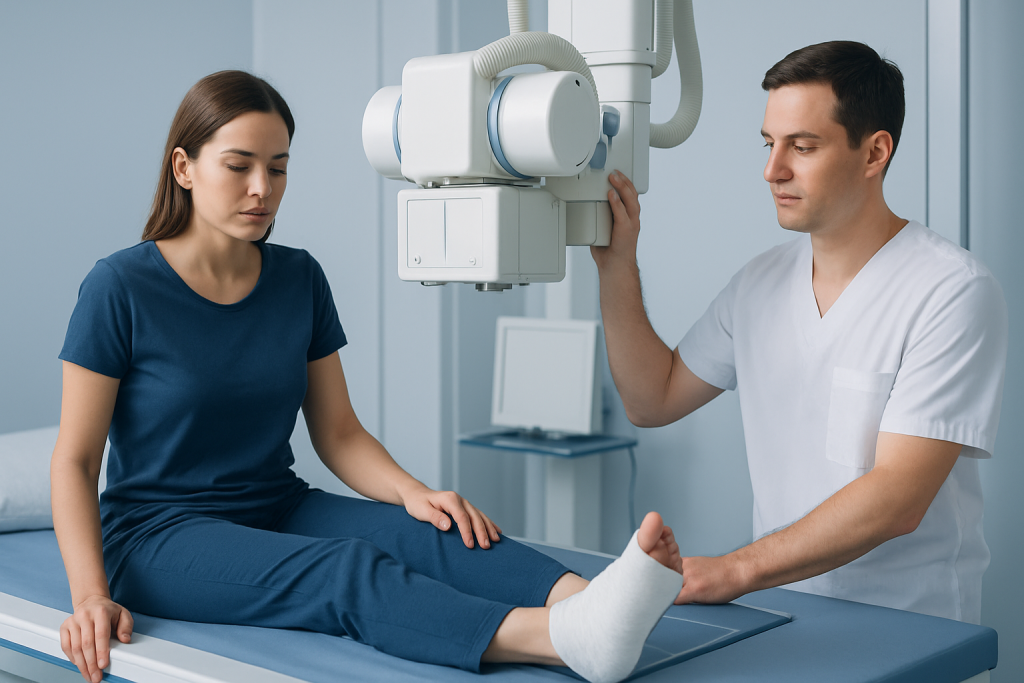
A broken toe usually becomes painful soon after the injury. The pain is often sharp at first and then continues as a throbbing ache, especially when weight is placed on the foot or when the toe is moved.
Common signs include swelling, bruising, tenderness to touch, and difficulty walking. Some people notice that the toe looks different from the others, appears bent, or sits at an unusual angle. In more obvious injuries, the person may hear or feel a crack at the moment of injury.
Symptoms can vary depending on which toe is involved. The smaller toes may still allow limited walking, while a fracture in the big toe often causes more disruption because of its role in balance and push-off. A nail injury, skin break, or a wound near the toe can also signal a more complicated problem that should be examined promptly.
Causes & Risk Factors

The most common cause is direct trauma. A toe may be struck by a door, dropped object, sports collision, treadmill belt, or hard edge of furniture. Twisting injuries and falls can also fracture a toe, especially if the foot is caught while turning or landing.
Some factors make fracture more likely or recovery more complicated. Osteoporosis, poor bone health, balance problems, improper footwear, and participation in high-impact sports may increase risk. Repeated stress on the foot can also contribute to stress fractures, which may develop gradually rather than after one obvious accident.
People who have diabetes, reduced sensation in the feet, circulation issues, or a history of foot deformities should pay close attention to toe injuries. In those situations, even a small fracture may need earlier evaluation so that skin, alignment, and healing can be monitored carefully.
Diagnosis
Diagnosis begins with a clinical examination. A clinician will usually ask how the injury happened, where the pain is located, whether the person can bear weight, and whether there are numbness, color changes, or open wounds. The toe will be inspected for swelling, angulation, rotation, and tenderness.
X-rays are often used to confirm a fracture and to check whether the bone is displaced. They help show if the fracture involves the joint, whether more than one toe is affected, and if there are signs of a more serious foot injury. In some cases, especially when symptoms do not match the initial X-ray, additional imaging may be considered.
Not every painful toe needs advanced testing, but persistent pain, visible deformity, or difficulty walking should not be dismissed as a simple bruise. A careful diagnosis helps prevent a fracture from healing in a position that could later interfere with movement or shoe wear.
Treatment Options
Treatment depends on the bone involved, how far the fracture has shifted, and whether the joint is affected. Many lesser toe fractures can be treated without surgery. The injured toe may be stabilized with buddy taping, protective footwear, or a stiff-soled shoe so that it is not bent repeatedly during walking.
More significant fractures, especially those involving the big toe or a displaced bone, may require reduction, immobilization, or referral to an orthopedic specialist. Surgery is less common but may be considered when the bone is badly misaligned, unstable, or associated with an open wound or joint injury.
Pain control is usually part of care, along with rest and activity modification. The main goal is to protect the toe long enough for it to heal while keeping the rest of the foot as functional as possible. For international patients, this often means planning treatment in a way that supports safe travel, follow-up imaging, and recovery after returning home.
- Common treatment measures may include buddy taping for selected fractures.
- Stiff-soled shoes or walking boots may reduce painful bending.
- Temporary reduction in activity helps prevent repeat injury.
- Follow-up may be needed to confirm alignment and healing.
Prevention & Self-care
For the first days after injury, simple measures often make a noticeable difference. Resting the foot, elevating it when possible, and using ice wrapped in a cloth can help limit swelling and discomfort. A supportive shoe that protects the toe is often more comfortable than a flexible sandal or barefoot walking.
If a clinician recommends taping, it should be done carefully so circulation is not restricted. The skin should be checked regularly for irritation, pressure marks, or worsening pain. People should avoid forcing the toe to move normally too early, since repeated stress can slow recovery.
Prevention is also practical. Good footwear, attention on stairs and uneven ground, and safer sports technique can reduce toe injuries. People with reduced foot sensation or chronic medical conditions may benefit from routine foot checks, especially after any new trauma, even if it seems minor at first.
When to See a Doctor
Medical review is sensible when the toe looks crooked, there is marked swelling or bruising, or walking is difficult. It is especially important if the pain is severe, if the nail bed is injured, or if the skin is open and the bone may be exposed.
Urgent assessment is also appropriate if there is numbness, the toe becomes pale or blue, or symptoms are getting worse instead of better. People with diabetes, poor circulation, or immune problems should not wait long before seeking care for a suspected fracture, because small foot injuries can become more complicated.
If the person is traveling or living abroad, it can help to arrange a clear follow-up plan before leaving the clinic. Acibadem Health Point’s multidisciplinary specialists and JCI-accredited hospitals support international patients with diagnosis and treatment planning for toe fractures and other orthopedic injuries.
Even when the injury seems minor, ongoing pain after several days, trouble returning to normal shoes, or stiffness that limits movement deserves reassessment. A well-healed toe should gradually become less tender and more usable, not steadily more painful.
Frequently asked questions
01How can someone tell if a toe is broken or just bruised?
A broken toe often causes more intense pain, swelling, and bruising than a simple bruise, and it may hurt to walk or move. A toe that looks crooked or feels unstable should be checked by a clinician, because an exam and sometimes an X-ray are needed to tell the difference.
02Do all broken toes need an X-ray?
Not always, but X-rays are commonly used when the toe looks deformed, pain is significant, or the injury involves the big toe. If symptoms are persistent or the diagnosis is uncertain, imaging helps confirm the injury and guide treatment.
03Can a broken toe heal on its own?
Many toe fractures heal well with basic protection and time, especially when the bones stay in good alignment. Even then, it is better to have the injury assessed so that healing is not delayed by an unnoticed displacement or joint injury.
04Should a broken toe be taped to the next toe?
Buddy taping is sometimes used for selected fractures, but it is not appropriate for every injury. A clinician should confirm that taping is safe, and the skin should be protected so the toes do not rub or become irritated.
05How long does recovery usually take?
Recovery depends on the location and severity of the fracture, as well as the person’s overall health. Smaller toe fractures often improve over several weeks, while bigger or more complicated injuries may take longer and need closer follow-up.
06What should someone avoid while a toe fracture is healing?
It is usually wise to avoid running, jumping, tight shoes, and any activity that bends or re-injures the toe. Returning too quickly can prolong pain and may affect how the bone heals.
This article is for general information only and is not a substitute for professional medical advice. Please consult a qualified doctor about your individual situation.
Joint and spine care in Turkey — expert assessment & treatment
JCI-accredited · board-certified surgeons · reply within 24h
Add us as a Preferred Source to see more of our trusted health content across Google Search, AI Overviews and Discover.