Breast Augmentation Scars: Healing and Care
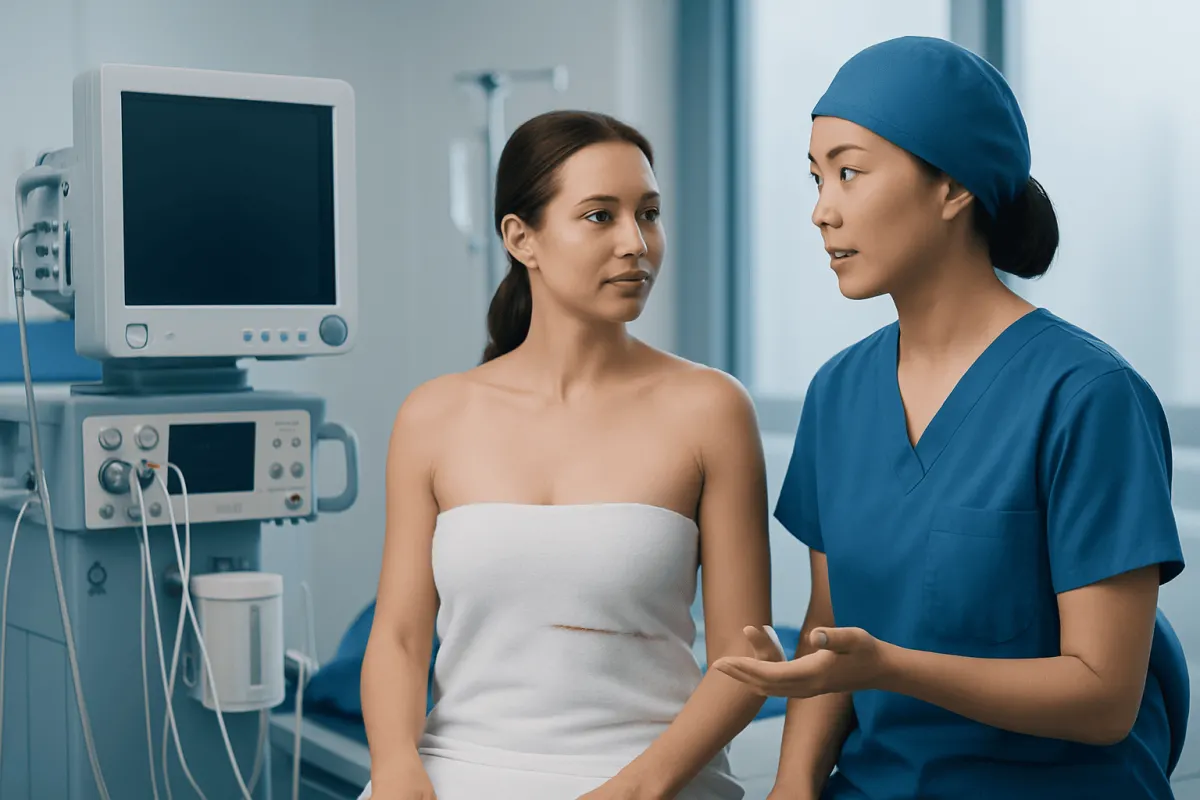
Augmentation scars are a normal part of breast augmentation and commonly look red, raised, or firm at first before gradually softening and fading over many months. Careful incision care, sun protection, and follow-up with the surgical team can support healing and help identify concerns early.
Augmentation scars: what to expect
Augmentation scars are the marks left where a surgeon makes an incision to place breast implants. They are expected after breast augmentation, and their appearance changes substantially during healing. In the first weeks, scars may be pink or red, slightly swollen, itchy, tender, or firmer than the surrounding skin. These features often improve as the incision gains strength and the scar matures.
The final appearance depends on several factors, including the incision location, natural skin tone and healing tendency, genetics, tension on the wound, smoking status, infection, and exposure to ultraviolet light. No surgical technique can promise scar-free healing, but an experienced surgeon plans incisions carefully so they are as discreet as reasonably possible.
Breast augmentation may use an incision in the breast crease, around part of the areola, or occasionally in the armpit. Each option has potential advantages and limitations related to anatomy, implant choice, prior surgery, and the person’s goals. A consultation for breast augmentation should include a discussion of likely scar placement and the realistic healing process.
How breast augmentation works and who may be a candidate
Breast augmentation is an operation that increases breast volume or improves breast shape using implants, or in selected cases, a person’s own transferred fat. Implant procedures may use saline or silicone gel implants. The implant can be placed above or below the chest muscle, depending on tissue coverage, anatomy, implant characteristics, and the surgical plan.
Suitable candidates are generally adults in good overall health who understand that implants and scars require long-term consideration. They may seek restoration of volume after pregnancy, weight change, or aging, correction of breast asymmetry, or a change in breast size. A surgeon assesses medical history, medications, previous breast surgery, family history, breast examination findings, and personal expectations.
People who smoke or use nicotine products are usually advised to stop well before and after surgery because nicotine can reduce blood flow and increase wound-healing problems. Surgery may also need to be postponed when there is an active infection, uncontrolled medical condition, or concern requiring breast imaging or specialist assessment.
- Scar placement should be selected jointly with the surgeon based on safety and suitability.
- Implants are not lifetime devices, so future monitoring or additional surgery may be needed.
- A consultation should cover alternatives, including whether a breast lift may be more appropriate when significant skin laxity is present.
The procedure: from incision to closure
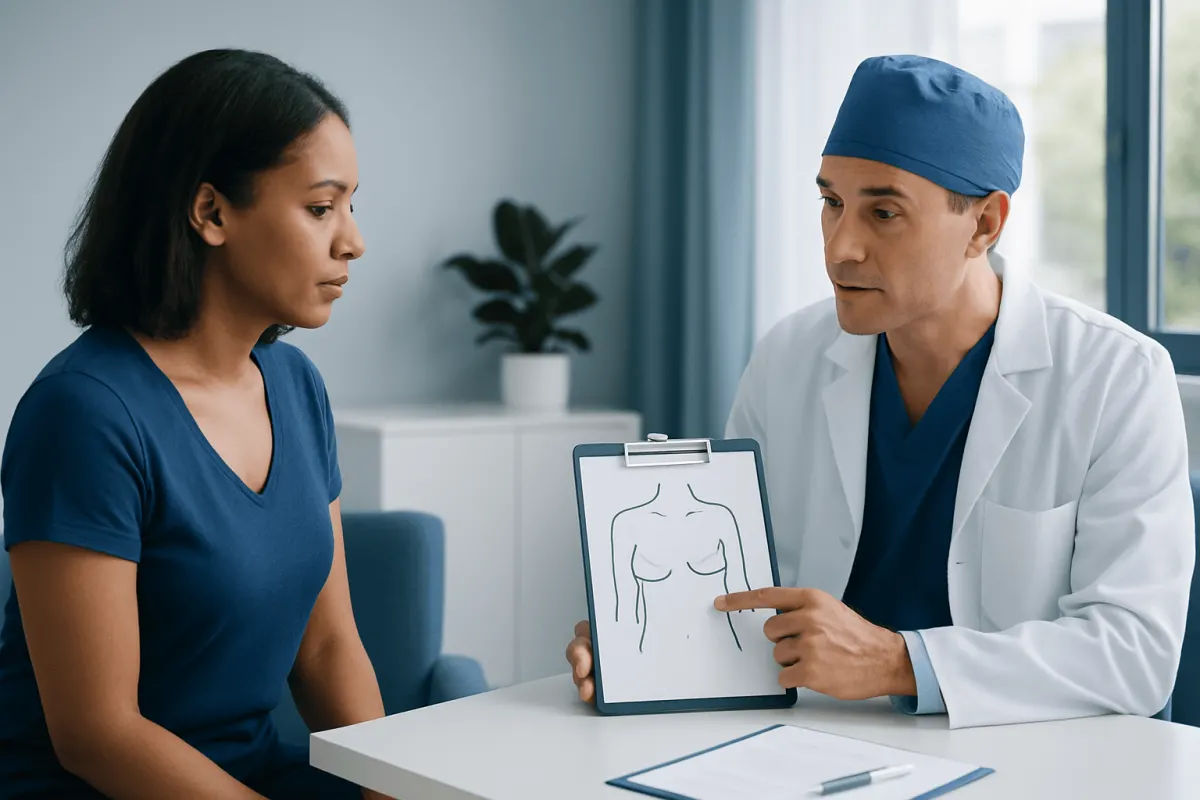
Breast augmentation is typically performed under general anesthesia. After reviewing the agreed surgical plan, the surgeon makes the planned incision and creates a pocket for the implant. The implant is positioned, the breasts are checked for symmetry and shape, and the incision is closed in layers to support healing and reduce tension on the skin.
Dressings, surgical tape, or skin adhesive may cover the incision. Some patients are advised to wear a supportive postoperative bra. The exact instructions vary according to the technique used, the implant position, and the surgeon’s preferred protocol, so the operating team’s guidance should take priority over general online advice.
Benefits can include increased breast volume, improved contour, and correction of some asymmetry. Risks include bleeding, infection, delayed wound healing, altered nipple or breast sensation, implant displacement, capsular contracture, implant rupture, visible scarring, and the possibility of revision surgery. The surgeon should explain these risks in relation to the individual’s health and goals before an informed decision is made.
How long do scars take to heal after breast augmentation?
The surface of a breast augmentation incision often closes within about one to two weeks, but this is only the first stage of healing. During the following weeks, the scar may become darker, pinker, itchier, or somewhat firmer as the body builds collagen. This can be a normal part of scar development when there are no signs of infection or wound separation.
Most scars begin to settle over several months. They commonly become flatter and less red between three and six months, while full scar maturation often takes 12 to 18 months and sometimes longer. Some people are prone to hypertrophic scars, which remain raised within the incision boundary, or keloids, which grow beyond the original wound edge. These patterns should be discussed with a surgeon or dermatologist.
Healing is not always symmetrical: one side may settle differently or more slowly. Following activity restrictions, avoiding nicotine, protecting the area from sun exposure, and attending follow-up visits can all support uncomplicated healing. The surgical team can advise when scar products are appropriate, since applying products too early to an unclosed wound may cause irritation or delay healing.
What does the 45-55 rule mean for breast augmentation?
The “45-55 rule” is not a formal medical guideline or a universally accepted measure in breast augmentation. It is an informal phrase that may be used differently by surgeons, clinics, or online communities, often in discussions about breast proportions, implant selection, or the balance of fullness in different areas of the breast.
Because there is no single validated definition, it should not be used alone to choose implant size, shape, or placement. Breast planning is more safely based on measured chest width, existing breast tissue, skin elasticity, body proportions, desired appearance, and the limits of what tissues can support.
Anyone who hears this term should ask the surgeon exactly what is meant and how it applies to their own anatomy. A responsible consultation focuses on individualized planning and informed consent rather than a fixed ratio or social-media trend.
How can I care for my scars after breast augmentation?
In the early phase, the priority is protecting the incision while it closes. Patients should keep dressings clean and dry as instructed, avoid pulling or rubbing the incision, take prescribed medicines only as directed, and attend scheduled reviews. Bathing, showering, lifting, driving, exercise, and sleeping advice should be individualized by the surgical team.
Once the incision is fully closed and the surgeon approves it, silicone gel or silicone sheets may be recommended to support scar management. Gentle scar massage may also be appropriate later in recovery, but it should only begin when the surgeon says the wound is ready. Moisturizers, fragrance-free skin care, or paper tape may be suggested in some cases, while products that irritate the skin should be avoided.
Sun protection is particularly important. Fresh scars can darken with ultraviolet exposure and may remain more noticeable. When the area may be exposed, covering it with clothing and using broad-spectrum sunscreen as advised can help protect the healing skin. Smoking and nicotine vaping should be avoided, as they can impair blood supply and healing.
- Do not pick at scabs, adhesive strips, or surgical glue.
- Do not use vitamin E, oils, exfoliants, or home remedies on the incision unless the surgeon approves them.
- Contact the surgical team before using any scar treatment if there is redness, drainage, rash, or an open area.
What's the worst day after breast augmentation?
There is no single “worst day” for everyone. Many people find the first two to three days the most uncomfortable because swelling, chest tightness, fatigue, and soreness are often greatest then. Discomfort may feel more pronounced when implants are placed beneath the chest muscle, although experiences vary widely.
Pain and tightness should generally begin to improve gradually rather than worsen day by day. Following the prescribed pain-management plan, resting, walking gently as advised, drinking fluids, and arranging practical support at home can make the early recovery period more manageable. Patients should not compare their recovery too closely with another person’s, as the pace is individual.
Severe or escalating pain, marked one-sided swelling, shortness of breath, chest pain, fainting, or other sudden symptoms are not routine recovery concerns and need urgent medical assessment. The operating team should provide clear contact information for questions that arise after discharge.
When to seek medical care
Patients should contact their surgeon promptly if they develop increasing redness or warmth around an incision, pus-like or foul-smelling drainage, fever, worsening pain, a new opening in the wound, or bleeding that soaks through dressings. A breast that becomes suddenly much larger, firmer, or more painful than the other also requires prompt assessment.
Urgent medical care is needed for breathing difficulty, chest pain, confusion, fainting, or symptoms of a serious allergic reaction. Even when symptoms seem mild, it is reasonable to seek advice when something does not feel right during recovery. Early review can help distinguish normal healing changes from a complication that needs treatment.
If a scar remains very raised, itchy, painful, dark, or distressing after the initial healing phase, a clinician may discuss options such as silicone therapy, steroid treatment, laser-based approaches, or scar revision when appropriate. Acıbadem Health Point’s multidisciplinary specialists and JCI-accredited hospitals support international patients undergoing assessment and treatment planning for breast surgery and postoperative concerns.
Frequently asked questions
01Will breast augmentation scars go away completely?
Breast augmentation scars do not disappear completely because an incision permanently changes the skin. However, most scars fade, flatten, and become less noticeable as they mature over many months. Their final visibility varies with incision location, skin type, genetics, and healing.
02When can silicone scar gel be used after breast augmentation?
Silicone gel or sheets should only be started after the incision is fully closed and the surgeon confirms that it is safe. Applying scar products to open, draining, or irritated skin is not appropriate. The surgical team can recommend the timing and method most suitable for the individual.
03Can I massage my breast augmentation scars?
Scar massage may be helpful for some patients later in recovery, but it should not begin until the incision has healed sufficiently and the surgeon gives approval. Massaging too early can disrupt healing or irritate the wound. The surgeon can demonstrate a safe technique if massage is recommended.
04Why are my breast augmentation scars red and itchy?
Redness, mild itching, and firmness can occur during normal early scar formation as collagen develops. These symptoms should slowly improve over time. Spreading redness, increasing warmth, drainage, fever, or worsening pain should be reported to the surgical team.
05Can sun make breast augmentation scars darker?
Yes. Ultraviolet exposure can cause a healing scar to darken and may make color changes last longer. Covering the scar and using appropriate broad-spectrum sunscreen after the surgeon permits it can help protect the area.
06What can make breast augmentation scars worse?
Nicotine use, infection, wound tension, sun exposure, picking at scabs, and returning to strenuous activity too soon can interfere with healing. Some people also have a genetic tendency toward raised or darker scars. Following individualized postoperative instructions is the most reliable way to reduce avoidable risks.
This article is for general information only and is not a substitute for professional medical advice. Please consult a qualified doctor about your individual situation.
Explore treatments in Turkey — costs, top hospitals & a free quote
JCI-accredited · board-certified surgeons · reply within 24h
Add us as a Preferred Source to see more of our trusted health content across Google Search, AI Overviews and Discover.