Bledsoe Brace: An Evidence-Based Patient Guide
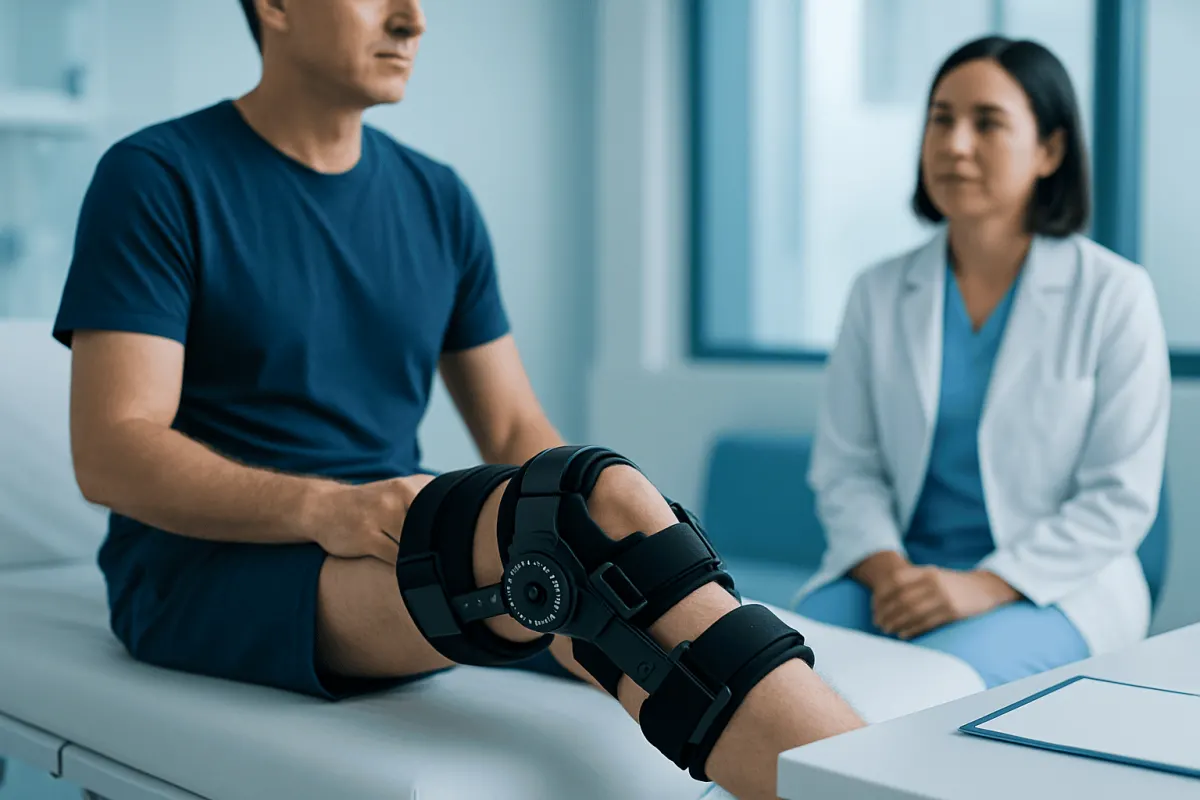
A Bledsoe brace is a type of adjustable hinged knee brace used to support and protect the knee while healing after selected injuries or surgery. Its settings, wearing schedule and weight-bearing instructions should always be individualized by the treating orthopedic clinician.
Overview: What Is a Bledsoe Brace Used For?
A Bledsoe brace is a rigid, adjustable knee brace with hinges on each side of the leg. It is designed to protect healing structures by limiting knee motion, supporting the joint during walking and helping a clinician control the pace of rehabilitation. Although “Bledsoe” is often used as a general term, it refers to a brand of orthopedic bracing; the exact model and settings vary by clinical need.
The brace may be used after knee surgery or following certain injuries involving ligaments, tendons, bones or cartilage. For example, a clinician may use a hinged brace after repair or reconstruction of a knee ligament, surgery involving the extensor mechanism, or treatment of a stable fracture. It is not a cure on its own: it works alongside diagnosis, activity modification, physical therapy and scheduled clinical review.
Some people will be asked to keep the knee fully straight while standing or walking, while others may be permitted a gradually increasing range of motion. These details are specific to the procedure, injury pattern and healing progress. The written plan from the surgeon, orthopedic specialist or physiotherapist takes priority over general bledsoe brace instructions found online.
How a Bledsoe Brace Works and Its Main Parts
A Bledsoe brace has upper and lower frame sections secured to the thigh and calf by straps. Foam or fabric pads help cushion the skin, while adjustable side hinges align approximately with the natural pivot point of the knee. The brace is commonly lightweight, but bledsoe brace weight differs by model, size and materials; it can still feel substantial at first because it extends above and below the knee.
The hinge is the key protective feature. It may be set to prevent bending, prevent full straightening, or allow movement only within a prescribed range. A bledsoe brace lock may hold the knee in extension, often at 0 degrees, during walking or sleeping when this is required. In other circumstances, the clinician may allow controlled bending for seated exercises or rehabilitation.
A bledsoe brace unlock should only be performed when the care team has specifically explained when and how it is safe. Unlocking a brace too early, or changing its range-of-motion stops, could place avoidable strain on repaired or injured tissue. If the settings are unclear, the safest action is to leave them unchanged and contact the prescribing clinic.
- Hinges: control permitted knee motion.
- Range-of-motion stops or dials: set the bend and straightening limits.
- Thigh and calf cuffs: keep the frame positioned on the leg.
- Straps: secure the brace without restricting circulation.
- Padding: helps reduce pressure and skin friction.
Who May Benefit and When a Knee Brace Is Not Recommended
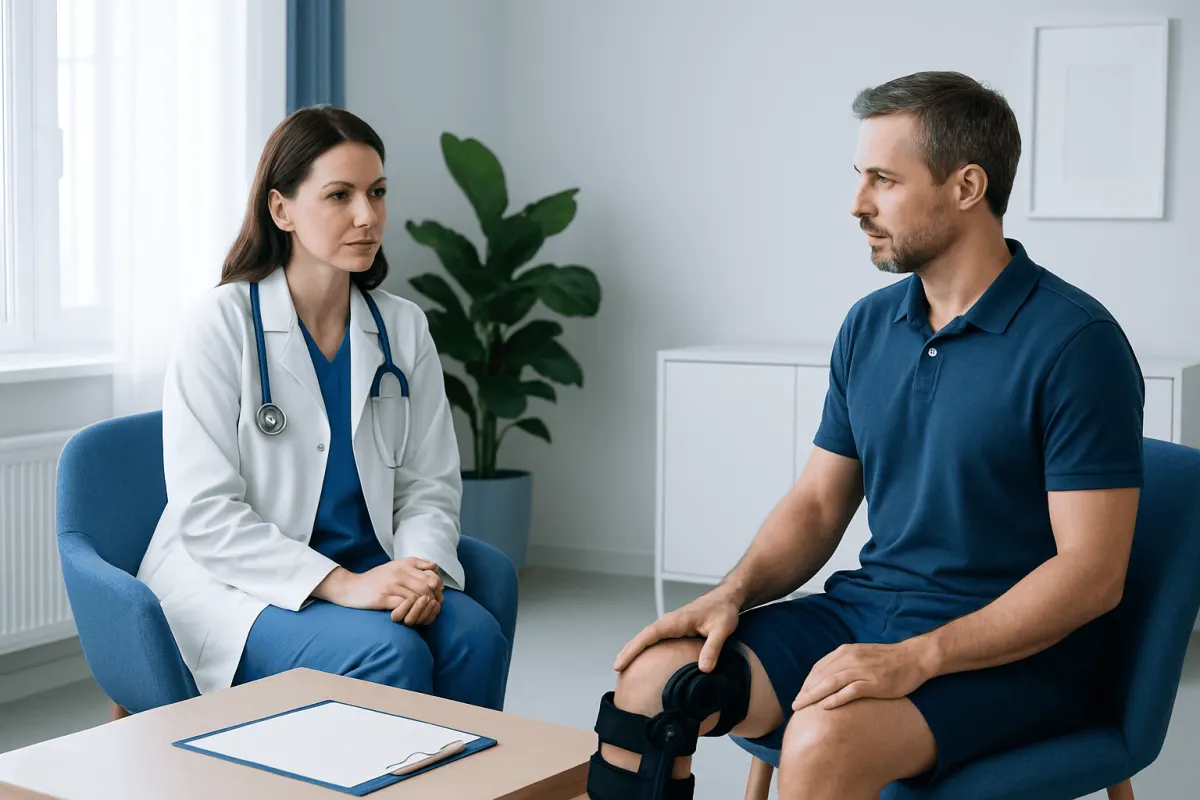
Candidacy for a hinged knee brace depends on the diagnosis, stability of the knee, treatment approach and the person’s ability to use the device safely. It may be considered after selected ligament reconstructions, tendon repairs, patellar stabilization procedures, meniscal procedures, knee dislocations, fractures managed with protection, or certain significant sprains. The need for bracing after knee ligament injuries varies considerably, and some rehabilitation protocols favor earlier guided movement with little or no brace use.
When is a knee brace not recommended? A brace may not be appropriate when it does not improve protection or function, when it could delay necessary movement, or when its use may worsen skin, circulation or balance problems. It may also be unsuitable for a person with significant skin wounds under the brace area, uncontrolled swelling, some nerve or blood-vessel concerns, or an inability to use it safely without assistance. These are clinical decisions rather than a matter of choosing the strongest brace.
Hinged bracing can create a false sense of security if a person returns to twisting, impact activity or weight-bearing earlier than advised. It should not replace timely assessment for a potentially serious injury. A knee that is visibly deformed, cannot bear weight, locks completely, or becomes rapidly swollen after trauma needs medical evaluation rather than self-treatment with a brace.
Fitting and Daily Use: Step-by-Step Bledsoe Brace Instructions
The fitting procedure begins with confirmation of the prescription, including the desired range of motion and weight-bearing status. Ideally, a trained orthopedic clinician or brace specialist checks the fit. The person is usually positioned with the leg supported and the knee in the prescribed position, often straight. The side hinges are aligned with the knee joint line rather than placed too high or too low.
Next, the straps are fastened in the sequence shown by the care team. They should be snug enough to prevent the brace from sliding, but not so tight that they cause tingling, coldness, discoloration or increased pain. Clothing should be smooth beneath the brace; bulky seams and wrinkles can cause pressure sores. Patients may be advised to inspect the skin at least daily, especially around the edges of the brace and behind the knee.
The prescribing clinician will explain whether the brace should be worn while walking, sitting, sleeping, bathing or performing exercises. If removal is permitted for hygiene or exercises, the leg should be supported as instructed and the brace reapplied before standing. Crutches, a walker or other mobility aids may be needed when weight bearing is restricted. A structured physical therapy and rehabilitation program can help restore mobility, strength and confidence without exceeding the healing limits.
People should avoid modifying the frame, trimming straps, placing extra padding under pressure points without advice, or independently changing the hinge setting. If the brace repeatedly slips, rubs, feels misaligned or becomes damaged, the clinical team can reassess the fit rather than relying on temporary home adjustments.
Benefits, Limitations and Possible Risks
The main benefit of a Bledsoe brace is controlled protection. By restricting movements that could strain healing tissue, it can help patients follow an individualized recovery plan during everyday tasks. It can also provide a reminder to move carefully while pain, weakness and reduced balance are still present.
However, a brace cannot guarantee healing or prevent all reinjury. The evidence for postoperative knee bracing differs by operation and rehabilitation protocol. In some settings, clinicians find it useful for short-term protection; in others, early supervised motion and muscle activation may be more important. The best plan is the one matched to the specific injury or procedure rather than a one-size-fits-all rule.
Possible problems include skin irritation, pressure marks, slipping, stiffness, discomfort, muscle weakness with prolonged unnecessary immobilization, and altered walking mechanics. Straps that are too tight can cause swelling, numbness or color changes below the brace. Falls are also possible, particularly when a locked knee changes the way a person walks or manages stairs.
Contact the care team if pain is increasing rather than improving, the brace no longer fits, there are blisters or open skin, or the foot becomes unusually cold, pale, blue, numb or swollen. A clinician can determine whether the brace, activity level or broader treatment plan needs adjustment.
Recovery Timeline and Rehabilitation Expectations
Recovery while wearing a Bledsoe brace is guided by the underlying condition, not by the brace alone. A minor injury may require only a short period of support, whereas recovery after ligament reconstruction, tendon repair or fracture can involve several stages over months. The time spent in a locked brace, the timing of bledsoe brace unlock, and the amount of permitted weight bearing should come from the treating team.
Early recovery commonly focuses on protecting the knee, controlling swelling, maintaining safe circulation and learning to move with prescribed restrictions. Depending on the treatment plan, gentle exercises for the ankle, hip and thigh may begin early. Later stages may gradually restore knee range of motion, walking quality, leg strength, balance and task-specific function.
Follow-up visits are important because healing cannot be judged by pain alone. The clinician may examine stability, wound healing where applicable, swelling, motion and strength, and may change brace settings in response. Patients should keep follow-up appointments even if they feel well, as progressing too quickly can undermine a good early recovery.
For people treated across borders, Acıbadem Health Point’s multidisciplinary specialists and JCI-accredited hospitals provide orthopedic diagnosis, treatment and rehabilitation planning for international patients. The treatment plan should always include clear written guidance for follow-up and rehabilitation after returning home.
How Much Does a Bledsoe Brace Cost?
How much does a bledsoe brace cost? The cost varies widely by country, brace model, adjustment features, retailer or hospital supplier, insurance coverage and whether professional fitting is included. A basic brace and a more specialized postoperative range-of-motion brace may have very different costs, so a single reliable price cannot be given without local information.
Patients can ask the prescribing clinic whether a specific model is required, whether an equivalent approved brace is acceptable, and whether the brace is purchased or supplied through a medical equipment provider. Before ordering a brace independently, it is important to confirm the size, hinge configuration and required range-of-motion settings.
Insurance plans and public health systems may cover some or all of the cost when the brace is medically prescribed, but rules differ. It is sensible to ask the insurer or provider about authorization requirements, fitting charges, replacement parts and return policies. Clinical suitability should remain the priority over appearance or price.
What Is the Absolute Best Knee Brace? When to Seek Medical Care
What is the absolute best knee brace? There is no single best knee brace for every person or injury. The most appropriate brace is one that matches the diagnosis, stage of recovery, required level of stability, body fit and clinician’s instructions. A hinged postoperative brace may be helpful for one patient, while a compression sleeve, patellar-support brace, unloader brace, or no brace at all may be better for another.
Medical care should be sought promptly after a knee injury if there is severe pain, a deformity, inability to bear weight, a large or rapidly increasing swelling, inability to straighten the knee, or a feeling that the knee has dislocated. Urgent assessment is also important for calf pain or swelling, chest pain, shortness of breath, fever, wound drainage after surgery, or new numbness and color changes in the foot.
For less urgent concerns, patients should contact their orthopedic team when the brace causes persistent rubbing, slips out of position, feels too tight, or does not match the written instructions. Early questions can prevent avoidable discomfort and help protect recovery. The clinical team can also determine whether imaging, reassessment or a change in rehabilitation is needed.
Frequently asked questions
01Can a Bledsoe brace be worn over clothing?
It is often worn over a thin, smooth layer of clothing or a stocking to reduce friction and protect the skin. Thick fabric, wrinkles and seams may interfere with fit or create pressure points. The prescribing team should confirm the preferred approach for the individual brace and surgical wound status.
02Should a Bledsoe brace be locked while walking?
Some patients are instructed to keep the brace locked in full extension while standing or walking, particularly early after certain operations or injuries. Others may be permitted a defined range of motion. The hinge setting should only be changed according to the treating clinician’s written instructions.
03Can a person sleep in a Bledsoe brace?
Whether the brace should be worn during sleep depends on the injury, procedure and stage of recovery. Some protocols require overnight use to prevent unintended bending, while others allow removal. Patients should not remove it overnight unless their clinician has said it is safe.
04How tight should the straps be?
Straps should hold the brace securely enough that it does not slide or rotate, but they should not cause numbness, tingling, coldness, discoloration or significant swelling below the brace. The skin should be checked regularly for redness or pressure injury. Persistent fit concerns should be assessed by the care team.
05Can a Bledsoe brace be used for knee arthritis?
A postoperative hinged brace is not automatically the best option for knee arthritis. Some people with arthritis benefit more from exercise therapy, medication, weight-management support, an unloading brace or other individualized measures. A clinician can help identify the cause of knee pain and recommend an appropriate treatment plan.
06How long will a person need to use a Bledsoe brace?
Duration varies from a short protective period to several weeks or longer, depending on the diagnosis and treatment plan. Decisions about stopping the brace are based on healing, stability, motion, strength and functional progress. It should not be discontinued early simply because the knee feels better.
This article is for general information only and is not a substitute for professional medical advice. Please consult a qualified doctor about your individual situation.
Joint and spine care in Turkey — expert assessment & treatment
JCI-accredited · board-certified surgeons · reply within 24h
Add us as a Preferred Source to see more of our trusted health content across Google Search, AI Overviews and Discover.