Best Places in Turkey for Dental Work: Istanbul vs Antalya

Key Takeaways
- There is no single best place in Turkey for teeth — Istanbul suits complex, multi-specialist cases and flexible flight schedules, while Antalya suits shorter, simpler plans combined with a quieter recovery setting.
- Treatment packages usually bundle consultation, imaging, the dental work itself, airport transfers, hotel accommodation and interpreter support; the exact contents differ between providers and should always be confirmed in writing.
- Costs are best understood as planning bands rather than fixed prices, because the final figure depends on the number of teeth, the materials chosen and whether preparatory treatment is needed.
- Accreditation such as JCI, verifiable dentist registration and clear specialist credentials matter more than marketing claims when comparing providers.
- Most implant-based plans require two visits several months apart, so travel dates should be planned around the treatment sequence, not the other way round.
- Aftercare back in the UK should be arranged before departure, including records, a written treatment summary and a named contact for follow-up questions.
For UK patients weighing up dental travel, Istanbul and Antalya both offer accredited hospital dentistry, English-speaking coordination and structured treatment packages — the right choice depends on case complexity, travel logistics and how much recovery time is available. This guide explains how the two cities compare and how a coordinated dental journey is normally planned.
Istanbul or Antalya: A Direct Answer
Patients researching the best place in turkey for teeth usually find the same two cities at the top of every list: Istanbul and Antalya. Both host internationally accredited hospitals and dental centres, both routinely treat visitors from the United Kingdom, and both work through English-speaking patient coordinators. The honest answer is that neither city is universally better — the more useful question is which setting fits the specific dental plan, the amount of time available and personal travel preferences.
In broad terms, Istanbul offers the largest concentration of hospital-based dentistry and multidisciplinary teams, which can matter when a case involves oral surgery, gum treatment, orthodontics and prosthodontics working together. It is also the most connected city for direct flights from across the UK, which simplifies the second visit that many implant plans require. Antalya, by contrast, is a smaller, calmer coastal city where clinics and hotels sit close together, and where the recovery days between appointments feel more restful.
A well-planned dental journey starts with the clinical assessment rather than the destination. Once a dentist has reviewed panoramic imaging or a CT scan and outlined the likely treatment sequence, the choice of city becomes a practical decision about travel, timing and comfort. This article looks at that decision from the patient-journey perspective; questions about which specific procedure is appropriate should always be discussed with a qualified dentist.
How Istanbul and Antalya Actually Differ
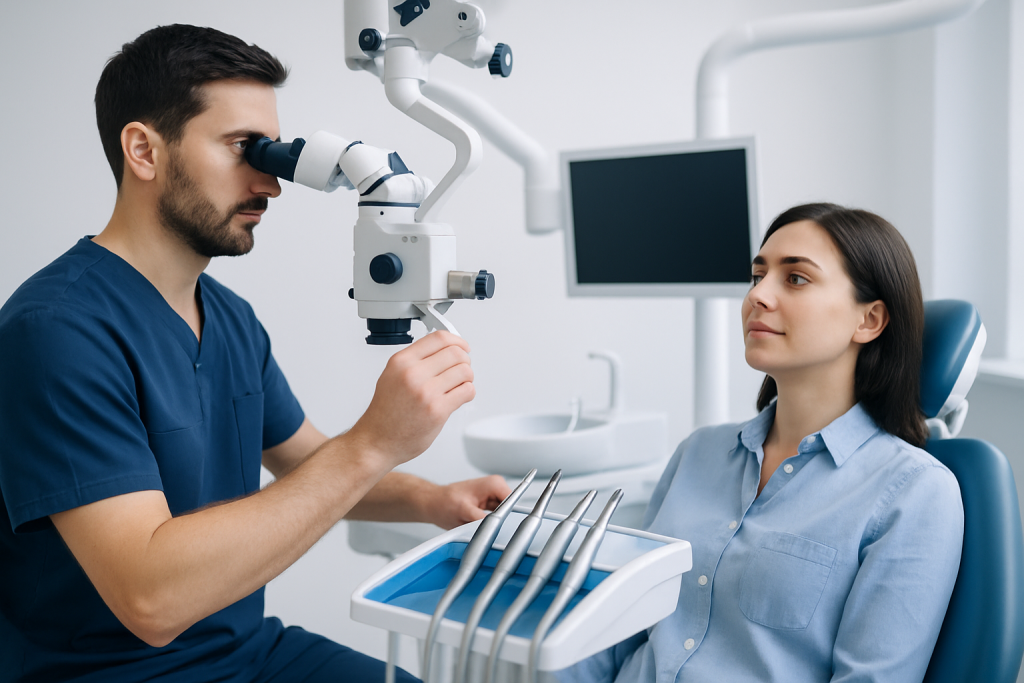
Istanbul is a large metropolitan centre with a dense mix of university hospitals, private hospital groups and specialist dental units. For patients whose plan may evolve — for example, where sinus involvement, bone grafting or a medical condition requires input from another department — being inside a full-service hospital environment can be reassuring. Journey times across the city can be long, so accommodation is usually arranged close to the treating centre.
Antalya is geared towards visitors, with shorter transfer times, a milder climate for much of the year and a compact layout that makes repeated short appointments straightforward. Many UK patients find the setting easier for a first experience of treatment abroad. Seasonal demand is a factor: flights and hotels are busier in summer, and appointment availability can be tighter.
- Flight options: Istanbul offers year-round direct routes from most major UK airports; Antalya has strong seasonal connections with fewer winter options.
- Case complexity: Istanbul’s hospital networks suit multi-specialist or medically complex cases.
- Recovery environment: Antalya is quieter and more compact; Istanbul offers more variety but more travel within the city.
- Repeat visits: Consider how easy the second trip will be at the time of year it will fall.
Neither city guarantees a particular standard by geography alone. Quality varies between individual providers in both places, which is why the selection criteria described below matter more than the postcode.
What Dental Treatment Packages Typically Include
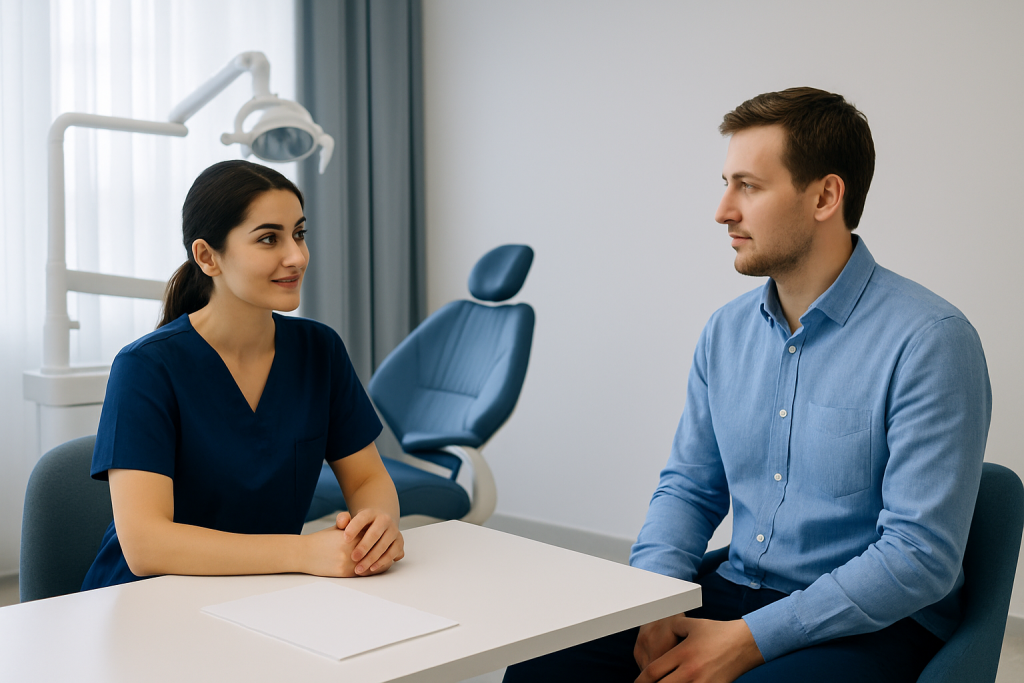
Most Turkish providers present dental care to international patients as a package rather than a list of separate charges. A typical package includes an initial in-person examination, diagnostic imaging, the agreed treatment itself, laboratory work for crowns or bridges, follow-up appointments during the stay, airport transfers, hotel accommodation for the treatment period and interpreter support. Some also include a video consultation before travel and a written post-treatment report.
What is often not included is just as important. Flights are usually excluded. Preparatory treatment discovered on arrival — such as extractions, treatment of gum disease or bone grafting — may be quoted separately, because it cannot always be predicted from photographs sent by email. Travel insurance, extra hotel nights and any second-visit accommodation may also sit outside the headline package.
Before confirming anything, it is reasonable to ask for the package contents in writing, including the number of nights covered, the specific materials proposed, what happens if the plan changes after examination, and what follow-up is offered once the patient has flown home. A coordinator should be able to answer these questions plainly and without pressure.
Understanding Cost Bands Rather Than Fixed Prices
Precise prices cannot responsibly be quoted before a dentist has examined the mouth and reviewed imaging, so it is more useful to think in planning bands. At the lower end sit single restorations such as a crown, veneer or filling. In the middle sit multi-unit work — several crowns, a bridge or a small number of implants. At the upper end sit full-arch or full-mouth implant-supported rehabilitations, which involve surgery, temporary restorations and definitive prosthetics over more than one visit.
Several variables move a case between bands: the number of teeth involved, the material selected for crowns or bridges, whether implants are needed and how many, whether bone or soft-tissue grafting is required, and whether existing dental work must be removed first. Sedation or general anaesthesia, if clinically appropriate, also affects the total. A written, itemised estimate that separates the treatment from the travel elements makes comparison far easier.
UK patients should also budget for the whole journey rather than the dental invoice alone — flights, insurance that covers planned treatment abroad, any additional nights, and possible follow-up care at home. Building a modest contingency into the plan avoids difficult decisions mid-treatment if the examination reveals something unexpected.
Accreditation, Credentials and Vetting a Provider
Accreditation is one of the few objective signals available before travel. Joint Commission International (JCI) accreditation applies to hospitals and healthcare organisations and reflects an externally audited framework covering patient safety, infection control, medication management and record keeping. It does not evaluate an individual dentist’s outcomes, but it does indicate the standard of the institution around the chair. In Turkey, dentists and hospitals are also regulated by the Ministry of Health, and clinicians are registered through the national system.
Alongside accreditation, it is fair to ask about the treating clinician directly: their dental qualification, any postgraduate specialty training in areas such as oral surgery, periodontics or prosthodontics, their professional memberships and how long they have worked with the techniques proposed. Ask who will actually perform the surgery and who will design and fit the restorations, as these are often different people.
- Request a written treatment plan naming the clinician responsible.
- Ask which implant system or restorative materials will be used, and whether documentation is provided.
- Check what happens if a restoration needs adjustment after the patient returns home.
- Be cautious of plans offered without imaging, and of pressure to decide quickly.
Reputable providers are comfortable with questions, offer a second opinion where appropriate, and are clear that outcomes depend on individual anatomy, oral hygiene and healing — never on a promise.
Treatment Timing, Recovery and Planning the Trip
Timing is shaped by the treatment sequence. Purely restorative work such as crowns or veneers is often completed within a single stay of several days, because laboratory work and fitting happen in sequence during the visit. Implant treatment usually requires two stages: surgical placement, then a healing period of several months before the definitive restoration is fitted on a second visit. Some cases allow temporary teeth in between; whether that is suitable is a clinical decision for the treating dentist.
Recovery after oral surgery typically involves some swelling, tenderness and dietary restrictions for a period, and patients are usually advised not to fly immediately after certain procedures. Coordinators plan discharge and departure dates around this guidance rather than around cheap flight availability. Booking flexible tickets, allowing a buffer day before departure and arranging accommodation near the clinic all reduce stress if the schedule shifts.
Practical logistics matter too. UK passport holders should check current entry requirements for Turkey well in advance, arrange travel insurance that explicitly covers planned medical treatment abroad, and travel with a companion where surgery or sedation is involved. Sharing a full medical history — including blood-thinning medication, diabetes, bisphosphonates and smoking status — before travel allows the team to plan safely.
Aftercare Once Back in the UK
Aftercare is the part of dental travel most often underestimated. Before leaving Turkey, patients should collect a complete treatment record: the procedures carried out, imaging, the implant system and restorative materials used with any batch or reference documentation, post-operative instructions and a named contact for questions. This information allows a UK dentist to provide sensible ongoing care and to respond appropriately if an issue arises later.
It is sensible to arrange a check-up with a UK dentist or hygienist after returning, and to be registered with a practice before travelling rather than searching for one afterwards. Some UK dentists are willing to review work performed abroad; others may be limited in what they can do without the original records, which is another reason documentation matters. Routine maintenance — professional cleaning, regular reviews and diligent home hygiene — has a significant bearing on how restorations and implants perform over time.
Most providers offering international dental care maintain remote follow-up by video or messaging for a defined period, and will advise on whether a minor problem can be managed locally or warrants a return visit. Clarifying that process, and any policy on adjustments or remakes, before treatment begins avoids uncertainty later.
When to Speak to a Patient Coordinator
A patient coordinator is worth contacting early — ideally at the research stage, before flights are considered. Their role is to gather the clinical information a dentist needs (photographs, recent imaging, medical history), arrange a remote consultation or second opinion, translate the resulting plan into a realistic itinerary, and set out what a package does and does not cover. They also handle interpreters, transfers, accommodation and, where relevant, guidance on entry formalities.
It is particularly worth speaking to a coordinator when the case is complex, when medical conditions or medications may affect surgery, when time in Turkey is limited, or when a plan received from elsewhere seems unclear. Asking for the plan and estimate in writing, with the clinician named, gives a solid basis for comparison and for discussion with a UK dentist before committing.
Acıbadem Health Point coordinates dental care for international patients across Acıbadem’s JCI-accredited hospitals in Istanbul and Antalya, arranging assessment with multidisciplinary specialists, interpretation, travel logistics and structured follow-up after patients return home. Whichever provider is chosen, a decision made with full information — and with a UK dentist aware of the plan — is the soundest foundation for treatment abroad.
Frequently asked questions
01Is Istanbul or Antalya better for dental implants?
Neither city is inherently better; the difference lies in the individual provider and the case. Istanbul's hospital networks can be helpful for complex implant cases needing input from several specialties, while Antalya suits shorter, more straightforward plans with a compact travel routine. The treating dentist's experience and the quality of the diagnostic assessment matter far more than the city itself.
02How many trips to Turkey does dental treatment usually require?
Crowns, veneers and other restorative work can often be completed within one stay of several days. Implant treatment usually requires two visits separated by a healing period of several months, so that the implants can integrate before the final restorations are fitted. The exact sequence depends on the clinical findings and should be confirmed by the treating dentist before flights are booked.
03What is normally included in a dental package for UK patients?
Packages commonly include the examination, imaging, the agreed treatment, laboratory work, in-stay follow-up appointments, airport transfers, hotel accommodation and interpreter support. Flights, travel insurance and any unforeseen preparatory treatment are usually excluded. It is always worth asking for the inclusions and exclusions in writing before confirming a booking.
04Why can't clinics give an exact price before I travel?
A responsible estimate requires an examination and up-to-date imaging, because the number of teeth involved, the condition of the gums and bone, and the materials chosen all affect the plan. Providers can give indicative cost bands based on photographs and a description, but these may change once a dentist assesses the mouth in person. Any figure quoted remotely should be treated as planning guidance rather than a fixed quotation.
05Does JCI accreditation mean my dental treatment will be successful?
No accreditation can promise a particular clinical outcome. JCI accreditation indicates that a hospital or healthcare organisation has been externally audited against international standards for patient safety, infection control and record keeping, which is a useful selection criterion. Outcomes still depend on the individual case, the clinician's expertise, healing and long-term oral care.
06What should I do if a problem develops after I return to the UK?
Contact the treating provider's coordinator promptly, as most offer remote follow-up and can advise whether the issue can be managed locally or needs review. Having a UK dentist and a complete set of treatment records — including details of implants and materials used — makes local assessment much easier. For pain, swelling, fever or bleeding, seek dental or medical care in the UK without delay.
07When is the best time to contact a patient coordinator?
Ideally at the research stage, before booking flights or accommodation. A coordinator can arrange a remote consultation or second opinion, explain what a package covers, and build an itinerary around the clinical timeline rather than travel bargains. Early contact also allows time to share medical history so that the team can plan safely.
This article is for general information only and is not a substitute for professional medical advice. Please consult a qualified doctor about your individual situation.
Explore treatments in Turkey — costs, top hospitals & a free quote
JCI-accredited · board-certified surgeons · reply within 24h
Add us as a Preferred Source to see more of our trusted health content across Google Search, AI Overviews and Discover.