Best Knee Replacement Manufacturers: What Matters
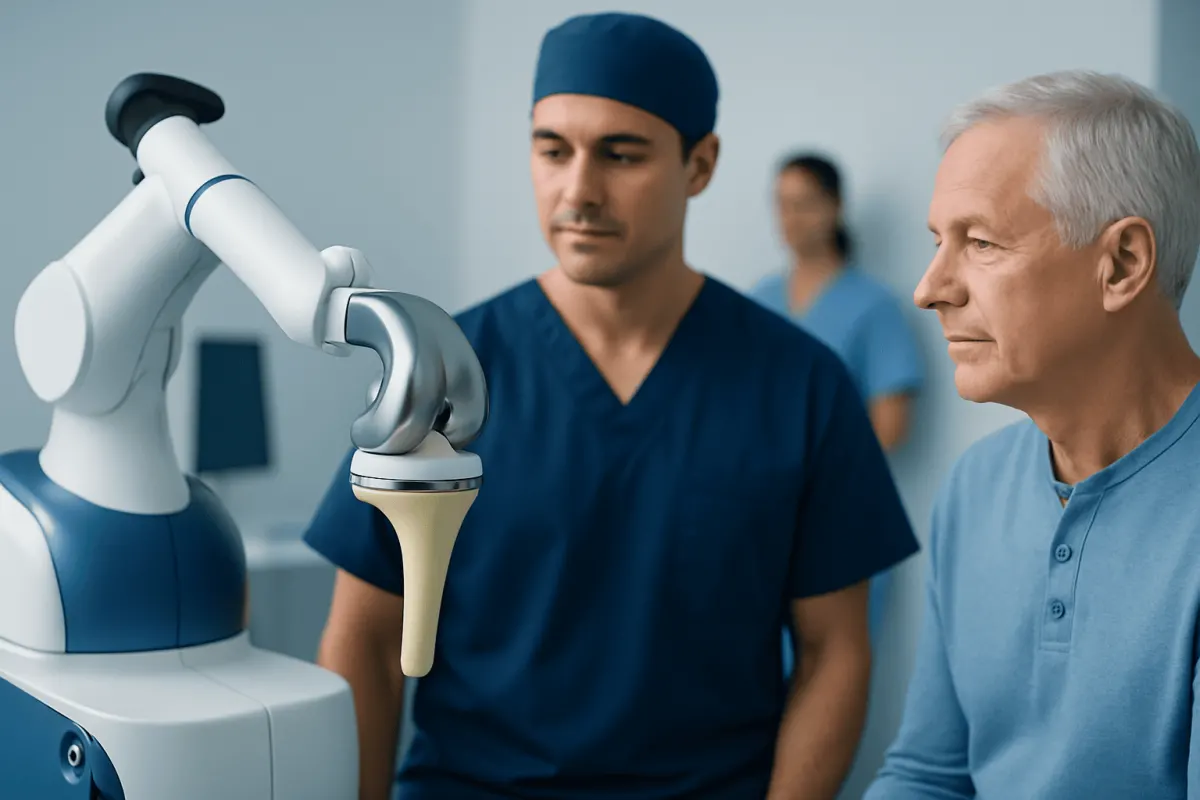
The best knee replacement manufacturers offer well-studied implant systems, but there is no single best brand for every person. A safe choice depends most on the patient’s anatomy, diagnosis, activity needs, implant track record, surgeon experience and access to rehabilitation and follow-up.
Overview: choosing among knee replacement manufacturers
Best knee replacement manufacturers cannot be ranked with one universal winner. Several established manufacturers produce widely used knee implant systems, and the safest choice is usually the implant that fits the individual’s knee, bone quality, diagnosis and lifestyle needs, and that is used regularly by an experienced orthopedic surgeon.
Knee replacement, also called knee arthroplasty, replaces damaged joint surfaces with prosthetic components. It may involve the entire knee (total knee replacement) or only one damaged part of the joint (partial knee replacement). The aim is to reduce pain, improve everyday movement and support independence when symptoms from arthritis or joint damage remain limiting.
Manufacturer information is useful, but it should not replace a clinical discussion. Patients can ask which system is proposed, why it suits their situation, how often the surgeon uses it and what rehabilitation will involve. National joint registries and long-term clinical evidence also help clinicians monitor implant performance over time.
What is the highest rated knee replacement?
There is no single knee replacement that is highest rated for all patients. Outcomes are measured in different ways, including implant survival, need for revision surgery, pain relief, range of motion, stability and patient-reported quality of life. A model that performs very well in one group may not be the best match for another person.
In general, established total knee systems with long-term registry data are often preferred when they are appropriate for the patient. However, a favorable rating or strong registry performance does not guarantee an individual outcome. Surgical technique, accurate alignment, infection prevention, health conditions, rehabilitation and adherence to recovery guidance all influence results.
Patients should be cautious about claims that a new technology, a particular material or a customized implant is automatically superior. Innovations can be helpful in selected cases, but they need appropriate evidence and should be considered alongside proven options. An orthopedic surgeon can explain whether a specific feature has a clear reason in that person’s treatment plan.
What is the gold standard for knee replacement?

For advanced <a href="https://acibademhealthpoint.com/diseases/knee-osteoarthritis/”>knee osteoarthritis affecting more than one part of the joint, conventional total knee replacement with established implant designs remains the reference treatment. It has extensive clinical experience and long-term outcome data. The procedure is generally considered after symptoms continue to affect daily life despite suitable non-surgical measures.
The “gold standard” is not a single manufacturer or implant model. Rather, it is a careful process: confirming the source of knee symptoms, considering non-surgical treatment first where appropriate, selecting a well-supported implant design, performing surgery precisely and providing structured rehabilitation.
For arthritis confined to one compartment of the knee, partial knee replacement may be an option for carefully selected patients. In other situations, physical therapy, weight management where relevant, activity modification, walking aids, medicines or injections may help manage symptoms. Osteoarthritis is a common reason for knee replacement, but knee pain should be assessed because it can have more than one cause.
Which knee replacement brand is best?
No brand is objectively best for every knee. Major manufacturers offer a range of implant sizes, shapes, fixation methods and bearing options. A surgeon may favor particular systems because they offer reliable instrumentation, fit a broad range of anatomy and have strong evidence and registry follow-up.
Instead of focusing only on a brand name, patients can ask practical, clinically relevant questions. These include whether the implant has long-term outcome data, why its design is suitable for their anatomy, whether it is cemented or cementless and why, and what alternatives could reasonably be considered. It is also reasonable to ask whether the surgeon has experience with the proposed system.
Implant choice should be personalized. Factors can include the pattern and severity of arthritis, knee alignment, ligament stability, previous surgery, bone quality, body size, activity goals, allergies that need evaluation and the possibility of future revision surgery. The best plan is one developed through shared decision-making rather than advertising or online rankings.
- Ask for the full name and model of the proposed implant.
- Ask what evidence supports its use in patients with similar needs.
- Discuss expected recovery, rehabilitation and realistic activity goals.
- Ask how complications and long-term follow-up would be managed.
What is the difference between Stryker knee and Zimmer knee?
Stryker and Zimmer Biomet are both major orthopedic device manufacturers that offer multiple knee replacement systems. Neither name refers to one single implant. Each company’s product portfolio includes different designs for total and partial knee replacement, with variations in component geometry, sizes, instrumentation, fixation options and, in some settings, technologies intended to support surgical planning or alignment.
For a patient, the clinically important question is usually not “Stryker or Zimmer?” but “Which specific implant and surgical approach are suitable for my knee, and why?” Two surgeons may reasonably recommend different systems based on their training, experience and the patient’s anatomy. Both can be appropriate when selected carefully and used according to evidence-based practice.
It is helpful to discuss features without assuming that one is inherently better. For example, fixation may involve bone cement, biologic fixation in selected patients or a combination of approaches. The surgeon can explain the expected advantages and limitations for the individual, as well as what is known about the implant’s performance from registries and published research.
How clinicians choose an implant and plan treatment
Assessment begins with a history of symptoms, examination of knee movement and stability, and imaging such as X-rays. The care team evaluates how pain affects walking, sleep, work and daily tasks. They also consider overall health, medicines, smoking status, blood sugar control, weight, previous operations and infection risk, because optimizing these factors can support safer surgery and recovery.
If knee replacement is appropriate, the surgeon selects components that can restore joint alignment and stability while preserving or balancing the surrounding soft tissues. Implant availability alone should not determine care. The proposed device should be suitable for the patient and supported by the surgical team’s expertise and the hospital’s follow-up processes.
Patients should understand that replacement surgery carries risks, including blood clots, infection, stiffness, ongoing pain, nerve or blood vessel injury, instability and the possible need for further surgery. These complications are not inevitable, and the team takes steps to reduce risk, but informed consent means discussing them openly. Knee replacement surgery should include a clear preparation, recovery and rehabilitation plan.
Recovery, self-care and protecting the new knee
Rehabilitation is a central part of knee replacement recovery. Early guided movement and exercises help restore strength, flexibility and confidence with walking. Recovery speed varies between individuals, and improvement often continues over months. The care team will provide instructions for wound care, pain management, activity progression and use of mobility aids.
Before and after surgery, healthy habits can support recovery. These may include attending physiotherapy, following exercise advice, eating a balanced diet, managing long-term conditions and avoiding tobacco. Low-impact activities such as walking, cycling, swimming or clinician-approved strength exercises are often useful after recovery, while recommendations for high-impact sports should be individualized.
Regular follow-up allows clinicians to monitor function and address concerns. Patients should not compare their recovery too closely with someone else’s, because pain levels, strength, health conditions and the type of procedure differ. If a new symptom develops, it is safer to contact the treating team than to change medicines or activity independently.
When to seek medical care
A person should arrange a medical assessment for knee pain that persists, repeatedly swells, limits walking or sleep, causes the knee to give way, or does not improve with appropriate self-care. Evaluation is particularly important when symptoms interfere with work, independence or important daily activities. An orthopedic specialist can determine whether the cause is arthritis, injury or another condition and discuss suitable treatment options.
Urgent medical attention is needed for a hot, very swollen or red knee with fever, severe pain after an injury, inability to bear weight, a visibly deformed joint, new calf swelling or sudden shortness of breath. These symptoms can require prompt assessment and should not be managed solely at home.
For people considering surgery, a second orthopedic opinion can be helpful when there is uncertainty about the diagnosis, the recommended procedure or implant choice. Acıbadem Health Point’s multidisciplinary specialists and JCI-accredited hospitals diagnose and treat knee conditions for international patients, with care plans guided by clinical assessment and rehabilitation needs.
Frequently asked questions
01How do I choose a knee replacement manufacturer safely?
A patient does not usually need to select a manufacturer independently. The safer approach is to choose an experienced orthopedic team and discuss the specific implant proposed, its evidence base and why it fits the patient’s anatomy and treatment goals. Asking about follow-up and rehabilitation is also important.
02Do more expensive knee implants work better?
Cost alone does not show whether an implant is better for a particular patient. Appropriate fit, established clinical evidence, careful surgery and rehabilitation are more meaningful factors. A surgeon can explain whether a recommended implant feature is likely to offer a relevant benefit.
03How long does a knee replacement usually last?
Many knee replacements function well for many years, but longevity varies between individuals and implant systems. Age, activity level, body weight, surgery quality, infection and other health factors can affect durability. Follow-up with the orthopedic team helps monitor the replacement over time.
04Is a robotic knee replacement better than a standard knee replacement?
Robotic or computer-assisted tools can help with planning and bone preparation in some operations, but they are not automatically better for every person. The value depends on the patient, the system used and the surgeon’s experience. Long-term outcomes and the overall treatment plan should be discussed rather than relying on technology alone.
05Can a partial knee replacement be better than a total knee replacement?
Partial knee replacement may be suitable when arthritis is limited to one part of the knee and the ligaments and other joint areas are in good condition. It is not appropriate for everyone. A clinical examination and imaging help determine whether partial or total replacement is more suitable.
06What should I ask my surgeon before knee replacement?
Patients can ask about the diagnosis, non-surgical alternatives, the type of replacement recommended and the specific implant system. They may also ask about expected recovery, rehabilitation, possible complications and the surgeon’s experience with the procedure. Clear answers can support informed shared decision-making.
This article is for general information only and is not a substitute for professional medical advice. Please consult a qualified doctor about your individual situation.
Joint and spine care in Turkey — expert assessment & treatment
JCI-accredited · board-certified surgeons · reply within 24h
Add us as a Preferred Source to see more of our trusted health content across Google Search, AI Overviews and Discover.