

Best Invisalign Dentist: Choosing an Orthodontic Provider
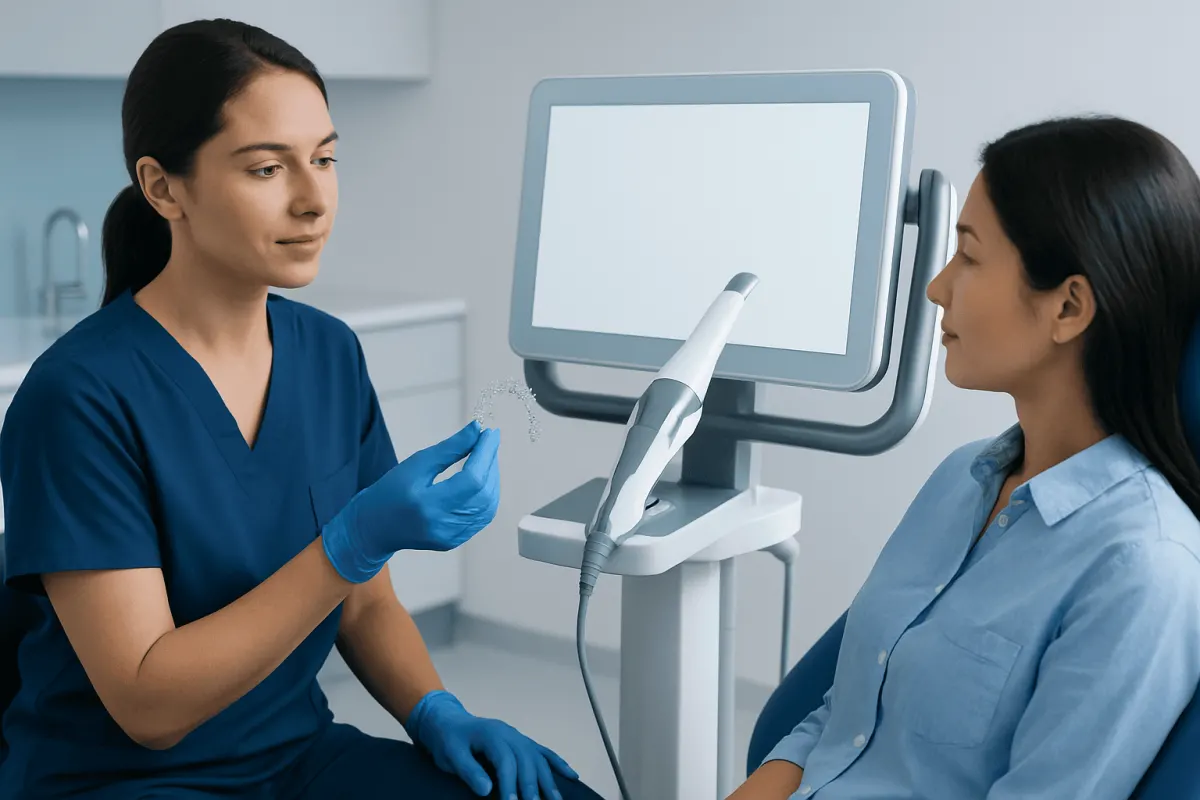
The best Invisalign dentist is not defined by advertising claims or social-media results, but by appropriate orthodontic training, careful diagnosis, transparent planning, and regular monitoring. Clear aligner treatment can be effective for many bite and alignment concerns when it is selected and supervised safely.
Overview: Choosing the Best Invisalign Dentist Safely
The best Invisalign dentist is a licensed dental professional with relevant orthodontic experience who evaluates the whole mouth and bite, confirms that clear aligners are appropriate, and follows progress throughout treatment. Rather than relying on rankings, before-and-after photographs, or terms such as “top provider,” patients can focus on clinical credentials, a complete consultation, clear explanations, and access to follow-up care.
Invisalign is a brand of clear removable aligners used to correct selected tooth-position and bite problems. The aligners are custom-made and changed in sequence to guide teeth gradually. Treatment may be provided by an orthodontist or by a general dentist with suitable training and experience; the most appropriate choice depends on the complexity of the individual case.
Clear aligners may appeal to people because they are discreet and removable, but they are still an orthodontic treatment. A safe plan begins with accurate diagnosis and includes monitoring for tooth movement, gum health, bite changes, and aligner fit. Patients considering Invisalign treatment should expect an individualized discussion rather than a one-size-fits-all promise.
What Invisalign Does and How It Works
Clear aligners are thin, transparent trays that fit closely over the teeth. Each set is designed to apply gentle pressure to specific teeth. As teeth move, the patient progresses through a planned series of aligners, usually wearing them for most of the day and removing them for eating, drinking anything other than water, and brushing and flossing.
A digital scan or dental impression is used to create a model of the teeth. The clinician uses this information, along with the bite assessment and imaging where needed, to plan movement in stages. Small tooth-colored attachments may be bonded to some teeth to help aligners grip and deliver particular movements. In some situations, small spaces between teeth may be created carefully to allow movement, or elastic bands may be used to improve bite relationships.
Not every movement is equally predictable with removable aligners. Rotated teeth, major bite discrepancies, significant crowding, teeth that need to move vertically, and jaw-related bite concerns can require additional techniques or conventional braces. A responsible clinician explains what aligners can realistically achieve, whether refinements may be needed, and what alternatives are available.
Who Is a Good Candidate?

Clear aligners can be appropriate for many teenagers and adults with mild to moderate crowding, spacing, or certain bite concerns. They may also be used in more complex cases when planned by an experienced orthodontic clinician and combined with attachments, elastics, or other methods. Suitability depends on tooth position, bite function, gum health, bone support, oral hygiene, and the person’s ability to wear aligners consistently.
Before starting, active tooth decay, untreated gum disease, dental infection, and poorly fitting restorations should be addressed. People with gum recession, loose teeth, a history of periodontal disease, jaw discomfort, or previous orthodontic treatment may still be candidates, but they need a tailored assessment and may need care from other dental specialists first. For related gum concerns, patients may benefit from evaluation of gum disease before orthodontic tooth movement begins.
Commitment is a practical part of candidacy. Aligners work only when worn as prescribed, and they must be kept clean and stored safely when removed. For people who may struggle to keep aligners in place consistently, fixed braces may offer a more reliable treatment approach. A clinician should discuss daily routines, travel, sports, school or work demands, and any concerns about compliance before finalizing a plan.
How to Assess Invisalign Dentists and Orthodontists
When comparing the best Invisalign orthodontists or dentists for an individual situation, patients can begin by confirming professional licensing and asking about orthodontic education and experience with clear aligners. An orthodontist is a dentist who has completed additional specialist training in orthodontics. A general dentist may also provide aligner care, particularly for straightforward cases, but should be able to recognize when specialist referral is appropriate.
A high-quality consultation should include more than a quick scan and a projected smile image. The clinician should examine the teeth and gums, assess how the jaws and teeth meet, review relevant health and dental history, and use X-rays or other imaging when clinically indicated. They should discuss the limits of simulation software, because a digital preview is a planning aid rather than a guarantee of an exact final result.
Useful questions include who will oversee treatment, how often progress will be checked, what happens if aligners do not fit or teeth do not track as expected, and whether retainers are included in the long-term plan. Patients should feel able to ask why aligners are recommended over braces, what treatment alternatives exist, and what risks apply to their own teeth and gums. The best Invisalign services prioritize informed decisions and continuity of care rather than speed or promotional claims.
- Look for a comprehensive oral and bite examination before treatment starts.
- Ask how the clinician manages complex cases and when they involve an orthodontist or other specialist.
- Confirm the planned follow-up schedule and how urgent concerns can be handled.
- Request clear information about retainers and maintaining results after active treatment.
The Treatment Process and Recovery Timeline
The first stage is consultation and diagnosis. After the examination, the clinician may take photographs, digital scans, and dental X-rays. If clear aligners are suitable, a treatment plan is developed and the aligners are manufactured. At the fitting visit, the clinician checks the first aligner, places attachments if required, explains cleaning and wear instructions, and schedules review appointments.
During active treatment, patients change aligners according to the clinician’s instructions and attend regular in-person or remote reviews when offered as part of supervised care. Mild pressure or temporary tenderness is common when starting a new set, especially for the first few days. Speech can feel slightly different initially, but most people adapt as they become accustomed to wearing the trays.
There is generally no surgical recovery period with clear aligners, and most daily activities can continue immediately. Treatment duration varies substantially with the starting tooth positions, bite goals, treatment adherence, and whether refinements are necessary. After the planned movement is complete, retainers are important because teeth can gradually shift over time. The clinician will advise on the type of retainer and the recommended wear schedule.
Benefits, Risks, and Safe Self-Care
Potential benefits of clear aligners include their subtle appearance, removability for meals and oral hygiene, and the ability to plan tooth movement digitally. Because the trays can be removed, patients can brush and floss more normally than with fixed braces. However, removability is only an advantage when the aligners are worn consistently and handled carefully.
Possible side effects and complications include temporary discomfort, mouth irritation, changes in speech during adaptation, broken or lost aligners, and difficulty maintaining the planned movement if wear is inconsistent. Orthodontic treatment can also reveal or contribute to bite changes, gum irritation, root shortening in susceptible individuals, or relapse after treatment if retainers are not used. These risks are uncommon or manageable for many patients, but should be discussed before treatment begins.
Online searches for “best Invisalign hacks” often promote shortcuts such as heating trays, trimming them without advice, skipping ahead to the next set, or wearing aligners less than recommended. These approaches can damage the aligner, reduce treatment control, and increase the chance that teeth do not move as planned. The safest self-care is to follow the clinician’s instructions, clean aligners with suitable products, brush and floss before replacing them, avoid exposing them to heat, and store them in their case whenever they are out of the mouth.
When to Seek Medical Care
Patients should contact their dental clinician promptly if an aligner cracks, is lost, causes a sharp injury, no longer fits properly, or if a tooth seems to be moving in an unexpected way. Early advice can help prevent treatment delays and may clarify whether the current aligner should be continued, replaced, or adjusted.
Professional assessment is also important for significant tooth pain, persistent gum bleeding or swelling, pus, a loose tooth, facial swelling, fever, or difficulty swallowing or breathing. Severe facial swelling, breathing difficulty, or trouble swallowing requires urgent emergency care. These symptoms may indicate an infection or another issue that should not be managed with aligners alone.
Acıbadem Health Point’s multidisciplinary dental specialists and JCI-accredited hospitals can assess orthodontic needs and coordinate care for international patients. A qualified clinician can help determine whether clear aligners, braces, periodontal treatment, restorative care, or a combined approach is most suitable.
Frequently asked questions
01How can someone find the best Invisalign dentist?
The best Invisalign dentist for a person’s needs is a licensed clinician who completes a full dental and bite assessment, explains the expected benefits and limits, and provides regular follow-up. Patients can ask about orthodontic training, experience with similar cases, the monitoring plan, and how problems such as poor aligner fit will be managed. A consultation should feel informative and individualized rather than rushed.
02Is an orthodontist better than a general dentist for Invisalign?
Orthodontists have additional specialist training in moving teeth and correcting bite problems, which can be particularly valuable for complex cases. General dentists with appropriate aligner training and experience may treat straightforward cases successfully. The important factor is whether the clinician has the skills to assess the case properly and refer when specialist care is needed.
03How many hours a day should Invisalign aligners be worn?
Clear aligners are usually intended to be worn for most of the day, often around 20 to 22 hours, but the exact instructions come from the treating clinician. They are normally removed for meals, drinks other than water, and oral hygiene. Wearing them less than advised can delay movement and affect the final result.
04Does Invisalign hurt?
Pressure, tenderness, or mild discomfort is common when starting treatment or changing to a new aligner set. This usually improves within a few days as the mouth adjusts. Severe pain, persistent soreness, or an aligner that cuts the gums should be reviewed by the dental clinician.
05Can Invisalign fix every type of bite problem?
Invisalign can treat many alignment and bite concerns, but it is not the best choice for every situation. The complexity of tooth movement, jaw relationship, gum health, and the patient’s ability to wear aligners consistently all matter. Some people may benefit more from fixed braces, additional dental treatment, or a combined orthodontic plan.
06What happens after Invisalign treatment is finished?
Retainers are used after active treatment to help hold teeth in their new positions. Without retention, teeth can move over time, even after a successful orthodontic result. The clinician will recommend the appropriate retainer type and wear schedule based on the individual case.
This article is for general information only and is not a substitute for professional medical advice. Please consult a qualified doctor about your individual situation.
Explore treatments in Turkey — costs, top hospitals & a free quote
JCI-accredited · board-certified surgeons · reply within 24h
Add us as a Preferred Source to see more of our trusted health content across Google Search, AI Overviews and Discover.


