Best Hair Loss Products for Women: What Helps
The best hair loss products for women are those matched to the cause of shedding or thinning, with topical minoxidil being the most established nonprescription option for many women with female-pattern hair loss. A dermatologist can help distinguish this common condition from temporary shedding, nutritional deficiencies, hormonal changes, scalp disease, or other medical causes that need different treatment.
Overview: choosing hair loss products safely
The best hair loss products for women depend on why hair is becoming thinner. For many women with gradual widening of the part or reduced hair density over the crown, topical minoxidil is the product with the strongest evidence for helping maintain and, in some cases, improve hair growth. It is not the right answer for every type of hair loss, so choosing safely begins with identifying the likely cause.
Hair shedding can increase after illness, childbirth, major stress, rapid weight change, surgery, restrictive dieting, or a medication change. Other causes include female-pattern hair loss, iron deficiency, thyroid disorders, inflammatory scalp conditions, traction from tight hairstyles, and autoimmune hair loss. Products sold online may make broad promises, but a product cannot correct a hormonal, nutritional, inflammatory, or medical cause on its own.
It is also helpful to separate hair shedding from hair thinning. Shedding means more hairs than usual are released from the scalp, often temporarily. Thinning describes a gradual reduction in the number or diameter of visible hairs. Both can occur together, and an assessment by a qualified clinician can guide the safest plan.
What is the most effective product for stopping hair loss in women?
For many women with female-pattern hair loss, topical minoxidil is the most effective widely available product for slowing further thinning and supporting regrowth. It is applied directly to the scalp, not the hair shaft, and is available in different formulations. A clinician or pharmacist can help a woman choose an appropriate formulation and explain how to use it correctly.
Minoxidil works gradually. Some people notice temporary increased shedding during the early weeks as follicles shift into a new growth cycle; this does not necessarily mean the treatment is failing. Visible benefit usually requires consistent use for several months, and continued use is generally needed to preserve results. Stopping treatment can allow the underlying pattern of thinning to resume.
Minoxidil may irritate the scalp or cause unwanted facial hair growth if it transfers beyond the scalp. Women who are pregnant, trying to conceive, or breastfeeding should seek medical advice before using it. A healthcare professional should also assess sudden or unexplained shedding rather than assuming that over-the-counter treatment is appropriate.
What is the most effective product for women to treat hair loss?
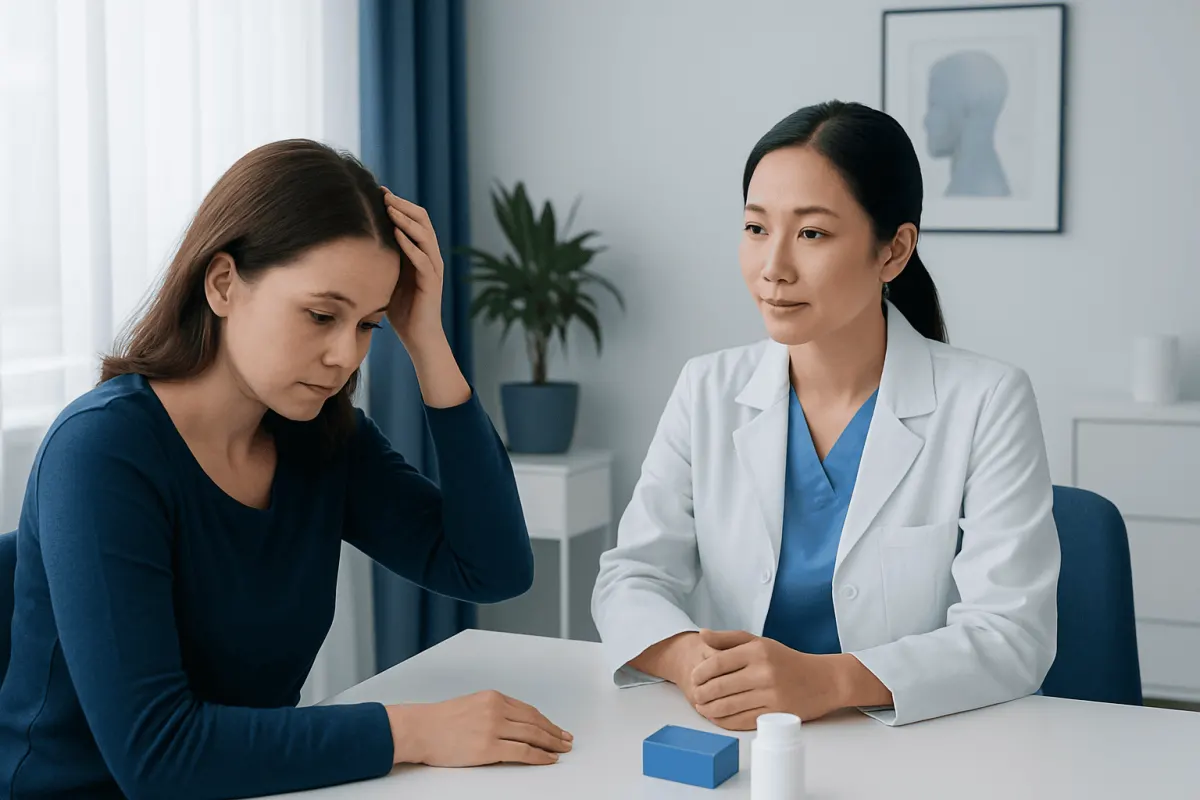
The most effective product is the one that treats the diagnosed cause. Topical minoxidil is commonly recommended for female-pattern hair loss, but it may not be sufficient for other conditions. For example, low iron stores, thyroid disease, scalp inflammation, fungal infection, or a medication-related change requires targeted care rather than simply adding a cosmetic hair product.
A dermatologist may recommend prescription treatment for selected women with female-pattern hair loss, particularly when topical treatment alone is not enough or is not tolerated. Depending on an individual’s health history, this may include medicines that influence hormonal pathways or low-dose oral minoxidil. These options require medical supervision because they can have side effects and are not suitable for everyone.
Women with clearly defined bald patches, broken hairs, scaling, pain, or itching may have a different disorder, such as alopecia areata or a scalp condition. Early evaluation is especially valuable where inflammation may damage follicles. A specialist can also discuss appropriate medical and procedural options for hair transplant treatment when hair loss has become stable and a person is a suitable candidate.
What do dermatologists recommend for female hair loss?
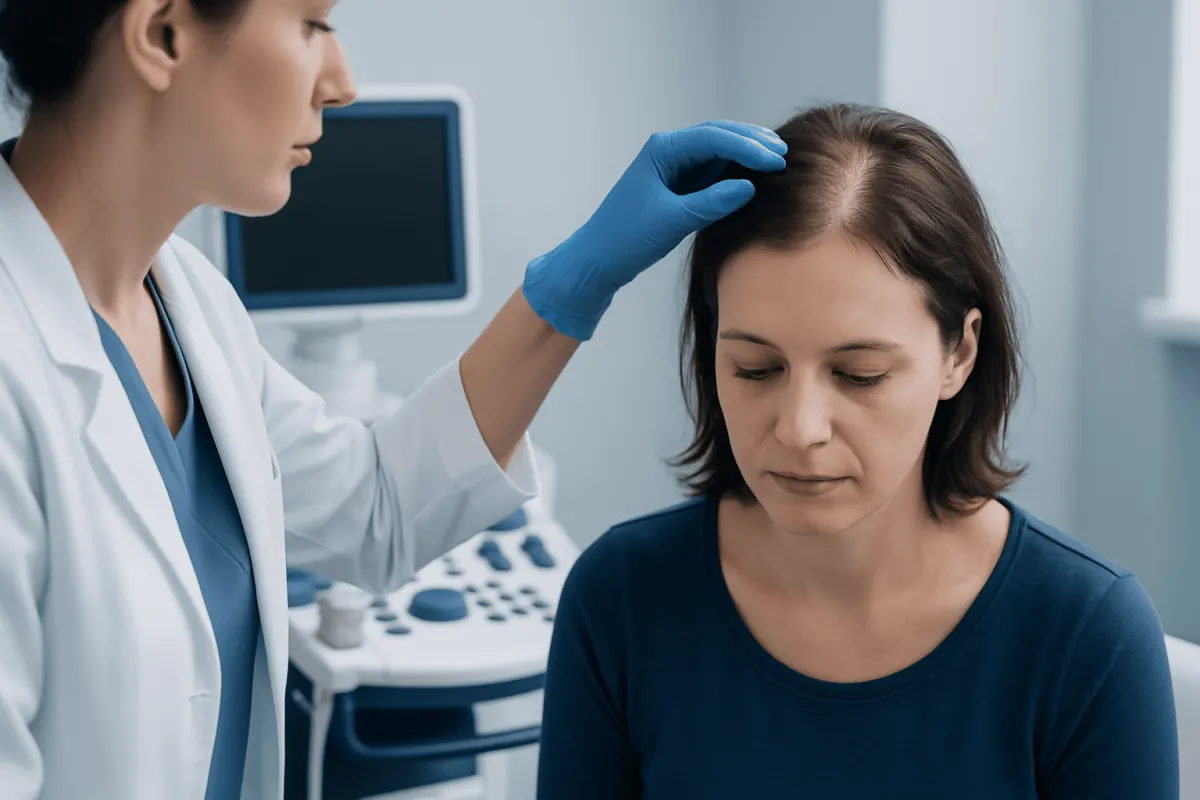
Dermatologists usually start by taking a detailed history and examining the scalp and hair pattern. They may ask about recent illness, childbirth, menstrual changes, diet, weight changes, family history, hair practices, medications, and symptoms such as fatigue or changes in skin and nails. Blood tests may be considered when the history suggests iron deficiency, thyroid dysfunction, nutritional deficiency, hormonal imbalance, or another medical contributor.
For female-pattern hair loss, dermatologists commonly recommend topical minoxidil as a first-line option, together with regular follow-up to assess progress and side effects. They may suggest photos taken under similar lighting over time, since day-to-day changes are difficult to judge. If there is significant shedding, the clinician will also look for a trigger and explain whether it is likely to settle after the trigger resolves.
Dermatologists also encourage scalp-friendly routines: avoid tight braids, ponytails, extensions, and chemical or heat practices that cause breakage or traction; use gentle detangling; and treat dandruff or scalp inflammation when present. If the clinical pattern suggests an autoimmune form of loss, evaluation for alopecia areata may be needed because management differs from female-pattern thinning.
What are the big 3 for thinning hair?
The phrase “big 3” is commonly used online for a combination of minoxidil, finasteride, and ketoconazole shampoo. This phrase mainly comes from discussions of male-pattern hair loss and should not be treated as a universal or self-directed plan for women. The best combination for a woman depends on the cause of her thinning, reproductive plans, other medicines, and overall health.
Topical minoxidil has a well-established role for many women with female-pattern hair loss. Finasteride is a prescription medicine and may be considered only in selected cases under specialist care; it has important pregnancy-related safety considerations and is not appropriate for many women. Ketoconazole shampoo can be useful when dandruff or seborrheic dermatitis is present, but it is not a proven stand-alone hair-regrowth treatment.
Rather than building a regimen around a social-media formula, women should seek an individualized plan. A dermatologist may recommend one treatment, a combination, or treatment of an underlying condition. Adding multiple products at once can cause irritation, makes side effects harder to identify, and may add expense without improving outcomes.
How to assess shampoos, supplements and cosmetic products
Volumizing shampoos, conditioners, fibers, sprays, and styling products can make hair appear fuller by reducing breakage or coating the hair shaft. These may be useful for confidence and day-to-day styling, but they do not usually change the biological cause of hair loss. A gentle shampoo is often a sensible choice, especially for an irritated scalp, but no shampoo should be expected to regrow hair simply because its label says “anti-hair loss.”
Supplements are most helpful when a clinician confirms or strongly suspects a deficiency. Iron, vitamin D, zinc, protein, and other nutrients are important for normal hair growth, but taking high doses without guidance can be ineffective or harmful. Biotin is often marketed for hair, yet deficiency is uncommon and biotin supplements can interfere with some laboratory tests, including certain thyroid and heart-related tests.
Before buying a product, women can check whether it names an active ingredient, explains its intended use, gives realistic expectations, and includes clear safety information. Products that promise rapid permanent regrowth, claim to work for every cause of hair loss, or replace medical evaluation deserve caution. Patch testing a new scalp product may help identify irritation, but persistent redness, burning, or scaling should be reviewed by a clinician.
Prevention and self-care for healthier hair
Not every form of hair loss can be prevented, especially when genetic or hormonal factors are involved. However, a balanced diet with adequate protein and varied nutrient sources supports normal hair production. Women considering a restrictive diet, managing heavy menstrual bleeding, or recovering from illness may benefit from discussing nutrition and testing needs with a clinician.
Practical hair care can reduce avoidable breakage. This includes limiting hairstyles that pull firmly on the roots, reducing frequent high-heat styling and harsh chemical processing, using conditioner on the hair lengths, and detangling gently. These steps protect existing hair but should be combined with medical treatment when a hair-loss disorder is present.
Stress management, sleep, and treatment of scalp symptoms can support overall wellbeing and hair care. It is important to set realistic expectations: hair grows slowly, and recovery after temporary shedding may take several months. Keeping a simple record of shedding, new products, illnesses, and medication changes can help a clinician identify patterns.
When to seek medical care
A woman should arrange medical assessment for sudden or rapidly worsening hair loss, distinct bald patches, loss of eyebrows or eyelashes, scalp pain, burning, marked itch, redness, scaling, or pus-filled bumps. Care is also important if hair loss begins after a new medicine, follows a major illness, or occurs with fatigue, weight changes, irregular periods, acne, excess facial hair, or other new symptoms.
Prompt assessment is particularly important when hair loss may reflect scarring or significant scalp inflammation, as early treatment may help protect follicles. A doctor or dermatologist can examine the scalp, review health history, consider relevant tests, and explain which treatment options have a reasonable evidence base for the individual.
Acıbadem Health Point’s multidisciplinary specialists and JCI-accredited hospitals diagnose and treat hair and scalp concerns for international patients. The aim is to clarify the cause first, then develop a plan that is appropriate, safe, and practical for long-term use.
Frequently asked questions
01Can women use minoxidil for hair loss?
Many women can use topical minoxidil for female-pattern hair loss, and it is commonly recommended by dermatologists. It should be applied as directed to the scalp and used consistently for several months before results can be assessed. Women who are pregnant, planning pregnancy, or breastfeeding should ask a healthcare professional before using it.
02Do hair loss shampoos work for women?
Hair loss shampoos may improve scalp comfort, reduce dandruff, or make hair look fuller, but most do not regrow hair on their own. A medicated shampoo may be useful when a scalp condition is contributing to shedding or breakage. Persistent thinning should be evaluated rather than treated with shampoo alone.
03Are hair vitamins worth taking for female hair loss?
Hair vitamins can be helpful when testing or dietary assessment identifies a nutrient deficiency. Taking supplements without a known need is less likely to improve hair growth and may cause side effects or interfere with laboratory tests. A clinician can advise whether testing for iron, thyroid function, or other contributors is appropriate.
04How long does it take to see results from hair loss treatment?
Hair grows slowly, so meaningful changes often take several months. With topical minoxidil, consistent use is usually needed before improvement can be judged, and results vary between individuals. Taking comparable photographs over time can make gradual progress easier to notice.
05Can stress cause hair loss in women?
Physical or emotional stress can contribute to temporary increased shedding, often several weeks to months after the trigger. Illness, surgery, childbirth, rapid weight loss, and major life events can have a similar effect. If shedding is substantial, prolonged, or accompanied by scalp symptoms, a clinician should assess for other causes.
06When is female hair loss a medical concern?
Medical advice is recommended for sudden hair loss, patches of baldness, scalp discomfort or inflammation, and progressive thinning that does not improve. It is also important to seek care when hair loss occurs with fatigue, menstrual changes, weight changes, or other new symptoms. Identifying the cause early can help guide effective treatment.
This article is for general information only and is not a substitute for professional medical advice. Please consult a qualified doctor about your individual situation.
Hair transplant in Turkey — costs, graft counts & a free assessment
JCI-accredited · board-certified surgeons · reply within 24h
Add us as a Preferred Source to see more of our trusted health content across Google Search, AI Overviews and Discover.