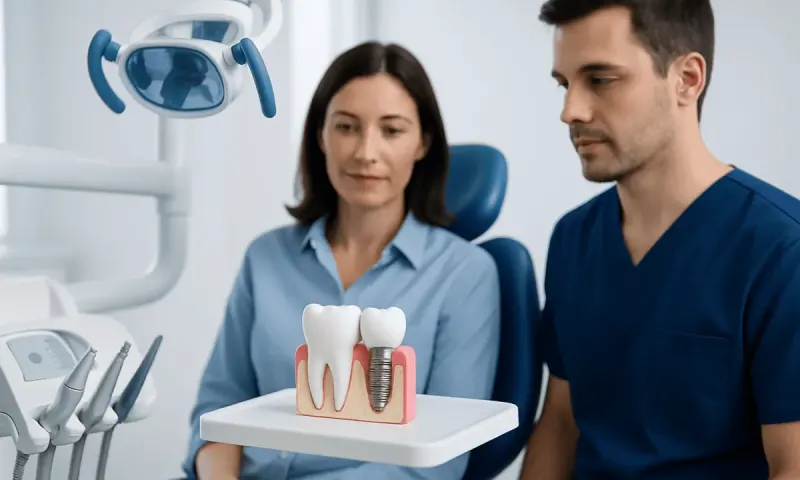
Best Dental Implant Surgeon: Signs of Qualified Care

The best dental implant surgeon is not defined by advertising claims or location alone, but by verified training, relevant experience, careful treatment planning and a transparent approach to risks and follow-up. A safe choice starts with a comprehensive assessment of oral health, bone support, medical history and long-term restorative needs.
Overview: what makes the best dental implant surgeon?
The best dental implant surgeon is a clinician with appropriate professional qualifications, experience placing implants in situations similar to the patient’s, and a careful process for planning, performing and reviewing treatment. Rather than relying on claims such as the “best dental implant surgeon in USA,” the “best dental implant surgeon in the world” or the “best dental implant surgeon in Mexico,” patients can compare objective factors: training, credentials, diagnostic approach, communication, infection-control standards and access to follow-up care.
A dental implant is a small biocompatible post, usually made of titanium, placed in the jawbone to replace a missing tooth root. After it integrates with the bone, it can support a crown, bridge or removable denture. Implant care often involves a team that may include a general dentist, periodontist, oral and maxillofacial surgeon, prosthodontist and dental hygienist.
The best dental implant procedure is therefore not one identical technique for every person. It is an individual plan that considers the missing tooth or teeth, gum health, bite, jawbone volume, health conditions, appearance goals and the ability to maintain the implant over time. Dental implant treatment should begin with a consultation rather than a decision based on a single scan, promotion or before-and-after image.
How to choose a dental implant surgeon?
Patients should first confirm who will perform the surgery and who will design and fit the final restoration. Dental implants may be placed by appropriately trained general dentists or by specialists such as periodontists, oral and maxillofacial surgeons and prosthodontists. The right professional depends on the complexity of the case, but the clinician should be able to explain their qualifications, implant-specific training and experience in a straightforward way.
It is reasonable to ask how the clinician assesses bone and gum health, whether they use three-dimensional imaging when it is clinically indicated, and how they plan the final bite and appearance before surgery. A good plan considers the restoration first, then positions the implant to support it safely and predictably. For more complex cases, coordinated care between surgical and restorative clinicians can be particularly valuable.
- Ask about relevant training, professional registration and experience with similar cases.
- Ask whether gum disease, bone loss, bite forces and medical conditions will be assessed before treatment.
- Request a written explanation of the proposed stages, alternatives, expected healing time and follow-up schedule.
- Discuss who to contact after surgery and what arrangements exist for complications or repairs.
- Be cautious if a provider pressures a rapid decision, dismisses risks or guarantees a lifelong outcome.
Choosing care abroad requires the same clinical checks plus practical planning. Patients considering a best dental implant surgeon in Mexico or another country should verify licensing and credentials, understand the materials and laboratory work being used, and arrange accessible follow-up care at home. Travel should not replace the need for comprehensive diagnosis and continuing maintenance.
What I wish I knew before dental implants?

Many people wish they had known that implant treatment is a process rather than a single appointment. Even when the surgical placement is brief, the jawbone usually needs time to heal around the implant before the final crown or bridge is fitted. The overall schedule can range from a few months to longer when tooth extraction, infection treatment, bone grafting or gum treatment is needed first.
It is also important to know that implants do not develop tooth decay, but the surrounding gums and bone can still become inflamed. Peri-implant mucositis is inflammation of the soft tissue around an implant. If untreated, it may progress to peri-implantitis, which can involve bone loss and threaten the implant. Daily cleaning, professional reviews and stopping tobacco use where possible are central parts of implant care.
Patients benefit from discussing the appearance of the final tooth, the shape of the gumline, bite comfort and the likelihood of future maintenance. Crowns, connectors and dentures supported by implants may eventually need repair, replacement or adjustment. A clinician should also explain alternatives, including a conventional bridge, removable denture or, in some circumstances, leaving the space untreated.
Medical history matters. Conditions such as diabetes may need to be well controlled, and some medicines or treatments can affect bone healing or surgical planning. Patients should share all medications, allergies, smoking or vaping history, previous radiation treatment to the jaws and any history of gum disease before committing to care.
How dental implant treatment works: candidacy and key stages
Dental implants work through osseointegration, a biological process in which bone heals closely against the implant surface. A stable implant can then transfer chewing forces to the jawbone and support a replacement tooth. However, the implant must be positioned within enough healthy bone and surrounded by healthy gum tissue to have the best chance of lasting well.
Suitable candidates commonly have one or more missing teeth, healthy or treatable gums, sufficient bone or the potential to rebuild bone, and a willingness to attend reviews and clean around the restoration. Age alone does not rule out implants. Candidacy is based more on general health, oral health, anatomy, healing capacity and treatment goals.
The process usually starts with a clinical examination, dental X-rays and, when needed, cone-beam computed tomography to assess bone dimensions and important structures such as nerves and the sinus cavities. The team may take photographs, impressions or digital scans and review how the upper and lower teeth meet. Active gum disease, decay, infection or poorly fitting dentures may need treatment before implant surgery.
During the surgical stage, local anaesthesia is usually used, with additional sedation options available in some settings. The clinician prepares the implant site and places the implant in the jawbone. A temporary tooth may sometimes be used, but immediate loading is not appropriate for every case. After healing, the implant is uncovered if necessary, a connecting component is attached, and a custom crown, bridge or denture is fitted and adjusted.
What is the 3/2 rule for dental implant placement?
The “3/2 rule” is an informal planning shorthand sometimes used in implant dentistry, but it is not a universal rule or a replacement for individual imaging-based planning. It may refer to keeping approximately 3 millimetres between an implant and a neighbouring implant, and about 2 millimetres between an implant and a natural tooth. These spaces can help preserve bone and soft tissue and allow room for a healthy, cleanable restoration.
Exact spacing depends on the implant system, tooth position, jawbone anatomy, gum thickness, planned crown shape and bite forces. In the visible front region, very small differences in position can affect gum contour and appearance. In the back teeth, strength, nerve location and available bone may be more important considerations.
A safe clinician does not rely on a simple measurement rule alone. They use examination and imaging to select the implant size, angle and depth, while avoiding nearby tooth roots, nerves and the sinus. If the available bone is inadequate, options may include grafting, a different restoration design or another tooth-replacement approach.
Benefits, risks and recovery after implant surgery
Potential benefits of dental implants include improved chewing function, support for speech, a fixed-feeling replacement tooth and preservation of jawbone stimulation in the area of a missing tooth. Implants can also avoid preparing adjacent healthy teeth, as may be required for some conventional bridges. Outcomes vary, and an implant is not necessarily the best option for every missing tooth.
It is normal to have some soreness, swelling, minor bleeding or bruising after surgery. These symptoms commonly improve over several days. Patients are usually advised to follow the clinician’s instructions about food texture, oral hygiene, activity, medication and review visits. Softer foods may be helpful initially, while the surgical site heals.
Possible complications include infection, delayed healing, pain, gum recession, implant loosening, nerve irritation, sinus problems in the upper jaw, damage to nearby structures and problems with the crown or bridge. Some risks are uncommon but can be significant, which is why diagnosis, consent and aftercare are essential. Contact with the dental team should be prompt if pain or swelling worsens rather than improves, bleeding persists, fever develops, numbness continues or the implant or temporary tooth feels loose.
The first phase of healing often settles within one to two weeks, while bone integration usually takes several months. The final restoration may be fitted after the clinician confirms that healing and stability are appropriate. Once treatment is complete, regular dental visits remain important to check the gums, bone levels, bite and condition of the restoration.
What is the number one reason dental implants fail?
There is no single cause for every failed dental implant, but infection and inflammation around the implant, often linked to bacterial plaque and inadequate cleaning, are among the leading reasons for later implant failure. This condition is called peri-implantitis. It can cause bleeding, swelling, deepening pockets and bone loss around the implant, sometimes with few early symptoms.
Early failure, before the implant fully integrates with bone, may be related to impaired healing, infection, insufficient stability at placement, excess biting forces or inadequate bone. Smoking, poorly controlled diabetes, untreated periodontitis, heavy teeth grinding and missed maintenance visits can raise risk. These factors do not automatically prevent implant treatment, but they should be recognised and managed as part of the plan.
Long-term success depends on both professional care and daily habits. Patients should brush thoroughly, clean between teeth and around the implant using the tools recommended for their restoration, attend maintenance visits, and report bleeding, bad taste, swelling or looseness early. People with a history of gum disease may need especially close periodontal monitoring.
At Acıbadem Health Point, multidisciplinary dental specialists in JCI-accredited hospitals can assess implant suitability and coordinate treatment planning and follow-up for international patients. A qualified clinician can help patients weigh the benefits and limitations of implants against their individual oral and general health needs.
When to seek medical care
Anyone considering dental implants should arrange a dental assessment before treatment, especially if there is tooth pain, loose teeth, bleeding gums, persistent bad breath, swelling, a non-healing mouth sore or difficulty chewing. These symptoms can indicate conditions that should be treated or stabilised before implant placement.
After implant surgery, patients should follow the planned review schedule. They should contact the dental team promptly for increasing pain, spreading swelling, fever, prolonged bleeding, pus, a loose implant or restoration, altered sensation that does not improve, or difficulty opening the mouth, swallowing or breathing. Difficulty breathing or swallowing needs urgent medical assessment.
Routine check-ups are also important when there are no symptoms. Professional examination can identify early gum inflammation, bite changes or wear of the restoration before they become more difficult to manage.
Frequently asked questions
01How can a patient find the best dental implant surgeon?
A patient can compare verified credentials, implant-focused training, experience with similar cases and the quality of the diagnostic process. The clinician should explain alternatives, risks, healing time and follow-up care clearly. A second opinion can be useful for complex treatment plans or when major grafting is proposed.
02Is a periodontist or oral surgeon better for dental implants?
Both periodontists and oral and maxillofacial surgeons may have extensive implant training, and appropriately trained general dentists may also place implants. The best choice depends on the patient’s anatomy, gum health, bone needs and medical history. Complex extractions, bone grafting, severe gum disease or anatomical challenges may benefit from specialist involvement.
03How long does dental implant treatment take?
Treatment commonly takes several months because the implant generally needs time to integrate with bone before the final tooth is fitted. The timeline can be shorter or longer depending on whether extraction, grafting, infection treatment or gum treatment is needed. The dental team can provide an individual estimate after assessment.
04Can dental implants fail years after placement?
Yes. An implant can develop problems later, particularly if inflammation around it causes loss of supporting bone. Regular maintenance, effective daily cleaning, management of gum disease and avoiding tobacco can help reduce this risk. A loose crown, bleeding gums or discomfort should be assessed early.
05Are dental implants painful?
Implant placement is usually performed with local anaesthesia, so pain should be controlled during the procedure. Mild to moderate discomfort, swelling or bruising can occur after surgery and often improves over several days. The treating clinician will give personalised instructions for comfort and recovery.
06What should patients ask during an implant consultation?
Patients can ask who will perform each part of treatment, what imaging and planning are needed, whether grafting is required, what alternatives exist and how long healing may take. It is also helpful to ask about maintenance, possible complications and arrangements for urgent concerns or future repairs. Clear answers support informed decision-making.
This article is for general information only and is not a substitute for professional medical advice. Please consult a qualified doctor about your individual situation.
Explore treatments in Turkey — costs, top hospitals & a free quote
JCI-accredited · board-certified surgeons · reply within 24h
Add us as a Preferred Source to see more of our trusted health content across Google Search, AI Overviews and Discover.