Beginning Stages of Skin Cancer: Early Signs and Care
The beginning stages of skin cancer may be subtle, often appearing as a new spot, a changing mole, a persistent scaly patch, or a sore that does not heal. Most early skin cancers are highly treatable, so timely skin examination and, when needed, biopsy are important.
Overview: beginning stages of skin cancer
The beginning stages of skin cancer usually involve changes limited to the skin. A person may notice a spot that is new, changing, bleeding, crusting, itching, or failing to heal. Because early lesions can be small and painless, they are not always recognized immediately.
The most common forms are basal cell carcinoma, squamous cell carcinoma, and melanoma. Basal and squamous cell carcinomas often develop in areas with cumulative sun exposure, such as the face, ears, scalp, neck, hands, and forearms. Melanoma can occur anywhere, including areas that receive little sun exposure.
Finding skin cancer early generally allows for simpler treatment and a favorable outlook. However, appearance alone cannot provide a diagnosis. A doctor, often a dermatologist, can examine the skin with magnification and remove or sample a suspicious area for laboratory testing.
What does skin cancer look like when it starts?
Early skin cancer does not have one single appearance. Basal cell carcinoma may begin as a pearly, shiny, skin-colored or pink bump, a sore that repeatedly bleeds or crusts, or a flat scar-like area. On darker skin tones, it may appear brown, black, or darker than the surrounding skin rather than pink.
Squamous cell carcinoma may start as a rough, scaly, red, brown, or thickened patch, a tender bump, or a crusted sore. A precancerous condition called actinic keratosis can look like a persistent rough or sandpaper-like spot, especially on sun-exposed skin. Not every rough spot becomes cancer, but persistent lesions should be assessed.
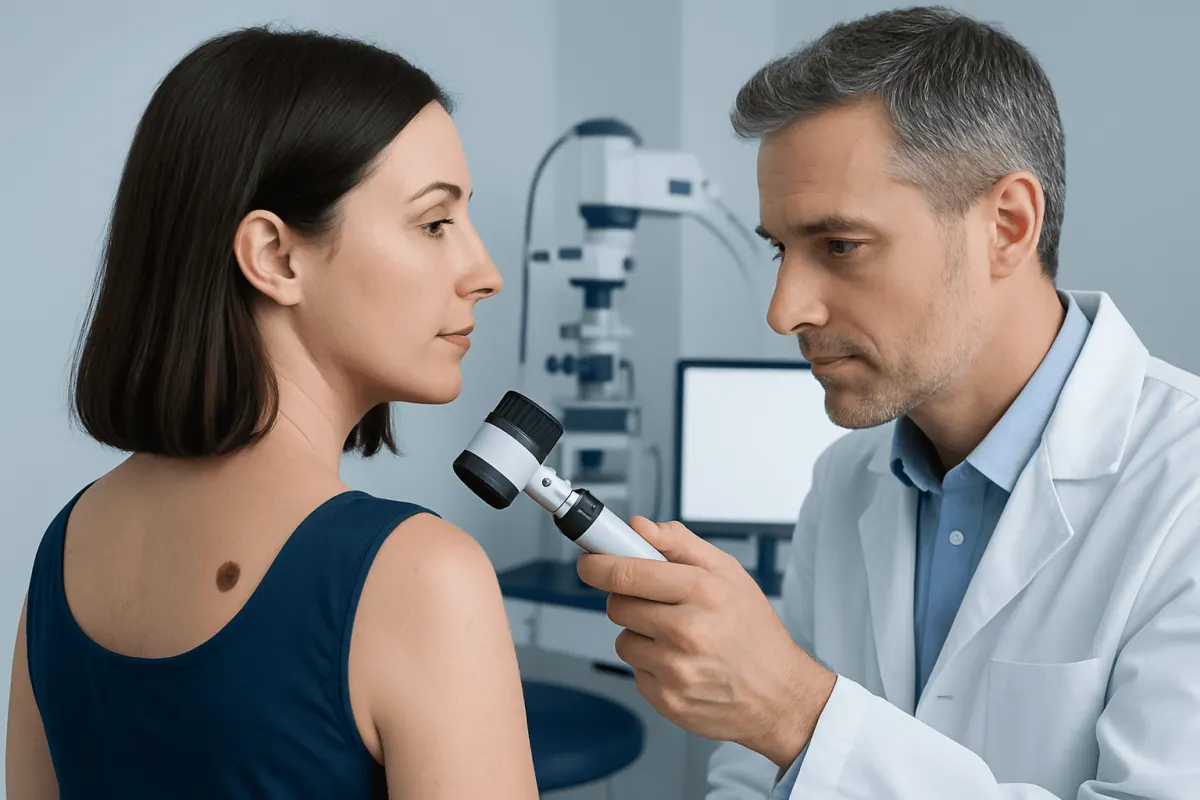
Melanoma often develops in or near a mole, but it may also appear as a new dark mark. The ABCDE approach can help identify concerning changes: Asymmetry, irregular Borders, uneven Colors, a larger Diameter, and Evolution or change over time. A lesion that looks noticeably different from a person’s other spots, sometimes called an “ugly duckling,” also deserves attention.
- New growth or spot that persists for several weeks
- Mole that changes in size, shape, color, or sensation
- Sore that does not heal or repeatedly heals and returns
- Spot that bleeds, oozes, forms a crust, or becomes painful
- Dark line under a nail, especially if it widens or pigment extends onto nearby skin
Who is at risk and what causes skin cancer?
Skin cancer begins when skin cells develop DNA changes that allow them to grow abnormally. Ultraviolet radiation from sunlight and indoor tanning devices is a major preventable cause. Risk can build over time through repeated exposure, sunburns, and use of tanning beds.
Anyone can develop skin cancer, including people with dark skin. Risk may be higher in people with fair skin that burns easily, a history of intense sun exposure or blistering sunburns, many moles, a personal or family history of skin cancer, or a weakened immune system. Certain medicines and previous radiation exposure can also affect risk.
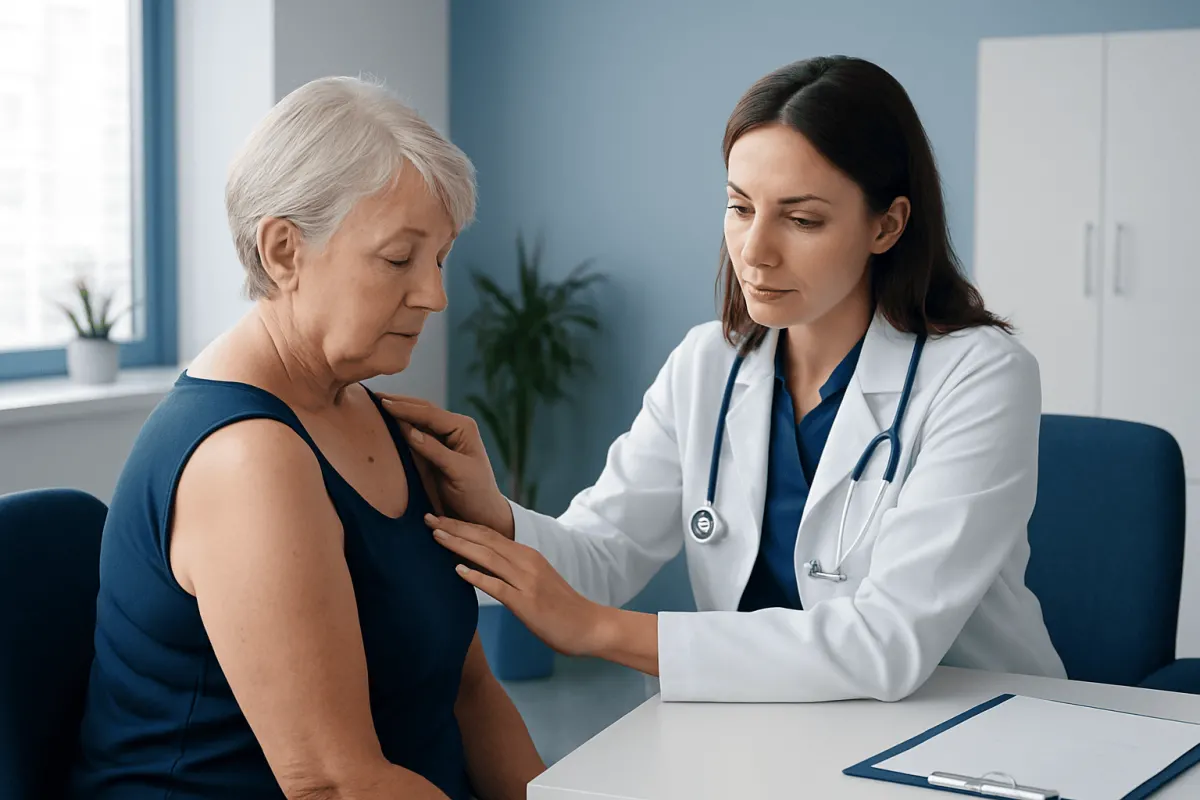
Skin cancer can occur on skin that is usually covered, so checks should include the scalp, soles of the feet, between the toes, under the nails, genital area, and buttocks when appropriate. A clinician can advise on individual risk and an appropriate schedule for professional skin examinations.
How beginning stages of skin cancer are diagnosed
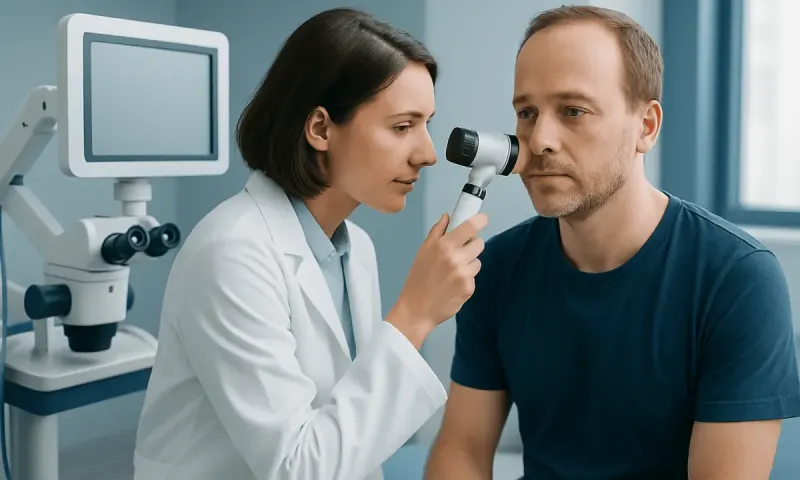
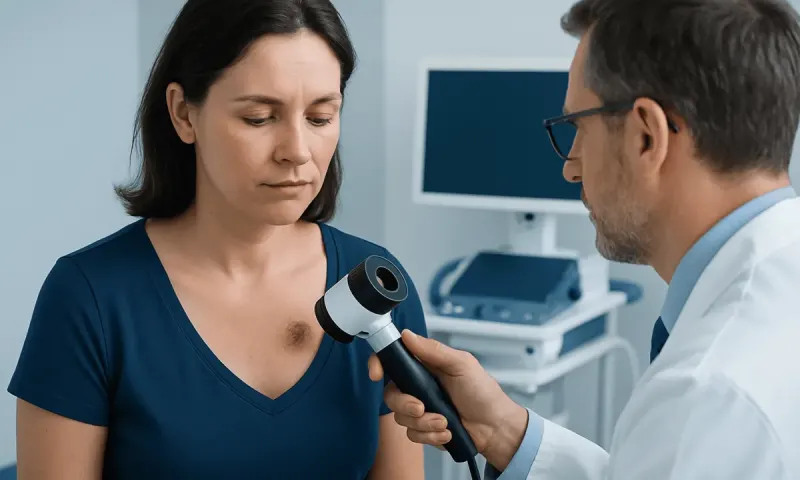
Diagnosis starts with a focused medical history and skin examination. The clinician may ask when the area was first noticed, whether it has changed, and whether there is bleeding, itching, pain, sun exposure, or a history of skin cancer. They may inspect the lesion using a dermatoscope, a handheld device that helps reveal patterns below the skin surface.
If a lesion looks suspicious, a biopsy is usually recommended. During this minor procedure, all or part of the spot is removed under local anesthetic and examined by a pathologist. A biopsy determines the exact type of skin cancer and provides details that guide treatment planning.
For confirmed melanoma, the pathology report may include the depth of the tumor and other features linked to prognosis. Some people with thicker or higher-risk melanoma may need assessment of nearby lymph nodes or imaging studies. These tests are not routinely needed for every early lesion.
Regular review is especially important for people with a previous skin cancer. Having one skin cancer does not mean another will occur, but it does increase the need for continued sun protection and follow-up examinations.
How does your body feel when you have melanoma?
Early melanoma often causes no general feeling of illness. Many people feel completely well, and the only sign is a changing mole or a new unusual spot on the skin. This is why visual changes and regular self-examination are more useful than waiting for physical symptoms.
Some melanomas can itch, feel tender, become painful, bleed, or develop a raised surface, but these symptoms are not specific to melanoma. Many harmless skin conditions can also itch or bleed. Any persistent or changing lesion should be examined rather than judged by symptoms alone.
General symptoms such as unexplained weight loss, persistent fatigue, or swollen lymph nodes are not typical of early melanoma and may have many possible causes. A clinician can assess these symptoms in context, particularly when there is a known melanoma diagnosis.
Treatment options for early skin cancer
Most beginning-stage skin cancers are treated by removing the abnormal cells. The best approach depends on the diagnosis, lesion size and depth, location, whether the borders are clear, a person’s general health, and cosmetic or functional considerations. A dermatology or cancer team can explain the expected benefits and possible Chemotherapy Side Effects: What to Expect and How to Manage" class="ahp-ilk">side effects of each option.
For basal cell and squamous cell carcinoma, treatment may include surgical excision, curettage and cautery, cryotherapy for selected superficial lesions, topical medicines in specific situations, or radiation therapy when surgery is not suitable. Mohs surgery may be used for some cancers in high-risk locations, such as the face, or when preserving healthy tissue is particularly important.
Early melanoma is generally treated with surgical removal of the lesion plus a margin of surrounding normal-looking skin. Depending on the melanoma’s depth and other pathology findings, the team may discuss a sentinel lymph node biopsy. More advanced disease may require additional surgery, immunotherapy, targeted treatment, or other care.
Specialists at Acıbadem Health Point’s multidisciplinary teams and JCI-accredited hospitals can diagnose and treat skin cancer for international patients, coordinating dermatology, pathology, surgery, and oncology care when needed.
What happens if you don't remove the basal cell?
Basal cell carcinoma usually grows slowly and rarely spreads to distant organs, but it should still be treated. If it is not removed or otherwise treated, it can gradually enlarge and invade nearby skin, cartilage, muscle, or bone. This can make later treatment more extensive and may affect appearance or function, particularly around the eyes, nose, ears, or lips.
A basal cell carcinoma may also ulcerate, bleed, become crusted, or become infected. Some lesions appear to improve temporarily because a scab forms, but the cancer remains underneath. Any diagnosis or suspected diagnosis should be discussed with a qualified clinician rather than managed at home.
In uncommon cases, long-neglected basal cell carcinoma can become deeply destructive and may spread. Prompt assessment gives the best opportunity to choose an effective treatment while the lesion is small.
What are the signs that melanoma has spread to the lungs?
Melanoma that has spread to the lungs may cause no symptoms at first and can sometimes be identified on imaging performed for follow-up or staging. When symptoms occur, they can include a persistent or worsening cough, shortness of breath, chest discomfort, coughing up blood, recurring chest infections, or unexplained fatigue.
These symptoms are not specific to melanoma and are much more commonly caused by other conditions, including infections, asthma, chronic lung disease, or other health problems. They should not be used to self-diagnose spread of cancer.
A person with a history of melanoma who develops persistent respiratory symptoms should contact their treating clinician promptly. Urgent medical assessment is appropriate for severe shortness of breath, chest pain, coughing up blood, or sudden deterioration.
When to seek medical care
A person should arrange a medical skin assessment for any new or changing mole, non-healing sore, unexplained bleeding spot, persistent scaly area, or growth that looks different from other marks on the skin. It is sensible to seek care sooner if the lesion changes quickly, becomes painful, repeatedly bleeds, or is located on the face, scalp, lips, ears, hands, feet, or under a nail.
People with a personal history of melanoma or other skin cancers should follow their clinician’s recommended surveillance plan. Those with many atypical moles, a strong family history of melanoma, or reduced immunity may also benefit from regular professional examinations.
Monthly self-checks can help people recognize change. Examining skin in good light, using a mirror for hard-to-see areas, and asking a trusted person to help inspect the scalp and back can be useful. Photographs may help track a spot over time, but they do not replace an in-person medical assessment.
Daily broad-spectrum sun protection, shade, protective clothing, hats, sunglasses, and avoiding tanning devices can reduce further ultraviolet damage. Sunscreen should complement—not replace—other protective measures.
Frequently asked questions
01Can skin cancer be cured if it is found early?
Many skin cancers found at an early stage can be treated successfully, often with a procedure that removes the cancer from the skin. The outlook depends on the type of cancer, its size, depth, location, and pathology findings. Follow-up remains important because new skin cancers can develop later.
02Can skin cancer be painless?
Yes. Early basal cell carcinoma, squamous cell carcinoma, and melanoma are often painless. A spot does not need to itch, hurt, or bleed to require medical review if it is new, changing, or unusual.
03How quickly can melanoma develop?
Melanoma can develop over different timeframes. Some lesions change gradually over months or years, while others may change more quickly. A new or evolving dark spot should be assessed without delay rather than observed for a long period.
04Is every changing mole melanoma?
No. Moles can change for harmless reasons, and many suspicious-looking lesions are not melanoma. However, change is an important reason to arrange an examination, because only a clinician and, if needed, a biopsy can determine the diagnosis.
05Can a dermatologist tell if a spot is cancer without a biopsy?
A dermatologist can often identify features that make a lesion more or less suspicious during an examination, sometimes using dermoscopy. However, a biopsy and laboratory assessment are generally needed to confirm skin cancer and identify the exact type.
06Should people check their skin even if they have darker skin?
Yes. Skin cancer can affect people of every skin tone, although it may look different on darker skin and can occur on the palms, soles, nails, and mucosal surfaces. Checking for new, changing, or non-healing lesions is important for everyone.
This article is for general information only and is not a substitute for professional medical advice. Please consult a qualified doctor about your individual situation.
Hair transplant in Turkey — costs, graft counts & a free assessment
JCI-accredited · board-certified surgeons · reply within 24h
Add us as a Preferred Source to see more of our trusted health content across Google Search, AI Overviews and Discover.