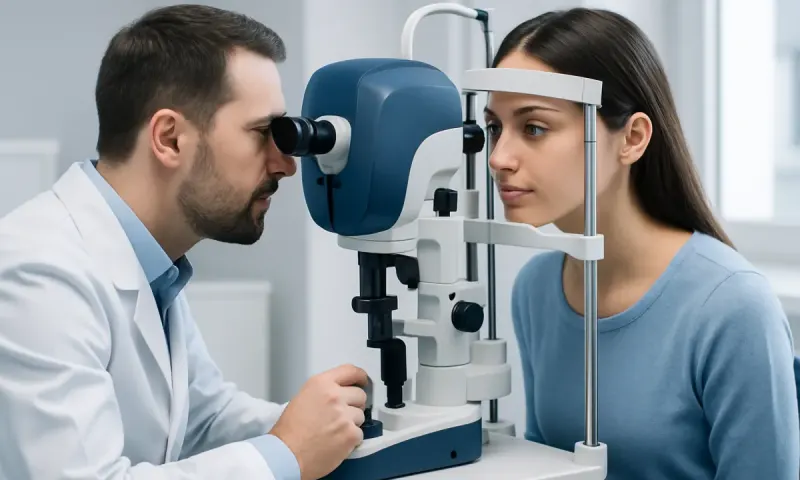
Correcting Astigmatism With Glasses, Lenses or Surgery
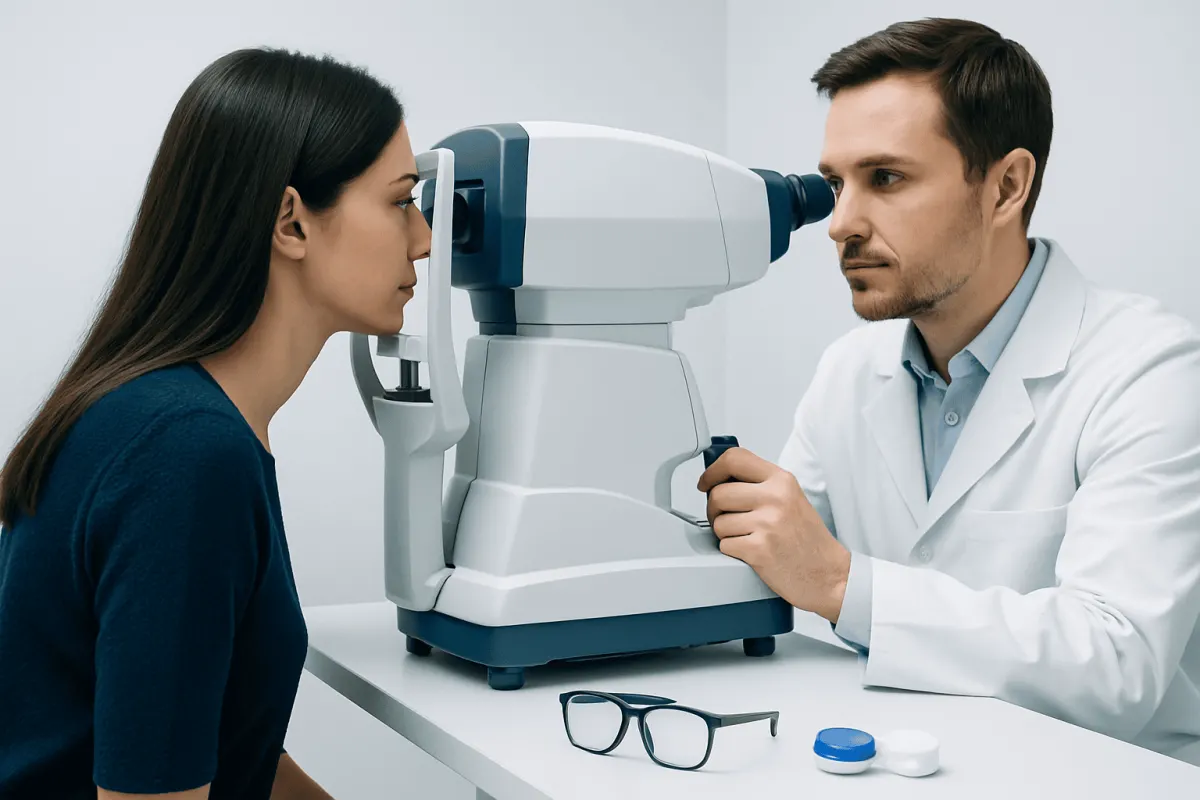
Do headlights smear into streaks when you drive at night? Do straight lines look slightly stretched, or do your eyes ache after an hour of reading? That can be astigmatism, and it is very treatable.
Treatment improves vision by compensating for or reshaping an uneven curve in the cornea or lens. Glasses and contact lenses work well for many people. For carefully selected adults, laser or lens-based procedures are an option for longer-term correction.
Astigmatism treatment: how it works
Treatment changes the way light focuses inside your eye. That can mean prescription glasses or contact lenses, or, in selected people, a procedure that reshapes the cornea or replaces the eye’s natural lens. Which option suits you depends on how much astigmatism you have and what type, the health of your cornea and lens, your age, what you do all day, and whether you want to rely less on glasses.
Astigmatism occurs when the cornea, the clear front surface of the eye, or less commonly the internal lens has an uneven curvature. Rather than focusing light at one sharp point on the retina, the eye creates more than one focal point. This may cause blur, distorted outlines, squinting, eye strain, headaches, or difficulty seeing clearly at night.
Correction does not have to mean surgery. Glasses and contact lenses give you clear vision while you wear them, at any age. Refractive surgery does permanently change the shape of the cornea, but eyes keep changing with time, and age-related reading difficulty or cataracts may later call for different vision care.
Non-surgical options: glasses and contact lenses
Prescription eyeglasses are the simplest and lowest-risk form of astigmatism treatment. Cylindrical lens power is used to counteract the uneven focusing caused by astigmatism. Glasses can correct astigmatism alone or alongside nearsightedness, farsightedness, presbyopia, or other refractive errors.
Soft toric contact lenses are designed to remain in a stable orientation on the eye so that their corrective power stays aligned correctly. Rigid gas-permeable and scleral lenses may be considered for people with higher or irregular astigmatism, including some corneal conditions, because they can create a smoother front optical surface.
Contact lenses need proper fitting, clean handling, and follow-up. Do not sleep in your lenses unless your eye-care professional has specifically told you it is fine, and get checked if you notice redness, pain, light sensitivity, discharge, or blurred vision. These symptoms can indicate irritation or infection and should not be managed by simply continuing lens wear.
- Glasses are convenient, reversible, and suitable for most prescriptions.
- Toric soft lenses can provide a wider field of view for many wearers.
- Specialty rigid or scleral lenses can help selected people with irregular corneal shape.
Astigmatism surgery: procedure options and candidacy
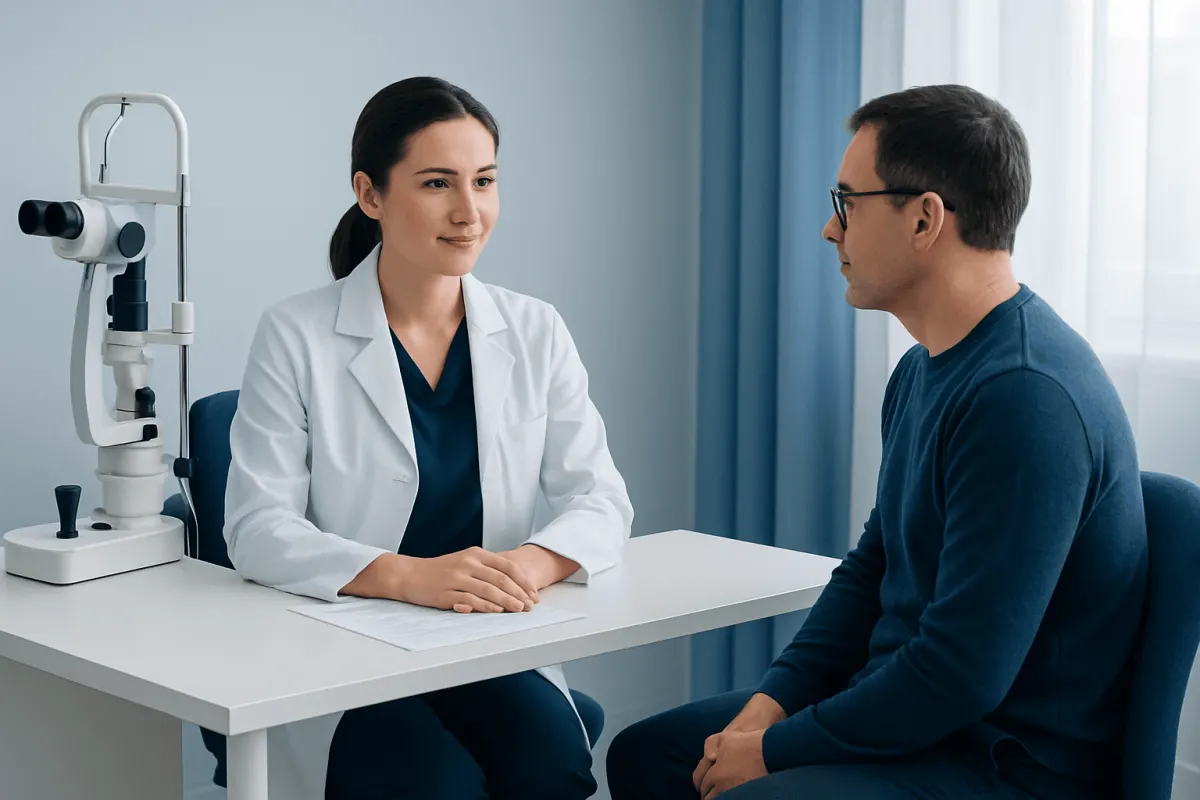
For appropriate adults, laser refractive surgery may reduce dependence on glasses or contacts by reshaping the cornea. Common approaches include LASIK, PRK, and SMILE, although the best technique depends on corneal thickness, curvature, prescription, tear-film health, occupation, and lifestyle. Not every procedure treats every form or degree of astigmatism.
During LASIK, a surgeon creates a thin corneal flap and uses an excimer laser to reshape tissue beneath it. In PRK, the surface cell layer is removed before laser reshaping; this may be considered when a flap is less suitable, though surface healing typically takes longer. SMILE uses a femtosecond laser to create and remove a small disc of corneal tissue through a small incision in selected refractive errors.
Lens-based procedures may be discussed when laser surgery is not suitable, particularly for people with cataracts or significant age-related lens changes. Cataract surgery can include a toric intraocular lens designed to address corneal astigmatism. In some circumstances, a refractive lens exchange may be considered, but it is an individualized surgical decision with different benefits and risks from corneal laser treatment.
You are more likely to be a good candidate if your prescription has been stable, your corneas are healthy, your expectations are realistic, and you have no untreated eye disease. Pregnancy, breastfeeding, unstable diabetes, certain autoimmune conditions, active eye inflammation, severe dry eye, keratoconus, or a thin or irregular cornea can affect suitability. A comprehensive preoperative assessment is essential before any decision about laser eye surgery.
What happens before, during and after astigmatism surgery
Before surgery, the ophthalmology team measures the cornea, pupil, prescription, eye surface, and overall eye health. Corneal mapping and thickness testing help identify irregularities that may make surgery less safe or less predictable. Contact lens wear may need to be paused before measurements because lenses can temporarily alter corneal shape.
On the day of a laser procedure, numbing drops are usually used. The patient remains awake and looks toward a fixation light while the laser is applied. Modern systems track small eye movements, but the patient is guided throughout. The laser portion is brief, while preparation and positioning take longer; both eyes are often treated during the same visit when clinically appropriate.
After LASIK, vision often begins improving within a day or two, although it may fluctuate initially. PRK usually has a slower early recovery because the corneal surface needs to heal, and clear vision continues to improve over several weeks. Dryness, light sensitivity, glare around lights, and mild discomfort are common short-term effects; prescribed drops and follow-up visits support healing.
Follow your surgeon’s advice on eye drops, keeping your hands off your eyes, and when to go back to sport, swimming, and driving. Your team may ask you to stay away from screens or visually demanding work for the first few days. Acıbadem Health Point’s multidisciplinary specialists and JCI-accredited hospitals assess and treat eye conditions for international patients, with follow-up plans tailored to the procedure and individual needs.
Benefits, limits and possible risks
The main benefit of astigmatism correction is clearer, more comfortable vision. Glasses and contact lenses can provide highly accurate correction when the prescription is appropriate. Laser surgery may reduce the need for eyewear and can be particularly useful for people who find glasses or contacts inconvenient, but it should be viewed as an elective medical procedure rather than a guarantee of perfect vision.
Many people achieve functional distance vision after laser correction, but some may still need glasses for certain tasks. Reading glasses are commonly needed with age because presbyopia affects the eye’s focusing ability, even in people whose distance astigmatism has been successfully treated. A small number of patients may need an enhancement procedure if a meaningful residual prescription remains and the eye is suitable.
Potential surgical risks include dry eye symptoms, temporary glare or halos, reduced contrast in low light, undercorrection or overcorrection, infection, inflammation, corneal haze after surface procedures, and uncommon but serious loss of best-corrected vision. Careful screening lowers risk but cannot eliminate it. People should discuss their visual priorities, night-driving needs, work requirements, and individual risk factors with an ophthalmologist.
Irregular astigmatism, especially when it progresses or is associated with corneal thinning, needs specialized evaluation rather than routine refractive surgery. In these cases, the priority may be monitoring, specialty lenses, or treatment of the underlying corneal condition.
Can astigmatism be 100% corrected?
Astigmatism can often be corrected very effectively, but “100% corrected” is not a realistic promise for every person. Glasses and contact lenses can usually compensate for the measured refractive error while they are worn. Laser or lens procedures can substantially reduce the prescription in suitable candidates, but results vary according to the eye, healing response, and the complexity of the astigmatism.
Clear vision also depends on more than the corneal prescription. Dry eye, cataracts, retinal conditions, amblyopia, glaucoma, and other eye health issues can limit visual quality even if the astigmatism itself is corrected. A full eye examination helps clarify what degree of improvement is reasonable to expect.
How long does it take to correct an astigmatism?
Glasses and contact lenses begin correcting astigmatism as soon as they are worn, although a person may need several days to adapt to a new prescription. Adaptation can be especially noticeable with stronger astigmatism correction, where straight lines or depth perception may initially feel different.
Laser procedures are completed in one treatment session, but visual recovery is gradual. LASIK commonly provides useful vision within days, while PRK generally requires more time for surface healing and visual stabilization. The final result may continue to refine over weeks to months, and follow-up appointments confirm that healing is progressing as expected.
Is it worth correcting astigmatism? How painful is astigmatism surgery?
Correcting astigmatism is often worthwhile when blurred or distorted vision interferes with reading, driving, work, sports, school, or daily comfort. Some people have mild astigmatism and few symptoms, so they may not need correction all the time. It is a personal call, based on your symptoms, your eye health, and what you want from your vision, not on the number on your prescription alone.
Laser astigmatism surgery is usually not painful during the procedure because numbing eye drops are used. Patients may feel pressure, awareness of the instruments, or temporary discomfort rather than sharp pain. After LASIK, irritation or a gritty sensation may occur for a short period; after PRK, discomfort can be more noticeable for several days while the surface heals.
Severe pain is not part of a normal recovery. If pain is getting worse, your eye turns markedly red, your vision drops suddenly, or you see unusual discharge, get seen urgently. These can signal a complication that needs prompt treatment.
When to seek medical care
A routine eye examination is appropriate for persistent blur, headaches with visual tasks, squinting, difficulty with night driving, or a change in how clearly one sees with current glasses or contact lenses. Children should have regular vision assessments because uncorrected refractive errors can affect visual development and learning.
Urgent assessment is important for sudden vision loss or a sudden major change in vision, severe eye pain, eye injury, a painful red eye, flashes of light, a curtain-like shadow in vision, or a sudden shower of floaters. These symptoms are not typical of uncomplicated astigmatism and may have another cause that requires timely care.
If you are thinking about surgery, see a qualified ophthalmologist in person rather than relying on an online prescription or a screening alone. Ask about the alternatives, the benefit you can realistically expect, what recovery involves, the possible risks, and the eye care you will still need as your vision changes over the years.
Frequently asked questions
01What is the best treatment for astigmatism?
The best treatment depends on the person’s prescription, eye health, lifestyle, and goals. Glasses and toric contact lenses are effective for many people, while laser or lens-based surgery may be suitable for selected adults after a detailed eye assessment.
02Can astigmatism get worse over time?
Astigmatism can change over time, particularly during childhood, with changes in the cornea or lens, or as cataracts develop later in life. Regular eye examinations help identify meaningful prescription changes and rule out other causes of changing vision.
03Can eye exercises fix astigmatism?
Eye exercises do not reshape the cornea or lens and therefore do not correct astigmatism. They should not replace a professional eye examination or prescribed vision correction.
04Do glasses make astigmatism worse?
No. Wearing properly prescribed glasses does not make astigmatism worse or weaken the eyes. They simply compensate for the refractive error while they are worn.
05Is LASIK permanent for astigmatism?
LASIK permanently changes the treated corneal tissue, but vision can still change later because of normal aging, presbyopia, cataracts, or other eye changes. Some people may have a small residual prescription or need glasses for particular tasks after surgery.
06Can children have astigmatism treatment?
Yes. Children commonly receive glasses to correct astigmatism and support normal visual development. Refractive laser surgery is generally not used until adulthood and only after careful assessment.
This article is for general information only and is not a substitute for professional medical advice. Please consult a qualified doctor about your individual situation.
Persistent digestive symptoms? Get evaluated in Turkey
JCI-accredited · board-certified surgeons · reply within 24h
Add us as a Preferred Source to see more of our trusted health content across Google Search, AI Overviews and Discover.