Am I a Candidate for Lens replacement surgery? Eligibility Criteria
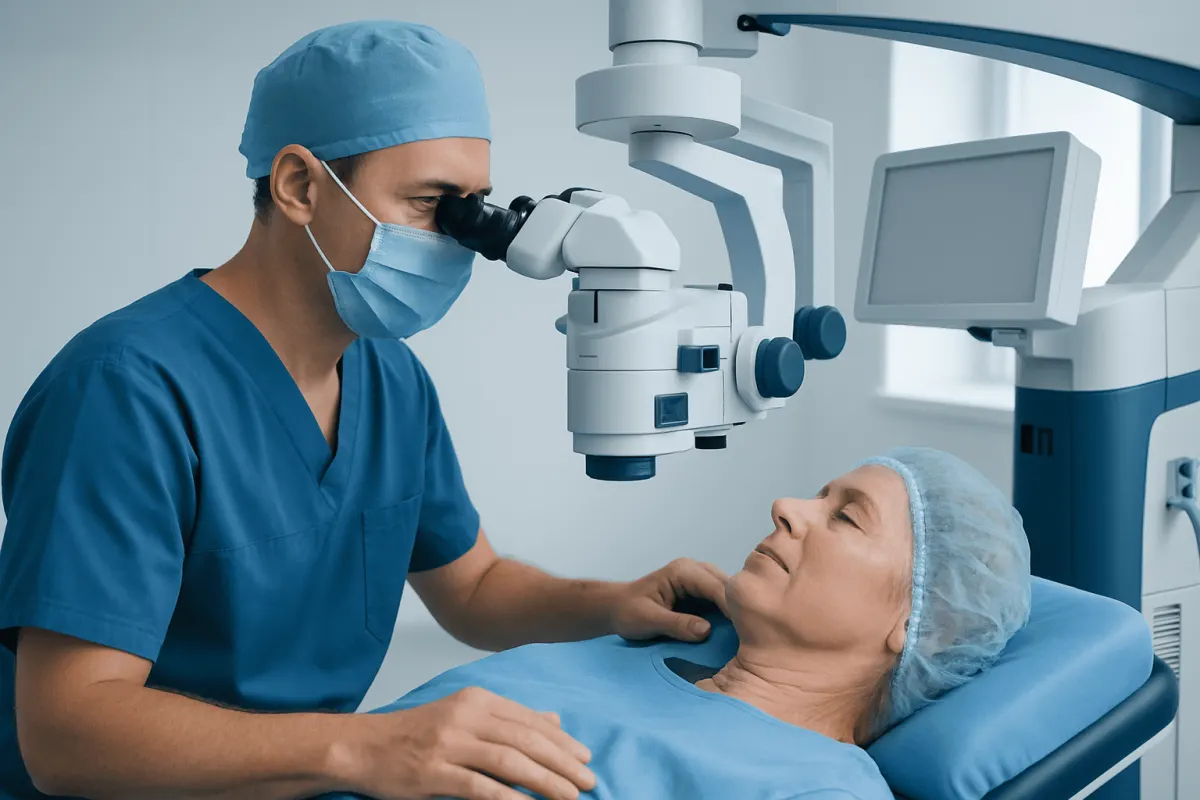
People may be candidates for lens replacement surgery if they want to reduce dependence on glasses or contact lenses and have eyes that are otherwise suitable for surgery. A comprehensive ophthalmic assessment is essential because suitability depends on eye health, prescription, lifestyle needs and realistic expectations.
Am I a Candidate for Lens Replacement Surgery?
Many adults may be candidates for lens replacement surgery when glasses or contact lenses no longer meet their visual needs, particularly after age 40 when near focusing becomes more difficult. The answer depends on a detailed eye examination: candidates generally have stable vision, healthy eyes overall, and clear goals about reducing reliance on corrective lenses.
Lens replacement surgery, also called refractive lens exchange, uses the same core technique as cataract surgery. The natural lens is removed and replaced with a permanent artificial intraocular lens, or IOL, chosen to address distance, near or intermediate vision needs. It is often considered for people with presbyopia, strong long- or short-sighted prescriptions, or early lens changes that affect quality of vision.
This article explains eligibility and decision-making rather than replacing a personal consultation. For a broader overview of the procedure and available lens types, see lens replacement surgery.
How Lens Replacement Surgery Works
The eye’s natural lens sits behind the coloured part of the eye, the iris. It focuses light onto the retina at the back of the eye. With age, the lens gradually loses flexibility, causing presbyopia, and it may eventually become cloudy as a cataract. Replacing the lens can correct the focusing problem while also preventing a future cataract from developing in that lens.
During the procedure, the surgeon makes a very small incision, gently breaks up and removes the natural lens, and places a folded artificial lens inside the remaining lens capsule. The IOL unfolds into position and remains in the eye permanently. The incision is usually self-sealing and typically does not need stitches.
Different IOL designs have different visual trade-offs. Monofocal lenses commonly provide clear vision at one main distance, often with reading glasses still needed. Toric lenses can correct astigmatism, while multifocal or extended-depth-of-focus lenses may reduce dependence on glasses at more than one distance for appropriately selected patients. No lens can guarantee complete freedom from glasses in every activity or lighting condition.
Who May Be a Suitable Candidate?

Lens replacement is most often considered in adults whose eye prescription has been reasonably stable and whose visual goals are compatible with the available lens options. It can be especially relevant for people in midlife and beyond who have presbyopia and would like to address both distance and near vision, or for people with high refractive errors that may be less suitable for corneal laser surgery.
A person may be a potential candidate if they have one or more of the following: difficulty reading without glasses, significant short-sightedness or long-sightedness, astigmatism that may be corrected with a toric IOL, intolerance of contact lenses, or early age-related lens changes. People with cataracts may also benefit from lens surgery when the cloudiness begins to interfere with daily activities, such as driving, reading or recognising faces.
- They understand that surgery is elective when there is no visually significant cataract.
- They have realistic expectations about visual quality, glasses use and recovery.
- They can attend follow-up visits and use prescribed eye drops as directed.
- They do not have an untreated eye infection or active eye inflammation.
- They can discuss their work, hobbies, night-driving needs and preferred viewing distances openly with the surgical team.
Suitability is not determined by age alone. An ophthalmologist considers the full clinical picture, including the structure and health of both eyes, rather than relying only on a glasses prescription.
Preoperative Assessment and Reasons to Delay Surgery
A preoperative assessment is the most important part of deciding whether lens replacement is appropriate. The ophthalmologist measures the eye and checks the cornea, pupil, lens, retina, macula, optic nerve and eye pressure. Tests may include refraction, corneal mapping, optical biometry for IOL calculations, tear-film evaluation and retinal imaging when indicated.
Some conditions do not automatically rule out surgery, but they may change the expected result, the choice of IOL or the timing of treatment. Examples include dry eye disease, glaucoma, diabetic eye disease, macular degeneration, corneal disorders, previous eye surgery and retinal problems. These conditions may need treatment, monitoring or specialist input before proceeding.
Lens replacement may be postponed or may not be advisable if there is active eye infection, uncontrolled inflammation, an unstable prescription, severe untreated dry eye, or eye disease likely to limit vision after surgery. People who have high expectations of perfect vision in every situation should also discuss this carefully, as halos, glare or reduced contrast sensitivity can occur with some premium lens designs.
Patients can use a pre-assessment form or arrange an ophthalmology consultation to begin this evaluation. The final recommendation should follow in-person testing and a discussion of individual risks, benefits and alternatives.
What Happens During the Procedure?
Lens replacement surgery is usually performed one eye at a time as an outpatient procedure. Before surgery, the eye is measured again and the chosen IOL plan is confirmed. Dilating and anaesthetic eye drops are used; some patients may also receive medication to help them relax, depending on their health needs and the clinic’s protocol.
The surgeon makes a small opening at the edge of the cornea, removes the natural lens using ultrasound-assisted techniques, and inserts the selected IOL. The procedure itself is commonly brief, but preparation and recovery in the clinic take longer. The patient goes home the same day and should arrange for someone else to drive them.
If both eyes require surgery, the second eye is generally treated after the first eye has been assessed for early healing and visual outcome. The exact interval varies according to the surgeon’s approach and the individual’s eye health. Follow-up appointments help confirm that the IOL position, eye pressure and healing are satisfactory.
Benefits, Risks and Recovery Timeline
The potential benefit of lens replacement is long-term correction of the lens-based component of vision, with reduced dependence on glasses or contact lenses for selected tasks. It also removes the natural lens, so a cataract cannot later develop in that lens. For some people, this makes lens replacement a practical option when presbyopia and refractive error occur together.
Vision often begins to improve within the first few days, although it may be blurred or fluctuate initially. Mild grittiness, watering, light sensitivity and awareness of the eye can occur early in recovery. Most patients return to many everyday activities within several days, while vision and comfort may continue to settle over several weeks. Adaptation to multifocal or extended-depth-of-focus lenses can take longer for some people.
All surgery carries risks. Possible complications include infection, inflammation, raised eye pressure, corneal swelling, retinal detachment, residual prescription, IOL displacement and, rarely, lasting loss of vision. Some people experience glare or halos around lights, especially at night. A cloudy membrane behind the IOL can develop months or years later and is commonly treatable with a laser procedure.
After surgery, patients should use eye drops exactly as prescribed, avoid rubbing the eye, and follow guidance about swimming, strenuous exercise and eye makeup. New pain, increasing redness, worsening vision, flashes of light, a sudden increase in floaters or a curtain-like shadow in vision require urgent eye assessment.
When to Seek Medical Care
Anyone considering lens replacement should book a routine assessment with an ophthalmologist rather than relying on online eligibility checks. This is particularly important for people with diabetes, glaucoma, retinal conditions, a history of eye injury or surgery, or symptoms that have changed quickly.
Urgent medical care is needed for sudden vision loss, severe eye pain, marked redness, trauma to the eye, flashing lights, a sudden shower of floaters, or a dark shadow moving across the field of vision. These symptoms can have causes unrelated to lens replacement and should be assessed promptly.
After surgery, the treating team should be contacted without delay if discomfort becomes severe, vision worsens rather than gradually improves, or there is significant discharge or increasing sensitivity to light. Acıbadem Health Point’s multidisciplinary eye specialists and JCI-accredited hospitals can assess and treat lens-related vision concerns for international patients.
Frequently asked questions
01What age is best for lens replacement surgery?
There is no single best age. Lens replacement is commonly considered from midlife onward, when presbyopia becomes noticeable, and it may also be appropriate for people with cataracts or high refractive errors. Eye health, prescription stability and visual priorities matter more than age alone.
02Can I have lens replacement surgery if I do not have cataracts?
Yes. Refractive lens exchange can be performed before a cataract forms when the aim is to reduce dependence on glasses or contact lenses. Because it is elective in this situation, a careful discussion of benefits, alternatives and risks is particularly important.
03Is lens replacement better than laser eye surgery?
Neither procedure is universally better. Laser eye surgery reshapes the cornea, while lens replacement changes the lens inside the eye. The appropriate option depends on age, prescription, corneal thickness and shape, eye health, and whether presbyopia or early lens changes are present.
04Will I need glasses after lens replacement surgery?
Some people still need glasses, particularly for small print, prolonged reading, low-light tasks or detailed work. The likelihood depends on the selected IOL and the person’s eyes and visual needs. An ophthalmologist can explain the realistic range of vision expected with each lens type.
05How long does recovery take after lens replacement surgery?
Many people notice useful vision within a few days and resume light daily activities soon afterward. However, healing, refraction stabilisation and adjustment to the new lens can take several weeks. Follow-up appointments are necessary to monitor recovery.
06Who may not be suitable for lens replacement surgery?
People with active eye infection or inflammation, uncontrolled eye disease, severe untreated dry eye or certain retinal and corneal disorders may need treatment first or may not be suitable. Some people can still have surgery with modified planning, so individual assessment is essential.
This article is for general information only and is not a substitute for professional medical advice. Please consult a qualified doctor about your individual situation.
Explore treatments in Turkey — costs, top hospitals & a free quote
JCI-accredited · board-certified surgeons · reply within 24h
Add us as a Preferred Source to see more of our trusted health content across Google Search, AI Overviews and Discover.