Halos Around Lights: Causes and When to Seek Care
Halos around lights are bright rings, starbursts, or glowing circles seen around lamps, headlights, and other light sources. They are commonly linked to tear-film changes, refractive errors, or glare at night, but they can occasionally signal an eye condition that needs prompt assessment.
Overview: What Do Halos Around Lights Look Like?
Halos around lights are luminous rings, circles, or diffuse glows that appear around light sources. They may be most noticeable around streetlights, oncoming headlights, traffic signals, computer screens, or indoor lamps. Some people describe a smooth circular ring, while others notice starbursts, rays, haze, or a foggy glow that makes lights seem larger than they are.
In many cases, seeing halos around lights is related to the way light passes through the tear film and clear structures at the front of the eye. It can be more apparent at night because pupils naturally become larger in dim conditions and bright lights stand out against a dark background. A mild, longstanding symptom without pain or loss of vision is often not an emergency, but new, persistent, or worsening halos should be discussed with an eye-care professional.
The most useful clues are when the halos began, whether they occur in one or both eyes, and whether they happen only at night or throughout the day. Symptoms such as blurred vision, glare, eye discomfort, redness, headaches, nausea, or a sudden reduction in vision can help a clinician determine how quickly assessment is needed.
Why Halos Happen: The Role of Light in the Eye
For vision to be clear, light needs to travel smoothly through the tear film, cornea, lens, and the gel-like interior of the eye before reaching the retina. If any of these structures is irregular, cloudy, swollen, or temporarily disrupted, light can scatter instead of focusing sharply. This scattering may create halos, glare, double images, or reduced contrast, particularly in low-light settings.
The tear film is often overlooked but is important for clear vision. It forms the eye’s outermost optical surface. When tears evaporate too quickly or do not adequately coat the eye, vision can fluctuate and lights may look smeared or surrounded by glow. Blinking may briefly improve the image, which can be a useful sign that dryness is contributing.
Pupil size also influences symptoms. A person may see well during the day but notice more glare at night, when the pupil widens and light passes through a larger area of the cornea and lens. This does not automatically mean there is a serious problem; however, it can reveal small optical imperfections that are less noticeable in brighter environments.
Common Causes and Contributing Factors

Dry eye disease is a frequent cause of intermittent halos, glare, and fluctuating blur. It may be associated with extended screen use, air conditioning, wind, aging, hormonal changes, certain medicines, contact lens wear, or eyelid conditions. Allergy-related eye irritation can also affect the tear film and make lights appear less crisp.
Refractive errors, including nearsightedness, farsightedness, and astigmatism, can cause lights to look distorted when glasses or contact lens prescriptions are not optimal. Even a small change in prescription may be more obvious while driving at night. Scratched, smudged, poorly fitting, or overworn contact lenses and eyeglasses can similarly increase glare.
Changes in the eye’s natural lens may also lead to halos. Cataracts can scatter incoming light and often cause increasing glare from headlights or lamps, reduced contrast, and a gradual change in vision. Halos may also occur for a period after certain vision-correction procedures or cataract surgery, as the eye heals and the visual system adapts. Persistent or troublesome symptoms after a procedure should be reviewed by the treating eye specialist.
Less commonly, halos can occur when pressure inside the eye rises suddenly. Acute angle-closure glaucoma is an urgent condition that may cause colored or rainbow-like halos along with severe eye pain, redness, blurred vision, headache, nausea, or vomiting. This pattern is different from mild nighttime glare and requires emergency medical assessment.
Patterns That Can Help Describe the Symptom
It can be helpful to observe the exact pattern of halos before an appointment. Symptoms limited to nighttime driving may point toward glare, an uncorrected refractive error, dry eyes, early lens changes, or large pupils in low light. Halos that improve after blinking or using prescribed lubricating drops may be related to an unstable tear film, although an examination is still appropriate if symptoms continue.
Halos in only one eye may suggest an issue affecting that eye’s cornea, lens, contact lens, or surface. To check this, a person can cover one eye at a time while looking at a distant light source, without staring directly into very bright lights. If the effect is distinctly different between eyes, this information can be useful to report to an ophthalmologist or optometrist.
Some people use the word “halos” to describe floaters, flashes, or shimmering visual patterns. Floaters are small moving spots or threads, while flashes can look like brief flickers of light, usually at the edge of vision. New flashes, a sudden shower of floaters, or a curtain-like shadow across vision are not typical halos and need urgent eye assessment because they may indicate a retinal problem.
How Eye Specialists Assess Halos Around Lights
An eye examination usually begins with a discussion of the symptom, general health, current medicines, eye history, contact lens use, and recent procedures. The clinician may ask about night driving, whether the symptom affects daily activities, and whether pain, nausea, redness, or sudden visual changes have occurred. Visual acuity and refraction testing can determine whether updated glasses or contact lenses may improve vision.
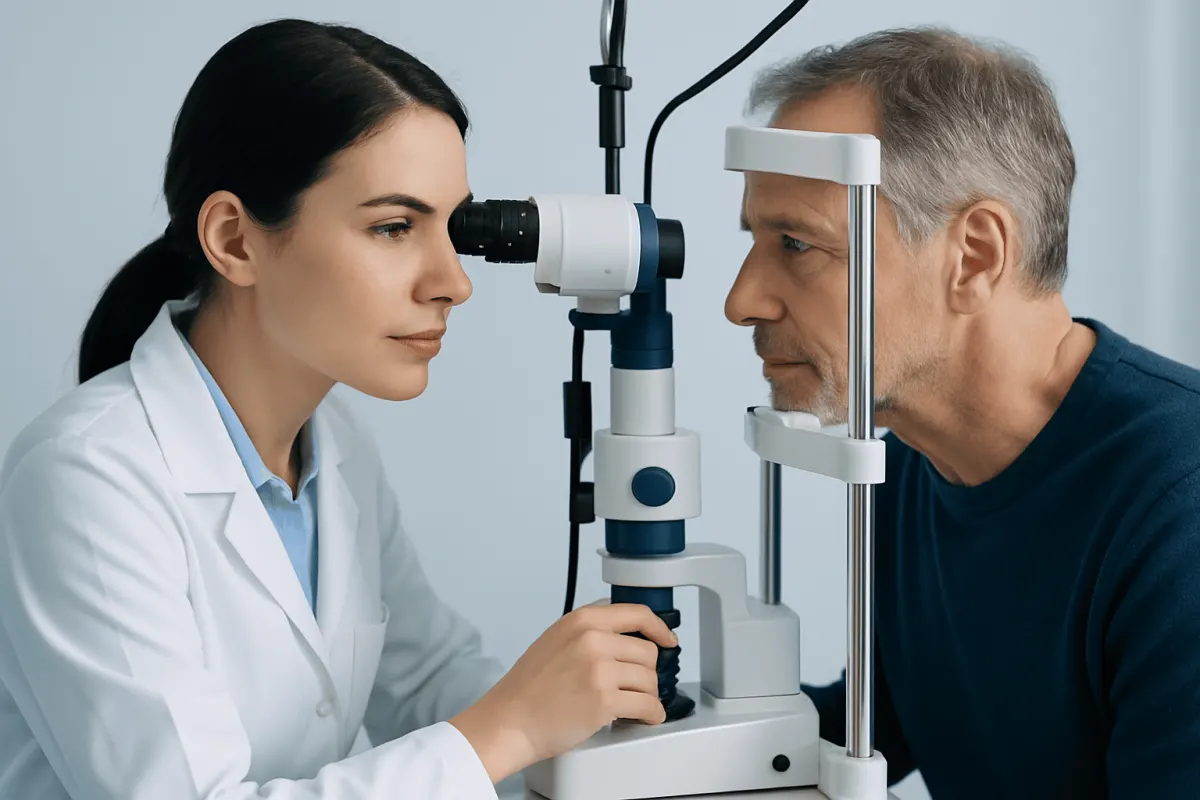
The eye’s surface, eyelids, tear film, cornea, and lens may be examined with a slit lamp microscope. This allows the clinician to look for dryness, inflammation, corneal irregularities, swelling, cataract changes, or contact lens-related complications. Eye pressure testing is often performed when glaucoma is a concern.
Depending on the findings, the pupils may be dilated so that the retina and optic nerve can be examined more fully. Additional tests can include corneal mapping, tear-film assessment, visual field testing, or imaging of the optic nerve and retina. The aim is not simply to confirm that halos are present, but to identify the part of the visual system responsible and select appropriate care.
Treatment and Practical Self-Care
Treatment depends on the underlying cause. If dry eyes are contributing, an eye-care professional may recommend changes to the environment and screen habits, appropriate lubricating eye drops, or treatment for associated eyelid inflammation. Contact lens wearers may need a review of lens fit, cleaning routines, replacement schedules, or the type of lens used.
When halos are related to a refractive error, updating glasses or contact lenses may reduce blur and glare. Anti-reflective lens coatings can be useful for some people who are troubled by reflections, although they do not treat eye disease. For people with cataracts that meaningfully affect vision or daily activities, an ophthalmologist can discuss whether cataract surgery is appropriate and what visual effects to expect.
Until the cause is clear, practical measures may make night activities more comfortable. Keeping windshields, eyeglasses, and contact lenses clean can reduce extra light scatter. Taking regular screen breaks, blinking fully, avoiding smoke and direct air flow to the eyes, and using suitable lighting at home may also help. People who feel unsafe driving at night because of glare should avoid driving in those conditions until their vision has been assessed.
Self-care should not replace an eye examination when symptoms are new, worsening, one-sided, or affecting function. Acıbadem Health Point’s multidisciplinary specialists and JCI-accredited hospitals can assess visual symptoms and provide care for international patients when evaluation or treatment is needed.
When to Seek Medical Care
A routine eye appointment is appropriate for halos that are persistent, gradually worsening, newly affecting night driving, or accompanied by changes in glasses or contact lens comfort. An examination is also advisable if halos are affecting one eye more than the other, follow an eye injury, occur after a recent eye procedure, or are accompanied by ongoing dryness, blurred vision, or sensitivity to light.
Urgent medical care is needed for sudden halos combined with intense eye pain, a red eye, marked blurred vision, headache, nausea, or vomiting. This combination can occur with a sudden rise in eye pressure and should be evaluated without delay. It is safer not to drive oneself if vision is significantly impaired.
Emergency assessment is also important for sudden vision loss, new flashing lights, many new floaters, or a dark curtain or shadow in the visual field. These symptoms may have causes unrelated to ordinary glare but can require prompt treatment to protect vision. When in doubt, contacting an ophthalmologist, emergency service, or local urgent eye-care provider is the safest choice.
Frequently asked questions
01Are halos around lights normal?
Occasional mild halos, especially at night or when eyes are tired or dry, can be common. However, new, frequent, or worsening halos should be checked because they may be related to an uncorrected prescription, dry eye disease, cataracts, corneal changes, or another eye condition.
02Can dry eyes cause halos around lights?
Yes. An uneven tear film can scatter light and cause fluctuating blur, glare, and halos, often worsening with screen use, air conditioning, wind, or contact lens wear. Symptoms that briefly improve after blinking may suggest dryness, but an eye professional can confirm the cause.
03Why do I see halos around headlights at night?
At night, pupils become larger and bright headlights contrast strongly with the dark surroundings. This can make refractive errors, dry eyes, lens changes, or surface irregularities more noticeable. If night glare affects driving confidence or safety, an eye examination is recommended.
04Do halos around lights mean cataracts?
Not necessarily. Cataracts can cause glare and halos, particularly from headlights, but many other conditions can create similar symptoms. Cataracts are usually diagnosed through a comprehensive eye examination rather than by halos alone.
05Can glasses help with halos around lights?
Glasses can help when halos are caused or worsened by an uncorrected refractive error. A current prescription and anti-reflective coating may reduce glare for some people, but glasses will not resolve halos caused by conditions such as significant dry eye, cataracts, or raised eye pressure.
06When are halos around lights an emergency?
Halos are an emergency when they begin suddenly with severe eye pain, redness, headache, nausea, vomiting, or rapid loss of vision. Immediate assessment is important because this pattern may indicate acute angle-closure glaucoma or another serious eye problem.
This article is for general information only and is not a substitute for professional medical advice. Please consult a qualified doctor about your individual situation.
Persistent digestive symptoms? Get evaluated in Turkey
JCI-accredited · board-certified surgeons · reply within 24h
Add us as a Preferred Source to see more of our trusted health content across Google Search, AI Overviews and Discover.