Afro Hair Transplant: Procedure, Benefits, Risks and Recovery

Key Takeaways
- Afro-textured hair can be transplanted successfully, but it requires a surgeon familiar with the curl pattern below the skin as well as above it.
- The two main approaches are typically FUE and FUT, with technique selection depending on hair characteristics, donor supply, and the patient’s goals.
- Recovery is usually gradual, and early shedding of transplanted hairs can be normal before new growth begins.
- Not every type of hair loss is suitable for surgery, so diagnosis and a realistic donor-area assessment are essential before treatment.
- Aftercare, scalp protection, and long-term hair-loss management can influence the final appearance and the durability of results.
An afro hair transplant is a hair restoration procedure designed for tightly curled or coily hair patterns, which require specialized planning and technique. This article explains how it is performed, who may benefit, what the risks are, and what recovery can look like.
Overview
An afro hair transplant is a surgical hair-restoration procedure for people with afro-textured, tightly curled, or coily hair who want to restore thinning areas or improve the appearance of a receding hairline, temples, or crown. The goal is the same as with any hair transplant: move healthy follicles from a donor area, usually the back or sides of the scalp, to areas with reduced hair density.
What makes this procedure different is the shape of the hair follicle. Afro-textured hair often curves beneath the skin, not just above it, and that changes how grafts are harvested, handled, and implanted. For that reason, the procedure is usually best planned by a surgeon who has experience with curly-hair extraction and placement.
For international patients, the planning process matters as much as the surgery itself. A well-prepared consultation should review the pattern of hair loss, the donor supply, scalp health, travel timing, and the expected follow-up schedule after returning home.
How Afro Hair Transplant Procedures Work
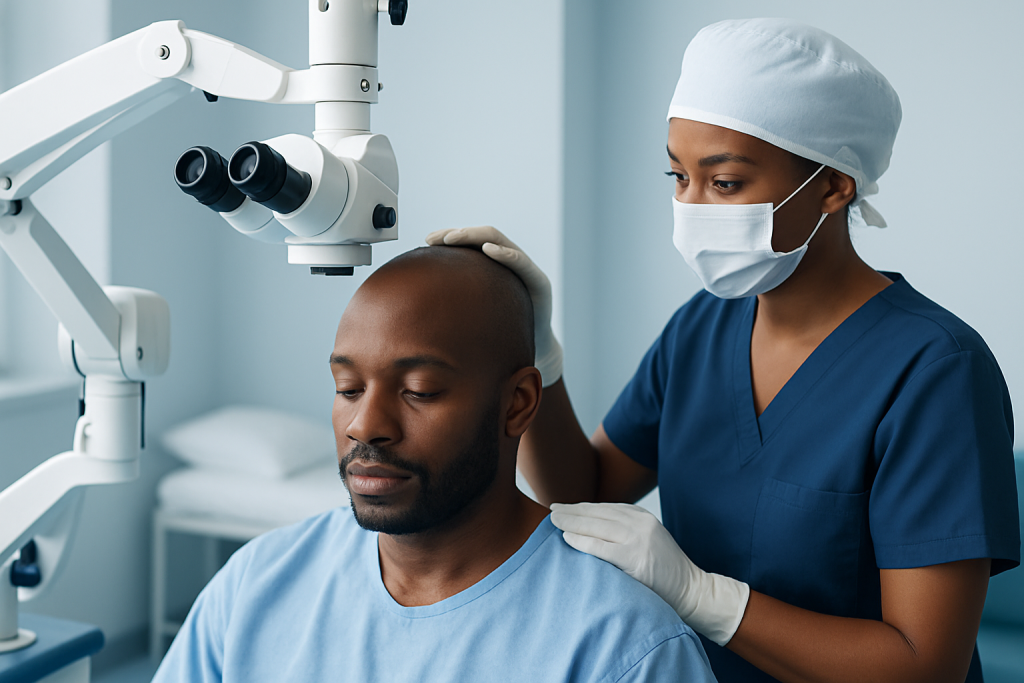
The surgeon first evaluates the scalp, hair density, curl pattern, and the stability of the hair loss. This helps determine whether the hair loss is likely to continue and whether surgery should be combined with medical treatment to protect the remaining hair. Donor-area mapping is especially important because tightly curled follicles can be more difficult to isolate without injury.
Two common techniques are used in modern hair transplantation. Follicular Unit Extraction, or FUE, removes individual grafts from the donor area and places them into the thinning zones. Follicular Unit Transplantation, or FUT, removes a thin strip of scalp from which grafts are prepared. In afro-textured hair, the surgeon must account for the follicle’s curved path under the skin, since that can affect extraction and healing.
During implantation, the recipient sites are created to match the natural direction, angle, and density pattern of the patient’s hair. This is particularly important for afro-textured hair, where the curl pattern often provides visual fullness, but only when the grafts are placed with careful attention to angle and spacing.
Who May Be a Good Candidate

People with stable pattern hair loss, traction alopecia in selected cases, or scarring in limited areas may be considered for an afro hair transplant. The best candidates usually have a healthy donor area and realistic expectations about density, scarring, and the gradual pace of growth.
Not everyone with hair loss is a candidate right away. If shedding is caused by untreated medical conditions, such as active inflammatory scalp disease, uncontrolled thyroid problems, nutritional deficiency, or ongoing traction from tight hairstyles, those issues should be addressed first. Surgery is generally more suitable once the cause is known and the hair loss has become stable.
The quality of the donor hair also matters. Because curly follicles take up more scalp space visually, patients may appear to have dense donor hair even when the usable supply is limited. A thorough assessment helps determine whether enough grafts can be harvested safely without making the donor zone look thin.
Benefits and What Patients Hope to Achieve
The main benefit of an afro hair transplant is a more natural-looking restoration that respects the patient’s own curl pattern. When planned well, the result can blend into the surrounding hair and avoid the flat or artificial appearance that can happen when the curl structure is not considered during surgery.
Many patients seek treatment not only for appearance, but also for confidence and styling flexibility. Restoring the frontal hairline or temples can make grooming easier and may reduce the need for concealment techniques. In some cases, a transplant can also help rebuild areas affected by traction alopecia where hair loss has been long-standing.
Another practical benefit is durability. Transplanted follicles are usually taken from areas genetically less prone to thinning, so they often continue to grow after they settle in their new location. Even so, the surrounding native hair may continue to thin over time, which is why many patients need a long-term plan rather than a one-time procedure alone.
Risks, Limitations, and Possible Side Effects
As with any surgery, an afro hair transplant carries some risks. Temporary swelling, tenderness, redness, scabbing, and itching are common during healing. Some patients also notice shock loss, meaning nearby hairs temporarily shed after the procedure before regrowing.
More specific risks include uneven graft survival, visible scarring, poor growth, infection, or an unnatural hairline if graft placement is not carefully designed. Because afro-textured hair has a curved follicular path, inexperienced extraction can increase the chance of transection, which means the follicle may be damaged before it is implanted.
There are also limitations to keep in mind. A transplant cannot create unlimited density, reverse widespread active hair loss, or replace healthy medical management when a scalp condition is still progressing. A responsible surgeon should explain what can be improved, what cannot, and what the likely long-term maintenance plan will involve.
Recovery and Hair Growth Timeline
Recovery after an afro hair transplant is usually gradual rather than dramatic. In the first days, the scalp may feel tight or sore, and small crusts may form around the grafts. Patients are commonly advised to avoid rubbing, scratching, heavy exercise, direct sun exposure, and hairstyles that put tension on the scalp during early healing.
Many transplanted hairs shed within the first few weeks. This can be unsettling, but it is often part of the normal cycle. New growth typically appears later, then thickens over the following months as the follicles settle into their new location and the hair enters a more visible growth phase.
For people traveling from another country, recovery planning should include a realistic stay for initial checks, instructions for washing and sleeping, and a way to communicate with the clinic after returning home. Follow-up appointments can help the care team assess healing and guide next steps if the patient needs ongoing treatment for the rest of the scalp.
Prevention, Maintenance, and Aftercare
Aftercare plays a major role in protecting the result. Patients are usually advised to follow the clinic’s washing routine, use gentle products, and avoid tight braids, weaves, or styles that pull on the scalp while the grafts are settling. Sun protection also matters, because a healing scalp can be more sensitive to irritation.
Long-term maintenance depends on the original cause of hair loss. If pattern hair loss is still active, a doctor may suggest medical therapy to help preserve existing hair. If traction alopecia contributed to the loss, changing styling habits is often essential to prevent further thinning in untreated areas.
Healthy recovery also supports healthy growth. Balanced nutrition, good sleep, hydration, and smoking avoidance can all support wound healing and hair quality. Patients who live far from the treatment center should make sure they understand when to send photos, when to schedule review visits, and which warning signs should prompt earlier medical contact.
When to See a Doctor
A medical evaluation is important before considering surgery, especially if hair loss is sudden, patchy, painful, or associated with redness, scaling, or scalp tenderness. These features can suggest an underlying condition that needs treatment before any transplant is planned.
Patients should also seek specialist advice if they have a history of keloid scarring, autoimmune disease, bleeding problems, or previous scalp surgery. These factors do not automatically rule out treatment, but they can change the surgical approach and recovery plan.
Anyone thinking about an afro hair transplant should meet with a qualified hair-restoration specialist who can examine the scalp in person or by pre-consultation review, explain the likely donor supply, and discuss whether surgery is the right next step. For international patients, Acibadem Health Point’s multidisciplinary specialists and JCI-accredited hospitals can help diagnose and treat this condition in a coordinated setting.
Frequently asked questions
01What is an afro hair transplant?
It is a hair transplant tailored to afro-textured or tightly curled hair. The surgeon must account for the curved follicle shape to harvest and place grafts safely and naturally.
02Is FUE or FUT better for afro-textured hair?
Both can be used, and the better option depends on donor supply, hairstyle goals, scarring preferences, and the surgeon’s experience. For curly hair, technical skill is often more important than the label of the method.
03Does afro hair transplant hurt?
The procedure is usually done with local anesthesia, so discomfort during surgery is generally limited. Afterward, patients may feel soreness, tightness, or tenderness for a short time as the scalp heals.
04When will new hair start growing after the transplant?
Transplanted hairs often shed first, which is normal. New growth usually appears gradually over the following months, with fuller cosmetic improvement developing later.
05Can an afro hair transplant treat traction alopecia?
Sometimes, yes, but only when the condition is stable and the scalp is suitable for surgery. Ongoing traction from tight styles must be corrected, or hair loss may continue in other areas.
06Will the transplanted hair still be curly?
Yes, the transplanted hair usually keeps the characteristics of the donor hair, including curl pattern. Careful placement helps the restored area blend naturally with the surrounding hair.
This article is for general information only and is not a substitute for professional medical advice. Please consult a qualified doctor about your individual situation.
Hair transplant in Turkey — costs, graft counts & a free assessment
JCI-accredited · board-certified surgeons · reply within 24h
Add us as a Preferred Source to see more of our trusted health content across Google Search, AI Overviews and Discover.