Explain the DHI FUE Procedure: What You Need to Know

Key Takeaways
- DHI FUE uses individual follicular units taken from a donor area and placed directly into the thinning area.
- It may be suitable for some people with androgenetic alopecia, hairline recession, or crown thinning.
- Careful diagnosis matters because not every type of hair loss is treated the same way.
- Recovery usually involves temporary redness, crusting, and specific aftercare instructions.
- Long-term results depend on donor hair quality, scalp health, realistic planning, and follow-up.
The DHI FUE procedure is a hair transplantation technique that combines follicular unit extraction with direct implantation for a carefully planned result. It is commonly considered by people with pattern hair loss or thinning who want a natural-looking hairline and a minimally invasive approach.
Overview
To explain the DHI FUE procedure clearly, it helps to start with the basic idea: hair follicles are collected one by one from a donor area, usually the back or sides of the scalp, and then implanted into thinning or balding areas. In DHI, the placement is done with a special implanter tool that allows the surgeon to insert follicles directly into the scalp after they are harvested, rather than creating recipient channels in a separate step.
For many people, the appeal of DHI FUE is precision. The method is often discussed for hairline refinement, density work, and cases where the surgeon wants close control over the angle, direction, and spacing of each graft. That said, the right technique depends on the person’s pattern of hair loss, donor supply, scalp characteristics, and the expertise of the medical team.
It is also worth noting that a hair transplant is not a single decision made in isolation. People considering treatment may be planning around work, travel, and recovery time, especially if they are seeking care abroad. A good consultation should address the procedure itself, expected downtime, aftercare, and whether the person’s loss pattern is stable enough for surgery to make sense.
What DHI FUE Means in Practice
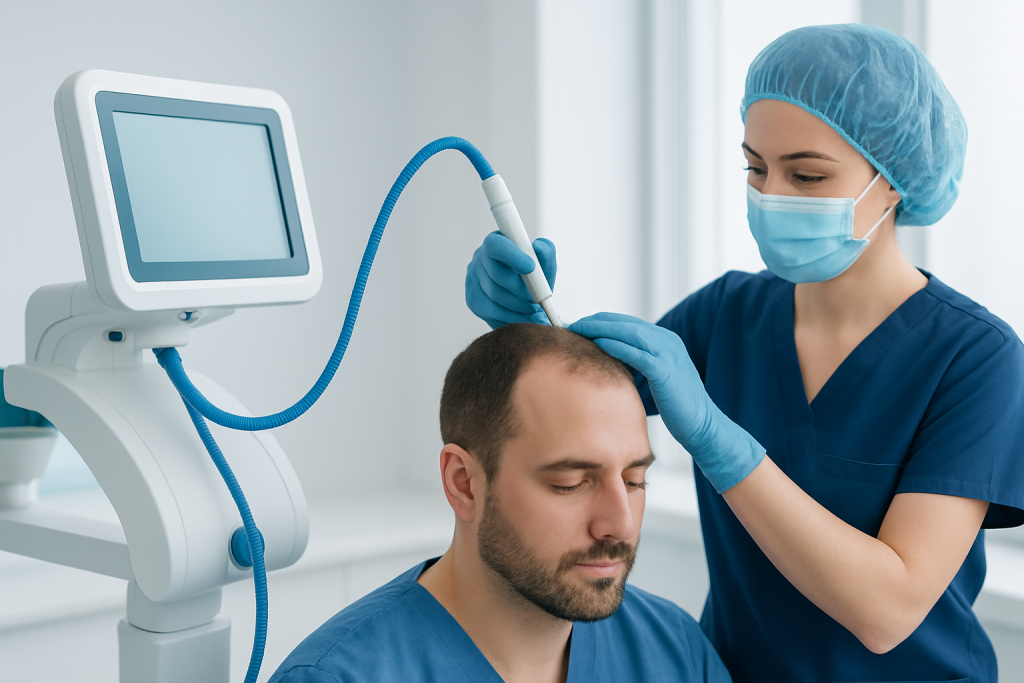
FUE stands for follicular unit extraction. In this method, the team removes follicular units individually rather than taking a strip of scalp. DHI, or direct hair implantation, refers to the way those follicles are placed into the recipient area with an implanter pen or similar device. In everyday terms, the procedure is designed to give the surgeon detailed control while keeping the process minimally invasive.
During planning, the surgeon usually maps the areas to be restored, estimates graft numbers, and discusses the shape of the future hairline. The team also examines the donor area because the number, quality, and resilience of follicles there determine what can realistically be achieved. A balanced plan aims for natural appearance first, not simply maximum density.
People sometimes compare DHI FUE with other transplant methods, but the more useful question is which technique best matches the individual case. Some patients need conservative restoration over several sessions, while others may be candidates for focused correction in a smaller area. The best technique is the one that fits the scalp, the hair characteristics, and the long-term plan.
Symptoms and Signs That Lead People to Consider It

DHI FUE is not performed for every kind of hair loss. It is usually considered when thinning has become stable or predictable and when the person is seeking visible restoration in the hairline, temples, crown, or other limited areas. Common patterns include a receding hairline, thinning at the crown, or diffuse reduction in density in select cases.
Some people notice that the change is more cosmetic than medical at first, but hair loss can affect confidence and daily routines. They may spend more time styling, avoiding certain hairstyles, or trying to conceal widening areas of scalp. A consultation can help clarify whether the concern is caused by pattern hair loss, scarring, traction, alopecia areata, or another condition with a different treatment pathway.
Before deciding on surgery, it is important to identify whether the hair loss is active. If shedding is ongoing or the cause is inflammatory, hormonal, medication-related, or nutritional, treatment may need to focus on the underlying problem first. Transplant surgery works best when the medical picture is well understood.
Causes and Risk Factors
The most common reason people seek DHI FUE is androgenetic alopecia, also known as male or female pattern hair loss. This condition is influenced by genetics and hormones and usually causes gradual thinning over time. Because the donor area often remains stronger, it can provide follicles for redistribution to thinner zones.
Other factors can also contribute to hair loss and may change the treatment plan. These include previous injury or scarring to the scalp, traction from tight hairstyles, certain autoimmune conditions, hormonal shifts, and some medications or medical illnesses. In these situations, a transplant may or may not be appropriate, depending on whether the underlying condition is controlled and whether the scalp can support grafts.
Key considerations for candidacy often include:
- Stability of the hair loss pattern
- Adequate donor hair quality and density
- Healthy scalp tissue in the recipient area
- Realistic expectations about coverage and density
- Willingness to follow pre- and post-procedure instructions
People traveling internationally for treatment should also think beyond the operation itself. Follow-up access, language support, and the ability to follow care instructions after returning home all matter when planning a procedure like DHI FUE.
Diagnosis and Pre-Procedure Assessment
Before a DHI FUE procedure, a qualified clinician should confirm the diagnosis rather than assuming all thinning is the same. The assessment usually includes a medical history, scalp examination, review of hair loss timing, and discussion of family history. In some cases, photographs, dermoscopy, blood tests, or referral to a dermatologist may be helpful.
The purpose of evaluation is to understand both the cause of hair loss and the safety of surgery. The team may look for signs of active shedding, scalp inflammation, infection, iron or thyroid issues, or medications that could be contributing to the problem. If the hair loss is not stable, delaying surgery may be the wiser choice.
Planning also includes designing the hairline and deciding where each graft should go. This is where experience matters: a hairline that is too low, too dense, or too symmetrical may look unnatural over time. The best plans anticipate future hair loss and preserve donor follicles for later needs.
Treatment Options and How the Procedure Is Done
The DHI FUE procedure usually begins with preparation of the donor and recipient areas, followed by local anesthesia so the person remains awake and comfortable. Follicular units are then extracted one by one from the donor region. After that, each graft is implanted directly into the recipient area using the implanter tool, with attention to angle, direction, and spacing.
Because the follicles are handled individually, the procedure can be methodical and time-consuming. The exact length varies with the number of grafts and the complexity of the plan. Some people may need only a focused session for the hairline, while others may need broader coverage of the frontal scalp or crown.
Other treatment options may be discussed alongside DHI FUE. These can include medication for certain types of hair loss, low-level light therapy, platelet-rich plasma in selected cases, or a different transplant strategy if the pattern of loss and donor availability suggest it. The decision should be based on medical need, not on a one-size-fits-all preference for a specific method.
Potential advantages of DHI FUE may include precise placement and no linear donor scar, but it is not automatically better for every person. The outcome depends heavily on surgical skill, graft handling, scalp condition, and the overall treatment plan.
Prevention, Recovery, and Self-care
Hair transplant surgery does not prevent future hair loss on its own. Many patients still need a long-term strategy to protect native hair that remains outside the transplanted area. That strategy may involve medical therapy, monitoring, and follow-up visits if appropriate for the individual.
After the procedure, temporary redness, swelling, crusting, and tenderness are common. The scalp needs to be treated gently while grafts settle in. Patients are usually given detailed instructions about washing, sleeping position, physical activity, sun exposure, and when to resume normal grooming.
Helpful recovery habits often include:
- Avoiding rubbing, scratching, or picking at the grafts
- Sleeping with the head elevated if advised
- Following the clinic’s washing schedule exactly
- Protecting the scalp from sun and heavy sweating early on
- Attending all recommended follow-up appointments
It is also important to prepare for the emotional side of recovery. New growth does not appear immediately, and shedding of transplanted hairs can happen before regrowth begins. This does not necessarily mean failure; it is often part of the normal growth cycle. A patient who is traveling home after treatment should leave with clear written aftercare instructions and a point of contact for questions.
When to See a Doctor
Anyone considering the DHI FUE procedure should first meet a doctor who can confirm the cause of hair loss and determine whether surgery is appropriate. This is especially important if the thinning is sudden, patchy, associated with scalp pain or scaling, or happening alongside fatigue, weight changes, or other body symptoms.
After surgery, medical review is sensible if there is increasing redness, drainage, severe pain, fever, or unexpected swelling. These are not typical recovery features and should be assessed promptly. It is also appropriate to contact the clinic if grafts seem to have been disturbed, if there are concerns about healing, or if instructions are difficult to follow.
For international patients, continuity matters. The ideal care plan includes a surgeon who can explain the procedure clearly before travel, provide realistic expectations, and arrange follow-up once the person has returned home. Acibadem Health Point’s multidisciplinary specialists and JCI-accredited hospitals diagnose and treat hair and scalp conditions for international patients with that continuity in mind.
Frequently asked questions
01What is the DHI FUE procedure?
DHI FUE is a hair transplant method that combines follicular unit extraction with direct implantation. Individual follicles are removed from a donor area and placed directly into thinning areas using a special tool. The goal is to restore hair in a way that looks natural and follows the person’s hair growth pattern.
02Is DHI FUE better than standard FUE?
Neither technique is automatically better for everyone. DHI may offer more precise placement in certain cases, while other FUE approaches may suit different scalp conditions or transplant goals. The best choice depends on the person’s hair loss pattern, donor supply, and the surgeon’s assessment.
03Who is a good candidate for DHI FUE?
Good candidates usually have stable hair loss, enough donor hair, and healthy scalp tissue in the areas being treated. It is commonly considered for pattern hair loss, hairline restoration, or selected thinning areas. A doctor should first rule out active medical causes of shedding.
04How long does recovery take after DHI FUE?
Early healing often takes days to a couple of weeks, but the scalp may remain pink or sensitive for longer in some people. New hair growth typically takes months rather than weeks, so patience is important. The clinic’s aftercare instructions help protect grafts during the healing phase.
05Does DHI FUE leave scars?
FUE techniques usually leave tiny dot-like marks in the donor area rather than a single linear scar. These marks are often small and less noticeable, though healing can vary from person to person. Scarring risk is reduced by careful technique and good aftercare, but it cannot be eliminated completely.
06Can hair loss come back after a DHI FUE procedure?
Yes, the transplant restores moved follicles, but it does not stop all future hair loss in untreated areas. Native hair around the transplant can continue to thin over time if the underlying condition progresses. That is why long-term planning and follow-up are important.
This article is for general information only and is not a substitute for professional medical advice. Please consult a qualified doctor about your individual situation.
Hair transplant in Turkey — costs, graft counts & a free assessment
JCI-accredited · board-certified surgeons · reply within 24h
Add us as a Preferred Source to see more of our trusted health content across Google Search, AI Overviews and Discover.