Aesthetic Photos and Results: How to Read Before-and-After Images Safely

Before-and-after images can be useful when someone is researching aesthetic treatments, but they need to be interpreted carefully. Understanding lighting, timing, editing, and patient differences helps set realistic expectations and supports safer decision-making.
Overview: What Before-and-After Images Can and Cannot Show
Before-and-after images are commonly used to show examples of results from aesthetic procedures. They can help a person understand what a treatment is designed to improve, such as body contour, breast shape, facial balance, or skin texture. When presented carefully, these images may support informed questions and more realistic expectations.
However, before-and-after images are not the same as a diagnosis, treatment plan, or guarantee. Every person has a different starting point, including anatomy, skin quality, age, healing response, and medical history. Two people having the same procedure may still have noticeably different outcomes.
Photos also show only a limited moment in time. They usually do not reveal how the person felt during recovery, whether swelling was still present, whether a revision was needed, or how the result changed over months. For this reason, images are best viewed as examples rather than proof of what will happen for everyone.
The safest approach is to use before-and-after images as one part of research. They are most helpful when combined with a consultation with a qualified specialist, a careful review of risks and benefits, and a clear discussion of goals.
What Makes an Image Misleading
Even honest photo sets can be hard to interpret if they are not standardized. Small changes in camera angle, distance, body position, facial expression, or head tilt can make a result look more dramatic or more subtle. Lighting is especially important. Bright front lighting may soften shadows and hide texture, while side lighting can emphasize contour or irregularities.
Styling can also change the impression of a result. Makeup, hair styling, skin products, tanning, shaving, compression garments, and clothing choices may affect how the photo is perceived. In facial procedures, smiling in one image and staying neutral in another may alter the apparent shape of the cheeks, eyes, or jawline.
Timing matters as well. An “after” image taken too early may still show swelling, bruising, or temporary asymmetry. On the other hand, an “after” image taken only when healing is at its best may not reflect the longer recovery process. A trustworthy series should explain how long after surgery or treatment the final image was taken.
Digital editing is another concern. Obvious retouching is not the only issue. Cropping, filters, skin smoothing, or contrast adjustments can all influence how a result appears. If the skin texture looks unnaturally blurred or the background lines appear distorted, it is reasonable to ask whether the image has been altered.
How to Evaluate Photos More Critically
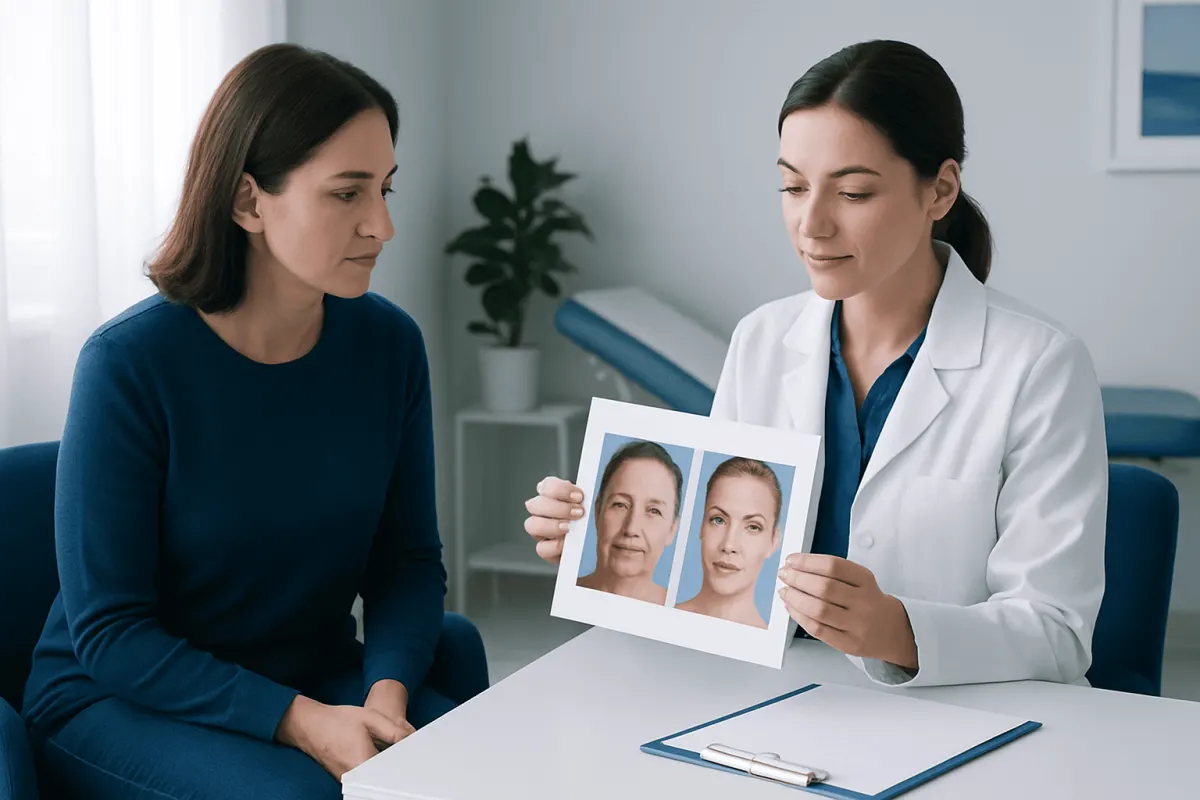
A careful viewer can look for signs that the photos were taken in a consistent and fair way. Helpful sets usually show the same pose, angle, background, lighting, and distance in both images. The person should ideally have a neutral expression, with similar hair placement and no distracting accessories. Clear front, side, and angled views are often more informative than a single dramatic angle.
It also helps to check whether the “before” photo truly reflects the starting point. For example, poor posture, a pushed-forward abdomen, or a different bra or garment can change the appearance of shape in breast or body images. In facial images, raised eyebrows, lip tension, or chin position can affect how the nose, eyelids, or jawline look.
Readers should also consider whether the person in the photo is similar to them. Features such as skin thickness, body frame, degree of aging, scar tendency, and previous surgery can all affect results. A photo from breast augmentation in a person with one body type may not be a good comparison for someone with very different anatomy or goals.
When available, a gallery showing a range of outcomes is more useful than only the most striking transformations. Seeing subtle, moderate, and more dramatic results can give a better picture of what a treatment can realistically achieve. This is true for procedures such as liposuction, eyelid and brow surgery, or acne scar treatment, where individual variation can be significant.
Why Individual Results Differ
Aesthetic outcomes depend on more than the procedure itself. Baseline anatomy is one of the biggest factors. Skin elasticity, bone structure, breast tissue, fat distribution, scar history, and facial symmetry all affect what can be changed and how visible that change will be. A person with significant skin laxity may need a different approach than someone whose main concern is fullness or projection.
Healing also varies from person to person. Swelling can last longer in some areas than others, and scar maturation often continues for many months. Lifestyle factors such as smoking, nutrition, sun exposure, and following aftercare instructions can influence both healing and final appearance.
Medical factors matter too. Previous surgery, hormonal changes, weight fluctuations, pregnancy, chronic conditions, and certain medications may affect treatment planning and results. In reconstructive cases, such as after keloid scars, burns, or facial trauma, the goals and limitations may differ from those of purely cosmetic procedures.
Because of these differences, a good consultation focuses on the individual rather than on copying someone else’s photo result. The main question is not whether a person can look exactly like an image, but what improvement is realistic, safe, and appropriate for their own anatomy and health.
Questions to Ask During a Consultation
Photos can help start a conversation, but they should lead to questions rather than assumptions. A patient may ask whether the photos shown are of the surgeon’s own patients, how long after treatment the “after” images were taken, and whether the pictures were standardized. It is also reasonable to ask whether any revision procedures were needed before the final result was photographed.
Another important step is to ask how closely the examples match the patient’s own starting point. A specialist can explain whether the concerns are similar in terms of anatomy, skin quality, age, and treatment goals. This discussion is often more useful than simply choosing a favorite image from a gallery.
Patients may also want to ask about the full treatment journey: expected downtime, likely swelling, scar care, follow-up visits, and when a result can be judged fairly. For procedures such as brow lift or body contouring, the early appearance can be quite different from the mature result.
Useful consultation questions include:
- Am I a good candidate for this procedure?
- What result is realistic for my anatomy?
- What are the main risks, limitations, and alternatives?
- How long does swelling or bruising usually last?
- What kind of scars should I expect, and how are they managed?
- How often is a revision or additional treatment needed?
Red Flags When Viewing Aesthetic Results Online
Caution is important when viewing images on social media or promotional websites. A gallery that shows only one angle, uses heavy filters, or avoids discussing timing and recovery may not provide enough information for safe decision-making. Results that appear unusually perfect, identical across different patients, or instantly final can create unrealistic expectations.
Another red flag is language that sounds like a promise. Ethical medical communication usually describes possibilities, suitability, and expected improvement rather than certainty. No surgeon or clinic can guarantee an exact aesthetic result, because healing and anatomy vary. This applies whether someone is considering aesthetic breast surgery or a less invasive cosmetic treatment.
It is also wise to be careful with testimonials that focus only on appearance without mentioning the consultation process, healing period, or follow-up care. A result photo may look impressive but still leave out important practical information. Balanced educational material should explain both potential benefits and possible downsides.
If a person feels pressured to decide quickly based on pictures alone, stepping back is sensible. Aesthetic treatment decisions should be made with enough time to compare options, understand risks, and discuss concerns with a qualified doctor.
Using Photos Safely as Part of Decision-Making
Before-and-after images can still be valuable when used in the right way. They are often most helpful for clarifying goals: for example, whether someone prefers a subtle or more noticeable change, whether they want correction of asymmetry, or whether they prioritize contour, lift, volume, or scar improvement. A patient can point to features they like in an image while understanding that the exact outcome will be personal.
Bringing a few thoughtfully chosen examples to a consultation may help communication. It can show what concerns the person most and what kind of change they have in mind. The specialist can then explain which parts of the example are realistic, which are not, and whether another treatment approach would be safer or more effective.
Reliable decision-making also includes checking qualifications, discussing benefits and risks, and making sure postoperative care is available. Near the end of the process, some patients choose centers with multidisciplinary support, especially if they are traveling. Acıbadem Health Point’s multidisciplinary specialists at JCI-accredited hospitals diagnose and treat aesthetic and reconstructive concerns for international patients.
In the end, the goal is not to reject before-and-after images, but to read them carefully. When images are interpreted alongside a proper medical assessment, they can support informed, realistic, and safer choices.
Frequently asked questions
01Are before-and-after images a reliable way to choose a procedure?
They can be helpful, but they should not be the only factor. Photos show examples of possible outcomes, while a consultation and physical examination are needed to decide what is safe and realistic for an individual.
02Why can the same procedure look very different from one person to another?
Results vary because anatomy, skin quality, age, healing, and medical history are different in each person. Surgical technique and aftercare also play a role, so identical results are not expected.
03How can someone tell if a photo may be misleading?
Differences in lighting, angle, posture, facial expression, makeup, and timing can all affect appearance. Photos are more trustworthy when they are taken in the same position, with similar lighting and a clearly stated recovery time.
04Should 'after' photos always be taken at the same time point after treatment?
A consistent time point makes comparison more meaningful. Final results may take weeks or months to develop, depending on the procedure, so it helps when the image explains how far along the healing process the patient is.
05Is it acceptable to bring example photos to a consultation?
Yes, this can be useful for communication. Example images can help show preferred features or goals, but the specialist will still explain what is realistic for the patient’s own anatomy.
06Do good before-and-after photos guarantee a good result?
No. Even excellent photo galleries do not guarantee the same outcome for another person, because healing and starting anatomy differ. They are best used to understand possibilities, not as promises.
This article is for general information only and is not a substitute for professional medical advice. Please consult a qualified doctor about your individual situation.
Hair transplant in Turkey — costs, graft counts & a free assessment
JCI-accredited · board-certified surgeons · reply within 24h
Add us as a Preferred Source to see more of our trusted health content across Google Search, AI Overviews and Discover.