Preparing for a Follow-Up Scan in Turkey

Medically reviewed by the Acıbadem clinical team — June 13, 2026
This guide explains how to prepare for a follow-up scan in Turkey, what happens before and during the appointment, and how results are usually shared. It also covers travel planning, safety, and the support you can expect from Acibadem Health Point.
At a glance
- Procedure type: Diagnostic imaging follow-up
- Purpose: To compare with earlier scans, monitor healing, or check a known condition
- Anesthesia: Usually none; sedation is uncommon and only used in specific cases
- Hospital stay: Outpatient; most patients leave the same day
- Estimated recovery: No physical recovery for most scans; return to normal activity is usually immediate
- Return to daily life: Often the same day unless contrast or sedation requires short observation
- Final result timeline: Preliminary findings may be same day; formal report timing varies by scan type
- Suitable department: Radiology and the referring clinical specialty
- International patient support: Online coordination, interpreter assistance, transfer guidance, and remote follow-up
What is this treatment?
A follow-up scan is a repeat imaging study used to see how a condition is changing over time. It may be requested after surgery, during cancer surveillance, after an injury, or when your doctor wants to compare a current image with an older one for a more accurate clinical picture.
In Turkey, follow-up imaging is commonly arranged through radiology departments that work closely with the referring specialist. At Acibadem Health Point, the goal is to make the process straightforward for international patients: your records are reviewed in advance, the exam is scheduled with the right department, and your results are sent back in a format your treating doctor can use.
Depending on the reason for the scan, follow-up imaging can include ultrasound, X-ray, CT, MRI, mammography, PET/CT, or other targeted studies. The exact method is chosen to answer a specific medical question, not simply to “take another picture.”
When is it recommended?
Your doctor may recommend a follow-up scan when they need to check whether a treatment is working, whether an area is healing as expected, or whether a known finding is stable. It is also used when symptoms change and your clinician needs updated information before deciding the next step.
Common reasons include monitoring a tumor, checking the result of surgery, reassessing a fracture or ligament injury, following up an infection, or watching a chronic condition such as a cyst, nodule, or organ lesion. Sometimes the scan is scheduled at a planned interval even if you feel well, because some changes are only visible on imaging.
If you are traveling internationally, the scan is often part of a broader care plan rather than a stand-alone appointment. That is why sharing previous images and reports before you travel is so useful: it helps the team decide whether the same exam is enough or whether a different protocol would be more informative.
Who is a good candidate?

You are usually a good candidate for a follow-up scan if your doctor needs comparison imaging and you can safely undergo the requested test. In many cases, the most important factor is not age or nationality, but whether the scan will genuinely help guide care.
You may need extra review if you are pregnant, have kidney disease, have a contrast allergy, have implants or devices, or struggle with lying still due to pain, anxiety, or mobility limitations. These details do not automatically prevent imaging, but they may change the choice of scan or preparation steps.
For international patients, a good candidate is also someone who can provide prior reports, medication details, and the reason the scan was ordered. This information lets Acibadem Health Point coordinate the right appointment and reduce the chance of delays after travel.
Treatment options
“Follow-up scan” is a broad term, so the most appropriate option depends on what your doctor is looking for. Some patients need a direct repeat of the previous exam so images can be compared like-for-like. Others need a more focused study if the original question has changed.
Typical options include ultrasound for soft tissue and organ follow-up, X-ray for bone and chest reassessment, CT for detailed cross-sectional anatomy, MRI for high-detail soft tissue evaluation, and PET/CT in selected cases where metabolic activity needs to be assessed. In some situations, contrast-enhanced imaging is recommended to improve visibility; in others, a non-contrast study is safer or sufficient.
Your radiologist and referring specialist will usually decide whether the best path is routine surveillance, a repeat scan with contrast, a different modality, or a shorter interval before the next check. The right choice depends on the underlying condition, what changed since the last study, and whether the answer needs to be very precise or simply reassuring.
Online evaluation before travel
Before you fly, the most efficient step is often an online review of your previous reports and images. This helps the team confirm whether the planned scan is appropriate, whether contrast is needed, and how much time you should allow in Turkey.
At Acibadem Health Point, international patient coordination can help organize this process in advance. You may be asked to upload prior imaging, pathology reports, discharge summaries, and a short description of your current symptoms or the reason for follow-up.
This pre-arrival review can prevent avoidable repeat tests and can also flag important details, such as fasting requirements, kidney function checks, or medication adjustments. For many patients, this step makes the trip calmer because they know what is expected before they arrive.
Before the treatment
Your preparation depends on the type of scan, but a few basics are common. You should bring previous imaging and reports, follow instructions about eating or drinking, and tell the team about allergies, implants, recent illnesses, and any chance of pregnancy.
If contrast is planned, you may be asked about kidney function, thyroid issues, asthma, or prior reactions to imaging contrast. Some patients also need blood tests before the appointment. If you take medication regularly, do not stop it on your own unless your doctor specifically tells you to do so.
Wear comfortable clothing without metal parts if possible, and remove jewelry before the scan. If you feel anxious in enclosed spaces, let the team know early so they can discuss ways to improve comfort, especially for MRI appointments.
What happens during the treatment
On the day of the scan, you will usually check in, confirm your identity, and review the exam plan with the radiology team. The staff may ask a few final safety questions, especially if contrast or sedation is involved.
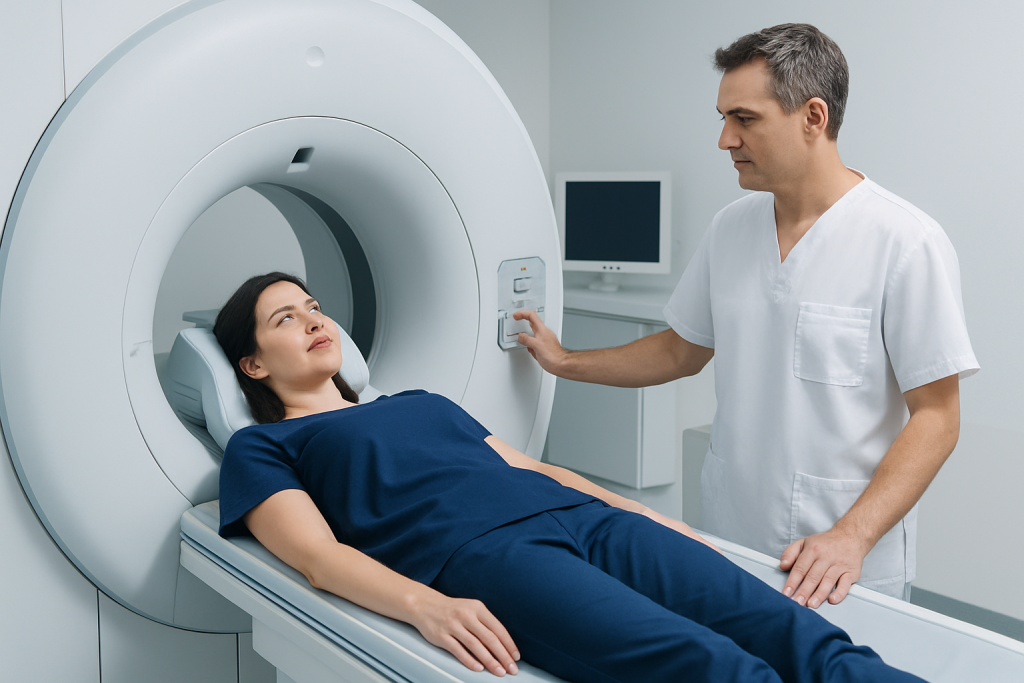
During the scan, you will be positioned on the table or in front of the imaging device, and you will need to remain as still as possible. Some studies are very quick; others take longer and may include multiple image series. If contrast is used, it may be given through a vein, orally, or in another method depending on the exam.
You can usually communicate with the staff during the procedure. If you feel uncomfortable, claustrophobic, or unwell, tell them immediately. Their job is not only to obtain accurate images, but also to make sure you are safe and understand each step.
Hospital stay and discharge
Most follow-up scans do not require a hospital stay. In many cases, you finish the exam, stay briefly for observation if needed, and leave the same day.
If contrast was used, the team may ask you to drink fluids and wait for a short period before discharge. If sedation was necessary, you may need someone to accompany you and should avoid driving or making important decisions until the effects wear off.
Before you leave, you may receive instructions about hydration, activity, and when to expect the report. For international patients, Acibadem Health Point can help coordinate how results are shared with you and, when appropriate, with your doctor back home.
Recovery timeline
For most follow-up scans, there is no true recovery period because the test does not involve surgery or a wound. The main considerations are comfort after contrast, mild fatigue from waiting, or observation after sedation if that was used.
| Timeframe | What to expect |
|---|---|
| First 24 hours | Most patients resume normal activities. If you had contrast, you may be advised to drink fluids. If you had sedation, rest and avoid driving. |
| First week | No physical healing is usually needed. Your main task is to review the report with your doctor and decide whether any next step is required. |
| Weeks 2-4 | If the scan was part of ongoing monitoring, this is often when your clinician compares findings with prior studies and updates the care plan. |
| Months 1-3 | Some conditions are followed at set intervals, so another scan may be scheduled depending on the result and the original reason for imaging. |
| Final result | Imaging findings are available once the radiologist has reviewed the study and issued the report; your treating physician then interprets them in context. |
Because the scan is diagnostic, the “recovery” timeline is mostly about understanding results and next steps rather than healing from the procedure itself. If you have any unusual symptoms afterward, contact the team rather than assuming they will pass on their own.
What to avoid after treatment
What you should avoid depends on the scan type. If you had sedation, you should not drive, drink alcohol, or sign important documents until you are fully alert and told it is safe. If contrast was used, follow the hydration advice given by your team.
You should avoid ignoring new symptoms simply because the scan is finished. A follow-up study is only one part of your care, and new pain, shortness of breath, fever, swelling, or a rash should still be reported.
If you are waiting for official results, do not try to self-diagnose from the images alone. Raw images can look worrying or reassuring without giving the full story, and the radiology report should always be read together with your clinical history.
Risks and possible complications
Follow-up scans are generally safe, but every imaging test has some possible downsides. These may include discomfort from staying still, anxiety during enclosed scans, mild bruising at an IV site, or a reaction to contrast in susceptible patients.
Some scans involve radiation exposure, such as X-rays and CT. Your doctor should only request these when the medical benefit is greater than the risk, and the imaging protocol should be chosen carefully to use the lowest appropriate exposure.
When contrast is used, the main concerns are allergy-like reactions and, in some cases, kidney-related precautions. MRI contrast has a different safety profile than CT contrast, which is why your medical history matters. The team will screen you before the exam and can adapt the plan if needed.
Warning signs: when to contact a doctor
Contact a doctor or the imaging team promptly if you experience any of the following after the scan:
- Difficulty breathing, wheezing, or throat tightness
- Swelling of the face, lips, tongue, or eyes
- Widespread rash, hives, or severe itching
- Persistent vomiting, severe dizziness, or fainting
- Severe pain, bleeding, or marked swelling at the IV site
- Chest pain, new palpitations, or severe weakness
- Fever or worsening symptoms that were not present before the scan
- Any new symptom that feels intense, unusual, or rapidly worsening
If you were given sedation, seek help if drowsiness becomes extreme or you have trouble waking up normally. If you are unsure whether a symptom is urgent, it is safer to call and ask than to wait.
Results and expectations
The scan itself does not “treat” the condition; it gives your clinicians a clearer map of what is happening. In some cases, the result is reassuring and simply confirms that healing is on track or the finding is stable.
In other cases, the report may show that treatment needs to continue, change, or be repeated at a different interval. That is not a failure of the scan — it is exactly why follow-up imaging exists. The information helps your doctor make decisions based on evidence rather than guesswork.
Be prepared for the fact that results may not be identical from one scan to the next because different machines, scan settings, and readers can influence how findings are described. If something is unclear, ask for a plain-language explanation and for the comparison with your previous study.
International patient travel planning
When you travel for a follow-up scan, timing matters almost as much as the exam itself. You should allow enough time for arrival, the appointment, possible pre-scan testing, and a reasonable window for report review before you leave Turkey.
Acibadem Health Point can help coordinate scheduling around your flight plans, interpreter needs, and any transfer or accommodation questions. If your scan depends on earlier records, send those well before travel so the team can verify that the planned appointment is appropriate.
It is also wise to keep your stay flexible in case the doctor recommends an additional sequence, a same-day consultation, or a different follow-up test. A little buffer time can make the experience far less stressful and can help you return home with a clearer plan.
Cost and package information
The cost of a follow-up scan can vary depending on the imaging method, whether contrast is used, whether additional views or sequences are needed, and whether pre-scan laboratory tests are required. The final amount may also be influenced by the need for specialist review, urgent scheduling, or comparison with prior studies.
When international patients ask about packages, it is helpful to separate what is usually included from what may be extra. Typically included items may be the imaging appointment itself, radiologist interpretation, and standard coordination support. Not always included are unrelated specialist consultations, repeat scans if a different protocol becomes necessary, extended hospital observation, medications, or accommodation and travel costs.
At Acibadem Health Point, the safest approach is to review your records first and then provide a plan tailored to your clinical need. That way, you understand the scope of the appointment before you travel, without relying on assumptions that may not fit your case.
Why choose Acibadem
For a follow-up scan, quality is often measured by details: careful comparison with previous images, clear communication, and a team that understands how important the result is to the next decision in your care. Acibadem Health Point works within JCI-accredited hospitals and connects you with radiology and specialty teams who can review the scan in context.
International patients benefit from a coordinated pathway that includes record review, appointment planning, interpreter support when needed, and help with transfers and practical logistics. That can reduce the back-and-forth that often makes medical travel more tiring than the procedure itself.
Just as importantly, you are not left to interpret the result alone. When appropriate, your report can be discussed with the referring physician, and remote follow-up helps you continue care after you return home.
Medical review and disclaimer
This guide has been reviewed by the Acibadem Health Point medical team for general informational accuracy. It is intended to help you understand the usual steps involved in a follow-up scan in Turkey, especially if you are planning care from another country.
It does not replace a consultation, diagnosis, or personalized treatment plan from a physician. The right scan, preparation, and timing depend on your medical history, previous imaging, current symptoms, and any safety considerations such as pregnancy, kidney function, or contrast allergy.
Suitability always requires physician evaluation. If you are uncertain about your scan plan, bring your records for review so your care team can guide you safely and appropriately.
Step by step
- Initial contact. You reach out with the reason for the follow-up scan, your preferred travel dates, and any known diagnosis or prior treatment history.
- Medical record / photo submission. You send previous scan reports, image files if available, discharge summaries, and any relevant lab results or referral letters.
- Preliminary medical review. The team checks whether the planned scan is appropriate, whether comparison imaging is needed, and whether any safety issues must be addressed first.
- Treatment plan and quotation. You receive a proposed imaging plan, preparation instructions, and a clear explanation of what is and is not included in the arranged service.
- Travel planning. International patient coordinators help with timing, airport transfer guidance, interpreter requests, and accommodation planning if needed.
- Arrival. When you arrive in Turkey, you confirm the appointment schedule and make sure your records are available to the radiology team.
- In-person consultation. If required, you meet the doctor or imaging team to review symptoms, prior studies, medications, allergies, and the exact question the scan must answer.
- Pre-operative tests. For some scans, this means laboratory checks such as kidney function or a brief safety assessment rather than an operation-related workup.
- Treatment. You undergo the imaging study following the planned protocol, with contrast or special positioning used only when medically appropriate.
- Hospital stay. Most patients do not need to stay overnight and leave after a short observation period, if any observation is needed.
- First control. The radiologist reviews the images and, when possible, a preliminary interpretation is shared or discussed with the relevant specialist.
- Discharge / travel clearance. You receive aftercare instructions, any necessary limitations, and guidance on whether it is safe to travel immediately or after a short wait.
- Remote follow-up. After you return home, Acibadem Health Point can help arrange remote review of the results or coordinate with your local doctor when appropriate.
Your checklist
- Passport and travel documents
- Previous scan reports and image files, if available
- Referral letter or doctor’s request for the follow-up scan
- Medical history summary, including the reason for monitoring
- Current medication list, including supplements and blood thinners
- Known allergies, especially to contrast agents or medications
- Previous surgeries, implants, or medical devices
- Recent laboratory results, especially kidney function if contrast may be used
- Current symptoms and when they started or changed
- Pregnancy status if relevant
- Interpreter or accessibility needs, if applicable
- Contact details for your local doctor for result sharing
Key takeaways
- A follow-up scan is usually done to monitor a known issue, compare progress, or confirm treatment response.
- Most scans are outpatient, and many patients can return to normal routines the same day.
- You may need prior images, a referral, fasting, or contrast preparation depending on the scan.
- If you travel for imaging, plan time for the appointment, possible waiting, and report review.
- Results can be clear and helpful, but they should always be interpreted by your treating physician.
Frequently asked questions
Who usually needs a follow-up scan?
A follow-up scan is often recommended for people who need monitoring after treatment, surgery, or an earlier finding that was not fully resolved. It can also be used when symptoms have changed and your doctor needs updated imaging. The main question is whether the scan will change your care plan.
Can I travel to Turkey just for the scan?
Yes, many international patients travel for imaging only, especially when they already have a diagnosis and need comparison or surveillance. It is best to send your records in advance so the team can confirm the correct study before you book flights. That reduces the risk of needing a second appointment.
How long should I stay in Turkey?
This depends on the type of scan and how quickly the report needs to be reviewed. Some patients can complete everything in a day, while others may need an extra day if contrast testing, specialist consultation, or report discussion is required. Build in a small buffer if your travel schedule is tight.
Is a follow-up scan painful?
Most follow-up scans are not painful, although some people find the table uncomfortable or the MRI environment noisy or enclosed. If contrast is given through a vein, you may feel a brief pinch from the needle. The team can usually help make the process more comfortable.
Do I need to fast before the scan?
Not always. Fasting is sometimes needed for certain contrast studies or abdominal scans, but many imaging appointments require no fasting at all. You should follow the specific instructions you receive after your records are reviewed.
What factors affect the cost?
The type of scan, whether contrast is used, whether special sequences or extra views are needed, and whether pre-scan tests are required can all affect cost. Coordination needs, specialist review, and the complexity of the case may also play a role. It is best to ask for a personalized plan rather than assume all imaging appointments are the same.
How soon will I get my results?
Timing varies by scan type and by whether the study needs formal specialist comparison with prior images. Some preliminary information may be available the same day, while the final report can take longer. Your team should tell you the expected turnaround before you travel.
Are follow-up scans safe?
They are generally safe when ordered for a clear medical reason and performed with standard precautions. The team will screen for contrast allergies, kidney problems, pregnancy, and device-related considerations when relevant. If there is a safety concern, the plan can often be adjusted.
What if the scan shows something unexpected?
Unexpected findings sometimes happen, and that is one reason follow-up imaging is useful. If something new appears, your doctor will interpret it alongside your history, symptoms, and earlier scans. You should avoid self-reading the result and wait for medical guidance.
What makes Acibadem Health Point helpful for international patients?
Acibadem Health Point offers coordinated review, interpreter support, transfer guidance, and help with sharing results remotely after you return home. The care process is designed so you can move through the appointment with clear instructions and fewer logistical surprises. That can be especially useful when a scan is only one part of ongoing treatment.
More Patient Guides

Bin ich ein geeigneter Kandidat für eine Behandlung im Ausland?
Erfahren Sie, ob eine Behandlung im Ausland in Türkiye für Sie geeignet ist, was Sie vorbereiten sollten, wie die Beurteilung abläuft und…

International Patient Medication Reconciliation Guide
Learn how medication reconciliation works for international patients in Turkey, what to bring, how review happens, and how to prepare safely.
10 min read
Clinic Visit Checklist for International Patients
Use this checklist to prepare for a safe, smooth clinic visit in Turkey, from documents and tests to travel, consultation and follow-up.
9 min read