

How to Arrange Mobility Equipment for Your Stay in Turkey
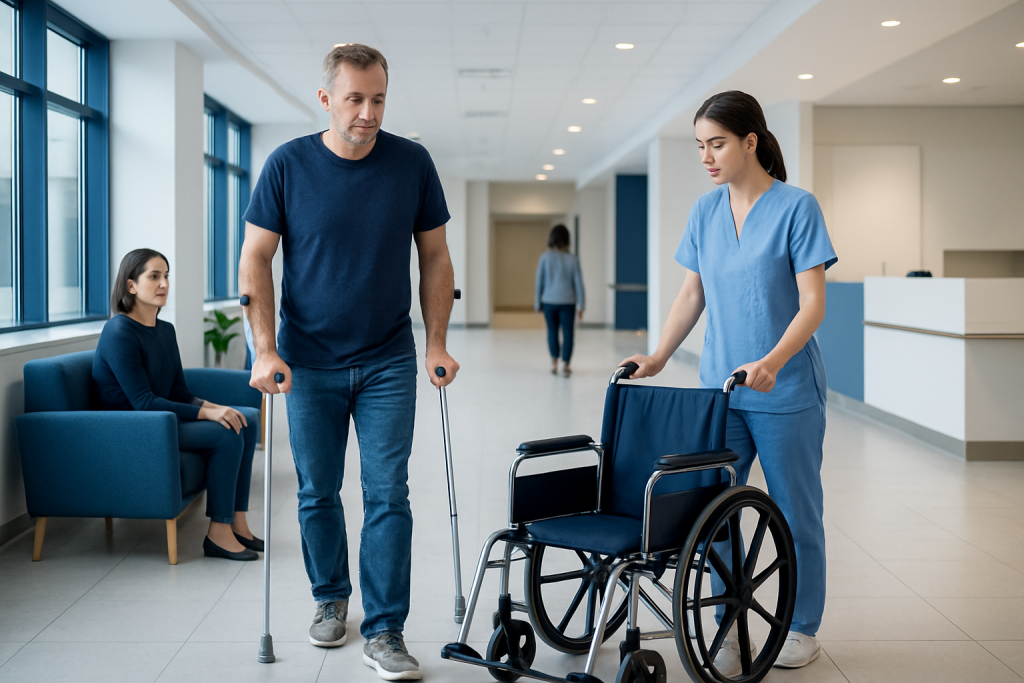
Plan mobility equipment before you travel to Turkey with a simple checklist for wheelchairs, walkers, beds, and hotel or airport support.
Medically reviewed by the Acıbadem clinical team — June 12, 2026
If you are traveling to Turkey for care and need help moving safely, arranging the right mobility equipment early can make the trip far easier. This guide walks you through what to request, when to organize it, and how Acibadem Health Point can help coordinate practical support around your stay.
At a glance
- Best time to plan: As soon as your care plan is confirmed
- Common equipment: Wheelchairs, walkers, transfer aids, bedside commodes, hospital beds
- Who can help coordinate: International patient services and your care team
- Where support may be needed: Airport, hotel, hospital, transfers, and recovery stay
- What to prepare: Your height, weight, mobility level, and any specific safety needs
Start with the way you move now, not with the equipment first
Before anyone books a wheelchair or asks a hotel for an adjustable bed, it helps to describe how you actually get around on a normal day. Can you walk short distances with support? Do you need a chair for longer corridors? Do stairs, narrow doorways, or getting in and out of a car create the biggest problem? Those details matter more than a generic label like “mobility aid needed.”
If you are traveling for treatment, your needs may also change once you arrive. You might be independent at the airport but need extra help after a procedure, during physiotherapy, or while you are resting at the hotel. Acibadem Health Point can use that information to coordinate practical support around your schedule rather than treating mobility as a single item to tick off.
A useful rule is to think in three stages: travel, hospital stay, and recovery time. Each stage may call for different equipment, different assistance, and a different level of supervision. When you separate the trip this way, it becomes much easier to ask for exactly what you need.
What mobility equipment may be worth arranging in advance
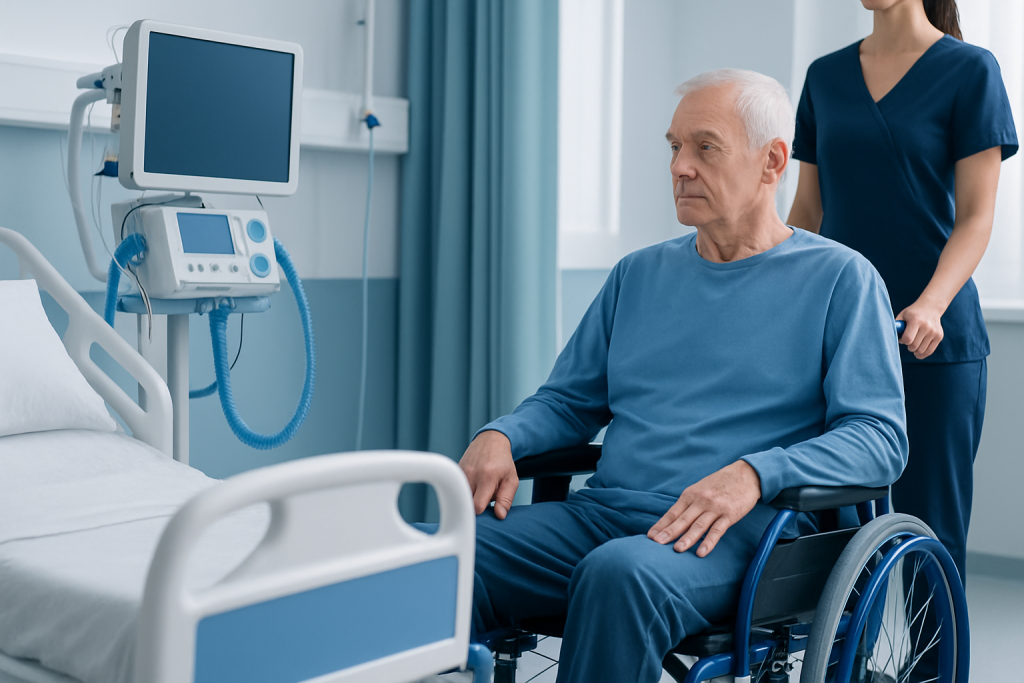
The right setup depends on your condition, the length of your stay, and whether you will be carrying baggage, managing pain, or recovering from surgery. Common items include standard or transport wheelchairs, walkers or rollators, crutches, shower chairs, bedside commodes, raised toilet seats, and hospital beds or adjustable beds for recovery accommodation.
For many international patients, it is not only about the equipment itself. Safe transfers, step-free access, elevator size, bathroom layout, and bed height can matter just as much. A walker is less helpful if the hotel bathroom is too tight to use comfortably, and a wheelchair is less useful if the entrance has several stairs without a ramp.
Some people also benefit from having a caregiver-friendly room setup, such as extra space beside the bed, a chair for a companion, or a nearby surface for medications and water. If you are unsure what is appropriate, ask your care team to describe the likely activity level during your stay. Acibadem Health Point teams regularly coordinate with international patients on these everyday needs, especially when recovery is taking place away from home.
- Wheelchair or transport chair for longer distances
- Walker, rollator, or cane for short, supported walking
- Shower chair or non-slip bathing support
- Raised toilet seat or commode for easier transfers
- Adjustable bed or extra bed support in recovery accommodation
How to request equipment before you travel

The simplest approach is to raise the request as soon as your treatment dates are discussed. Do not wait until you are packing. Mobility equipment may need to be reserved, delivered, or matched to your hotel room before you arrive, especially if you need a specific size or if more than one item is required.
When you contact Acibadem Health Point, share the practical facts that help a coordinator make good decisions: your height and weight, whether you can stand and transfer independently, whether you use stairs, and whether you need help at night. If you already use equipment at home, tell them what it is and whether you plan to travel with it or rent locally.
If you are bringing your own device, ask in advance whether airline policies, battery rules, or baggage handling will affect it. If you are renting in Turkey, ask how delivery, collection, and backup support work if the item needs adjustment during your stay. Small details like these are often what prevent avoidable stress after a long flight.
Airport, hotel, and hospital: each one has a different access check
Mobility support works best when it is planned point by point. At the airport, you may need wheelchair assistance, help with luggage, or time to move through security without rushing. At the hospital, you may need a chair for transport between departments, accessible waiting areas, or a smoother route from admissions to your appointment.
Your hotel or serviced apartment needs a separate review. Ask about step-free entry, elevator access, room width, bathroom rails, shower access, bed height, and whether staff can help with luggage or room setup. A room that looks comfortable online can still be inconvenient if the bathroom door is too narrow for your aid or if the bed is too low to use safely.
Acibadem Health Point can help you think through this travel chain in a practical order. That may include advising what to ask the hotel, what to confirm with transfer providers, and what to keep close for daily use. The goal is simple: fewer surprises after arrival, and less energy spent managing logistics when you should be resting.
How to pack for comfort and safer movement
Pack for the activities you will actually be doing, not for an ideal version of the trip. Keep essential items within easy reach: medications, water, phone charger, travel documents, any mobility aid accessories, and a copy of your care instructions. If you rely on a walker or cane, make sure it is labeled clearly and easy to access after customs or baggage collection.
Footwear matters more than many travelers expect. Choose shoes that are stable, closed, and simple to put on and take off. Loose clothing may be more comfortable if you are using a brace, compression garment, or post-treatment support.
If you will need to sit for longer periods, consider any pressure relief or positioning items you normally use. You do not need to overpack, but you do need to avoid the common mistake of leaving important comfort items at home because they seemed minor. When mobility is limited, “minor” can quickly become essential.
When your condition changes during the stay
It is common for mobility needs to shift after treatment, after a procedure, or simply after a tiring travel day. A patient who managed well on arrival may need more support by the second or third day. Tell your care team early if standing, walking, toileting, or showering becomes harder than expected.
That is one reason to keep your plan flexible. You may start with a walker and later need a wheelchair for longer distances. You may think a standard hotel room will be enough and then realize that an accessible bathroom or a different bed height would make daily life much safer.
Acibadem Health Point’s international patient services can help re-check practical arrangements if your needs change. In a destination country, having one team that understands both your treatment timeline and your day-to-day access needs can save a lot of back-and-forth between providers, drivers, and accommodation staff.
A smoother return home starts before you leave Turkey
Plan the last part of the trip with the same care you used at the beginning. If you will be flying home with mobility equipment, ask how it should be cleaned, packed, or checked. If you rented equipment locally, confirm the collection process so you are not dealing with returns on the day of travel.
It also helps to ask for a brief summary of what support you used during your stay. This can be useful if your doctor at home wants to understand whether your mobility limitations changed, improved, or need follow-up. If you are recovering from treatment, your home setup may need to be adjusted before you land, especially for stairs, bathing, or sleeping.
Many international patients find that a little forward planning on departure reduces anxiety at exactly the time they are most tired. Acibadem Health Point can help you think through these final steps so the handover back home feels orderly rather than rushed.
What a practical mobility plan usually includes
A good plan is not a single booking; it is a chain of small confirmations. You want to know what you are using, where it will be delivered, who can adjust it if needed, and how you will move between airport, hospital, and accommodation. When those pieces are written down, the trip feels much more manageable.
For many patients, the most helpful part is knowing that someone has checked the details with a real-world recovery in mind. Acibadem Health Point’s JCI-accredited hospitals, multidisciplinary specialist teams, and international patient services are designed to make coordination easier, especially when your support needs go beyond the clinical appointment itself.
If you are uncertain whether you need a full mobility setup or just a few access adjustments, ask early and ask plainly. The best plan is the one that fits your body, your schedule, and your energy level—not the most elaborate one.
Step by step
- Describe your current mobility in everyday terms. Explain how far you can walk, whether you need help standing, and what becomes difficult first. Use real-life examples such as stairs, showers, or long corridors rather than only medical labels.
- Tell the care team what will happen during the stay. Share whether you are traveling for consultation, treatment, surgery, or recovery. Your equipment needs may be different for an airport transfer than for a hospital day or a hotel night.
- Ask for access checks at each location. Confirm hotel entry, bathroom layout, bed height, elevator access, and transfer arrangements. A location can look suitable on paper but still be hard to use safely if the details are missed.
- Decide what you will bring and what should be arranged locally. If you already have equipment that fits your needs and airline rules, it may be easiest to bring it. If not, ask Acibadem Health Point or your local support contact about arranging rental or delivery in Turkey.
- Build in backup support. Have a plan if equipment needs adjustment, a room needs to change, or your condition changes after treatment. A flexible plan is more useful than a perfect plan that cannot adapt.
- Confirm return-day logistics before you pack to leave. Check collection of rented items, baggage handling, and any extra help you may need for the airport. Leaving the country is easier when equipment returns and transport are already mapped out.
Your checklist
- My mobility needs are described in clear, everyday language
- I told the team my height, weight, and transfer ability
- I confirmed airport assistance if I need it
- I checked hotel entry, elevator, and bathroom access
- I know whether I am bringing or renting equipment
- I have a backup plan if my mobility changes
- I know how rented items will be delivered and collected
- I packed medications, chargers, and essential comfort items together
Key takeaways
- Plan mobility equipment early, ideally as soon as your treatment dates are set.
- Think in three parts: travel, hospital time, and recovery accommodation.
- Give practical details such as stairs, transfers, showering, and nighttime movement.
- Check access at the airport, hotel, and hospital separately.
- Keep your plan flexible in case your condition changes during the stay.
- Use international patient services to coordinate details across providers and locations.
Frequently asked questions
When should I arrange mobility equipment for a trip to Turkey?
The earlier the better, ideally once your treatment or travel dates are confirmed. Some items need to be reserved or coordinated with your hotel and transfer service, and last-minute requests can limit your options. Early planning also gives you time to clarify whether you should bring equipment from home or arrange it locally.
Should I bring my own wheelchair or rent one in Turkey?
It depends on your airline rules, the condition of your equipment, and how much of the trip requires it. If your chair fits you well and you use it every day, bringing it may feel safest and most familiar. If you only need temporary support, renting locally can be easier, especially when Acibadem Health Point helps coordinate delivery and collection.
What details do I need to share when requesting equipment?
Share your height, weight, how you transfer, whether you can climb steps, and whether you need help in the bathroom or shower. It also helps to explain where you will use the equipment most often, such as the airport, hospital, or hotel. The more practical the details, the better the recommendation.
Can Acibadem Health Point help with access arrangements beyond the hospital?
Yes, international patient services can help you think through practical logistics across your stay. That may include support with transfers, accommodation questions, interpreters, and coordination with your care plan. The aim is to reduce friction between the different places you will be moving through.
What if my mobility gets worse after treatment?
Tell your care team as soon as you notice a change. You may need a different aid, more supervision, or a room setup adjustment to stay safe and comfortable. A flexible plan is important because recovery does not always follow a straight line.
Do I need special equipment for short hotel stays?
Not always, but even a short stay can be difficult if the room layout does not suit your needs. A shower chair, bedside support, or accessible transfer plan may be enough to make a short stay much easier. The key is matching the setup to the tasks you will need to do each day.
How do I avoid problems on the day I leave Turkey?
Confirm return transport, equipment collection, and airport assistance before the last day. Keep your essential items separated so you are not searching for documents, medications, or chargers at the end of the stay. A quick review the day before departure can prevent most rushed decisions.
Add us as a Preferred Source to see more of our trusted health content across Google Search, AI Overviews and Discover.
More Patient Guides

Preparing for Treatment in Turkey with Visual Impairment
Plan a smoother treatment trip to Turkey with practical accessibility tips, support options, packing advice, and aftercare planning.
8 min read
Guide to Mobility Assistance for Patients in Istanbul
Plan mobility assistance in Istanbul with practical tips on airports, transfers, wheelchairs, hotels, and hospital support for your visit.
8 min read
Special Needs Travel Checklist Before Surgery in Turkey
Plan a smoother surgery trip to Turkey with a practical special needs checklist for mobility, documents, medications, and support needs.
8 min readRelated Specialists

Fzt. Mustafa Özcan
Physical Medicine & Rehabilitation
Fzt. Gizem Aydın
Physical Medicine & Rehabilitation
Fzt. Elif Tokgöz Nizam
Physical Medicine & Rehabilitation
Dr. Safiye Sayilir
Physical Medicine & Rehabilitation