

Hearing-Impaired Patient Guide to Medical Visits in Turkey

Medically reviewed by the Acıbadem clinical team — June 12, 2026
If you are hearing-impaired and planning medical care in Turkey, a little preparation can make every part of the visit feel clearer and less stressful. This guide walks you through communication support, appointment logistics, and practical ways to make your experience easier from arrival to follow-up.
At a glance
- Best for: International patients who are deaf or hard of hearing
- Main support needs: Clear communication, interpreters, written instructions, and appointment planning
- Before you travel: Share your hearing needs and preferred communication method early
- At Acibadem Health Point: International patient services can help coordinate interpreters and logistics
- Useful backup: Phone-to-text tools, written questions, and a companion if you want one
Start with the communication plan, not the appointment time
For a hearing-impaired patient, the most important part of a medical visit is often not the procedure itself but the way information is shared. Before you travel, tell the team how you prefer to communicate: speechreading, written notes, text messages, a sign-language interpreter, or a mix of methods. The earlier you share this, the easier it is to build the visit around your needs rather than trying to fix things on the day.
When you contact Acibadem Health Point, be specific about what helps you most. For example, let them know whether you use American Sign Language, British Sign Language, International Sign, or a local sign language, and whether you need an in-person interpreter or can work with remote support. If you rely on hearing aids, cochlear implants, captioning apps, or visual alerts, mention those too so the clinic can think through the room setup and timing.
It also helps to ask for written confirmation of your appointment details, including the department, date, time, building entrance, and any fasting or preparation instructions. A good communication plan reduces repeated explanations and gives you more control over the visit.
What to arrange before you fly
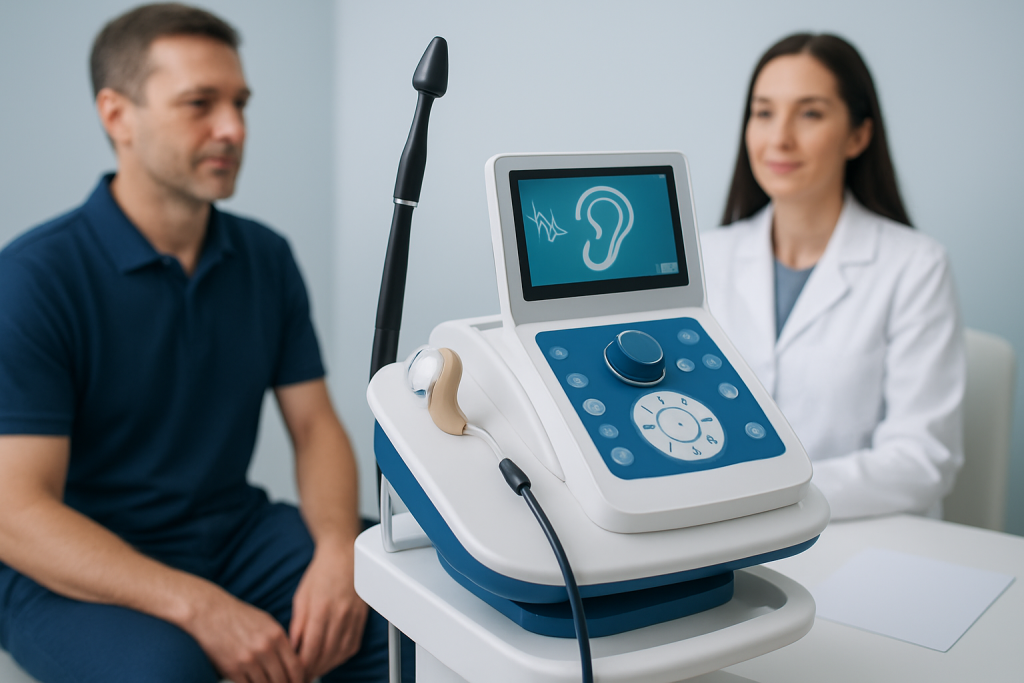
A smooth medical trip usually begins with documents and expectations. Send any referral letters, imaging, test results, medication lists, and brief notes about your hearing needs before departure. If you use hearing devices, pack spare batteries, chargers, cleaning tools, and any assistive accessories in your hand luggage rather than checked bags.
International patient services at Acibadem Health Point can often help coordinate practical details such as airport transfers, hotel suggestions, and the best arrival timing for your appointment. If your hearing support depends on someone accompanying you, decide early whether that person will travel with you and attend consultations. That makes it easier to plan room access, consent discussions, and any times when you may want extra help.
You may also want to prepare a one-page communication card that says you are hearing-impaired and explains the best way to speak with you. Keep it in your wallet and on your phone. In a busy hospital setting, that simple tool can save time and prevent misunderstandings.
How to make check-in and waiting areas easier to navigate

Hospital entrances, reception desks, and waiting areas can be noisy, fast-moving spaces. Ask in advance whether the hospital can provide a quieter point of contact or a staff member who will approach you directly when it is your turn. If you lipread, choose a seat with good lighting and a clear view of the person speaking.
Visual cues matter. Many hearing-impaired patients find it useful to ask whether the clinic uses display boards, text alerts, or direct mobile notifications for appointment calls. If the answer is no, confirm how the staff will find you when it is time to go in. Even a small clarification, such as “Please come to my seat and wave me over,” can make the visit much smoother.
At Acibadem Health Point, international patient coordinators can often bridge the gap between departments, reception teams, and interpretation support so that you are not left guessing what happens next. If you have multiple appointments in one day, ask for the order in writing. A printed schedule or a message thread on your phone is often more reliable than trying to catch announcements in a crowded hall.
During the consultation, keep the conversation visible and structured
Medical consultations move faster when everyone knows how to keep the exchange clear. Ask the clinician to face you when speaking, avoid talking while looking down at a screen, and pause between points so you can follow the thread. If you use an interpreter, speak directly to the clinician rather than to the interpreter; the interpreter is there to support the conversation, not replace it.
It is completely reasonable to ask for repetition or to have key points written down. Many hearing-impaired patients benefit from a short summary at the end of the visit that covers the diagnosis being discussed, next steps, medication changes, warning signs, and the timing of the next appointment. If something matters for consent or aftercare, do not rely on memory alone—ask for it in writing.
If you feel rushed, pause the conversation and reset it. You can say, “Please write that down,” “Please speak one at a time,” or “I need the interpreter to stay with me for the full visit.” A good team will adapt. Clear communication is not an extra service; it is part of safe care.
Tests, imaging, and procedures: ask what the room will sound like
Many medical visits in Turkey involve more than a doctor’s office conversation. You may move to a lab, imaging suite, or treatment room where instructions come quickly and staff may be wearing masks or moving around you. Before each step, ask what will happen, how long it will take, and whether there will be any alarms, machine noise, or spoken instructions you need to know about.
If you are anxious about missing instructions, ask for a written or visual sequence: what to remove, where to sit or lie down, when to hold still, and how staff will signal that a test is finished. In some settings, a staff member can tap your shoulder lightly or show a hand gesture before giving directions. Small adjustments like that can reduce stress and help you stay oriented.
At Acibadem Health Point hospitals, multidisciplinary teams and international patient services can work together so that your communication needs are considered across departments, not just in one room. That matters when you are moving between consultations, diagnostics, and discharge planning in a language and healthcare system that may already feel unfamiliar.
Leaving with instructions you can actually use
Discharge is where many hearing-impaired patients run into avoidable problems. You may leave with medication changes, wound care instructions, activity limits, follow-up dates, and warning signs to watch for. Ask for all of it in writing, and ask someone to go through the list slowly before you leave. If you are receiving medicines, make sure you understand the purpose, the dose, the timing, and what to do if you miss one.
It is also worth confirming how to reach the team after you return to your hotel or home country. Ask which contact method works best for questions—email, messaging app, patient portal, or international patient coordinator—and whether follow-up can happen by video call, phone relay, or written update. If you need lab results or scan reports later, ask how they will be shared and in what format.
When you are traveling home, keep copies of all documents together: discharge summary, prescriptions, test results, and any translation you were given. If a local clinician at home will continue your care, those papers help them understand exactly what happened in Turkey without having to rely on your memory alone.
A few extra tools can make a big difference
Not every helpful adjustment comes from the hospital. A smartphone note app, speech-to-text tool, or captioning app can act as a backup when a room is busy or when an unexpected question comes up. A small notebook can still be useful too, especially if you prefer to write down names, times, and medication instructions as they are given.
If you travel with a companion, decide in advance how they will help. Some patients want their companion to listen for announcements, take notes, or help with logistics only. Others prefer to manage the conversation themselves and use the companion only for transport and practical support. Either approach is fine; the key is that the arrangement is yours.
When you are using Acibadem Health Point, it can be helpful to tell the international team about these tools so they can coordinate around them. A little advance planning means you spend less energy managing access and more energy focusing on your care.
If you are unsure, ask for the access check before your visit
You do not need to wait until you are standing at the reception desk to ask for support. A pre-visit access check can clarify interpreter availability, written materials, appointment timing, and the best way to contact you while you are in Turkey. It is one of the simplest ways to reduce avoidable stress.
Acibadem Health Point’s international patient services can help you gather the practical details you need before arrival and keep them aligned across your appointments. That is especially useful if you are combining several visits, crossing time zones, or traveling with hearing aids, implant equipment, or a companion.
If you remember only one thing, let it be this: safe medical care depends on understanding, and understanding is something you are allowed to request clearly. The right team will not treat that as a burden.
Step by step
- Tell the team your communication preferences early. Share whether you use sign language, lipreading, written notes, captions, or speech-to-text support. If you need an interpreter, say which language or sign system you use so the team can plan appropriately.
- Send documents before you travel. Email referrals, scans, medication lists, and any relevant medical history ahead of time. Add a short note explaining your hearing needs and the best way to contact you.
- Confirm how you will be called in. Ask whether the hospital uses displays, text alerts, or a staff member who will come to you directly. Do not assume you will hear an overhead announcement in a busy waiting area.
- Use written summaries during consultations. Ask for key points to be written down, especially diagnoses, treatment changes, and follow-up steps. If you use an interpreter, request a short final summary before you leave the room.
- Check instructions before you discharge. Go over medicines, wound care, warning signs, and the next appointment in writing. Make sure you know which contact method to use if questions come up after you leave.
- Keep a backup communication tool handy. Bring a notes app, speech-to-text app, or a small notebook for quick details. These tools are especially useful in imaging rooms, corridors, and other noisy areas.
- Plan follow-up before you fly home. Ask how results and reports will be shared after your visit. If you need ongoing care at home, collect the documents your local clinician will need.
Your checklist
- Written appointment confirmation
- Interpreter request submitted early
- Medication list and allergies prepared
- Hearing device chargers and spare batteries packed
- One-page communication card in your wallet
- Phone with notes or speech-to-text app ready
- Printed discharge and follow-up instructions
- Contact details for international patient services saved
Key takeaways
- Clear communication is a safety issue, not a convenience.
- Tell the hospital how you prefer to communicate before you arrive.
- Written summaries protect you when the visit gets busy or fast-moving.
- Acibadem Health Point can help coordinate interpreters and logistics for international patients.
- A companion, phone tools, and written notes can all support your independence.
Frequently asked questions
Can I request a sign-language interpreter for my medical visit in Turkey?
Yes, you should ask for interpreter support as early as possible so it can be arranged around your appointment time. Be specific about the sign language or communication method you use, since not all interpreters work in the same system. Acibadem Health Point can help coordinate this as part of international patient support.
What if I lipread but cannot hear well enough in a noisy clinic?
Let the team know that you may need them to face you, speak one at a time, and repeat important points in writing. A quiet room or a calmer seating area can make a big difference. You can also ask for text-based instructions so you are not relying only on speech in a busy environment.
Should I travel with a companion if I am hearing-impaired?
That depends on what feels comfortable and practical for you. Some patients like a companion for note-taking, transport, or backup communication, while others prefer to manage independently. Either way, decide in advance so the team knows who should receive instructions and who will help you after appointments.
How do I make sure I understand discharge instructions?
Ask for them in writing and review them before you leave the hospital. Make sure you understand medication names, doses, timing, follow-up dates, and warning signs that should prompt urgent contact. If anything is unclear, stop and ask again before you travel back to your hotel or home country.
What should I bring for a hearing-impaired medical trip?
Bring your hearing aids or implant equipment, chargers, spare batteries, written medical records, medication lists, and a phone with notes or speech-to-text tools. It is also helpful to carry a short card explaining that you are hearing-impaired and describing how staff can communicate with you. These items can save time if plans change or the clinic is busy.
Can Acibadem Health Point help with travel and accommodation planning?
Yes, international patient services can often help you with the practical side of the trip, including arrival logistics and hotel coordination. That support is especially useful when you are also arranging communication access and multiple appointments. It gives you one point of contact instead of trying to manage everything alone.
More Patient Guides

Traveling to Turkey with a Disability: Patient Checklist
Plan a smoother medical trip to Turkey with a disability. Use this practical checklist for flights, mobility, medication, support, and recovery.
8 min read
Wheelchair Access Guide for Medical Travel in Turkey
Plan wheelchair-accessible medical travel in Turkey with practical tips on airports, transfers, hospitals, rooms, and support from Acibadem Health Point.
9 min read
Accessible Hotel Planning for Medical Patients in Turkey
Plan an accessible hotel stay in Turkey with confidence: room features, transport, mobility needs, and support from Acibadem Health Point.
8 min readRelated Specialists

Dr. Safiye Sayilir
Physical Medicine & Rehabilitation
Dr. Özgün Barış Çolak
Physical Medicine & Rehabilitation
Prof. Dr. Meltem Vural
Physical Medicine & Rehabilitation
Prof. Dr. Meral Bayramoğlu
Physical Medicine & Rehabilitation