Yoga Exercises

Key Takeaways
- Yoga exercises are not one single workout; they include gentle stretching, strengthening, breathing, and relaxation.
- Many people use yoga to support flexibility, balance, posture, and stress management.
- The safest approach is to start gradually, use proper alignment, and adjust poses for any injury or medical condition.
- People with pain, dizziness, pregnancy-related concerns, or chronic illness should ask a doctor or qualified instructor how to modify practice.
- Yoga can be part of a broader health plan, but it does not replace medical evaluation or treatment when symptoms are persistent or severe.
Yoga exercises combine movement, breathing, and focus in a way that can support flexibility, balance, and overall well-being. For many people, yoga is a practical, low-impact activity that can be adapted to different ages, fitness levels, and health needs.
Overview
Yoga exercises are often described as a practice, but in daily life they function more like a flexible tool kit. Some poses are used to lengthen tight muscles, others to build stability, and others to settle the breathing and attention. That mix is one reason yoga can fit into so many different routines, from early-morning mobility work to evening stress relief.
For a person deciding whether yoga is right for them, the first question is usually not whether they can do advanced poses. It is whether they need a low-impact form of movement that can be adjusted to their body and energy level. Yoga may be practiced on a mat at home, in a studio, or as part of rehabilitation or wellness care under guidance.
International patients who travel for care may also encounter yoga as a supportive activity during recovery, especially when a clinician recommends gentle movement, breathing, or posture awareness. The key is to match the style and intensity of yoga to the person’s current health status rather than to a trend or a social media image of the practice.
Common Yoga Exercises and What They Do

Many people imagine yoga as a long sequence of complicated positions, but most routines begin with basic movements. Standing, seated, and floor-based poses can each serve a different purpose. Some improve hamstring and hip mobility, while others encourage spinal extension, shoulder opening, or core engagement.
Examples of commonly used yoga exercises include mountain pose for posture awareness, downward-facing dog for a full-body stretch, child’s pose for resting the back and hips, cat-cow for gentle spinal movement, and warrior poses for leg strength and balance. Breathing exercises are also an important part of yoga because steady breathing often helps the body relax and makes movement feel more controlled.
The goal is not to force the body into a shape. In a well-taught session, each pose is adjusted to the person’s ability, using blocks, straps, chairs, or the wall when needed. That is especially helpful for beginners, older adults, and anyone returning to activity after illness or injury.
Possible Benefits
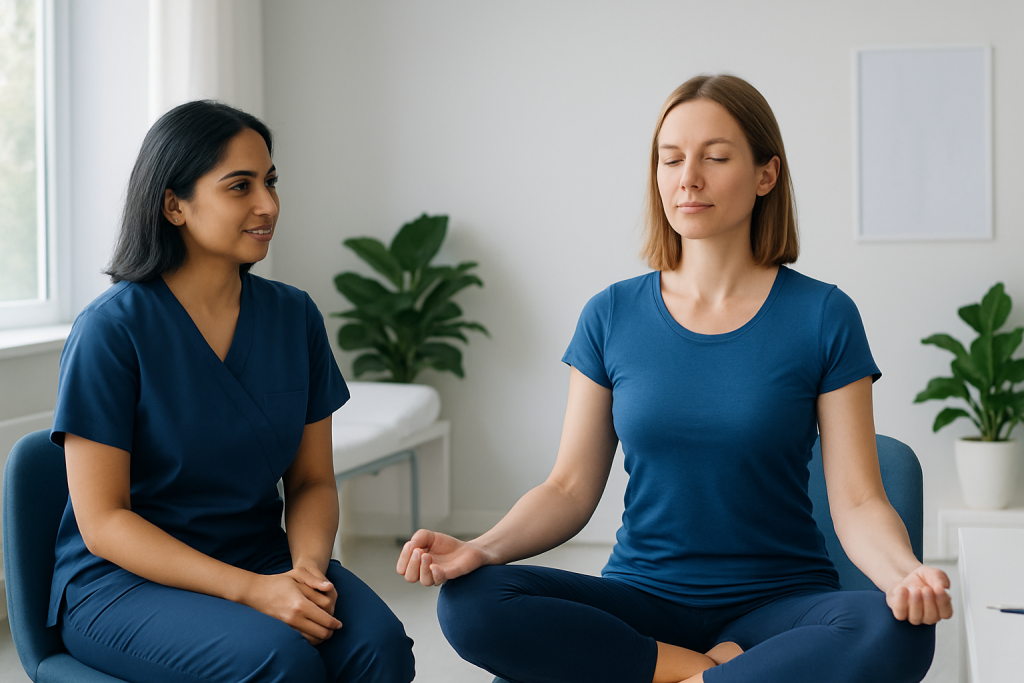
Yoga is popular because it can support several aspects of health at once. Many people notice improved flexibility and easier movement in daily tasks such as bending, reaching, or turning. Others value the sense of calm that comes from coordinated breathing and slower, more intentional motion.
Yoga may also help with balance, body awareness, and muscular endurance. Those effects can be useful for people who sit for long periods, want a gentler form of exercise, or are rebuilding confidence after a period of inactivity. Some people find that regular practice supports better sleep or makes stress feel more manageable.
It helps to think of yoga as supportive rather than curative. It can be one useful part of a healthy routine alongside walking, strength training, medical care, good sleep, and balanced nutrition. The best results usually come from consistency and sensible progression, not from pushing through discomfort.
Causes & Risk Factors: Who Benefits Most, and Who Should Be Cautious
Yoga is not caused by a disease, of course, but people usually turn to it for particular reasons. A person may feel stiff from desk work, tense from chronic stress, or deconditioned after a period of reduced activity. Others may be looking for a form of exercise that is easier on the joints than high-impact sports.
At the same time, certain situations call for caution. Neck pain, low-back pain, recent surgery, balance problems, glaucoma, uncontrolled blood pressure, pregnancy, osteoporosis, and some neurologic or cardiovascular conditions may require pose modifications. Even very healthy people can strain a muscle if they are overly eager, ignore pain, or copy a position without proper instruction.
The most practical “risk factor” is often overconfidence. Yoga looks gentle, but some positions demand strength, coordination, or joint stability that beginners do not yet have. A qualified teacher and a realistic self-assessment can reduce the chance of injury.
Diagnosis and Evaluation Before Starting
Yoga itself does not require a medical diagnosis, but a person with symptoms or a known health condition may benefit from a brief health review before beginning. A doctor can help determine whether movement is advisable, whether any restrictions are needed, and whether yoga should be part of a broader rehabilitation plan.
Evaluation may include a discussion of pain, dizziness, falls, prior injuries, bone health, breathing problems, medications, and recent procedures. For someone traveling internationally for treatment, this conversation is especially useful because it helps bridge local and home-country care. The clinician can explain which movements are safe during recovery and when to pause exercise.
In some cases, a physiotherapist, rehabilitation specialist, or certified yoga therapist may suggest a modified program. This is not a sign that yoga is off-limits; it simply means the practice should be matched to the person’s current abilities and medical context.
Treatment Options: How Yoga Fits Into Health Care
When yoga is used for health support, the “treatment” is usually a structured, adaptable practice rather than a rigid workout. A beginner-friendly session may start with breathing exercises, move into gentle mobility work, and finish with relaxation. More active styles can include flowing sequences and longer holds, but they are not the best starting point for everyone.
For people with pain or limited mobility, the most useful version of yoga may be chair yoga, restorative yoga, or one-to-one instruction focused on safe alignment. A clinician may also recommend pairing yoga with physical therapy, medication, or other treatments depending on the condition. The goal is to help the body move better without aggravating symptoms.
Those recovering abroad may find it helpful to ask for written guidance about acceptable activities before returning home. Clear instructions about walking, stretching, lifting, and yoga modifications can make follow-up care smoother and reduce uncertainty once travel resumes.
- Use props such as blocks, blankets, and straps to reduce strain.
- Choose slower classes if breath control and awareness are new.
- Stop any pose that causes sharp pain, numbness, or worsening symptoms.
- Progress gradually, especially after injury, surgery, or a long break from exercise.
Prevention & Self-care
Safe yoga practice begins before the first pose. A short warm-up, comfortable clothing, a stable surface, and enough space to move are simple details that make practice safer. People often benefit from learning how to hinge at the hips, keep the neck long, and avoid locking the knees or elbows.
Self-care also includes pacing. A person does not need to do a long session every day to benefit. Even brief, regular practice can be enough if it is consistent and comfortable. Hydration, rest, and attention to fatigue are important, especially in hot environments or during recovery from illness.
It is also wise to treat pain as information. Mild muscle effort is normal; sharp pain, joint catching, breathlessness that feels unusual, or lightheadedness is not. If a pose repeatedly causes discomfort, the position may need to be modified or replaced entirely.
When to See a Doctor
Medical advice is a good idea before starting yoga if the person has a heart condition, uncontrolled blood pressure, severe osteoporosis, recent surgery, significant joint instability, or a history of fainting or falls. A clinician can help decide which style of movement is appropriate and whether supervision is needed.
It is also sensible to seek care if yoga triggers persistent pain, swelling, numbness, weakness, or dizziness. The same applies if back, neck, shoulder, or knee symptoms worsen after practice instead of settling with rest. These signs do not always mean a serious injury, but they do deserve proper evaluation.
For international patients who need coordinated assessment and follow-up, Acibadem Health Point’s multidisciplinary specialists and JCI-accredited hospitals can help diagnose and treat condition-related concerns with a patient-centered approach. That kind of support can be especially useful when someone needs clear guidance before resuming exercise after treatment or travel.
Frequently asked questions
Are yoga exercises suitable for beginners?
Yes. Many yoga exercises are specifically designed for beginners and can be adapted with props or simplified ranges of motion. A person does not need to be flexible to start; flexibility often improves gradually with practice.
Can yoga help with back pain?
It may help some people, especially when the practice is gentle and well guided. However, back pain has many causes, so persistent or severe pain should be assessed by a doctor before starting or continuing yoga.
How often should someone do yoga?
That depends on fitness level, goals, and medical status. Some people practice a few times a week, while others prefer short daily sessions; consistency matters more than intensity for many beginners.
Is yoga safe during pregnancy?
It can be, but pregnancy requires modified poses and attention to comfort, balance, and breathing. A person who is pregnant should ask a doctor or qualified instructor about suitable classes and positions.
Do yoga exercises replace medical treatment?
No. Yoga can support well-being and sometimes ease symptoms, but it should not replace medical evaluation, prescribed treatment, or rehabilitation when these are needed.
What should someone do if a pose hurts?
They should stop and reassess the pose rather than push through pain. If the discomfort is sharp, persistent, or associated with swelling, numbness, or dizziness, medical advice is recommended.
References
- National Center for Complementary and Integrative Health
- World Health Organization
- Mayo Clinic
- American College of Sports Medicine
- National Health Service
This article is for general information only and is not a substitute for professional medical advice. Please consult a qualified doctor about your individual situation.