What Is A Hernia

Key Takeaways
- A hernia is a bulge caused by tissue pushing through a weak area in the body wall.
- Common hernias may appear in the groin, abdomen, upper thigh, or around a surgical scar.
- Symptoms can range from a painless lump to discomfort, pressure, or pain with coughing and lifting.
- Some hernias can be watched, but many eventually need surgery to prevent complications.
- Sudden pain, a firm bulge, nausea, or vomiting may signal an urgent problem that needs prompt medical attention.
A hernia happens when an internal organ or tissue pushes through a weak spot in the muscle or tissue that normally holds it in place. Many hernias are treatable, and understanding the warning signs helps people decide when simple monitoring is enough and when medical evaluation is needed.
Overview
A hernia is best understood as a structural problem rather than a disease that spreads or “goes away” on its own. It develops when tissue, often part of the intestine or fatty tissue, slips through a weak opening in the muscle or connective tissue that is supposed to keep it contained. The result may be a visible bulge, a sense of pressure, or no noticeable symptoms at all.
Hernias can form in different parts of the body, but they are especially common in the groin and abdominal wall. Some appear after surgery, some develop gradually over time, and others are linked to physical strain that reveals an already weak spot. For international patients planning evaluation abroad, it is often helpful to think of hernia care as a stepwise process: confirm the type, check whether there are warning signs, and decide whether observation or repair is the safest path.
Although the word can sound intimidating, many hernias are straightforward to diagnose and treat. The key is not to ignore new lumps, ongoing discomfort, or changes in a known hernia, because those details guide the next steps in care.
Symptoms
The most recognizable sign of a hernia is a bulge under the skin. It may become more obvious when standing, coughing, straining, or lifting, and it may flatten when lying down. Some people notice only a mild pulling sensation or a feeling that something is “not quite right” in the area.
Symptoms vary depending on the hernia’s location and size. An inguinal hernia in the groin may cause aching, heaviness, or discomfort that worsens with activity. A hiatal hernia, which affects the upper stomach area, may be associated with reflux-like symptoms such as heartburn or chest discomfort rather than a visible lump.
- A soft or firm bulge in the abdomen, groin, or around a scar
- Pain or pressure when coughing, bending, or lifting
- Heaviness or dragging sensation in the groin
- Burning, bloating, or reflux symptoms in some upper abdominal hernias
- Occasionally, no symptoms at all until the hernia is found during an exam
Not every hernia causes pain, and pain level does not always reflect how serious the problem is. A hernia that suddenly becomes tender, hard, or difficult to push back in deserves prompt medical review.
Causes & Risk Factors

Most hernias develop when muscle or connective tissue becomes weaker over time. Some weaknesses are present from birth, while others develop after surgery, injury, aging, or repeated pressure on the abdominal wall. The pressure inside the abdomen rises naturally during coughing, straining, heavy lifting, pregnancy, or constipation, which can make a vulnerable area more likely to give way.
There is usually more than one contributing factor. For example, a person may have a naturally weak spot in the groin and then notice symptoms only after years of lifting at work or after a prolonged cough. In other cases, a surgical incision can leave an area that heals less strongly than the surrounding tissue.
Common risk factors include:
- Heavy lifting or repeated physical strain
- Chronic cough, constipation, or straining with bowel movements
- Pregnancy
- Previous abdominal surgery
- Age-related weakening of tissue
- Obesity or significant weight gain
- Smoking, which may affect tissue healing and chronic cough
- Family history of certain hernia types
Understanding risk factors can help patients make sense of why a hernia developed, but it does not replace medical assessment. A clinician still needs to identify the type of hernia and check whether repair is advisable.
Diagnosis
Diagnosis often begins with a careful history and physical examination. A clinician may ask when the bulge first appeared, whether it changes with activity, whether it can be pushed back in, and whether there has been pain, nausea, or bowel changes. These details help distinguish a hernia from other causes of a lump or abdominal discomfort.
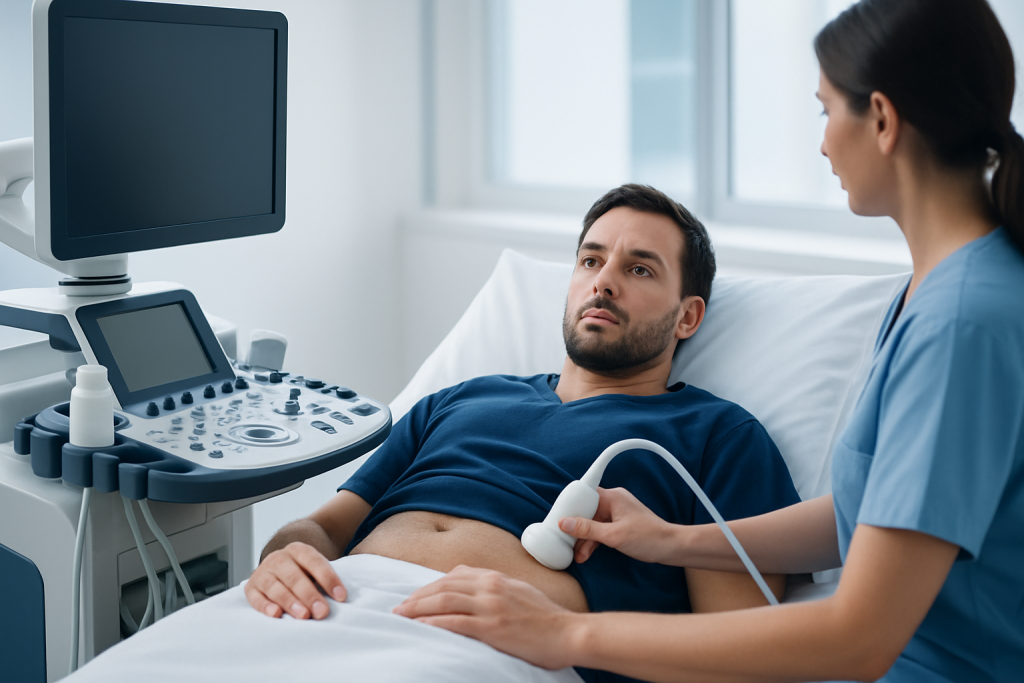
In many cases, the exam is enough to make the diagnosis. The clinician may ask the person to cough or stand so the bulge becomes easier to see. If the area is small, deep, or unclear, imaging may be used to confirm the finding and assess the exact location.
Possible tests include ultrasound, CT scan, or sometimes MRI, depending on the suspected hernia type and the information needed before treatment. For people traveling from another country, imaging is often part of the planning conversation because it helps the surgical team decide whether repair is necessary and what approach is most appropriate.
It is also important to distinguish a reducible hernia, which can move back into the abdomen, from an incarcerated or strangulated hernia, which may be trapped or have its blood supply compromised. Those terms describe urgency, not just anatomy, so the exam focuses on safety as much as on naming the condition.
Treatment Options
Treatment depends on the hernia’s size, location, symptoms, and whether complications are present. Some small, minimally bothersome hernias may be monitored for a period of time, especially if the person and clinician agree that observation is reasonable. However, hernias do not repair themselves, and many eventually require surgery.
Surgical repair is the definitive treatment for most symptomatic hernias. The goal is to return the tissue to its normal place and strengthen the weak area, sometimes using sutures and sometimes with mesh, depending on the type of hernia and the surgeon’s judgment. The procedure may be performed through a traditional open approach or minimally invasive techniques, when suitable.
The best approach is individual. Factors such as age, general health, prior operations, the hernia’s size, and the person’s travel plans all influence the recommendation. For someone coordinating care internationally, it is useful to discuss the expected hospital stay, activity limits, follow-up needs, and whether any local physician will assist with recovery once home.
In the short term, pain control, avoiding heavy strain, and managing constipation or cough may reduce discomfort. These measures can support comfort, but they are not substitutes for repair when surgery is advised.
Prevention & Self-care
Not every hernia can be prevented, especially when there is an inherited weakness or a prior surgical scar. Still, practical habits can reduce strain on the abdominal wall and support recovery if a hernia is already present.
People are often advised to protect the area from unnecessary pressure. That means using good lifting technique, treating persistent cough, managing constipation, and keeping follow-up appointments rather than waiting for symptoms to become more dramatic. If weight management or smoking cessation is relevant, those changes may also support tissue health and surgical recovery.
- Use proper lifting form and avoid sudden heavy strain when possible
- Address chronic cough, constipation, or urinary straining with medical guidance
- Maintain a healthy body weight if recommended by a clinician
- Avoid smoking, which can interfere with healing and coughing control
- Follow post-surgery activity instructions closely, especially after international travel
After repair, self-care usually centers on wound care, gentle movement, hydration, and a gradual return to normal activity. Patients coming from abroad should ask in advance how to recognize normal healing changes versus symptoms that need a call to the surgical team, so they can recover with confidence once they are back home.
When to See a Doctor
A medical evaluation is a good idea whenever a new bulge appears in the groin or abdomen, even if it does not hurt. It is also wise to seek care if a known hernia becomes more painful, grows quickly, or starts interfering with daily movement, eating, or bowel function. Early assessment helps the clinician decide whether observation is still safe or whether repair should be planned.
Immediate medical attention is needed if the bulge becomes firm, very tender, red, or impossible to push back in, or if it is accompanied by nausea, vomiting, abdominal swelling, fever, or severe pain. These may be signs of a trapped hernia that needs urgent treatment.
People traveling for care should not wait until departure if symptoms are changing. A qualified doctor can guide next steps, including whether evaluation should happen locally right away or whether it is reasonable to arrange treatment at a specialized center. Acibadem Health Point can support international patients with multidisciplinary specialists and JCI-accredited hospitals that diagnose and treat hernia conditions in a coordinated way.
In all cases, the safest next step is a clinical exam rather than self-diagnosis. A hernia is common, but it deserves proper assessment because the treatment plan depends on its type and behavior over time.
Frequently asked questions
What is a hernia in simple terms?
A hernia happens when tissue pushes through a weak area in the muscle or tissue wall that normally holds it in place. It often appears as a bulge and may or may not cause pain. The exact symptoms depend on where the hernia is located.
Can a hernia go away without surgery?
A hernia does not repair the weak spot on its own. Some small hernias can be watched for a time if they are not causing problems, but many eventually need surgical repair. A clinician can advise whether observation is reasonable.
Are all hernias painful?
No, many hernias cause little or no pain at first. Some people notice only a lump or heaviness, especially with coughing or lifting. Pain that increases or changes suddenly should be checked by a doctor.
How do doctors know if it is a hernia?
Diagnosis usually starts with a physical exam and a review of symptoms. In some cases, ultrasound or another imaging test is used to confirm the type of hernia or plan treatment. The goal is to identify both the hernia and any signs of complication.
What is the main treatment for a hernia?
Surgery is the main treatment for most symptomatic hernias and for hernias at risk of complications. The surgeon chooses the approach based on the hernia type, size, and the person’s overall health. Some smaller hernias may be monitored first.
When is a hernia an emergency?
A hernia becomes urgent if it is suddenly very painful, firm, red, or cannot be pushed back in. Nausea, vomiting, fever, or abdominal swelling are also concerning signs. These symptoms need prompt medical attention.
References
- World Health Organization
- Mayo Clinic
- National Institute of Diabetes and Digestive and Kidney Diseases
- Cleveland Clinic
- American College of Surgeons
This article is for general information only and is not a substitute for professional medical advice. Please consult a qualified doctor about your individual situation.