Urine Specific Gravity: What It Means

Key Takeaways
- Urine specific gravity reflects how concentrated or diluted urine is.
- Results can be influenced by hydration, medications, kidney function, and some medical conditions.
- A single result is not usually diagnosed on its own; it is read with urinalysis and clinical context.
- Abnormal values may prompt repeat testing, further urine studies, or blood tests.
- Healthy fluid intake and timely medical review help protect kidney and overall health.
Medically reviewed by the Acıbadem clinical team — August 19, 2026
Specific gravity of urine is a simple measurement that helps show how concentrated urine is. It can offer useful clues about hydration, kidney function, and certain medical conditions, but it is interpreted best alongside other test results and a person’s symptoms.
Overview
Specific gravity of urine is a laboratory measurement that compares the density of urine with the density of water. In practical terms, it shows how much dissolved material is present in the urine, which helps clinicians understand whether the kidneys are making urine that is more concentrated or more diluted than expected.
This test is usually reported as part of a urinalysis, a common screening tool that may be done during a routine check-up, when symptoms develop, or during evaluation for kidney, hormonal, or fluid-balance concerns. For many people, the result is only one piece of a larger picture, rather than a stand-alone answer.
For international patients arranging care across borders, the test is also straightforward to repeat and compare over time. That can be helpful when a doctor wants to see how the body responds to hydration changes, treatment, or recovery after illness.
What the result means
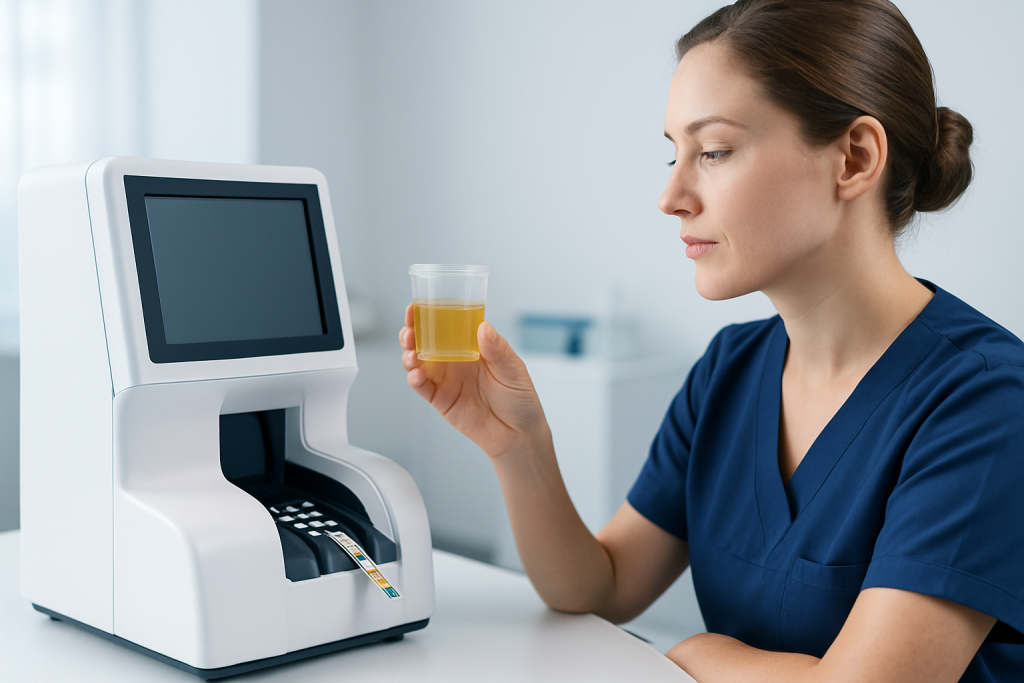
Urine specific gravity helps show whether the kidneys are conserving water or allowing more water to pass into the urine. A higher number usually means the urine is more concentrated; a lower number suggests it is more diluted. The result can shift from day to day depending on fluid intake, exercise, diet, fever, vomiting, or other temporary factors.
Doctors often look at this value together with urine color, urine volume, protein, glucose, ketones, and other urinalysis findings. They may also compare it with blood tests, since kidney function and hydration status are best interpreted in context. A result that is slightly outside the expected range is not always a sign of disease.
Because the kidneys are constantly adjusting water and salt balance, the specific gravity number can provide a snapshot of how well that regulation is working at the time of testing. It is especially useful when symptoms or other lab findings suggest dehydration, overhydration, diabetes, kidney disease, or a hormonal imbalance affecting water handling.
Common symptoms and why the test is ordered

Specific gravity itself does not cause symptoms, but it may be checked when a person has signs that point to a fluid, urinary, or kidney issue. These may include dark urine, very Urination: Causes and When to Seek Care" class="ahp-ilk">frequent urination, reduced urination, swelling, thirst, fatigue, dizziness, or changes in urine appearance.
The test may also be part of evaluation for abdominal pain, fever, suspected urinary infection, unexplained weakness, or routine monitoring in people with chronic kidney conditions. In some cases, it is used to follow recovery after dehydration from travel, heat exposure, gastrointestinal illness, or intense physical activity.
- Very dark or strong-smelling urine
- Urinating much more or much less than usual
- Persistent thirst or dry mouth
- Swelling in the legs, hands, or around the eyes
- Confusion or unusual fatigue, especially if fluid balance may be affected
Causes and risk factors for high or low values
A high urine specific gravity commonly means the urine is concentrated. This may happen with dehydration, fluid loss from vomiting or diarrhea, fever, heavy sweating, or not drinking enough. It can also occur when urine contains extra dissolved substances such as glucose or protein.
A low result usually means the urine is more diluted than expected. This can be seen after drinking large amounts of fluid, with certain kidney disorders, or when the kidneys cannot concentrate urine effectively. Some endocrine conditions and medications may also influence the result.
Risk factors that make an abnormal value more likely include older age, kidney disease, diabetes, prolonged illness, repeated urinary problems, and use of medicines that alter fluid balance. Recent contrast imaging, dietary changes, and timing of the sample can also affect interpretation.
Diagnosis and follow-up testing
The test is usually performed on a urine sample collected in a clean container. Depending on the situation, a doctor may request a random sample, a first-morning sample, or repeated samples to see whether the finding persists. First-morning urine is often more concentrated and can be useful when the question is about kidney concentrating ability.
If the result is outside the expected range, the next step is often to review symptoms, medications, hydration habits, and related laboratory values. A clinician may order blood tests for kidney function and electrolytes, a repeat urinalysis, or additional studies if diabetes, hormone imbalance, infection, or chronic kidney disease is suspected.
For people receiving care while traveling, keeping the original lab report and noting recent fluid intake, illness, and medications can make follow-up easier. Clear documentation helps the next doctor compare results accurately and avoid unnecessary repeat testing.
Treatment options
There is no treatment for the number itself. Instead, care focuses on the underlying reason for the abnormal result. If the urine is concentrated because of dehydration, the plan may include gradual rehydration and monitoring. If it is diluted because of excessive fluid intake, a doctor may advise adjusting intake and reviewing possible causes.
When kidney disease, diabetes, infection, or another condition is found, treatment is directed at that diagnosis. This may involve medication changes, dietary guidance, closer monitoring, or referral to a specialist. The exact approach depends on the broader clinical picture rather than the specific gravity value alone.
In some situations, no treatment is needed beyond observation and a repeat test. That is especially true when the person feels well and the result can be explained by a temporary factor such as exercise, recent illness, or drinking a large amount of fluid before the sample.
Prevention and self-care
Healthy hydration is the most practical way to support normal urine concentration. Many people benefit from drinking fluids steadily through the day rather than waiting until they feel very thirsty. Needs vary with climate, activity level, age, and medical conditions, so there is no single amount that suits everyone.
Self-care also means paying attention to warning patterns rather than just one lab value. Repeated episodes of very dark urine, persistent thirst, swelling, or unexplained changes in urination deserve medical review. People with diabetes, kidney disease, or a history of fluid imbalance should follow their doctor’s instructions closely.
- Maintain regular fluid intake, especially during heat, travel, or illness
- Do not overcorrect by drinking unusually large amounts unless advised
- Review medicines that may affect urine concentration with a clinician
- Seek care promptly for vomiting, diarrhea, fever, or reduced urine output
When to see a doctor
A doctor should review urine specific gravity when the result is repeatedly outside the expected range, especially if there are symptoms or other abnormal lab findings. The value is most meaningful when it is combined with a history, physical examination, and related tests.
Prompt medical attention is important if abnormal urine findings occur with confusion, severe weakness, shortness of breath, chest pain, fainting, marked swelling, blood in the urine, or very little urine output. These symptoms may point to dehydration, kidney problems, infection, or another condition that needs timely assessment.
For people seeking evaluation abroad, a multidisciplinary team can help coordinate repeat testing, kidney assessment, and follow-up planning before return travel. At Acibadem Health Point, multidisciplinary specialists and JCI-accredited hospitals diagnose and treat this condition for international patients in a coordinated way.
Frequently asked questions
Is urine specific gravity the same as hydration level?
Not exactly, but it is closely related. The test gives a snapshot of how concentrated urine is, which can reflect hydration status at that moment. It should still be interpreted alongside symptoms and other results.
Can diet change the result?
Yes. Eating or drinking a lot before the sample, and changes in salt or protein intake, may affect urine concentration. The effect is usually modest, but it can matter when a doctor is comparing repeated tests.
Does a low result always mean kidney disease?
No. A low value can simply mean the person has been drinking a lot of fluid. Kidney disease is only one possible explanation, and the doctor will look for other clues before drawing conclusions.
Why might my doctor repeat the test?
A repeat test helps show whether the finding was temporary or persistent. It also allows comparison with symptoms, medications, and other laboratory results, which often provides a clearer answer than one sample alone.
Can urine specific gravity be checked during a routine physical?
Yes, it is often included in routine urinalysis or done when a clinician wants more information about kidney or fluid balance. It is a simple, noninvasive test that can add useful context to a general health check.
Should I change how much I drink before the test?
In most cases, no special preparation is needed unless the doctor gives instructions. Drinking normally is usually the best approach, because it helps the sample reflect everyday body conditions.
References
- MedlinePlus
- National Kidney Foundation
- Mayo Clinic
- Cleveland Clinic
- Merck Manual Professional Edition
This article is for general information only and is not a substitute for professional medical advice. Please consult a qualified doctor about your individual situation.
Explore treatments in Turkey — costs, top hospitals & a free quote
JCI-accredited · board-certified surgeons · reply within 24h
Add us as a Preferred Source to see more of our trusted health content across Google Search, AI Overviews and Discover.