Turbinado

Key Takeaways
- Turbinado is commonly used to describe enlarged or swollen nasal turbinates.
- Common symptoms include nasal blockage, mouth breathing, reduced smell, and pressure in the face.
- Allergies, irritants, chronic inflammation, and structural nasal issues can contribute to the problem.
- Diagnosis is usually based on an ENT examination and sometimes nasal endoscopy or imaging.
- Treatment may include nasal sprays, allergy care, and in some cases a procedure to reduce turbinate size.
Turbinado usually refers to enlarged nasal turbinates, the structures inside the nose that help warm and humidify air. When they swell or stay enlarged, they can make breathing feel blocked, interfere with sleep, and cause ongoing congestion.
Overview
Turbinado is often used to describe enlargement of the nasal turbinates, which are long, curved structures inside the nose. Their normal job is practical and important: they filter, warm, and humidify the air a person breathes. When they become swollen or chronically enlarged, the nose can feel persistently blocked even when there is no cold or infection.
For many people, this is not a dramatic illness but a frustrating daily problem. Breathing through the nose may become harder during exercise, sleep may feel less refreshing, and mouth breathing can leave the throat dry. Because the symptoms overlap with allergies, sinus problems, and a deviated septum, a careful ENT assessment is often the best way to understand what is actually driving the obstruction.
In international-patient care, this type of issue is often evaluated alongside the person’s travel plans and follow-up needs. A clear diagnosis matters because treatment may range from simple medical therapy to a procedure, depending on how long the symptoms have been present and what is causing the swelling.
Symptoms
The most common complaint is nasal blockage that seems to move from one side to the other or remain stubbornly present on both sides. People may describe a “full” feeling in the nose, the need to breathe through the mouth, or the sense that one nostril never fully opens. Symptoms often worsen at night, during allergy seasons, or in dry or dusty environments.
Other symptoms can appear when breathing through the nose becomes inefficient. These may include snoring, a dry mouth on waking, reduced sense of smell, facial pressure, or a feeling of mucus that never clears completely. Some people also notice that exercise feels harder because nasal breathing is limited.
It is helpful to remember that turbinates themselves are not the enemy; they are normal anatomy. The issue is usually persistent swelling or enlargement, which can look different from one person to another. Because of that, symptom patterns can vary from mild annoyance to a significant quality-of-life problem.
- Persistent nasal congestion
- Mouth breathing, especially at night
- Snoring or noisy breathing
- Reduced sense of smell
- Facial pressure or a blocked feeling in the nose
Causes & Risk Factors

Turbinates may enlarge in response to ongoing irritation. Allergic rhinitis is a common cause, because repeated exposure to pollen, dust mites, pet dander, or mold can keep the nasal lining inflamed. Non-allergic triggers such as cigarette smoke, strong odors, pollution, and very dry air can also play a role.
Chronic sinus inflammation, frequent upper respiratory infections, and overuse of decongestant nasal sprays may contribute in some cases. Structural factors matter too: if the septum is crooked or the nasal passages are narrow, the turbinates may compensate by becoming larger, which can worsen blockage. Some people develop swelling because the body is trying to protect and condition the airway, but that same response can become uncomfortable when it persists.
Risk is not determined by one single factor. A person with allergies, environmental exposure, and a deviated septum may experience more severe symptoms than someone with only one of those issues. For travelers, changes in climate, long flights, and hotel air conditioning can make nasal symptoms feel more noticeable, even when the underlying problem was already present.
Diagnosis
Diagnosis usually starts with a conversation about symptoms, triggers, sleep, allergies, medications, and any prior nasal injury or surgery. A doctor will also ask whether the blockage is constant, seasonal, or alternating from side to side, because those details can provide useful clues.
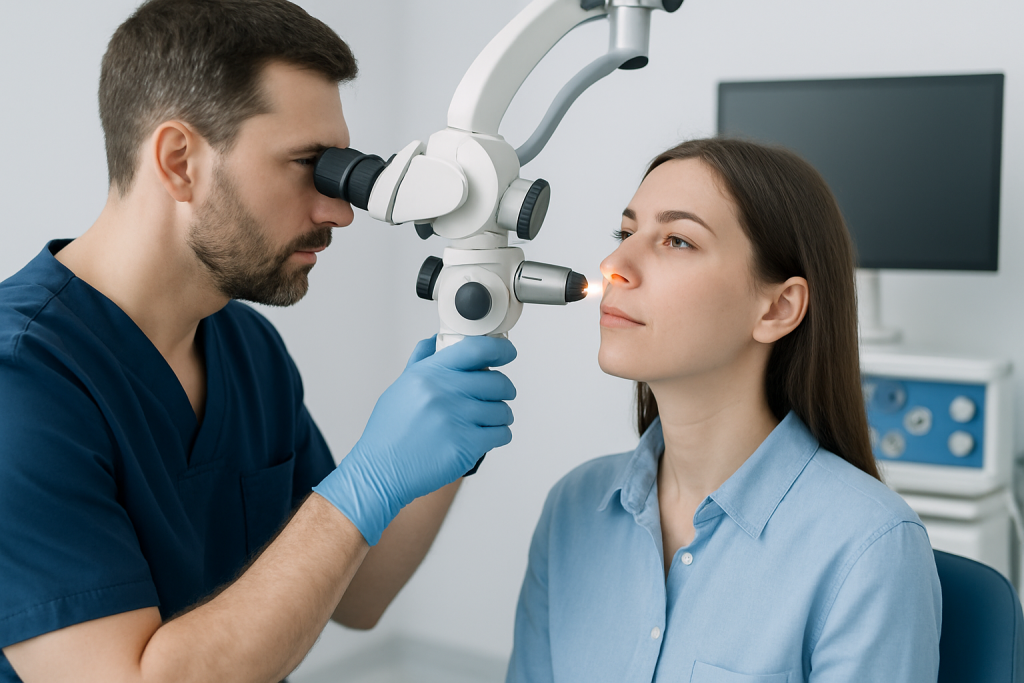
An ENT examination typically includes looking inside the nose with a speculum or endoscope. This helps the specialist see whether the turbinates are enlarged, whether the septum is deviated, and whether there are signs of inflammation, polyps, or discharge. In some situations, imaging such as a CT scan may be recommended to assess the sinuses or clarify the anatomy before treatment.
Diagnosis is not only about identifying swelling; it is about understanding why it is happening. That distinction matters because a person with allergy-driven swelling may need a different plan from someone whose blockage is mainly structural. A thoughtful assessment reduces the chance of treating the wrong problem.
Treatment Options
Treatment usually begins with the least invasive approach that matches the cause. If allergies are involved, a clinician may recommend regular allergy management and nasal care to calm the lining of the nose. Saline rinses can also help clear irritants and make the nose feel less congested.
Prescription nasal sprays are commonly used when inflammation is the main driver. Depending on the case, a doctor may discuss steroid nasal sprays, antihistamines, or other treatments aimed at reducing swelling and controlling the trigger. It is important to use medicines exactly as advised, since some over-the-counter decongestant sprays can worsen congestion when used too long.
If symptoms remain troublesome despite medical treatment, a procedure to reduce turbinate size may be considered. These procedures are designed to improve airflow while preserving the turbinates’ normal function as much as possible. The best option depends on the anatomy, the severity of blockage, and whether other issues such as a deviated septum also need correction.
For people traveling for care, treatment planning should include recovery time, return flights, and a reliable follow-up arrangement with the treating team. In some cases, Acibadem Health Point’s multidisciplinary specialists and JCI-accredited hospitals diagnose and treat this condition for international patients, helping coordinate evaluation and care across the visit.
- Saline nasal rinses
- Allergy control and trigger avoidance
- Anti-inflammatory or antihistamine nasal medicines
- Carefully selected turbinate reduction procedures
- Combined treatment when septal deviation or sinus disease is also present
Prevention & Self-care
Not every case can be prevented, but many people can reduce flare-ups by limiting irritation inside the nose. Managing allergies consistently, keeping indoor air reasonably clean, and avoiding smoke exposure are practical steps that often make a difference. Humidification may help some individuals, especially in dry climates or during air travel.
Saline rinses or sprays can support day-to-day comfort by washing away dust, allergens, and thick mucus. If a person has a history of frequent congestion, it is wise to be cautious with decongestant nasal sprays and to ask a clinician before using them for more than a short period. Gentle, regular nasal care is usually more helpful than repeatedly trying short-term fixes.
Self-care also includes noticing patterns. If symptoms worsen after certain exposures, during pollen season, or when sleeping in a particular environment, that information can guide treatment. Keeping a simple symptom diary may be useful, especially when seeking care away from home and trying to explain the pattern clearly to a new doctor.
When to See a Doctor
A doctor’s opinion is appropriate when nasal blockage lasts for weeks, keeps returning, or interferes with sleep, exercise, or daily comfort. Evaluation is especially important if one side of the nose feels persistently blocked, because structural causes may need attention. People who rely on mouth breathing or who wake unrefreshed should not simply assume it is “normal congestion.”
Medical review is also advisable when congestion is accompanied by frequent sinus infections, nosebleeds, reduced smell, or symptoms that do not improve with basic allergy care. If over-the-counter products are no longer helping, or if they seem to be making the problem worse, that is another reason to seek assessment. The goal is not to rush to a procedure, but to identify the safest and most effective path forward.
For international patients, a specialist consultation can be especially helpful before planning Varicose Vein Treatment Abroad: When Stockings Are Enough and When Procedures Help More" class="ahp-ilk">treatment abroad, because it can clarify whether medical therapy, a procedure, or both are likely to be needed. A precise diagnosis gives the person a clearer map for travel, treatment, and recovery.
Living With Turbinado-Related Nasal Obstruction
Chronic nasal blockage can affect energy, sleep quality, and even mood, mainly because breathing feels effortful all day and night. The good news is that many causes of turbinate enlargement are treatable, and people often feel better once the underlying inflammation or anatomy is addressed. Improvement may be gradual rather than immediate, especially when symptoms have been present for a long time.
After treatment, follow-up matters. If medication is prescribed, it should be used as directed; if a procedure is performed, healing instructions and review appointments help ensure the nose recovers well. Questions about flying, dryness, sprays, or return-to-work timing are worth discussing before travel so recovery is realistic and comfortable.
When the right cause is identified, turbinado-related symptoms are usually manageable rather than mysterious. A structured plan can restore easier breathing and make daily life feel more predictable again.
Frequently asked questions
What does turbinado mean in a medical context?
In medical writing, turbinado is often used to refer to enlarged or swollen nasal turbinates. These are normal structures inside the nose that help condition the air a person breathes. When they swell, they can narrow the nasal passages and cause congestion.
Is turbinado the same as a deviated septum?
No. A deviated septum is a crooked wall between the two sides of the nose, while turbinates are separate structures on the side walls. Both can cause blockage, and they sometimes occur together, which is why an ENT exam is useful.
Can allergies cause enlarged turbinates?
Yes, allergies are one of the most common reasons the turbinates swell. Ongoing exposure to allergens can keep the nasal lining inflamed and make breathing through the nose difficult. Treating the allergy often improves the congestion as well.
When is a procedure needed?
A procedure may be considered when medicines and self-care do not provide enough relief, or when the enlarged turbinates are mainly causing a structural blockage. The decision depends on the full nasal picture, including whether there is also a septal deviation or sinus disease. A specialist can explain the options and expected recovery.
Can turbinate swelling go away on its own?
Sometimes swelling improves when the trigger is temporary, such as a mild infection or short-term irritation. However, chronic enlargement often needs ongoing treatment rather than waiting for it to resolve. If symptoms are persistent, an ENT review is usually the best next step.
Is turbinado dangerous?
Turbinado itself is usually not dangerous, but persistent nasal obstruction can affect sleep, comfort, and quality of life. It is worth evaluating if symptoms are ongoing, because the underlying cause may be treatable. A calm, timely assessment is usually enough to guide the right care.
References
- American Academy of Otolaryngology–Head and Neck Surgery
- Merck Manual Professional Version
- Cleveland Clinic
- National Institute of Allergy and Infectious Diseases
- Mayo Clinic
This article is for general information only and is not a substitute for professional medical advice. Please consult a qualified doctor about your individual situation.