Tattoo Pain Chart

Key Takeaways
- Tattoo pain varies widely by body area, skin thickness, and individual pain sensitivity.
- Bony, thin-skinned, and nerve-rich areas often feel more intense during tattooing.
- Good hydration, sleep, and calm pacing may make the experience easier to manage.
- Proper aftercare supports healing and can reduce discomfort after the session.
- A healthcare professional should assess unusual redness, swelling, fever, or worsening pain.
A tattoo pain chart helps explain why some areas feel sharper, while others are more tolerable, but pain is still highly individual. Understanding skin thickness, nerve density, and healing factors can make tattoo planning calmer and more realistic.
Overview
A tattoo pain chart is not a medical test or a perfect prediction tool. It is a practical way to compare body areas that are usually easier or harder to tattoo, based on skin thickness, proximity to bone, nerve supply, and how much the skin moves during the session.
For many people, the chart is most useful before the appointment. It can help them decide where to place a first tattoo, how to schedule a longer session, and whether to choose a location that may be easier to sit through. The experience is still personal: two people with the same tattoo in the same place may describe the pain very differently.
People planning tattoo work while traveling often find it helpful to think beyond the tattoo chair itself. Recovery time, aftercare supplies, sun exposure, long flights, and access to follow-up care all matter, especially when the tattoo is being done away from home. A little planning makes the process feel more controlled and less rushed.
How Tattoo Pain Is Usually Described
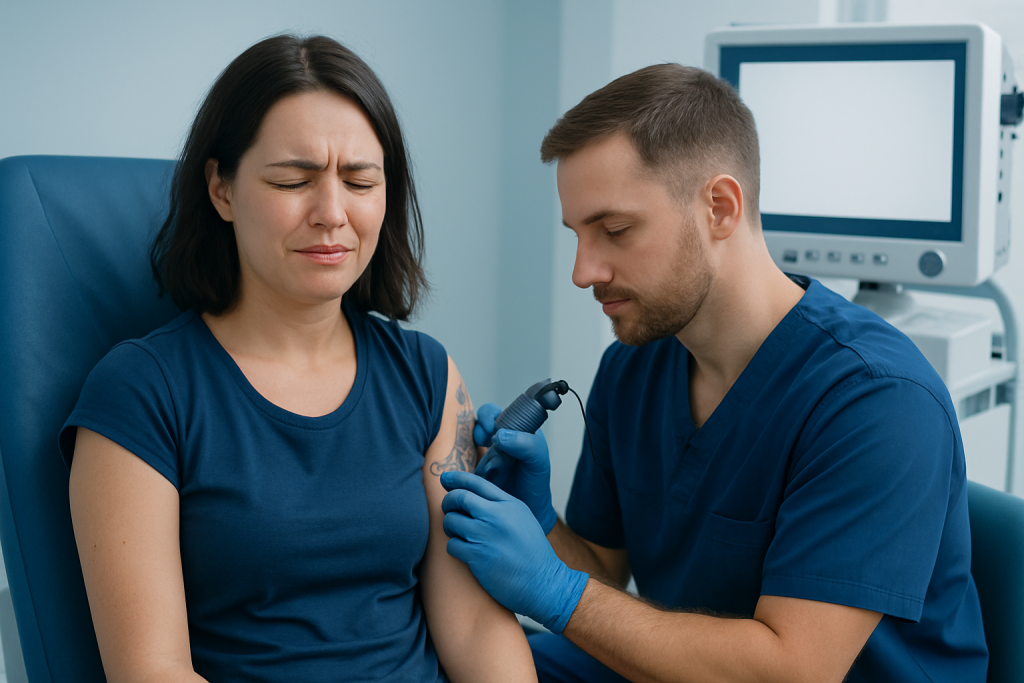
Most people do not describe tattoo pain as a single feeling. They may notice scratching, burning, vibration, stinging, or a warm, repetitive irritation that becomes more tiring over time. The sensation often changes as the session continues, because the skin becomes more sensitive the longer it is worked on.
Areas with more padding tend to feel more manageable, while areas with little soft tissue can feel sharper. The same body part may also feel different depending on the tattoo style, the needle grouping, the artist’s technique, and whether the session is slow, detailed, or shaded heavily.
It can also help to remember that pain and distress are not the same thing. Some people can tolerate a physically uncomfortable tattoo but feel anxious in the chair, while others are relaxed yet find the sensation intense. A calm environment, clear communication, and planned breaks often make the overall experience easier.
Body Areas That Tend to Hurt More or Less

A tattoo pain chart usually groups body sites into lower-, moderate-, and higher-pain zones. These groupings are broad and should be treated as guides rather than rules.
- Often less painful: outer upper arm, thigh, calf, shoulder with fuller muscle coverage.
- Moderate pain: forearm, back, chest, shin, ankle, wrist.
- Often more painful: ribs, sternum, spine, elbows, knees, feet, hands, neck, groin, and areas close to the armpit or inner thigh.
Locations near bone usually feel more intense because there is less soft tissue between the needle and the underlying structure. Thin skin, folds, and areas that move frequently can also become more uncomfortable as the session continues. Places with many nerve endings, such as fingers, feet, and the neck, may feel sharper or more electric.
That said, the chart is only a starting point. A small tattoo on a sensitive area may be easier to tolerate than a large piece on a more comfortable zone. The length of the session often matters just as much as the body area itself, because fatigue can make pain feel stronger as time passes.
Why Pain Differs From Person to Person
Pain perception is shaped by many individual factors. Some people have a naturally lower pain threshold, while others are simply more accustomed to body work or needle-based procedures. Stress, sleep, caffeine intake, and hunger can also influence how the body responds during a tattoo session.
Skin condition matters too. Dry, irritated, sunburned, or recently shaved skin may be more sensitive. If a person has a history of eczema, psoriasis, or frequent skin reactions, it is sensible to discuss the area with a qualified clinician or tattoo professional before proceeding.
Previous injury or surgery can change sensation in a region as well. Some people feel more pain in scar tissue, while others notice numbness that makes the area feel unusual rather than painful. Because healing and sensation can vary, it is always reasonable to pause and reconsider if a planned tattoo area seems unsafe or unexpectedly tender.
What to Expect During and After the Session
During the session, the sensation often starts as a manageable sting and gradually becomes more tiring. Small line work may feel very different from dense shading or color packing, and breaks can help reset comfort levels. Many people report that the most difficult moment is not the first needle pass, but the cumulative effect of staying still for a long period.
After the session, the skin usually feels warm, tender, and mildly swollen, similar to a superficial abrasion. This is part of the normal healing process. A tattoo may also feel itchy as the skin repairs itself, and light flaking is common in the days that follow.
Good aftercare matters because it affects both comfort and healing quality. The tattoo should be kept clean, protected from friction, and cared for according to the artist’s instructions. Avoiding picking, soaking, and excess sun exposure gives the skin a better environment to recover.
How to Prepare for a More Comfortable Tattoo Experience
Comfort often improves with simple preparation. Getting adequate sleep, eating beforehand, staying well hydrated, and arriving calm and unhurried can make the body more resilient to discomfort. If the appointment is long, bringing water and a light snack may help maintain energy.
Clothing also matters. Loose, breathable clothing that gives the artist easy access to the area is usually best. If the tattoo is in a difficult location, planning for movement, privacy, and the need for short breaks can reduce stress during the session.
Some people ask whether numbing products help. These products should only be used if the tattoo artist approves and if the person has checked that the product is appropriate for their skin and the specific procedure. It is best not to apply creams or medications without guidance, because some products can irritate the skin or affect the work surface.
Safety, Healing, and Self-care After Tattooing
Aftercare is about protecting a healing wound, not just preserving the design. The skin needs a clean environment, gentle washing if advised, and time to close and settle. Friction from tight clothing, repeated touching, and gym activity can all make the area feel more irritated.
Sun protection becomes important once the skin has healed enough for it. Fresh tattoos should not be exposed to direct sunlight unnecessarily, and later on, sunscreen helps protect the appearance of the artwork. Swimming, soaking in tubs, and picking at peeling skin are best avoided during early healing.
For people traveling after a tattoo, it may be wise to plan recovery around the journey. Long flights, hot climates, and limited access to clean supplies can complicate healing, so scheduling the tattoo when a few quiet days are available is often safer than rushing into sightseeing or strenuous activity.
- Follow the aftercare steps given by the tattoo professional.
- Keep the skin clean and avoid unnecessary friction.
- Do not scratch, pick, or peel healing skin.
- Watch for signs of infection or an unusual skin reaction.
When to See a Doctor
Most tattoo discomfort improves gradually as the skin heals. However, certain symptoms deserve medical attention because they may suggest infection, allergic reaction, or another skin problem rather than routine healing.
A doctor should be consulted if redness keeps spreading, swelling increases instead of settling, pain becomes worse after the first few days, or there is pus, foul-smelling drainage, or fever. A person should also seek advice if there is a rash beyond the tattooed area, blistering, or significant itching that does not improve.
If a person is unsure whether the reaction is normal, it is better to ask early than to wait. This is especially true for people with diabetes, immune system conditions, bleeding disorders, or a history of severe skin reactions. In international care settings, Acibadem Health Point’s multidisciplinary specialists and JCI-accredited hospitals can assess and treat tattoo-related skin concerns for patients who need medical evaluation while abroad.
Frequently asked questions
Is there a reliable tattoo pain chart for everyone?
No chart can predict pain with complete accuracy for every person. It can, however, give a helpful sense of which areas are usually easier or more difficult. Personal pain sensitivity, session length, and the tattoo style all influence the experience.
What are the most painful places to get tattooed?
Areas close to bone or with thin skin often feel more intense, such as ribs, sternum, spine, elbows, knees, feet, hands, and neck. The groin and inner thigh can also be very sensitive. Even so, individual experiences differ a great deal.
How can someone make a tattoo hurt less?
Good preparation can help: sleep well, eat beforehand, stay hydrated, and avoid arriving stressed or rushed. It also helps to choose a skilled artist, take breaks when needed, and follow any approved aftercare instructions carefully.
Is swelling after a tattoo normal?
Mild swelling, tenderness, and warmth are common early in healing. These symptoms should gradually improve rather than worsen. If swelling spreads, pain increases, or fever appears, medical advice is important.
Can a tattoo be done over scar tissue?
Sometimes it can, but scar tissue may feel different and may heal differently from normal skin. A professional assessment is important before tattooing over any scar, especially if the area is raised, recently healed, or still sensitive.
When is it too soon to get another tattoo?
It is usually best to wait until the previous tattoo is fully healed and the skin no longer feels irritated. The exact timing depends on the size, location, and how well healing has progressed. If there is lingering redness, scabbing, or pain, postponing the next session is sensible.
References
- American Academy of Dermatology
- Mayo Clinic
- National Health Service (NHS)
- World Health Organization
- Centers for Disease Control and Prevention
This article is for general information only and is not a substitute for professional medical advice. Please consult a qualified doctor about your individual situation.
More from the Health Library



Related Specialists

Dr. Ahmet Burak Dursun
Occupational Medicine
Prof. Dr. Tevfik Rifki Evrenkaya
Internal Medicine
Prof. Dr. Emine Handan Zeren
Pathology
Ezgi Nur Çiçek
Physical Medicine & Rehabilitation