Purified Water: Benefits and Risks

Key Takeaways
- Purified water has been processed to reduce impurities such as chemicals, microbes, and particles.
- It is not exactly the same as distilled, spring, or bottled water, even though these terms are sometimes used loosely.
- Safe water matters for drinking, medication use, wound care, and certain medical procedures.
- The best purification method depends on the water source, the intended use, and local safety standards.
- People with ongoing health concerns should follow clinician guidance about the type of water that is safest for them.
Medically reviewed by the Acıbadem clinical team — August 19, 2026
Purified water is water that has been treated to remove many contaminants, making it suitable for a range of everyday and medical uses. Understanding how it differs from other types of water can help patients make safer choices at home, while traveling, or during recovery.
Overview
Purified water is water that has been treated to remove a wide range of unwanted substances. The exact process can vary, but the goal is the same: to make the water cleaner and safer for a specific use. In daily life, that may mean drinking water from a filter system. In healthcare settings, it may mean water prepared for laboratory work, medication preparation, or certain cleaning tasks.
The word purified can sound simple, yet it covers several techniques and quality levels. Some systems focus on reducing taste and odor, while others are designed to remove microorganisms, dissolved minerals, or chemical contaminants. Because of that, purified water should not be assumed to be identical in every setting or from every label.
For patients who are planning treatment away from home, especially international visitors, water quality can become part of the practical care plan. Questions such as whether tap water is safe, whether a medical rinse should use sterile water, or whether a filter is needed for a child or older adult are worth clarifying with a healthcare professional.
What purified water means in everyday use
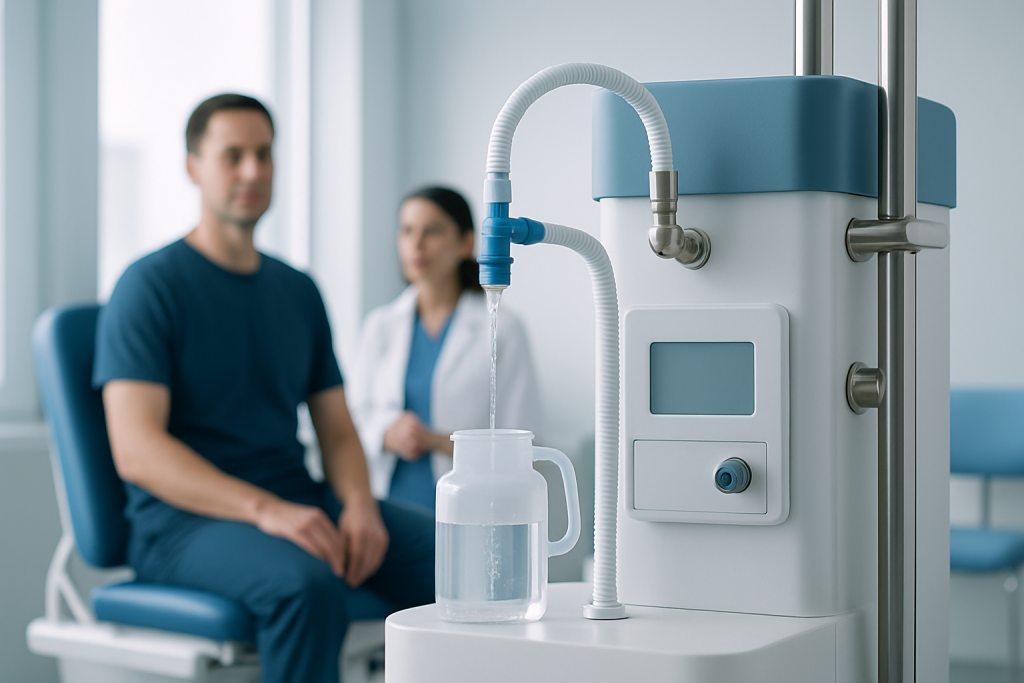
In common language, purified water usually refers to water that has gone through a process to remove impurities. These may include sediment, some heavy metals, excess minerals, microbes, chlorine byproducts, or other dissolved substances. The final composition depends on the treatment method and the source water.
Purified water is often used in home appliances, oral care, humidifiers, laboratories, and some health-related situations. It is also used in many bottled products. However, bottled labels can be confusing, because terms such as purified, spring, mineral, and drinking water may describe different sources and processing steps.
For patients, the key point is not the label alone but the intended purpose. Water suitable for drinking may not be appropriate for sterile medical use, and water used for a machine may not be the same as water chosen for a wound cleanser or a formula-preparation need. When there is uncertainty, a clinician or pharmacist can help interpret what is safest.
How water is purified

There are several established methods for purifying water, and many systems combine more than one. Filtration can trap particles and reduce some contaminants. Activated carbon may help improve taste and reduce certain chemicals. Reverse osmosis uses a membrane to remove many dissolved substances. Ultraviolet treatment can help inactivate certain microorganisms, and distillation removes impurities by boiling water and condensing the steam.
No single method is perfect for every situation. For example, a carbon filter may improve flavor but not remove all microbes, while a reverse osmosis system may be excellent for dissolved impurities but still require proper maintenance. The reliability of purified water also depends on how the system is installed, cleaned, and serviced over time.
Because treatment methods differ, a patient should not assume that all home filtration devices provide the same level of protection. If water is needed for a medical device, immune-sensitive care, infant feeding, or travel in an area with uncertain supply, the safest option should be confirmed with a healthcare professional or local public health guidance.
Why water quality matters for health
Water is part of more than hydration. It is used to prepare food, rinse fruits and vegetables, mix medications in some cases, clean medical equipment, and support hygiene. When water quality is poor, exposure to contaminants or microbes can affect the digestive system, skin, or overall well-being.
People with weakened immune systems, recent surgery, chronic illness, or open wounds may need extra caution. So may older adults, infants, and travelers who are adjusting to a different water system than the one they use at home. In these situations, purified or otherwise treated water can reduce risk, depending on the use.
Water quality also influences day-to-day comfort. Unpleasant taste, odor, or mineral buildup can make it harder for some people to drink enough fluids or use household equipment as intended. Improving water quality can therefore support both safety and routine self-care.
Purified water versus other water types
People often use water terms interchangeably, but the differences can matter. Purified water is a broad term for water that has been treated to reduce impurities. Distilled water is a type of purified water made by boiling and condensing steam. Spring water comes from an underground source and may be minimally processed. Mineral water contains naturally occurring minerals and is typically valued for taste.
Tap water can be safe in many places, but its quality depends on local treatment and distribution systems. Bottled water may be spring water, purified water, or mineral water, depending on the label and regulations in that region. The most important question is not which term sounds healthiest, but what the water will be used for.
For medical and laboratory use, specific standards may apply. For everyday drinking, local public health advice and household water testing may be more relevant. A patient who is unsure about a particular label or source should ask a clinician, pharmacist, or trusted local authority rather than relying on marketing language.
Common uses in medicine and at home
Purified water has many practical uses. In healthcare settings, it may be used for cleaning instruments, preparing some solutions, or supporting processes where lower contamination is important. At home, it may be chosen for humidifiers, steam irons, oral appliances, contact lens care systems, or certain rinsing tasks, depending on manufacturer instructions.
It is important to separate general use from sterile use. Purified water is not always sterile, and sterile water is not the same as drinking water. This distinction matters for wound care, injections, procedures, and other clinical situations. If a product or medical device requires a specific water type, the instructions should be followed exactly.
Travelers receiving Varicose Vein Treatment Abroad: When Stockings Are Enough and When Procedures Help More" class="ahp-ilk">treatment abroad may notice that local clinics use different labeling or packaging standards. That does not necessarily mean the care is unsafe; it means the patient should ask what kind of water is being used and for what purpose. Clear communication prevents simple misunderstandings and supports smoother recovery.
How to use purified water safely
Safe use begins with the source. Water should come from a reputable system or supplier, and household filters should be maintained according to the manufacturer’s schedule. If a filter cartridge is overdue for replacement, the quality of the water may decline rather than improve.
Storage matters too. Clean containers, tight lids, and proper handling help prevent contamination after treatment. Purified water that sits for a long time in an open or unclean container can lose the benefit of treatment. This is especially important in warm environments or busy shared kitchens.
- Follow the label or device instructions for the intended use.
- Replace filters and service systems on schedule.
- Keep containers clean and covered.
- Do not assume purified water is automatically sterile.
- Ask a clinician if water is needed for a medical procedure, wound, or infant feeding plan.
For patients managing care across borders, it can help to bring a short written list of water-related instructions from the treating team. This is especially useful after surgery, during medication changes, or when traveling to a place where supply quality varies from home.
When to ask a doctor or other professional
Medical advice is sensible whenever water is part of a treatment decision. This includes people recovering from surgery, those with weakened immunity, families caring for infants, and anyone using medical devices that come into contact with water. A clinician can explain whether tap water, purified water, distilled water, or sterile water is appropriate.
Professional guidance is also helpful if someone develops stomach upset after travel, notices unusual taste or odor in local water, or is concerned about contamination after a flood, interruption in supply, or plumbing issue. In many cases, the right response is straightforward, but it is better to confirm than to guess.
For international patients, treatment plans are often clearer when water use is discussed in advance, especially if a procedure, recovery period, or home-care step depends on a specific type of water. Acibadem Health Point works with multidisciplinary specialists in JCI-accredited hospitals to diagnose and treat patients who need this kind of coordinated care, including clear aftercare guidance for visitors from abroad.
Frequently asked questions
Is purified water the same as distilled water?
Not always. Distilled water is one type of purified water, but purified water can also be made by filtration, reverse osmosis, ultraviolet treatment, or other methods. The label should not be assumed to mean the same thing in every product or setting.
Can purified water be used for drinking?
Yes, purified water is commonly used for drinking if it is produced and stored safely. It may be preferred when local tap water quality is uncertain or when a person wants a treated water option. Still, drinking-water advice should follow local public health guidance.
Is purified water sterile?
No, purified water is not automatically sterile. Sterile water undergoes additional processing and is used in situations where very strict microbial control is needed. Patients should use the type of water specified for the task.
Why do some medical devices recommend purified water?
Some devices work better or last longer when minerals and impurities are reduced. Using the recommended water can help protect the device and support proper function. The device manual usually gives the most reliable guidance.
How should purified water be stored at home?
It should be kept in a clean, covered container and used according to the product or system instructions. If the water comes from a filter or dispenser, the equipment should be cleaned and maintained on schedule. Storage practices help prevent contamination after purification.
When should someone avoid guessing about water type?
When water is needed for a wound, medication preparation, infant care, or a medical device, guessing is not wise. In those cases, a doctor, nurse, or pharmacist can confirm whether purified, distilled, sterile, or tap water is appropriate. Clear instructions are especially important for patients traveling for care.
References
- World Health Organization
- Centers for Disease Control and Prevention
- U.S. Environmental Protection Agency
- National Institutes of Health
- Food and Drug Administration
This article is for general information only and is not a substitute for professional medical advice. Please consult a qualified doctor about your individual situation.
Explore treatments in Turkey — costs, top hospitals & a free quote
JCI-accredited · board-certified surgeons · reply within 24h
Add us as a Preferred Source to see more of our trusted health content across Google Search, AI Overviews and Discover.