PSA Is High: What Happens Before Anyone Talks About Biopsy

Key Takeaways
- A high PSA can happen for many reasons besides cancer, including infection, enlargement, or recent prostate irritation.
- Doctors usually confirm the result and review symptoms, medications, and recent activities before deciding on biopsy.
- Repeat PSA testing, urine tests, prostate examination, and MRI may help clarify risk.
- Biopsy is generally considered when the overall picture suggests a meaningful chance of prostate cancer.
- Men who travel for care can prepare better by bringing past test results, medication lists, and prior imaging with them.
Medically reviewed by the Acıbadem clinical team — June 13, 2026
A high PSA result does not automatically mean cancer, and biopsy is not always the next step. Doctors usually review the result in context, look for reversible causes, and may repeat testing or use imaging before recommending a biopsy.
Overview
When a PSA result comes back high, the first reaction is often to jump straight to the word “biopsy.” In practice, most clinicians pause before taking that step. PSA, or prostate-specific antigen, is a protein made by prostate tissue, and the blood test can rise for several reasons that have nothing to do with cancer.
That is why the conversation before biopsy matters so much. Doctors usually step back to ask a few practical questions: Was the test repeated? Was there a recent urinary infection, ejaculation, cycling session, or prostate manipulation? Has the prostate been enlarged for years, or is the number changing quickly? These details help separate a temporary spike from a pattern that needs closer attention.
For men seeking care across borders, this stage is especially important. A clear record of previous PSA results, medicines, past scans, and any urinary symptoms helps the receiving team avoid unnecessary procedures and choose the most appropriate next test. The goal is not to rush, but to understand the whole picture before deciding whether a biopsy is truly needed.
Symptoms
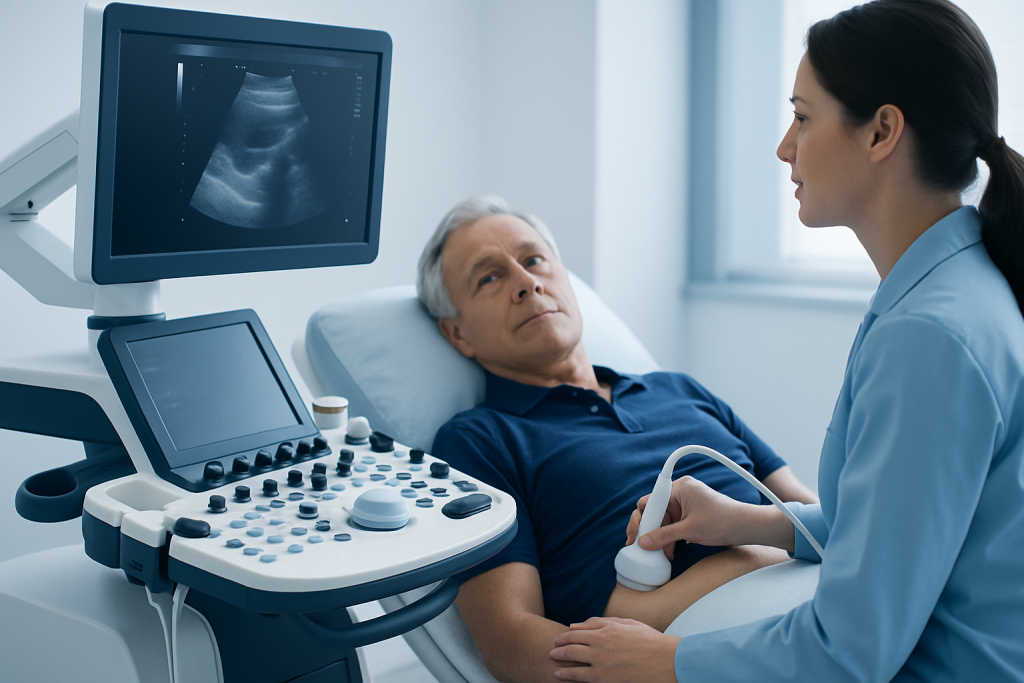
A high PSA level itself does not usually cause symptoms. Many men feel completely well and only discover the result during a routine health check, insurance screening, Male Fertility Evaluation: Which Test Answers Which Question First" class="ahp-ilk">fertility evaluation, or follow-up for another issue. That is one reason PSA findings can feel surprising and emotionally loaded.
When symptoms are present, they often point more toward a prostate or urinary condition than toward PSA alone. Men may notice more frequent urination, urgency, difficulty starting the stream, getting up several times at night, a weaker flow, pelvic discomfort, or burning during urination. These symptoms can occur with benign enlargement or inflammation as well as with cancer.
It is also possible to have prostate cancer without any early urinary symptoms. For that reason, doctors do not rely on symptoms alone; they combine the PSA result with age, exam findings, family history, and sometimes imaging or repeat blood work.
Causes & Risk Factors

PSA rises when prostate tissue is irritated, enlarged, injured, or affected by cancer. Benign prostate enlargement is common with age and can push the PSA higher without indicating a dangerous problem. Prostatitis, which is inflammation or infection of the prostate, can raise PSA sharply and sometimes temporarily.
Several everyday factors can also influence the result. Recent ejaculation, vigorous cycling, a urinary infection, urinary retention, prostate massage, catheter use, or a recent prostate procedure may all affect PSA levels. Because of this, doctors often ask about the days leading up to the test before deciding what the number really means.
Risk is not determined by PSA alone. Family history of prostate cancer, increasing age, African or Caribbean ancestry, prior abnormal prostate exam, and certain genetic factors can all matter. In men with a stronger risk profile, doctors may interpret even a modest PSA change more carefully and may recommend closer follow-up sooner.
Diagnosis
The next step after a high PSA is usually not biopsy by default. A doctor may first repeat the PSA to confirm the result, especially if the number is only mildly elevated or if something could have temporarily influenced it. The repeat test can help show whether the rise was a one-time fluctuation or part of a trend.
A clinical review often follows. This may include a symptom discussion, a digital rectal examination, a urine test to look for infection or blood, and a review of medicines and supplements. Some men also undergo a PSA-related calculation such as PSA density or PSA velocity, which helps the clinician estimate how concerning the result may be.
In many settings, multiparametric MRI of the prostate is now used before biopsy or to guide whether biopsy is needed at all. MRI can highlight areas that look suspicious and may help avoid unnecessary sampling. If the picture remains unclear, the doctor may discuss targeted biopsy, systematic biopsy, or continued monitoring based on the individual risk profile.
Treatment Options
Treatment depends on the reason the PSA is high. If infection or prostatitis is suspected, the doctor may treat that problem first and then recheck PSA later. If benign enlargement is causing urinary symptoms, treatment may focus on easing the blockage or improving comfort rather than immediately moving to biopsy.
When the concern is possible cancer, the discussion becomes more nuanced. Some men are advised to have a biopsy soon, especially if the PSA is persistently elevated, MRI findings are suspicious, or the prostate exam is abnormal. Others may be followed with repeat PSA and MRI if their risk appears lower and the elevation is small or explainable.
If biopsy is recommended, the doctor may explain how the sample is taken, what kind of anesthesia or preparation is needed, and what to expect afterward. For international patients, this is often the point where travel planning becomes practical: bringing prior reports, confirming anticoagulant use, and arranging enough time for test review and follow-up discussion before returning home. Acibadem Health Point’s multidisciplinary specialists and JCI-accredited hospitals can diagnose and treat this condition for international patients as part of a coordinated care pathway.
Prevention & Self-care
There is no guaranteed way to prevent PSA from rising, but men can help make testing more reliable. Before a planned PSA test, it is sensible to ask the clinician whether any temporary factors should be avoided, such as ejaculation or intense cycling for a short period beforehand. If a urinary infection is present, the test may need to wait until the issue is resolved.
Self-care also means keeping track of prior results. A single PSA value is less informative than a pattern over time, so maintaining a personal record can be useful, especially for men who receive care in more than one country. Including dates, lab names, and whether the test was done during illness or after a procedure can prevent confusion later.
Healthy routines matter too, though they do not replace medical evaluation. Staying active, maintaining a balanced weight, and attending age-appropriate checkups support overall health. Men with family history or previous prostate concerns should not delay follow-up simply because they feel well.
When to See a Doctor
Medical review is appropriate when PSA is elevated and the cause is not obvious. Men should also seek evaluation if PSA rises on repeat testing, if urinary symptoms are new or getting worse, or if a clinician finds an abnormal prostate exam. The aim is to clarify the risk early, not to assume the worst.
Prompt attention is especially important if there is fever with urinary symptoms, inability to pass urine, visible blood in the urine, or significant pelvic pain. These features may point to infection, retention, or another treatable urologic problem that should be assessed without delay.
For men traveling for care, it is helpful to plan a visit that includes enough time for review of results and a follow-up conversation. Before the appointment, gather previous PSA reports, MRI images or CDs if available, pathology records, and a complete medication list. That preparation makes the first consultation more efficient and often helps the team decide whether biopsy is truly the next step.
What the Biopsy Conversation Usually Looks Like
By the time biopsy is discussed, the doctor has usually already considered the less invasive clues. The question is rarely “Is PSA high?” and more often “Does the overall pattern justify sampling the prostate now?” That distinction matters because biopsy has benefits, but it also has downsides such as discomfort, bleeding, infection risk, and anxiety while waiting for results.
Patients are often reassured to learn that a biopsy recommendation does not mean cancer is confirmed. It simply means the team believes tissue testing is the best way to answer the remaining question. If the doctor recommends observation instead, that is also a medical decision—not a dismissal—and it may reflect a low-risk pattern that is better handled with monitoring.
For many men, the most useful next step is not guessing what the PSA “really means,” but organizing the next round of information carefully. A good follow-up plan may include repeat blood work, MRI, symptom review, and a clear timeline so the patient knows exactly when and why the next decision will be made.
Frequently asked questions
Does a high PSA mean prostate cancer?
No. PSA can rise because of benign enlargement, infection, inflammation, recent ejaculation, cycling, or prostate procedures. Doctors look at the full picture before deciding whether cancer is a real concern.
Why would a doctor repeat the PSA test before biopsy?
A repeat test helps confirm whether the result was a temporary fluctuation or a persistent elevation. This is especially useful when the PSA rise is mild or there was a recent factor that could have affected the number.
Can an MRI replace a biopsy?
MRI can be very helpful in deciding who needs biopsy and where suspicious areas may be located. It does not always replace biopsy, but it may reduce unnecessary procedures in some men.
What if I have no symptoms but my PSA is high?
That is common. PSA is often found during routine testing, and many men with elevated results feel completely normal, which is why follow-up testing and clinical review are so important.
Should I stop exercise before a PSA test?
Vigorous cycling and some intense activities may affect PSA in some men, so doctors sometimes advise avoiding them for a short period before testing. It is best to ask the clinician or lab for local instructions before the blood draw.
If I am traveling for care, what should I bring?
Bring all prior PSA results, MRI reports or images, pathology reports if any, and a current medication list. Having those records together helps the doctor decide whether biopsy, repeat testing, or MRI is the most sensible next step.
References
- National Cancer Institute
- American Cancer Society
- American Urological Association
- Mayo Clinic
- NHS
This article is for general information only and is not a substitute for professional medical advice. Please consult a qualified doctor about your individual situation.