

Pediatric Hip Dysplasia: Why Timing Matters More Than Most Parents Expect

Key Takeaways
- Timing matters because an immature hip is easier to guide into normal development in early infancy.
- Some babies show no obvious symptoms, so routine newborn and infant hip checks are important.
- Breech position, family history, and certain pregnancy or birth factors can raise the likelihood of hip dysplasia.
- Ultrasound is commonly used in young infants because the hip is still partly cartilaginous and not fully visible on X-ray.
- Treatment ranges from observation and bracing to casting or surgery, depending on age and severity.
- Parents should seek assessment promptly if they notice uneven leg movement, leg-length differences, or a clicking or unstable hip.
Medically reviewed by the Acıbadem clinical team — June 13, 2026
Pediatric hip dysplasia, also called developmental dysplasia of the hip, affects how a baby’s hip joint forms and fits together. When it is found early, treatment is often simpler and the chance of healthy hip development is much better.
Overview
Pediatric hip dysplasia refers to a hip joint that does not form or sit as securely as it should. In a healthy hip, the rounded femoral head rests deeply in the socket of the pelvis. When that fit is shallow or unstable, the joint may be loose, partially displaced, or fully dislocated.
Doctors may also use the term developmental dysplasia of the hip, or DDH, because the condition can appear at birth or unfold during the first months of life. That timing is important. A baby’s hip is still developing rapidly after birth, which means early guidance can often help the joint mature more normally. Delayed recognition can make treatment longer and more complex.
For parents, the condition can be unsettling because it is not always visible. Some babies appear completely comfortable and move normally, especially early on. That is why newborn screening, follow-up infant exams, and timely imaging when needed are such an important part of care.
Symptoms
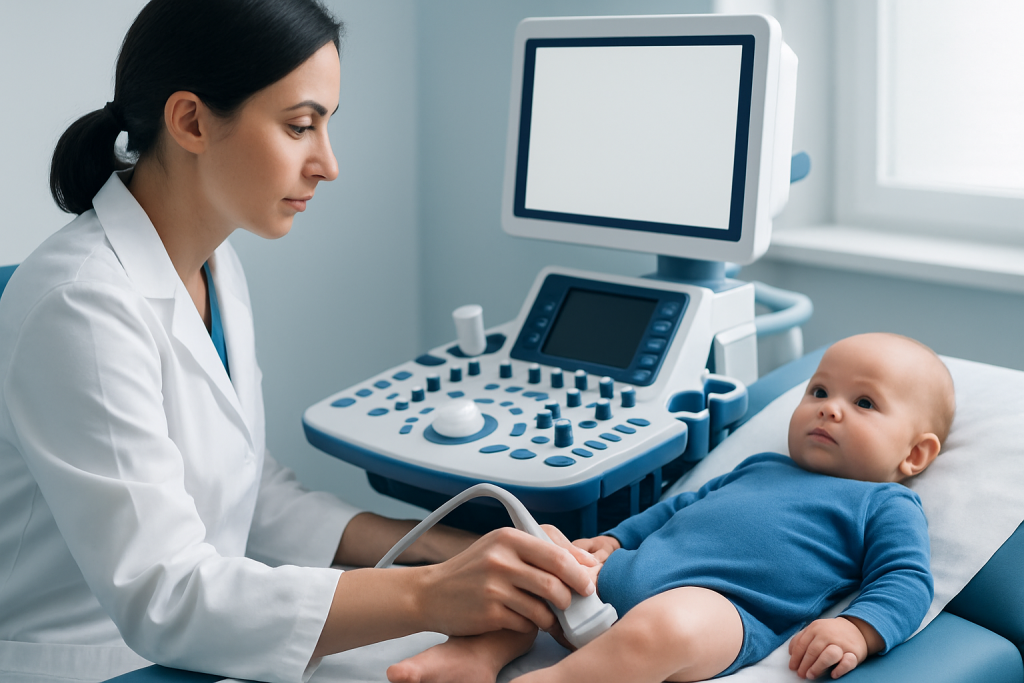
Hip dysplasia in infants may not cause pain, and many babies do not show clear outward signs. Instead, the condition is often first suspected during a routine physical examination or a screening check in infancy. Still, there are clues that parents and clinicians may notice.
Possible signs include one leg seeming shorter than the other, uneven skin folds on the thighs or buttocks, limited opening of one hip, or a clicking or clunking sensation during movement. In some cases, a baby may seem to prefer one side or may have difficulty spreading the legs comfortably during diaper changes.
As a child grows, untreated hip dysplasia may lead to limping, an unusual walking pattern, hip pain, or tiredness with activity. These later signs do not always mean hip dysplasia, but they do justify a careful orthopedic assessment, especially if the child had an earlier risk factor or a concerning newborn exam.
Causes & Risk Factors
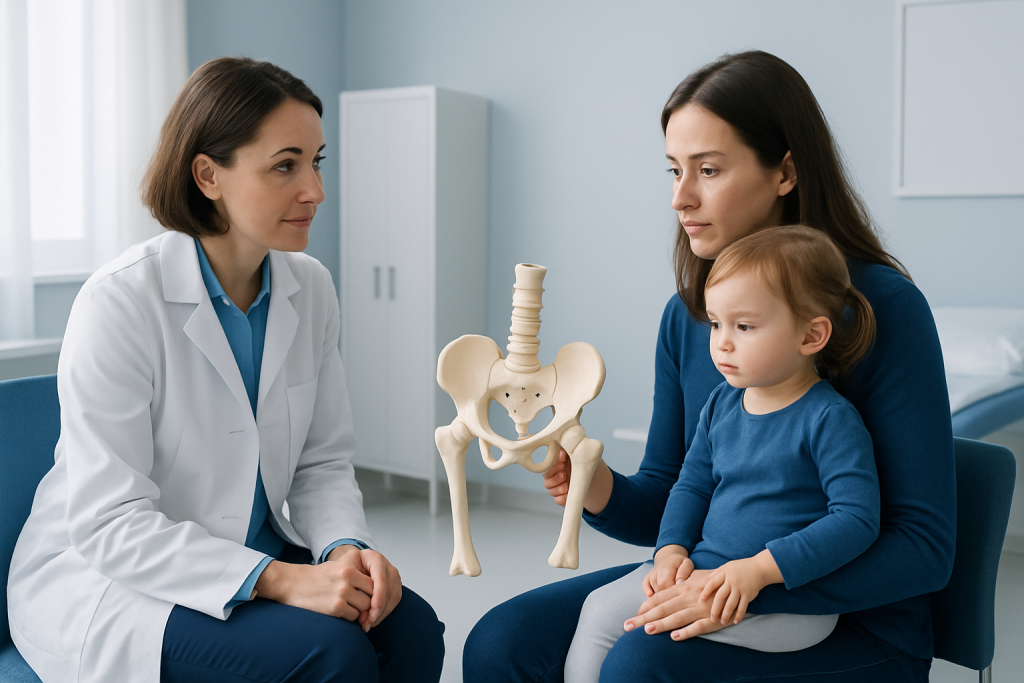
There is no single cause of pediatric hip dysplasia. The condition usually develops from a combination of mechanical and developmental influences that affect how the hip socket forms around the femoral head. During late pregnancy and early infancy, the joint is still adapting, so anything that limits normal positioning can matter.
Certain factors are known to raise the likelihood of DDH. These include breech presentation, a family history of hip dysplasia, being the first-born child, female sex, and situations where the baby had less space to move near the end of pregnancy. Tight swaddling with the legs held straight together may also place stress on developing hips.
It is helpful for parents to know that having a risk factor does not mean a child will develop hip dysplasia. The risk simply means the hips deserve closer attention. Likewise, a baby without risk factors can still develop the condition, which is why routine examination remains valuable for all infants.
Diagnosis
Diagnosis begins with a careful physical examination. A clinician will assess hip stability, leg movement, and symmetry, and may perform specific maneuvers in very young infants to look for looseness or dislocation. These checks are gentle and are part of standard newborn and infant care.
Imaging helps confirm the diagnosis when the exam is uncertain or when the baby has risk factors. Ultrasound is often the preferred test in young infants because the hip structures are still partly made of cartilage and may not yet show well on X-ray. As a child grows and the bones harden, X-rays become more useful for tracking the shape and position of the joint.
Early diagnosis matters because the treatment plan is closely linked to age. A hip identified in the first weeks of life may respond to a different approach than one found after several months. Families who are traveling for care sometimes appreciate that the evaluation can usually be organized into a clear sequence: examination, imaging, treatment planning, and follow-up, so they know what to expect before returning home.
Treatment Options
Treatment is chosen according to the child’s age, hip stability, and the degree of displacement. The main goal is always the same: keep the femoral head centered in the socket long enough for the hip to develop properly. When care starts early, treatment is often less invasive.
For young infants, a soft brace or harness may hold the hips in a flexed, abducted position that encourages the joint to stay aligned. If the hip is more rigidly displaced or the child is older, a doctor may recommend a closed reduction under anesthesia, followed by a cast to maintain position. In some cases, surgery is needed to reposition the hip or to correct the socket and surrounding structures.
Families should expect treatment to involve follow-up visits and repeat imaging. This is not because the initial plan has failed, but because pediatric hips change as children grow. For international patients, coordinating appointments, recovery guidance, and home-country follow-up before travel can make the process easier and safer.
Prevention & Self-care
Not every case of hip dysplasia can be prevented, but some practical habits can support healthy hip development and reduce avoidable strain. One of the simplest is safe swaddling: the hips and knees should be able to bend and move outward naturally rather than being wrapped tightly with the legs straightened together.
Parents can also pay attention to routine well-baby visits and keep recommended screening appointments, especially if the baby had breech positioning or a family history of hip problems. These visits are an opportunity to catch subtle changes before they become harder to treat. If a clinician recommends a hip ultrasound or orthopedic review, it is best not to delay it because the timing can influence both treatment choice and outcome.
At home, parents can follow the care team’s instructions carefully if a harness, brace, or cast is prescribed. That usually includes skin checks, feeding and carrying guidance, bathing adjustments, and awareness of warning signs such as swelling, color change, or marked discomfort. A baby or child in treatment still needs normal affection, movement within the allowed range, and regular medical review.
- Use hip-friendly swaddling that leaves the legs free to bend.
- Attend all newborn, infant, and pediatric follow-up visits.
- Ask when imaging is needed if your child has risk factors.
- Follow brace or cast instructions exactly as given.
- Seek advice promptly if the child seems less comfortable or less mobile.
When to See a Doctor
A doctor should evaluate any baby with a suspected hip issue as soon as possible, especially when there is a family history, breech birth, or a concern noted during the newborn examination. Hip dysplasia is one of those conditions where waiting can remove treatment options that are simpler in early infancy.
Parents should arrange assessment if they notice asymmetry in leg movement, a leg seeming shorter, difficulty spreading the legs, a persistent click or clunk, or if the child later develops limping or walking changes. Even if the sign turns out to be harmless, it is better to have it checked than to assume it will resolve on its own.
If treatment has already started, medical review is also important for any problem with a harness, cast, or post-procedure recovery. That includes skin irritation, swelling, fever, worsening pain, or a child who is not moving or feeding as expected. Acibadem Health Point’s multidisciplinary specialists and JCI-accredited hospitals can help diagnose and treat pediatric hip dysplasia for international patients, with coordinated care that supports both treatment and follow-up planning.
Living With the Condition: Recovery and Long-Term Outlook
Most families want to know what life looks like after the first diagnosis. The outlook depends heavily on how early the condition is found and how well the hip responds to treatment. When the joint is centered and monitored over time, many children go on to develop strong function and normal daily activity.
Recovery may involve short-term practical changes rather than dramatic restrictions. Parents may need to adapt feeding positions, diaper changes, carrying techniques, or travel plans while a harness or cast is in place. Older children who have undergone reduction or surgery may also need rehabilitation advice to regain comfortable movement and strength as they heal.
Follow-up is a key part of long-term care because the hip continues to grow for years. Even after initial improvement, doctors may check the joint over time to make sure the socket is developing well. That steady monitoring is especially reassuring for families managing care across countries, since it creates a clear roadmap for what to watch and when to return for review.
Frequently asked questions
Can hip dysplasia be present even if my baby seems fine?
Yes. Many infants with hip dysplasia do not look unwell and may move normally at first. That is why routine newborn and infant exams are so important.
Why is early treatment such a big deal?
A baby’s hip is still developing, so early treatment can help guide the socket and femoral head into a healthier position. When the condition is found later, the joint may be less flexible and treatment may become more involved.
Is an ultrasound always needed?
Not always, but it is commonly used when the baby is young, has risk factors, or has a concerning examination. Doctors choose imaging based on age and what they need to see clearly.
Does swaddling cause hip dysplasia?
Swaddling does not usually cause the condition by itself, but tight wrapping with the legs held straight can place the hips in a less healthy position. Hip-friendly swaddling leaves room for the legs to bend and move outward.
Will my child need surgery?
Not every child does. Many infants improve with early bracing or close monitoring, while surgery is usually reserved for more severe cases or for hips found later.
Can my child still travel during treatment?
Often yes, but the timing should be discussed with the treating team. Families should plan follow-up appointments, understand how the device or cast affects travel, and know what symptoms should prompt urgent review.
References
- American Academy of Pediatrics
- American Academy of Orthopaedic Surgeons
- International Hip Dysplasia Institute
- Mayo Clinic
- NHS
This article is for general information only and is not a substitute for professional medical advice. Please consult a qualified doctor about your individual situation.
More from the Health Library



Related Specialists

Dr. Murat Şahin
Pediatric CardiologyDr. Hande Turan
Pediatric Endocrinology
Assoc. Prof. Dr. Erman Çilsal
Pediatric Cardiology
Dr. Sinem Altunyuva Usta
Pediatric Cardiology