Neck Massager

Key Takeaways
- Neck massagers may help relax tight muscles, but they do not treat every cause of neck pain.
- People with injury, numbness, dizziness, or worsening symptoms should avoid self-massage until they are assessed by a clinician.
- Gentle, short sessions are usually safer than prolonged or forceful use.
- Heat, posture changes, movement breaks, and ergonomic support often work well alongside massage.
- Persistent, severe, or spreading neck symptoms deserve medical evaluation.
A neck massager can be a convenient tool for easing muscle tension, but it is not the right choice for every type of neck discomfort. Understanding when it may help, when it should be avoided, and when to seek medical advice can make its use safer and more effective.
Overview
Neck massagers are designed to apply pressure, vibration, kneading, or heat to the muscles around the neck and upper shoulders. For many people, they are a simple way to ease a feeling of tightness after long hours at a desk, frequent travel, or prolonged screen use.
Even so, a neck massager is best understood as a comfort tool, not a cure. If neck pain comes from a pinched nerve, injury, arthritis, infection, or another medical problem, massage alone may not be enough and may sometimes make symptoms harder to interpret.
For international patients who are weighing care from abroad, it can help to think of a neck massager as one part of a broader plan. The most useful approach often combines safe home measures with a clear diagnosis, especially when symptoms keep returning or interfere with daily activity.
Symptoms a Neck Massager May Help With
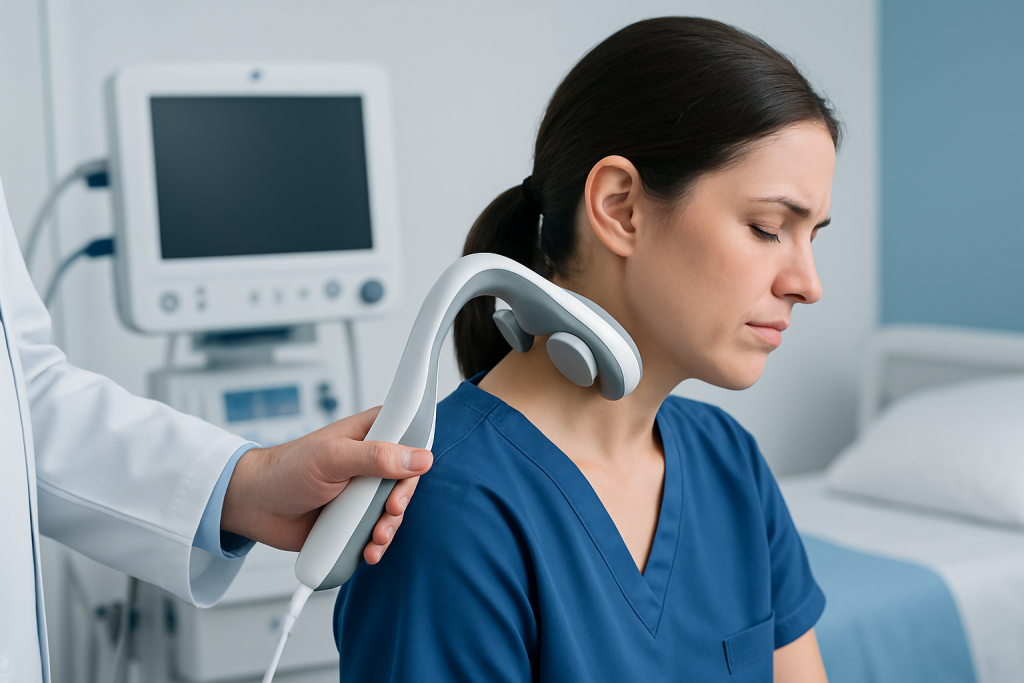
Neck massagers are most often used for muscular discomfort rather than structural problems. People may notice temporary relief when symptoms feel like a dull ache, stiffness, or a band of tightness across the neck and shoulders.
Common situations where a gentle massage device may be considered include:
- Muscle tension from desk work or computer use
- Soreness after stress or poor sleep posture
- Mild stiffness from overuse or prolonged travel
- Upper shoulder tightness that accompanies neck discomfort
Some users also feel that massage helps them relax and move more comfortably, which can make stretching and posture correction easier. However, pain that is sharp, one-sided, radiating into the arm, or linked with weakness, tingling, or headache should not be assumed to be simple muscle tension.
Causes & Risk Factors

Neck discomfort can arise from everyday strain, but it can also reflect a condition that needs medical attention. A neck massager may be appropriate for ordinary muscle tightness, yet it is not suitable for every cause of pain.
Factors that often contribute to neck tension include:
- Long periods of looking down at a phone or laptop
- Poor workstation setup or unsupported sleeping positions
- Stress-related muscle tightening
- Repetitive lifting, carrying, or driving
Certain health issues call for extra caution. Recent injury, whiplash, osteoporosis, inflammatory arthritis, known cervical spine disease, skin irritation, or reduced sensation in the neck area may increase the chance of harm. People who take blood thinners or who have a history of stroke-like symptoms should ask a doctor before using any device that applies pressure to the neck.
Diagnosis
When neck pain is persistent, recurrent, or accompanied by other symptoms, a clinician will usually begin with a careful history and physical examination. The goal is to learn whether the pain appears muscular or whether it may involve joints, discs, nerves, or another body system.
Questions often cover when the pain began, what makes it worse, whether it spreads to the shoulders or arms, and whether there has been a fall, accident, fever, or recent infection. The examination may include posture assessment, range of motion, reflexes, strength, and sensation.
Depending on the findings, imaging or other tests may be suggested. In many cases, however, a diagnosis is made without advanced testing, especially when the symptoms fit a straightforward pattern of muscle strain and there are no warning signs.
Treatment Options
Treatment depends on the cause of the discomfort. For uncomplicated muscle tension, conservative measures are often enough, and a neck massager may be one small part of that plan.
Options commonly recommended by health professionals include:
- Activity modification and posture correction
- Gentle stretching and movement breaks
- Heat or cold application, depending on the situation
- Physical therapy or guided exercise when symptoms linger
- Medicines recommended by a clinician, when appropriate
Massage devices should be used carefully. Short sessions, light pressure, and a comfortable position are generally safer than intense or prolonged use. People should stop if pain increases, if dizziness develops, or if the skin becomes irritated. Neck massage should never replace care for a suspected injury, nerve problem, or other medical condition.
Prevention & Self-care
Many neck symptoms improve when daily habits become more neck-friendly. Small adjustments often matter more than any single device.
Helpful self-care measures include keeping screens near eye level, taking brief movement breaks during long sitting periods, using a pillow that supports a neutral sleeping position, and avoiding the habit of cradling a phone between the shoulder and ear. Gentle shoulder rolls, stretching, hydration, and stress management can also reduce muscle guarding.
If a neck massager is used, it should be treated like any other wellness tool: follow the manufacturer’s instructions, do not use it on injured skin, and avoid sleeping with the device on. For people traveling internationally for treatment or follow-up, bringing a simple list of symptoms, triggers, and prior therapies can make appointments more efficient and help the care team tailor advice.
When to See a Doctor
Medical review is important when neck pain lasts longer than expected, keeps returning, or begins to interfere with sleep, work, or daily movement. A clinician can help identify whether the problem is muscular, nerve-related, or linked to another condition.
Prompt evaluation is especially important if neck pain follows an accident, comes with arm weakness, numbness, fever, unexplained weight loss, severe headache, trouble walking, or dizziness. Sudden neck pain with neurological symptoms should not be managed only with a home massager.
Acibadem Health Point’s multidisciplinary specialists and JCI-accredited hospitals diagnose and treat neck-related conditions for international patients, with care coordinated around assessment, treatment, and follow-up. For anyone uncertain about whether a neck massager is appropriate, a qualified doctor can offer safer, personalized guidance.
Practical Use Tips
When a clinician has confirmed that self-massage is reasonable, the safest approach is usually the simplest one. Choose a device that feels gentle rather than aggressive, and start with the lowest setting if the product offers intensity levels.
It is wise to sit upright, keep the neck relaxed, and limit sessions so the muscles are not overworked. Massage should feel soothing or neutral, not painful. If relief is only temporary, that does not mean the device failed; it may simply mean the underlying issue also needs posture changes, stretching, or professional care.
Think of the response as feedback. If the neck feels looser and movement improves, the approach may be useful. If symptoms worsen, spread, or change character, the safest next step is to stop using the device and seek medical advice.
Frequently asked questions
Can a neck massager help with everyday stiffness?
It may help when stiffness comes from muscle tension, poor posture, or prolonged sitting. The benefit is usually temporary, so it works best as part of a broader routine that includes movement and posture changes.
Is it safe to use a neck massager every day?
Not always, and not for everyone. Daily use may be fine for some people with simple tension, but it should be gentle and should not cause pain, bruising, or dizziness. If symptoms persist, a doctor should check the cause.
Can a neck massager make pain worse?
Yes, especially if the pain comes from an injury, nerve irritation, or an inflamed area. If discomfort increases during or after use, the device should be stopped and the symptoms reassessed.
Who should avoid using a neck massager without medical advice?
People with recent neck trauma, numbness, weakness, fever, severe headache, known cervical spine problems, or unexplained symptoms should avoid self-treatment until evaluated. Extra caution is also wise for those on blood thinners or with fragile bones.
Should a neck massager be used if pain spreads into the arm?
Pain that travels into the arm can suggest nerve involvement and should not be treated as ordinary muscle tension. A medical assessment is recommended before using a massager.
What helps neck pain besides massage?
Posture correction, short movement breaks, gentle stretching, ergonomic support, and professional physical therapy are often helpful. A clinician can suggest the right mix based on the cause of the pain.
References
- World Health Organization
- Mayo Clinic
- National Institute of Neurological Disorders and Stroke
- NHS
- American Academy of Orthopaedic Surgeons
This article is for general information only and is not a substitute for professional medical advice. Please consult a qualified doctor about your individual situation.