Mons Pubis

Key Takeaways
- The mons pubis is a normal part of female anatomy and can vary naturally from person to person.
- Changes in size or texture may be related to weight shifts, hormones, fluid retention, cysts, infections, or skin conditions.
- A new lump, worsening pain, redness, discharge, or a hard mass should be evaluated by a clinician.
- Diagnosis is usually based on history and examination, with imaging or tests used when needed.
- Treatment depends on the cause and may include self-care, medication, drainage, or surgery in selected cases.
The mons pubis is the soft, fatty area above the vulva that can change in shape, size, or comfort for many everyday reasons. Most changes are benign, but persistent swelling, a new lump, pain, or skin changes deserve medical assessment.
Overview
The mons pubis is the rounded, fatty area over the pubic bone and above the external genital organs. It is a normal part of female anatomy, and its appearance naturally differs from one person to another. Some people notice it more during puberty, after pregnancy, with weight changes, or later in life as the body’s fat distribution changes.
Because the area is close to skin folds, underwear lines, and moisture, it can also be affected by irritation, ingrown hairs, cysts, and infections. For many patients, the concern is not only appearance but also comfort: tenderness in tight clothing, embarrassment about a visible bulge, or worry that a new lump might signal something more serious. A careful, respectful medical evaluation can usually sort out the cause.
In international-patient care, this topic often comes up after a person has been managing symptoms quietly for months or years. A consult can clarify whether the change is simply a body-variation issue, a skin problem, or a condition that benefits from treatment.
Symptoms and Common Concerns
Mons pubis changes may be noticed as fullness, a lump, uneven contour, swelling, firmness, or soreness. Some people see a soft, symmetrical prominence that has been present for years, while others notice a new or changing area that feels different from the surrounding tissue. The details matter: a painless soft fullness is approached differently from a painful, red, or rapidly enlarging mass.
Symptoms can include:
- Visible swelling or enlargement above the pubic bone
- A localized lump, bump, or cyst-like nodule
- Tenderness with walking, exercise, or sexual activity
- Skin redness, warmth, itching, or drainage
- Discomfort from tight clothing or shaving irritation
Emotional concerns are common as well. Some patients worry about body image, while others are unsure whether the issue belongs in gynecology, dermatology, or surgery. In practice, the first step is simply identifying what is changing and whether the problem is in the skin, fatty tissue, a gland, or deeper tissue.
Causes and Risk Factors

There is no single reason the mons pubis may look or feel different. The most common explanation is ordinary variation in body fat distribution, which can be influenced by genetics, puberty, pregnancy, menopause, and overall weight changes. Hormonal shifts may also affect fat storage and fluid retention in the lower abdomen and pelvic region.
Other possible causes include cysts, inflamed hair follicles, boils, lipomas, hernias, swollen lymph nodes, or skin conditions such as hidradenitis suppurativa. Friction, shaving, waxing, tight clothing, sweating, and recurrent irritation can make these problems more noticeable or harder to heal. Less commonly, a firm or persistent mass may need further testing to rule out a tumor or another deeper structural problem.
Risk factors depend on the underlying cause. Recurrent skin friction, obesity, recent childbirth, prior surgery, and a history of cysts or skin inflammation can all play a role. A doctor’s job is not to assume the answer from appearance alone, but to match the pattern of symptoms with the most likely cause.
Diagnosis
Diagnosis usually begins with a detailed discussion of when the change started, whether it is painful, and whether the size has remained stable or changed over time. A clinician may ask about menstrual history, recent pregnancy, weight changes, skin care habits, shaving or hair removal practices, and any fever, discharge, or trauma.
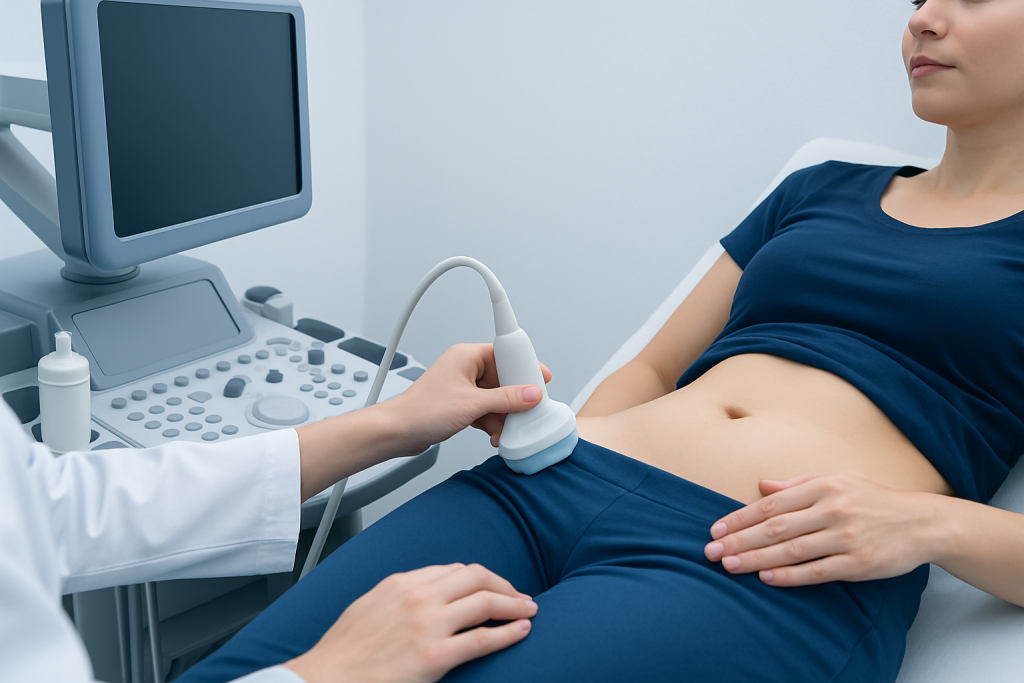
A physical examination is often enough to identify whether the issue appears to be a superficial skin lesion, a soft tissue swelling, or a deeper mass. If the finding is unclear, imaging such as ultrasound may be used to distinguish a cyst from solid tissue or to look for a hernia or other structural cause. Additional tests are guided by the suspected diagnosis and may include blood tests or, in selected cases, a biopsy.
For patients traveling from abroad, bringing prior records, photographs of changes over time, and any imaging reports can make the evaluation smoother. That is especially helpful when the concern has already been discussed with a gynecologist, dermatologist, or general surgeon in another country.
Treatment Options
Treatment depends entirely on the cause. A small, noninfected cyst may only need observation, while an infected area may require warm compresses, antibiotics, or drainage. Irritated skin often improves with reduced friction, gentler hair removal habits, and better moisture control, whereas a deeper mass may need surgical removal or specialist review.
If the issue is related to excess fatty tissue or contour concerns rather than a disease process, some patients discuss aesthetic or reconstructive options. In carefully selected cases, procedures such as liposuction or tissue reduction may be considered, but only after confirming that the fullness is not due to a medical condition. Any procedure in this region should be planned by a clinician experienced in vulvar and lower abdominal anatomy, since comfort, scar placement, and healing matter greatly.
When infection or inflammation is present, treatment may include pain relief measures, topical therapy, or oral medication chosen by the clinician. Self-treatment by squeezing, puncturing, or repeatedly shaving over the area can worsen irritation and increase the risk of infection, so it is best avoided.
Prevention and Self-care
Not every mons pubis change can be prevented, but day-to-day habits can reduce irritation and make symptoms easier to manage. Loose, breathable underwear, careful drying after bathing, and avoiding prolonged dampness can help the area stay comfortable. Gentle cleansing is usually enough; harsh scrubs and heavily scented products may create more irritation than relief.
People who shave or remove hair may benefit from using clean tools, allowing the skin to recover between sessions, and stopping if bumps or folliculitis keep returning. Managing weight gradually, when appropriate, may also improve pressure and friction in the area. For those with recurrent boils or nodules, early review by a clinician can help prevent repeated flares.
At home, warm compresses may ease mild discomfort from a small blocked gland or follicle, but persistent swelling should not be watched indefinitely. A changing lump is better assessed once than ignored for too long.
When to See a Doctor
A medical review is advisable if the mons pubis swelling is new, growing, painful, hard, red, draining, or associated with fever. Persistent itching, recurrent bumps, skin thickening, or a mass that does not improve over time also deserve attention. If the change affects walking, exercise, intimacy, or confidence, that is a valid reason to seek care as well.
Urgent assessment is especially important if there is rapid enlargement, severe pain, spreading redness, or a lump that seems fixed in place. These symptoms do not automatically mean something dangerous, but they do signal that the area should be examined without delay. Clear diagnosis usually brings relief because many causes are straightforward to treat once identified.
For patients considering care across borders, multidisciplinary teams can help coordinate gynecology, dermatology, imaging, and surgery when needed. Acibadem Health Point’s multidisciplinary specialists and JCI-accredited hospitals diagnose and treat this condition for international patients, with attention to both medical clarity and recovery planning.
Living With Mons Pubis Changes
Some mons pubis concerns are medical, and some are mostly about comfort or appearance, but both deserve a thoughtful response. A person should not have to guess whether a change is “normal enough” when a clinician can usually provide a practical explanation. Even when no treatment is needed, reassurance based on examination is often valuable.
For patients recovering after a procedure or infection treatment, follow-up matters. Healing in this area can be influenced by movement, clothing, hygiene, and friction, so instructions should be followed closely and any unexpected worsening should be reported. If care is being coordinated from another country, clear written guidance and scheduled follow-up can make recovery simpler and safer.
In most cases, the most helpful next step is not panic, but clarity: determine the cause, treat it appropriately, and choose the least disruptive plan that fits the person’s needs.
Frequently asked questions
Is the mons pubis supposed to be large or small?
There is a wide normal range in mons pubis size and shape. Genetics, body fat distribution, hormones, and life events such as pregnancy can all affect how it looks. Size alone is usually not a problem unless it changes suddenly or causes symptoms.
What does a lump on the mons pubis usually mean?
A lump may be a cyst, inflamed hair follicle, boil, lipoma, or another benign skin or soft tissue issue. A clinician should examine it if it is painful, growing, firm, or persistent. An exam often clarifies the cause quickly.
Can shaving cause bumps in the mons pubis area?
Yes. Shaving can lead to ingrown hairs, folliculitis, and skin irritation, especially if the skin is sensitive or the area is rubbed by tight clothing. Using gentler hair removal methods or pausing shaving may help if bumps keep returning.
Is mons pubis enlargement always related to weight gain?
No. Weight changes can contribute, but hormones, pregnancy, fluid retention, and individual anatomy can also play a role. If the enlargement is new, one-sided, or uncomfortable, it should be checked rather than assumed to be weight-related.
Can treatment improve the appearance as well as discomfort?
Often, yes. Treatment is chosen based on the cause, so it may reduce pain, swelling, infection, or visible fullness at the same time. A specialist can explain realistic options and whether a medical or procedural approach is appropriate.
When should someone seek urgent care for a mons pubis lump?
Urgent care is appropriate if the area becomes very painful, rapidly enlarges, turns red and hot, or is accompanied by fever. These signs may indicate an infection or another condition that should be assessed promptly.
References
- American College of Obstetricians and Gynecologists
- Merck Manual Professional Edition
- Mayo Clinic
- Cleveland Clinic
- World Health Organization
This article is for general information only and is not a substitute for professional medical advice. Please consult a qualified doctor about your individual situation.
More from the Health Library



Related Specialists

Dr. Faısla Rabea
Emergency Service
Dr. Mehmet Dolanbay
Gynecology & Obstetrics
Dr. Ferhat Şamlı
Anesthesiology
Assoc. Prof. Dr. Mehmet Altiparmak
Aesthetic Plastic & Reconstructive Surgery