Swollen Lymph Nodes on One Side of the Neck: Causes

Key Takeaways
- A one-sided neck lymph node swelling is often linked to infection in the throat, mouth, ear, or teeth.
- The size, tenderness, firmness, and duration of the swelling help guide the cause.
- Most cases improve once the underlying issue is treated, but persistent lumps should be checked by a clinician.
- Diagnosis may include a physical exam, blood tests, imaging, or sometimes a biopsy.
- Self-care can support recovery, but home treatment should not replace medical advice if the swelling lingers or worsens.
Lymph nodes enlarged on one side of the neck are often a sign that the body is reacting to infection or inflammation nearby. In some cases, the swelling is temporary and harmless, but persistent, painful, or unusual changes deserve medical evaluation.
Overview
Lymph nodes are small immune system structures that filter fluid and help the body respond to infection. When one side of the neck has enlarged lymph nodes, it usually means something nearby is causing the immune system to work harder. Common triggers include a sore throat, dental infection, ear infection, skin irritation, or a recent viral illness.
Many people notice the swelling while touching the neck, shaving, swallowing, or turning the head. The finding can be unsettling, especially when it appears on only one side, but one-sided swelling does not automatically point to something serious. The pattern, associated symptoms, and how long the lump has been present are more important clues than the swelling alone.
For international patients deciding whether to seek care locally or travel for evaluation, it helps to think in practical terms: a short-lived tender node after a cold is usually different from a firm lump that remains unchanged for weeks. A clinician can sort out whether the node is reacting normally or whether a closer look is needed.
Symptoms
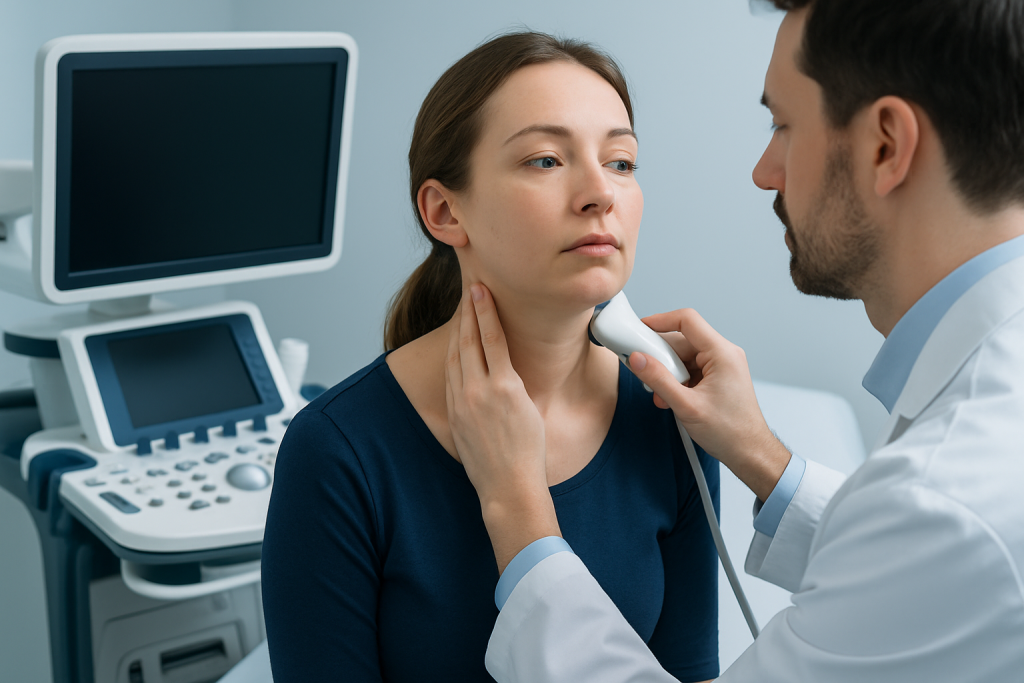
Enlarged lymph nodes on one side of the neck may feel soft, rubbery, or firm. They can be tender when touched, or they may be painless. Some people notice only a single node, while others feel a small cluster in the upper neck, under the jaw, or along the side of the throat.
Symptoms that appear alongside the swelling often point toward the source. A person may also have a sore throat, fever, runny nose, ear pain, tooth pain, gum swelling, skin redness, or a recent cut or rash on the scalp or face. If the swelling comes from a viral infection, it may ease gradually as the illness resolves.
Certain features deserve attention because they change the level of concern. These include a node that feels fixed in place, grows steadily, is very hard, or lasts longer than expected. Unexplained weight loss, drenching night sweats, ongoing fever, trouble swallowing, hoarseness, or breathing difficulty should be reported promptly to a doctor.
Causes & Risk Factors

The most common reason for lymph nodes enlarged on one side of the neck is a nearby infection. The immune system drains the head and neck region through specific lymph nodes, so even a localized problem can cause a clearly one-sided response. Throat infections, tonsillitis, sinus infections, ear infections, dental abscesses, and infected skin lesions are frequent examples.
Non-infectious causes are also possible. Autoimmune conditions, inflammatory disorders, medication reactions, and less commonly cancers of the head and neck or lymphatic system can enlarge neck nodes. In adults, especially when the swelling is persistent or unexplained, clinicians take the full context into account rather than assuming it is only a minor infection.
Risk factors depend on the cause. Recent viral illness, poor dental health, smoking, heavy alcohol use, exposure to tuberculosis, immune system weakness, and a history of cancer can all influence how a neck lump is evaluated. In children, enlarged nodes often follow common infections and are frequently benign, but persistent swelling still benefits from medical review.
Diagnosis
Diagnosis begins with a careful history and physical examination. A doctor will usually ask how long the lump has been present, whether it is painful, whether it has changed size, and whether there have been recent infections, dental problems, travel exposures, or other symptoms. Feeling the node helps assess its size, mobility, tenderness, and texture.
If the cause is not obvious, tests may be recommended. These can include blood work to look for signs of infection or inflammation, throat or dental evaluation, and imaging such as an ultrasound or CT scan. Ultrasound is often useful for distinguishing a reactive node from a node that needs closer study.
When a lump remains unexplained, a biopsy may be considered. This does not mean cancer is likely; rather, it is a way to obtain a clear diagnosis when simple observation is not enough. For patients traveling from another country, it is reasonable to ask in advance what tests may be needed so that the visit can be planned efficiently and follow-up can be coordinated after return home.
Treatment Options
Treatment depends entirely on the underlying cause. If a bacterial throat, ear, or dental infection is responsible, the main goal is to treat that source. If a viral illness is the trigger, the node often shrinks as the illness runs its course. Inflammatory or autoimmune causes may require specialist-guided therapy.
Some enlarged lymph nodes do not need direct treatment at all. A clinician may recommend watchful waiting when the swelling is small, recent, and clearly linked to a minor infection. This approach is often paired with re-examination to confirm that the node is improving rather than persisting.
When a serious cause is suspected, treatment may involve an ENT specialist, dentist, infectious disease expert, or oncologist, depending on the findings. The plan may include medicine, procedures, or surgery for the source problem. In multidisciplinary centers, this type of coordinated evaluation can be especially useful for international patients who need a clear diagnosis and a practical care pathway before heading home.
Prevention & Self-care
Not every case can be prevented, but some steps lower the chance of nodes becoming enlarged from common local infections. Good oral hygiene, prompt care for sore throats or ear pain, and attention to skin wounds on the face or scalp can reduce nearby inflammation. Regular dental visits are particularly helpful when gum or tooth problems are a recurring issue.
At home, gentle observation is better than repeated pressing or squeezing, which can irritate the area and make it harder to judge changes. Rest, hydration, and simple comfort measures may help if the swelling is part of a short-lived viral illness. A warm compress can feel soothing for some people, but it should not delay medical assessment if the lump is persistent.
People who are traveling for treatment should keep a short symptom log that includes when the swelling started, whether it changes with illness, and any recent infections or medications. Bringing prior scans, dental records, and laboratory results can make consultation more efficient and help the doctor compare changes accurately over time.
When to See a Doctor
Medical review is appropriate if the swelling lasts more than a few weeks, keeps getting larger, or appears without an obvious infection. A doctor should also evaluate a node that is hard, fixed, irregular, or associated with fever, night sweats, unexplained weight loss, or difficulty swallowing. Even if the lump is not painful, persistence is a good reason to check it.
Children, older adults, and people with weakened immune systems may need earlier evaluation. The same is true when there is a history of cancer, tuberculosis exposure, or recent travel to areas where unusual infections are more common. If the neck swelling is accompanied by trouble breathing, severe swallowing problems, or rapidly increasing size, urgent care is needed.
For patients considering care abroad, it helps to seek a clinician who can complete both diagnosis and follow-up planning before travel ends. Acibadem Health Point’s multidisciplinary specialists and JCI-accredited hospitals diagnose and treat this condition for international patients, with attention to continuity and clear next steps.
Frequently asked questions
Are swollen lymph nodes on one side of the neck usually serious?
Often they are not. A one-sided swollen lymph node is commonly a reaction to an infection nearby, such as a sore throat, dental problem, or ear infection. The main concern is persistence, hard texture, or growth over time, which should be checked by a clinician.
How long should I wait before getting a neck lump checked?
If the lump is linked to a recent infection and starts improving, short-term observation may be reasonable. If it lasts more than a few weeks, gets bigger, or has no clear cause, a medical evaluation is a good idea. Earlier review is recommended if there are warning signs such as fever, weight loss, or trouble swallowing.
Can stress cause lymph nodes to swell on one side of the neck?
Stress itself is not a common direct cause of lymph node enlargement. People under stress may notice symptoms more easily, but actual swelling usually reflects infection, inflammation, or another medical condition. A persistent lump should not be attributed to stress without proper assessment.
Can an enlarged lymph node go away on its own?
Yes, many reactive lymph nodes shrink once the infection or irritation settles. This is especially common after viral illnesses. If the node does not improve over time or becomes more noticeable, it should be reassessed.
Should I keep pressing on the lump to see if it changes?
No, repeated pressing can make the area sore and does not help determine the cause. It is better to note changes in size, pain, and duration over time. If the lump remains present or becomes concerning, a clinician can examine it properly.
References
- National Health Service
- Mayo Clinic
- Cleveland Clinic
- American Academy of Otolaryngology-Head and Neck Surgery
- Merck Manual Professional Edition
This article is for general information only and is not a substitute for professional medical advice. Please consult a qualified doctor about your individual situation.
Hair transplant in Turkey — costs, graft counts & a free assessment
JCI-accredited · board-certified surgeons · reply within 24h
Add us as a Preferred Source to see more of our trusted health content across Google Search, AI Overviews and Discover.