How To Get Rid Of A Hickey

Key Takeaways
- A hickey is a superficial bruise and usually heals without treatment.
- Cold compresses may help reduce early swelling, while warm compresses can support later healing.
- Avoid rubbing, aggressive massage, or harsh home remedies that can irritate the skin.
- Makeup, scarves, or clothing can temporarily conceal a hickey while it fades.
- Seek medical advice if the mark is very painful, keeps growing, or appears without any clear cause.
A hickey is a type of bruise caused by broken tiny blood vessels under the skin, usually on the neck. Most fade on their own over several days, but gentle care can help the skin recover more comfortably and may make the mark less noticeable.
Overview
A hickey is the everyday name for a bruise that forms when suction or pressure damages tiny blood vessels just beneath the skin. The leaked blood stays trapped in the tissue, which is why the area can look red, purple, blue, green, or yellow as it heals.
Most hickeys appear on the neck or upper chest because the skin there is delicate and close to the surface. In most cases, the body clears the trapped blood naturally, so the main goal is not to “erase” the mark immediately, but to support normal bruise healing and avoid making the skin more irritated.
For people who are planning travel, a work trip, or an important event, the practical question is often how to make the bruise less visible while it resolves. Safe home care, a little patience, and simple camouflage are usually enough.
Symptoms and What a Hickey Looks Like
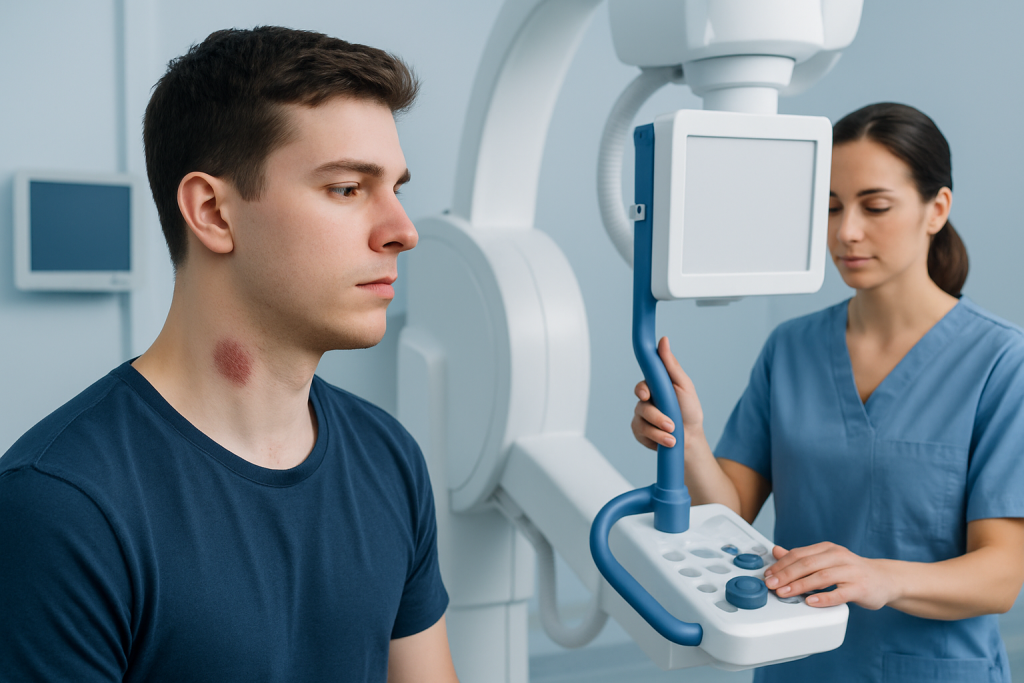
A hickey typically begins as a reddish or purplish patch that may feel tender to the touch. Over the next few days, it often darkens before gradually shifting to lighter shades of green, yellow, or brown as the body breaks down the blood under the skin.
The area may be mildly sore, slightly swollen, or warm at first. It should not cause severe pain or major movement problems. If the skin is broken, blistered, very swollen, or painful in an unexpected way, that is less typical and deserves medical attention.
Bruises can look different depending on skin tone, body location, and how much pressure was involved. On darker skin, the color change may be less obvious, so tenderness and swelling may be more noticeable than the color itself.
Causes and Risk Factors

A hickey forms when suction creates enough force to rupture tiny capillaries. This is the same basic process as any bruise, just triggered by localized pressure instead of a bump or fall.
Some people bruise more easily than others. Skin sensitivity, use of blood-thinning medicines, certain supplements, alcohol use, and conditions that affect clotting can all make bruises more likely or more noticeable. Age and fragile skin can also matter.
Hickeys are usually harmless, but the context matters. If bruising occurs often, appears in several places without a clear explanation, or develops after only very light pressure, it is reasonable to mention it to a doctor to make sure nothing else is contributing.
Diagnosis
Most hickeys do not need formal testing. A clinician can usually recognize them by their appearance and by asking how the mark developed.
When the history is clear and the bruise follows a typical pattern, no imaging or laboratory test is needed. If the bruise is unusually large, keeps spreading, or there is concern about a bleeding problem, a doctor may look for another explanation and decide whether blood tests are appropriate.
People who are seeking care from another country often want reassurance that the spot is only a bruise and not something more serious. A straightforward medical assessment can provide that clarity and help rule out other skin or circulation issues when the story does not fit the usual pattern.
Treatment Options
There is no instant cure for a hickey, but a few simple measures may help it settle more comfortably. A cold compress applied briefly during the first day can limit swelling and may make the bruise feel less tender.
After the first 24 to 48 hours, a warm compress can encourage circulation in the area and may help the body reabsorb the blood more efficiently. The pressure should be gentle; the goal is to soothe the skin, not to rub the bruise away.
People often ask about home tricks such as scraping the skin, using toothpaste, or applying strong oils. These are not reliable and can irritate the skin further. If cosmetic cover-up is needed, a concealer matched to the skin tone or a scarf, collar, or hairstyle may be a safer short-term option.
- Use a cold pack for short intervals in the early stage.
- Switch to warm compresses after the bruise is no longer fresh.
- Avoid massage, picking, or repeated pressing on the area.
- Choose gentle skin care products if the skin feels sensitive.
Prevention and Self-care
The most effective way to prevent a hickey is to avoid the suction or pressure that causes it. When that is not the focus, the practical approach is to reduce irritation and let the bruise heal undisturbed.
Good self-care includes protecting the skin from additional trauma, staying hydrated, and supporting overall healing with balanced nutrition. If a person bruises easily, it is wise to review medicines and supplements with a clinician, especially before travel or procedures.
If the bruise is in a visible place and the person needs to attend work or social events, dressing strategically can help. Lightweight scarves, high collars, or makeup designed for bruising may make the mark less noticeable while time does the rest.
When To See a Doctor
Medical advice is sensible if the mark is unusually painful, swelling is increasing, or the bruise is not following a typical healing pattern. A doctor should also be consulted if bruises appear often without a clear reason or if there is bleeding from the gums, nose, or other sites.
It is especially important to seek evaluation if the skin is broken, if there is fever, if the area becomes hot and more inflamed, or if the person takes anticoagulant medicines. These signs do not always mean something serious, but they deserve a proper check.
For international patients who need reassurance while away from home, Acibadem Health Point’s multidisciplinary specialists and JCI-accredited hospitals can help diagnose and treat bruising-related concerns in a calm, coordinated way. Even when a hickey is the likely explanation, a clinician can confirm that healing is progressing as expected.
A Realistic Timeline for Fading
Most hickeys begin to look lighter within several days, although the exact timeline varies. Smaller marks tend to fade faster, while larger or deeper bruises may linger longer.
It helps to think of the process as the body gradually clearing away pooled blood, not a blemish that can be forced off the skin overnight. Gentle care supports the natural repair process, while irritation can make the area last longer or look more obvious.
If the mark is still changing color and getting lighter, that is usually a good sign. If it stops improving, enlarges, or develops unusual symptoms, a doctor should take a look.
Frequently asked questions
How do you get rid of a hickey fast?
There is no safe way to remove a hickey instantly. A cold compress in the first day may help with swelling, and a warm compress later may support healing, but time is still the main factor. Gentle camouflage can help if the person needs the mark hidden sooner.
Does toothpaste remove a hickey?
No, toothpaste does not reliably remove a hickey. It may irritate the skin and make the area feel worse. Safer options are cold or warm compresses and avoiding anything abrasive.
How long does a hickey usually last?
Many hickeys fade over several days, though some may take longer depending on size, depth, and the person's tendency to bruise. The color usually changes gradually as it heals. If it is not improving, medical advice is sensible.
Can a hickey be dangerous?
A typical hickey is a superficial bruise and is not dangerous. However, unusual pain, swelling, skin breakdown, or repeated unexplained bruising should be assessed by a doctor. That helps rule out infection, bleeding problems, or another cause.
Is it okay to massage a hickey?
Aggressive massage is not recommended because it can further irritate the skin and may worsen bruising. Very gentle care is better. If the area is sore, a light compress is usually a safer option than rubbing.
How can someone cover a hickey for work or travel?
A color-correcting concealer, a scarf, a collared shirt, or a hairstyle that covers the area can help. The best method depends on where the bruise is and how visible it is. Cover-up should be gentle so the skin is not irritated further.
References
- American Academy of Dermatology
- NHS
- Mayo Clinic
- Cleveland Clinic
This article is for general information only and is not a substitute for professional medical advice. Please consult a qualified doctor about your individual situation.