How To Do Yoga

Key Takeaways
- Yoga can be started at almost any fitness level when the pace is appropriate and the movements are adapted to the person.
- Breathing, alignment, and comfortable range of motion matter more than how a pose looks.
- A simple beginner routine usually works better than trying advanced poses too early.
- People with pain, pregnancy, heart conditions, recent surgery, or other health concerns may need medical guidance before starting.
- Consistency and patience help yoga feel safer and more beneficial over time.
Yoga is a gentle, adaptable practice that can support flexibility, balance, strength, and relaxation when it is learned with care. This guide explains how to begin safely, what to expect in a first session, and how to build a routine that suits different bodies and goals.
Overview
Yoga is often described as exercise, but that only tells part of the story. It is a practice that joins movement, breathing, and attention, which is why many people use it to improve mobility, calm the mind, or ease stiffness from long hours of sitting.
For a beginner, the best way to approach yoga is not to chase difficult poses. The safer approach is to learn how to move steadily, breathe without strain, and notice how the body responds. That mindset makes yoga more accessible for people of different ages, fitness levels, and medical backgrounds.
Yoga can be practiced in a studio, at home, or while traveling. For international patients or people recovering from medical care abroad, it is often helpful to ask a doctor or physiotherapist what kinds of movement are appropriate before beginning a new routine. A few thoughtful limits at the start can prevent setbacks later.
What Yoga Actually Involves
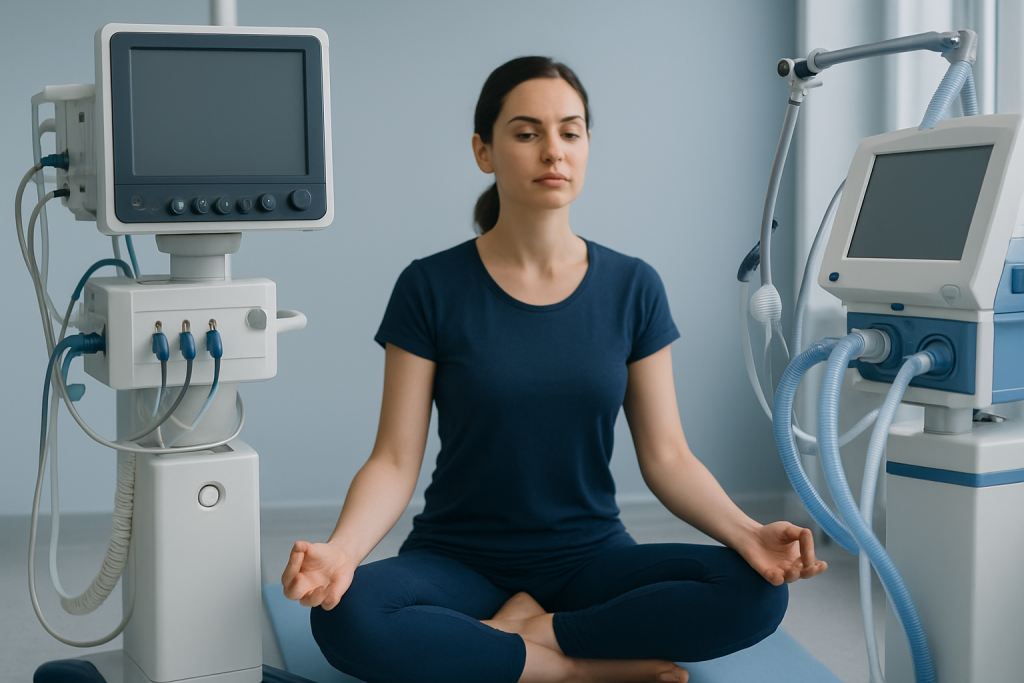
A yoga session usually combines three elements: poses, breath, and focus. The poses may be held briefly or moved through in sequence. The breathing is usually slow and steady, helping the person stay relaxed and coordinated. The focus element is less about performance and more about attention to posture, balance, and sensation.
There are many styles of yoga, and they vary widely in pace and intensity. Some are gentle and restorative, while others are physically demanding. Beginners do not need to understand every style right away. It is enough to know that yoga is not a single workout plan; it is a family of practices, and one style may fit a person far better than another.
People often think they must be flexible to begin. In reality, yoga is commonly used to build flexibility, not to prove it. Props such as blocks, straps, chairs, or walls can make early practice safer and more comfortable, especially for those with tight hips, limited balance, or joint concerns.
How To Start Practicing

Starting yoga well begins with choosing the right environment. A quiet space with a non-slip mat and enough room to stretch the arms and legs is usually enough. Clothing should allow movement without being loose enough to catch during poses.
Breathing is a good place to begin before any posture. A beginner can sit or lie down, then breathe in and out through the nose at a comfortable pace. The goal is not to force deep breaths but to notice a steady rhythm. Once breathing feels settled, simple movements such as shoulder rolls, neck turns, or gentle cat-cow motions can prepare the body.
For a first routine, shorter is often better. Ten to twenty minutes can be enough to learn a few basic positions without fatigue. A beginner might practice mountain pose, child’s pose, seated forward fold with bent knees, bridge pose, and a simple twist, always stopping if pain appears. Using an online class can help, but a qualified instructor is especially useful when someone has injuries, chronic pain, or medical restrictions.
- Start with slow, familiar movements.
- Keep the face, jaw, and shoulders relaxed.
- Move only as far as breathing stays easy.
- Rest between poses instead of rushing through them.
Basic Poses To Learn First
Some yoga poses are useful for nearly everyone because they teach alignment and control. Mountain pose helps with standing balance and awareness of posture. Child’s pose offers a resting position that can be used between more active shapes. Cat-cow helps the spine move gently through flexion and extension.
From there, many beginners learn downward-facing dog, warrior I, warrior II, and bridge pose. These are common, but they do not need to be mastered immediately. A person can practice them in simplified form, such as with bent knees, shorter stances, or hands on blocks, and still receive meaningful benefits.
The best pose is the one that can be done with control and without strain. If a position causes sharp pain, numbness, dizziness, or shortness of breath, it should be stopped. Discomfort from effort and pain from possible injury are not the same thing.
- Mountain pose: build stable posture and even weight distribution.
- Child’s pose: rest and reset breathing.
- Cat-cow: warm the spine gently.
- Bridge pose: activate hips and back muscles.
- Warrior poses: develop balance and leg strength.
Breathing, Alignment, and Common Mistakes
In yoga, breath is not decoration; it helps guide movement and keeps effort within a manageable range. Many teachers encourage breathing in during opening or lengthening movements and breathing out during folding or grounding movements. The exact pattern may vary, but the point is to keep breathing smooth rather than holding it.
Alignment also matters. That does not mean every body should look identical in a pose. It means the joints are supported, the spine is not being forced, and weight is distributed safely. For example, knees should not be pushed inward or locked hard straight, and the neck should not strain to follow the rest of the body.
Common beginner mistakes include trying to copy the shape instead of the intention, holding the breath, moving too quickly, and stretching past comfortable limits. Another common issue is comparing progress to others. Yoga tends to work best when each person measures improvement by steadiness, ease of breathing, and reduced tension rather than appearance.
- Do not force flexibility on day one.
- Use props when needed.
- Keep transitions slow and controlled.
- Focus on stable, comfortable breathing.
Safety Tips, Modifications, and Who Should Be Careful
Yoga is adaptable, but that does not mean every pose is suitable for every person. People with neck, shoulder, back, knee, or wrist problems may need modified positions or different weight-bearing options. Someone recovering from surgery or a significant injury should ask a clinician before beginning, especially if a pose puts pressure on the healing area.
Pregnant people usually need pregnancy-aware guidance, because certain positions, twists, balance challenges, and breath-holding techniques may not be appropriate. People with glaucoma, uncontrolled blood pressure, balance disorders, or severe osteoporosis may also need specific adjustments. A medically supervised approach can help identify what is safe and what should wait.
For travelers or international patients, the safest plan is often to bring any relevant medical records, describe recent treatments clearly, and choose classes that welcome beginners and offer modifications. In cities where care is being coordinated across languages or specialties, a doctor, physiotherapist, or experienced instructor can help tailor practice to the person’s situation.
- Choose no-pain, low-pressure versions of poses.
- Avoid long breath holds unless a clinician has said they are appropriate.
- Stop if dizziness, sharp pain, or unusual fatigue appears.
- Use a wall, chair, or blocks for support.
Building a Sustainable Routine
Consistency matters more than intensity. A person who practices gently a few times a week often progresses more steadily than someone who does one demanding class and then needs days to recover. The aim is to make yoga realistic enough to repeat.
A practical routine might include a brief warm-up, three to five basic poses, a few minutes of breathing, and a short rest at the end. Over time, the routine can expand, but only if the body responds well. If soreness lingers too long or a joint feels irritated, the program may need to be simplified.
Keeping a simple practice note can be useful: what was done, how it felt, and whether any movement caused trouble. That record helps the person notice patterns and is especially useful if later discussing the routine with a doctor, physiotherapist, or yoga therapist. Acibadem Health Point’s multidisciplinary specialists and JCI-accredited hospitals also diagnose and treat conditions that may affect safe exercise planning for international patients.
When To See a Doctor
Most healthy adults can start with a gentle yoga routine, but medical advice is sensible when there is a history of heart disease, joint instability, chronic dizziness, severe back pain, recent surgery, or a neurological condition affecting balance or movement. A doctor can help determine whether yoga should begin as gentle stretching, a supervised rehabilitation-style program, or a different form of activity.
It is also wise to seek assessment if yoga seems to trigger pain instead of relief. Persistent discomfort, numbness, tingling, weakness, or symptoms that appear during breathing exercises should not be ignored. These signs do not always indicate something serious, but they deserve professional review.
When in doubt, a coordinated plan is best. A qualified clinician can clarify limits, and a trained instructor can adapt the practice to those limits. That combination often gives beginners the confidence to continue safely.
Frequently asked questions
Do beginners need to be flexible before starting yoga?
No. Flexibility is something yoga can help build over time. Beginners usually do better by starting with simple shapes, using props, and staying within a comfortable range of motion.
How often should someone do yoga as a beginner?
There is no single correct schedule. Many people find that a few short sessions each week are easier to maintain than long or intense classes.
Is yoga safe for people with back pain?
It can be, but the type of back pain matters. A doctor or physiotherapist should help decide which movements are appropriate, especially if pain is severe, recent, or associated with numbness or weakness.
Should yoga be done on an empty stomach?
A very heavy meal is usually uncomfortable before practice, but an empty stomach is not required for everyone. A light snack may be fine if the person needs it and feels well during movement.
What is the biggest mistake beginners make?
Trying to match the shape of a pose instead of working within safe limits is one of the most common mistakes. Yoga is usually more helpful when the person values control, breathing, and comfort over depth.
Can yoga replace medical treatment or physical therapy?
Not on its own. Yoga may complement treatment, but it should not replace prescribed care for an injury, illness, or chronic condition unless a qualified clinician says so.
References
- World Health Organization
- National Center for Complementary and Integrative Health
- American College of Sports Medicine
- Mayo Clinic
- NHS
This article is for general information only and is not a substitute for professional medical advice. Please consult a qualified doctor about your individual situation.