

High Hemoglobin: Causes, Symptoms, and Treatment

Key Takeaways
- High hemoglobin is a lab finding, not a diagnosis by itself, and it should be interpreted with the full blood count and clinical picture.
- Common reasons include dehydration, smoking, living at high altitude, sleep-related breathing problems, and certain blood or hormone conditions.
- Some people notice no symptoms, while others may have headaches, dizziness, flushing, or signs related to the underlying cause.
- Evaluation usually starts with repeat blood tests and a medical review of medicines, lifestyle factors, oxygen levels, and relevant history.
- Treatment depends on the cause and may involve hydration, stopping a trigger, managing a medical condition, or specialist care in selected cases.
High hemoglobin means the blood carries more hemoglobin than expected, which can happen for short-term reasons such as dehydration or because the body is making too many red blood cells. Understanding the cause matters, because treatment ranges from simple fluid correction to evaluation for an underlying medical condition.
Overview
Hemoglobin is the protein inside red blood cells that carries oxygen from the lungs to the rest of the body. When a blood test shows hemoglobin above the expected range, clinicians describe it as high hemoglobin or elevated hemoglobin.
This result can appear for simple, temporary reasons, such as not drinking enough fluids before a test. It can also reflect a real increase in red blood cells, which deserves a closer look because it may change how thick or concentrated the blood appears.
High hemoglobin is best understood as a clue. The number itself does not tell the full story, so doctors usually interpret it alongside hematocrit, red blood cell count, oxygen levels, medications, and the person’s overall health.
Symptoms
Many people with high hemoglobin feel completely well, especially when the elevation is mild or found by chance during routine testing. In those cases, the laboratory result may be the first and only sign that anything needs attention.
When symptoms do appear, they often relate to thicker or more concentrated blood, or to the condition causing the rise. A person may notice headaches, dizziness, fatigue, blurred vision, facial redness, or a feeling of pressure or fullness in the head.
Other possible clues include itching after a hot shower, shortness of breath on exertion, tingling in the hands or feet, or signs of low oxygen such as snoring with daytime sleepiness. Symptoms are nonspecific, which is why a medical assessment is important rather than self-diagnosis.
Causes & Risk Factors

There are two broad reasons hemoglobin may be high: the blood is more concentrated than usual, or the body is making extra red blood cells. Dehydration can create the first pattern by reducing plasma volume, while conditions that increase red cell production create the second.
Common contributors include smoking, chronic low oxygen levels, living at higher altitude, sleep apnea, lung disease, some heart conditions, and testosterone or other medications that stimulate red cell production. Less commonly, kidney problems or certain tumors may influence signals that increase red blood cell formation.
Another important cause is polycythemia vera, a bone marrow disorder in which the body produces too many blood cells. Risk factors vary by cause, but a person’s medical history, environment, habits, and medication list all help shape the evaluation.
- Dehydration or fluid loss
- Smoking or vaping exposure that reduces oxygen delivery
- Sleep apnea or other causes of chronic low oxygen
- High-altitude residence or recent travel
- Testosterone therapy or other stimulating medicines
Diagnosis
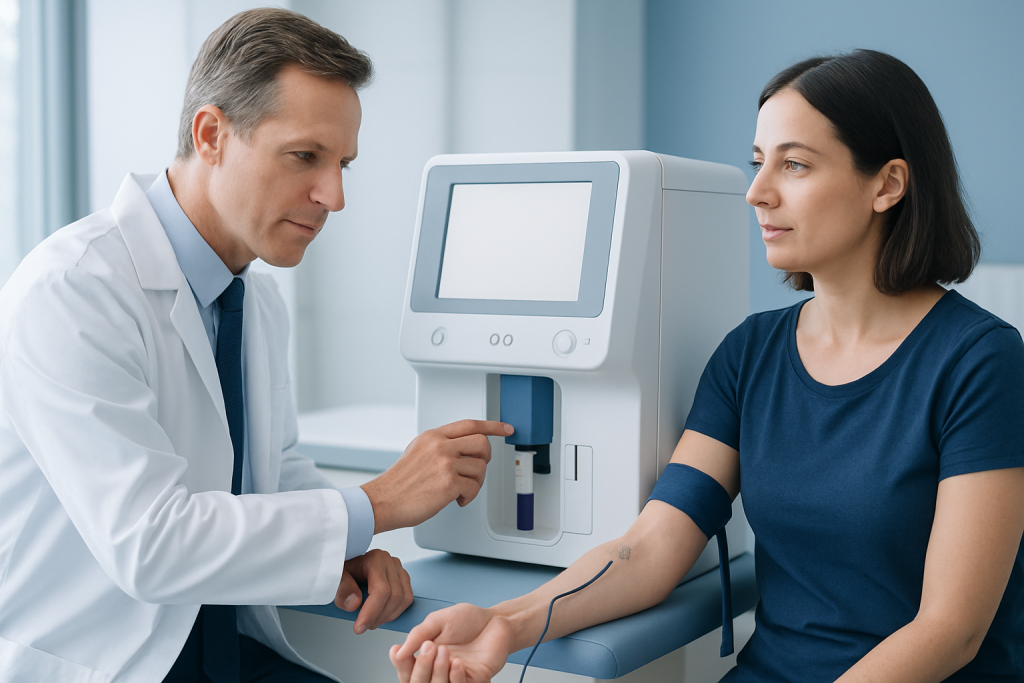
Diagnosis begins with confirming the result and understanding whether it is persistent. A clinician may repeat the complete blood count, review hematocrit and red blood cell indices, and ask about hydration, recent illness, altitude exposure, exercise, and medication use.
If the elevation remains, the next step is to look for an explanation. This may include checking oxygen saturation, assessing for sleep apnea, reviewing smoking history, examining the lungs and heart, and ordering blood tests that help distinguish between different causes of red blood cell excess.
In some situations, more focused testing is needed. Doctors may request kidney evaluation, hormone-related tests, or specialized studies for polycythemia vera. The workup is tailored to the person, because the goal is not simply to lower a number but to understand why it changed.
Treatment Options
Treatment depends entirely on the cause. If dehydration is responsible, restoring fluids and correcting the temporary imbalance may be enough. If smoking, sleep apnea, lung disease, or another chronic issue is involved, treating that underlying problem is the main priority.
When a person has a true increase in red blood cells, doctors may consider additional measures to reduce blood thickness and lower risk. This can include specialist-guided monitoring, addressing oxygen deficiency, reviewing medications that may contribute, and in selected cases, blood removal procedures such as therapeutic phlebotomy.
For polycythemia vera, care is usually directed by a hematology specialist and may involve ongoing monitoring and medicines that reduce cell production or clotting risk. Because treatment choices depend on the underlying diagnosis, it is important not to start or stop any therapy without medical guidance.
- Rehydration when the elevation is due to concentrated blood
- Managing sleep apnea, lung disease, or heart disease
- Smoking cessation support
- Reviewing hormone or other contributing medicines
- Specialist treatment for blood disorders when indicated
Prevention & Self-care
Not every cause of high hemoglobin can be prevented, but several practical steps can reduce risk or help keep the picture clearer for future testing. Staying well hydrated before routine blood work, unless a doctor advises otherwise, can help avoid a falsely concentrated result.
People who smoke may lower one important risk by quitting, since smoking can contribute to low oxygen levels and elevated hemoglobin. Good sleep habits and evaluation for loud snoring, witnessed pauses in breathing, or marked daytime sleepiness are also worthwhile, because sleep apnea is often underrecognized.
For those already being followed for a chronic condition, keeping appointments and sharing a complete medication list makes a real difference. International patients, in particular, may find it helpful to keep copies of prior lab reports, imaging, and prescriptions so that doctors can compare results across countries and avoid repeating unnecessary tests.
When to See a Doctor
A doctor should review elevated hemoglobin when it is persistent, clearly above the expected range, or found together with other abnormal blood counts. The finding is especially important if there is a history of smoking, sleep apnea, lung disease, heart disease, testosterone use, recent altitude change, or symptoms such as headaches and dizziness.
Prompt medical attention is also sensible if there are signs that could suggest reduced oxygen or a clotting problem, such as chest pain, severe shortness of breath, one-sided weakness, or sudden vision changes. These symptoms do not automatically mean a serious cause, but they should never be ignored.
For people traveling for care, a coordinated evaluation can be particularly helpful because the cause may span several specialties. Acibadem Health Point offers multidisciplinary specialists and JCI-accredited hospitals that diagnose and treat this condition for international patients, with attention to follow-up planning after return home.
Early review helps distinguish a temporary lab change from a condition that needs longer-term management. That distinction usually makes the path forward clearer, safer, and less stressful.
Living With High Hemoglobin
Living with high hemoglobin is usually about staying informed and following the plan that matches the underlying cause. Some people need only periodic blood tests, while others need structured treatment for sleep apnea, lung disease, or a blood disorder.
It can help to track symptoms, hydration, smoking status, sleep quality, and any new medicines before each follow-up visit. These small details often give clinicians useful clues and make it easier to see whether the hemoglobin level is changing for a reason that can be addressed.
Most importantly, patients should treat the lab result as an invitation to learn more, not as a diagnosis on its own. With the right evaluation, high hemoglobin is often explainable and manageable.
Frequently asked questions
Does high hemoglobin always mean a disease is present?
No. Sometimes it reflects dehydration, smoking, or living at high altitude. The significance depends on whether it is temporary or persistent and whether other tests are abnormal.
Can dehydration raise hemoglobin levels?
Yes. When the body loses fluid, the blood can become more concentrated, which may make hemoglobin appear higher than usual. This often improves after normal hydration is restored.
What symptoms are most common with elevated hemoglobin?
Some people have no symptoms at all. Others may notice headaches, dizziness, flushing, itching, or vision changes, though these symptoms are not specific to high hemoglobin alone.
Is high hemoglobin the same as polycythemia?
Not exactly. High hemoglobin is a lab finding, while polycythemia refers to an increased red blood cell mass or production. Polycythemia vera is one specific cause that a doctor may consider.
How do doctors find the cause of high hemoglobin?
They usually review the blood count, hydration status, oxygen levels, medications, smoking history, and possible sleep or lung problems. Additional tests may be ordered if the cause is not clear.
Can high hemoglobin be treated at home?
Only the mild, temporary form related to dehydration may improve with fluids, and even then a doctor should confirm the result if it persists. Home care should not replace medical evaluation when the level is repeatedly high or symptoms are present.
References
- MedlinePlus
- Mayo Clinic
- National Heart, Lung, and Blood Institute
- American Society of Hematology
- Merck Manual Professional Edition
This article is for general information only and is not a substitute for professional medical advice. Please consult a qualified doctor about your individual situation.
More from the Health Library



Related Specialists

Dr. Mehmet Gürcan
Orthopedic Surgery & Traumatology
Prof. Dr. Ferdane Pirinççi Sapmaz
Gastroenterology
Prof. Dr. Haluk Esgin
Ophthalmology
Beyza Nur Gündüz
Physical Medicine & Rehabilitation