Healthy Snacks For Work: Ideas and Tips

Key Takeaways
- A good work snack usually combines protein, fiber, and healthy fats to help with fullness.
- Portion size matters, even for healthy foods, because frequent grazing can add up over the day.
- Easy choices such as fruit, yogurt, nuts, vegetables, hummus, and whole-grain crackers travel well to the office.
- Planning snacks ahead of time is often more effective than trying to choose wisely when already very hungry.
- People with diabetes, food allergies, or digestive concerns may need more personalized snack choices.
Medically reviewed by the Acıbadem clinical team — August 19, 2026
Healthy snacks at work can help bridge long gaps between meals, support concentration, and make the workday feel more manageable. The best options are simple, satisfying, and easy to prepare or buy without relying on ultra-processed convenience foods.
Overview
Healthy snacks for work are less about strict rules and more about making the middle of the day easier to manage. When meetings run long, lunch is delayed, or energy dips in the afternoon, a thoughtfully chosen snack can help a person stay comfortable and focused.
The most useful office snacks tend to be simple foods that are easy to pack, store, and eat without much fuss. They should satisfy hunger enough to prevent a rushed stop at a vending machine, while still fitting into the person’s usual eating pattern.
For many people, the goal is not to snack all day. It is to have a reliable backup plan for busy days, travel days, and days when work schedules do not respect meal times. That is especially relevant for international patients or frequent travelers who may be adjusting to new routines, unfamiliar food options, or long appointments away from home.
Why the Right Snack Matters at Work
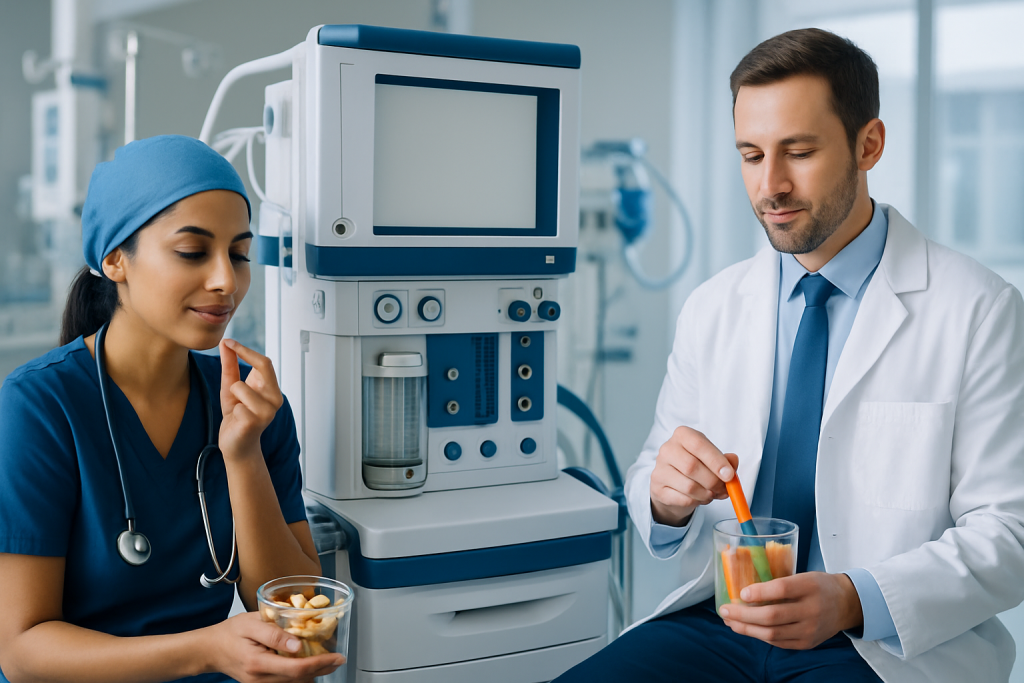
Long stretches without food can leave a person feeling irritable, distracted, or too hungry to make thoughtful choices later. A balanced snack can smooth out the day and make it easier to avoid overeating at the next meal.
Snacks also matter because the work environment often encourages convenience over quality. Sweet pastries, chips, and sugary drinks are easy to reach for, but they may lead to a short burst of energy followed by another slump. A more balanced snack usually provides steadier satisfaction.
In practical terms, a good snack can support:
- Steady energy between meals
- Better concentration during long tasks
- Less impulsive eating later in the day
- More predictable blood sugar patterns for some people
What Makes a Snack Healthy?

A healthy snack does not need to be complicated or expensive. In most cases, the best options include at least two of the following: protein, fiber, and healthy fat. These nutrients tend to help a person feel full for longer than refined carbohydrates alone.
For example, an apple is healthy, but an apple with nut butter is often more satisfying. Plain yogurt is a good start, but adding berries or seeds can make it more balanced. The idea is to create a small meal, not just a quick bite.
Portion size also matters. Even nutritious foods like nuts, dried fruit, and cheese are calorie-dense, so it helps to serve them in a sensible amount rather than eating straight from a large package. A pre-portioned container can be surprisingly helpful on a busy desk.
Best Healthy Snack Ideas for the Office
The best office snacks are the ones a person will actually eat consistently. A healthy option needs to survive the commute, fit in a bag or desk drawer, and still taste good when the afternoon arrives.
Some practical ideas include:
- Fresh fruit with a small handful of nuts
- Greek yogurt or unsweetened yogurt with berries
- Carrot sticks, cucumber slices, or bell peppers with hummus
- Whole-grain crackers with cheese or nut butter
- Boiled eggs with a piece of fruit
- Roasted chickpeas or edamame
- Air-popped popcorn with minimal added salt
For people who need a shelf-stable option at a desk or while traveling between appointments, roasted seeds, low-sugar protein bars, whole-grain cereal, and individual nut packs can work well. Labels still matter, especially for added sugar, sodium, and ingredients that may not match the person’s dietary needs.
How to Choose Snacks Based on Your Workday
There is no single snack that suits every schedule. A person who sits through back-to-back meetings may need something quick and quiet to eat, while someone with a physically active job may need more energy and a larger portion.
Someone trying to reduce mindless eating at a desk may benefit from snacks that require a little preparation, such as peeling fruit or assembling crackers and cheese. That small pause can make eating more intentional. By contrast, a person traveling for medical care may need portable snacks that do not depend on refrigeration or easy access to a café.
It can help to think in terms of the situation:
- For long meetings: choose tidy, low-mess snacks such as nuts, fruit, or bars with simple ingredients.
- For late afternoons: choose more filling combinations with protein and fiber.
- For travel or hospital visits: choose shelf-stable foods that are easy to pack and carry.
What to Limit in Work Snacks
Many people feel pressured to label foods as either good or bad, but a more helpful approach is to notice what a snack contributes. Foods high in added sugar and refined starch may be enjoyable and convenient, yet they often do little to keep a person full.
Common work snacks to limit or balance carefully include candy, pastries, sweetened coffee drinks, sugary granola bars, and oversized portions of chips or crackers. These foods can fit into an overall diet, but they are usually not the best choice when the goal is steady energy.
It also helps to watch for “health halo” snacks that sound nutritious but are heavily processed. Reading the label can clarify whether a product is mostly whole ingredients or mostly added sugar, salt, and refined flour.
Prevention & Self-care: Building a Snack Routine That Lasts
Healthy snacking becomes much easier when it is planned rather than improvised. A small weekly routine — shopping, portioning, and placing snacks where they are easy to grab — can prevent the late-day scramble that leads to less satisfying choices.
Some people find it useful to keep a snack kit at work with shelf-stable items such as nuts, whole-grain crackers, tea, or plain oatmeal. Others prefer to bring snacks from home each morning. Either way, the aim is consistency, not perfection.
Self-care at work also includes listening to hunger cues. If a person is snacking because of stress, fatigue, or boredom rather than true hunger, a brief walk, a glass of water, or a short break may help them reset before eating. That said, stress eating is common, and noticing the pattern is often more helpful than criticizing it.
When to See a Doctor
Most people can improve work snacking with simple planning, but recurring hunger or energy crashes may sometimes point to an underlying issue. If a person is frequently shaky, dizzy, overly thirsty, or unusually hungry, it is sensible to discuss the symptoms with a doctor.
Medical advice is especially important for people with diabetes, prediabetes, digestive disorders, Kidney Disease Treatment" class="ahp-ilk">kidney disease, food allergies, eating disorders, or unexplained weight changes. In those situations, snack choices may need to be more individualized.
Anyone who feels persistently unwell, has trouble maintaining a regular eating pattern, or needs support while traveling for treatment should seek professional guidance. For international patients, Acibadem Health Point’s multidisciplinary specialists and JCI-accredited hospitals can help diagnose and treat a wide range of health concerns with coordinated care.
Frequently asked questions
How often should someone snack at work?
There is no single schedule that fits everyone. Some people do well with one planned snack between meals, while others may not need one at all. The best approach is to snack when there is real hunger and the next meal is still some time away.
Are protein bars a healthy snack for work?
Some protein bars can be useful, especially when they contain moderate sugar and a reasonable amount of fiber. Others are closer to candy bars with added protein, so it helps to read the label and compare options carefully. They are best used as a convenient backup, not the only snack choice.
What is a good snack if there is no refrigerator at work?
Shelf-stable options such as nuts, seeds, whole-grain crackers, roasted chickpeas, fruit, or low-sugar bars can work well. Individual packets are often easier to store and portion than large bags. Water or unsweetened tea can also help a person feel more comfortable between meals.
How can someone avoid overeating healthy snacks?
Portioning snacks ahead of time is one of the simplest strategies. Eating directly from a large container can lead to larger portions than intended, even with nutritious foods. It also helps to pause and check whether hunger is physical, emotional, or just a response to stress or boredom.
Can healthy snacks help with afternoon fatigue?
They can help if the fatigue is partly related to hunger or a long gap since lunch. A balanced snack may improve comfort and focus for the rest of the afternoon. If tiredness happens often despite regular meals, a doctor should evaluate possible causes.
What should people with diabetes consider when choosing a work snack?
People with diabetes often do best with snacks that combine carbohydrate with protein or healthy fat, since that can support more stable blood sugar patterns. The exact choice depends on medication, meal timing, and individual goals. A doctor or dietitian can help personalize the plan.
References
- World Health Organization
- Harvard T.H. Chan School of Public Health
- American Heart Association
- Mayo Clinic
- National Institute of Diabetes and Digestive and Kidney Diseases
This article is for general information only and is not a substitute for professional medical advice. Please consult a qualified doctor about your individual situation.
Explore treatments in Turkey — costs, top hospitals & a free quote
JCI-accredited · board-certified surgeons · reply within 24h
Add us as a Preferred Source to see more of our trusted health content across Google Search, AI Overviews and Discover.