Hammer Curl Exercise: How to Do It

Key Takeaways
- Hammer curls use a neutral grip, which changes how the biceps and forearm muscles work.
- Good posture and controlled movement matter more than heavier weights.
- The exercise may support arm strength, grip endurance, and balanced upper-body training.
- People with elbow, wrist, or shoulder pain should modify the movement or ask a clinician before training.
- Progress should be gradual, especially when returning to exercise after injury or time away.
Medically reviewed by the Acıbadem clinical team — August 19, 2026
The hammer curl is a simple strength-training movement that targets the upper arm and forearm while supporting grip and elbow stability. With the right technique, it can fit into beginner or advanced exercise routines and be adapted for many training goals.
Overview
The hammer curl is a weight-training exercise in which the hands stay in a neutral position, as if holding a hammer. That small change in grip makes a meaningful difference: instead of turning the palms up like a traditional curl, the wrists remain facing inward throughout the lift.
For many people, this movement feels natural and joint-friendly. It is often included in general fitness programs because it strengthens the front of the upper arm, supports forearm development, and contributes to a balanced look and feel in the arms.
In an international-patient setting, exercise advice often comes up after an injury, surgery, or period of reduced activity. The hammer curl can be useful, but only when the shoulder, elbow, and wrist are ready for resistance training and a clinician has confirmed that the movement is appropriate.
Muscles Worked and Why the Exercise Matters
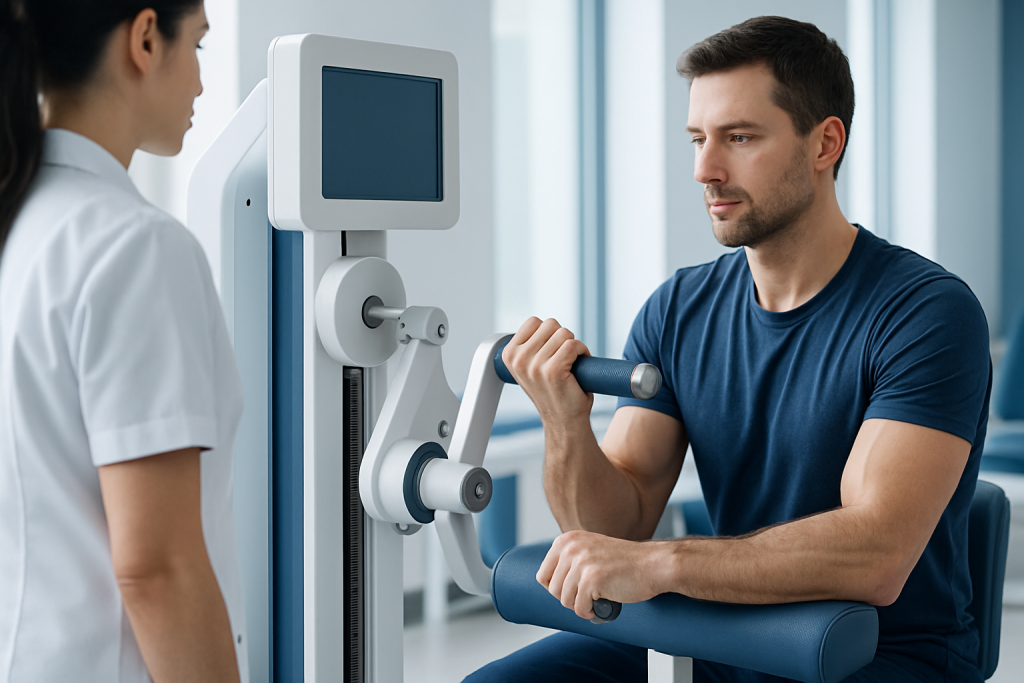
The hammer curl primarily works the biceps brachii and the brachialis, a deeper muscle that helps flex the elbow. It also recruits the brachioradialis, a forearm muscle that becomes especially active when the hand stays in a neutral position.
Because several muscles share the load, the exercise can feel slightly different from a standard biceps curl. Some people notice more effort in the forearms and a steadier grip, which is one reason the movement is often used to support everyday lifting tasks as well as gym training.
Hammer curls are not only about appearance. They can help build functional strength for carrying bags, opening doors, lifting luggage, or handling tools. For travelers and patients returning to daily routines after treatment, that practical benefit can matter as much as the training effect itself.
How to Perform a Hammer Curl

To begin, stand tall with the feet about hip-width apart and hold a dumbbell in each hand with the palms facing the body. Keep the shoulders relaxed, the chest open, and the elbows close to the sides rather than drifting forward.
Slowly bend the elbows and lift the weights toward the shoulders. The wrists should stay straight, and the upper arms should remain relatively still. At the top of the movement, pause briefly, then lower the weights with control until the arms are straight again.
- Use a smooth pace instead of swinging the weights.
- Keep the neck relaxed and avoid leaning backward.
- Choose a load that allows full control through the entire range of motion.
- Stop if the movement causes sharp pain rather than ordinary muscle effort.
People new to strength training often do better with lighter weights and fewer repetitions until the pattern feels stable. A physiotherapist or trainer can help check form, especially if the person is recovering from injury or learning how to train safely after time away from exercise.
Common Mistakes and Technique Pitfalls
The most common error is using momentum. When the body sways or the elbows drift forward, the exercise becomes easier to lift but less effective for the muscles it is meant to train. Controlled motion is usually a better sign of quality than a heavier dumbbell.
Another frequent issue is bending the wrists during the curl. Excess wrist extension can make the exercise uncomfortable and may place unnecessary stress on the forearm. The neutral grip should feel steady, with the knuckles and forearm moving as one line.
It is also easy to overtrain the arms by pairing hammer curls with several other pulling exercises without enough recovery. If soreness lingers, the load, volume, or frequency may need to be reduced. Persistent discomfort in the elbow or wrist deserves professional review rather than being pushed through.
Benefits, Variations, and Training Uses
Hammer curls can be used for a variety of training goals. Some people add them to build fuller-looking arms, while others use them to strengthen the forearms and improve grip endurance. Because the neutral grip is often comfortable, the exercise may also be a useful option for people who do not enjoy standard palm-up curls.
There are several safe variations. Alternating hammer curls let one arm work at a time, which can help with control. Seated hammer curls reduce body sway. Cable hammer curls offer constant tension through the movement. Cross-body hammer curls, in which the weight travels toward the opposite shoulder, are another common variation.
The best choice depends on the person’s goals, experience, and joint comfort. In rehabilitation-oriented programs, clinicians may prefer a lighter, slower version that emphasizes control, while more advanced lifters may use the exercise as one part of a larger arm or upper-body session.
Causes of Pain and Who Should Be Careful
Hammer curls are usually well tolerated, but discomfort can arise if the weight is too heavy, the technique is rushed, or there is a pre-existing problem in the elbow, wrist, or shoulder. Tendon irritation, joint stiffness, and muscle strain are common reasons the movement may feel wrong.
People with recent fractures, tendon injuries, nerve symptoms, or unresolved swelling should not assume a gym exercise is automatically safe. The same caution applies to those who have had surgery on the upper limb or who are returning to exercise after a period of immobilization. A gradual plan is usually safer than a quick return to previous training levels.
If the person notices numbness, weakness, a sudden loss of range of motion, or pain that does not settle after rest, medical advice is appropriate. These symptoms may indicate that the issue is more than simple muscle soreness and should be assessed before exercise continues.
Prevention and Self-care
Good preparation often makes the difference between a useful training session and an irritating one. A brief warm-up for the shoulders, elbows, and wrists can help the body transition into resistance exercise. Light movement, such as gentle arm circles or very easy curls, may be enough for many people.
Progression should be gradual. Increasing the weight, number of sets, or training frequency too quickly is a common reason for arm pain. Rest days matter as much as the exercise itself, especially when the biceps and forearms are being trained alongside back or shoulder work.
Simple recovery habits can also help: adequate sleep, hydration, and balanced nutrition support muscle repair. People with recurring discomfort may benefit from checking lifting technique, grip width, and overall program design with a qualified trainer, physiotherapist, or sports medicine clinician.
When to See a Doctor
Medical evaluation is sensible if hammer curls cause sharp pain, swelling, bruising, a popping sensation, or weakness that changes how the arm functions. Pain that continues beyond the workout or becomes worse over time should not be ignored.
A doctor or physiotherapist can help determine whether the problem is a muscle strain, tendon irritation, joint issue, or another condition. They can also advise when it is safe to resume lifting, how to modify the exercise, and whether other movements would be better during recovery.
For international patients seeking coordinated evaluation and treatment, Acibadem Health Point offers access to multidisciplinary specialists and JCI-accredited hospitals that diagnose and treat musculoskeletal conditions with a patient-centered approach.
A Practical Note on Returning to Training
After an injury, surgery, or long travel period, people often want clear guidance on what they can do first. A hammer curl may be part of that plan, but only if the tissues involved can tolerate it and the exercise fits the broader recovery strategy.
When a patient is rebuilding strength from another country, follow-up matters. The safest programs are usually the ones that can be adjusted as the person progresses, with communication between the treating clinician, physiotherapist, and the patient about symptoms, travel schedules, and training goals.
In that setting, the hammer curl is best viewed as one tool among many: useful, adaptable, and most effective when introduced at the right time with sensible technique and monitoring.
Frequently asked questions
What muscles do hammer curls work?
Hammer curls mainly work the biceps brachii, brachialis, and brachioradialis. They also involve the forearm muscles that help stabilize the grip. Because of the neutral hand position, the exercise often feels different from a standard biceps curl.
Are hammer curls better than regular curls?
Neither exercise is universally better; they just emphasize the arm muscles in slightly different ways. Hammer curls often feel more comfortable for the wrists and can add extra forearm work. Many training plans use both variations rather than choosing only one.
How heavy should the weight be for hammer curls?
The best weight is one that allows controlled lifting and lowering without body swinging or wrist strain. A person should be able to complete the set with good form and moderate effort. If the movement becomes sloppy, the weight is likely too heavy.
Can hammer curls hurt the elbows?
They can if the load is too high, the technique is rushed, or there is an existing tendon or joint problem. Mild muscle fatigue is normal, but sharp or persistent elbow pain is not. If symptoms continue, a clinician should assess the arm before training goes on.
Can beginners do hammer curls?
Yes, beginners can often learn hammer curls safely with light weights and clear instruction. The neutral grip is usually straightforward, which makes the exercise approachable. Starting slowly and focusing on control is the safest approach.
When should someone stop doing hammer curls and get checked?
They should stop if they feel sharp pain, numbness, unusual weakness, swelling, or a sudden change in how the arm moves. Pain that does not improve with rest or keeps returning is another reason to seek advice. A doctor or physiotherapist can help identify the cause and suggest safer options.
References
- American College of Sports Medicine
- Mayo Clinic
- National Academy of Sports Medicine
- Cleveland Clinic
- NHS
This article is for general information only and is not a substitute for professional medical advice. Please consult a qualified doctor about your individual situation.
Joint and spine care in Turkey — expert assessment & treatment
JCI-accredited · board-certified surgeons · reply within 24h
Add us as a Preferred Source to see more of our trusted health content across Google Search, AI Overviews and Discover.