Ecchymosis: Causes, Symptoms and Treatment

Key Takeaways
- Ecchymosis is a flat area of purple, blue, or brown skin discoloration caused by blood leaking under the skin.
- Most bruises heal without treatment, though the color often changes as the body clears the trapped blood.
- Common causes include minor injury, aging skin, blood-thinning medicines, and certain medical conditions.
- Large, frequent, unexplained, or very painful bruises deserve a medical review.
- Diagnosis often starts with a history and physical examination, with blood tests if a bleeding problem is suspected.
Medically reviewed by the Acıbadem clinical team — August 19, 2026
Ecchymosis is the medical term for a bruise caused by bleeding under the skin. It is usually harmless and improves on its own, but sometimes it can signal an injury, medication effect, or an underlying condition that needs medical attention.
Overview
Ecchymosis is the medical term for a bruise. It appears when tiny blood vessels break and blood collects in the tissues just beneath the skin, creating a flat patch of purple, blue, red, or brown discoloration. In many cases, the area is mildly tender but otherwise harmless.
For most people, ecchymosis is part of everyday life after a bump, pressure, or sports injury. The color usually changes over several days as the body reabsorbs the blood. When bruises appear often, seem unusually large, or happen without a clear reason, they deserve closer attention because the pattern may point to a clotting issue, a medication effect, or another health concern.
Patients planning care from another country often first notice ecchymosis while recovering from surgery, a dental procedure, or a minor fall. In those situations, the key question is not only how the bruise looks, but whether it is behaving as expected for that person’s age, medicines, and overall health.
Symptoms
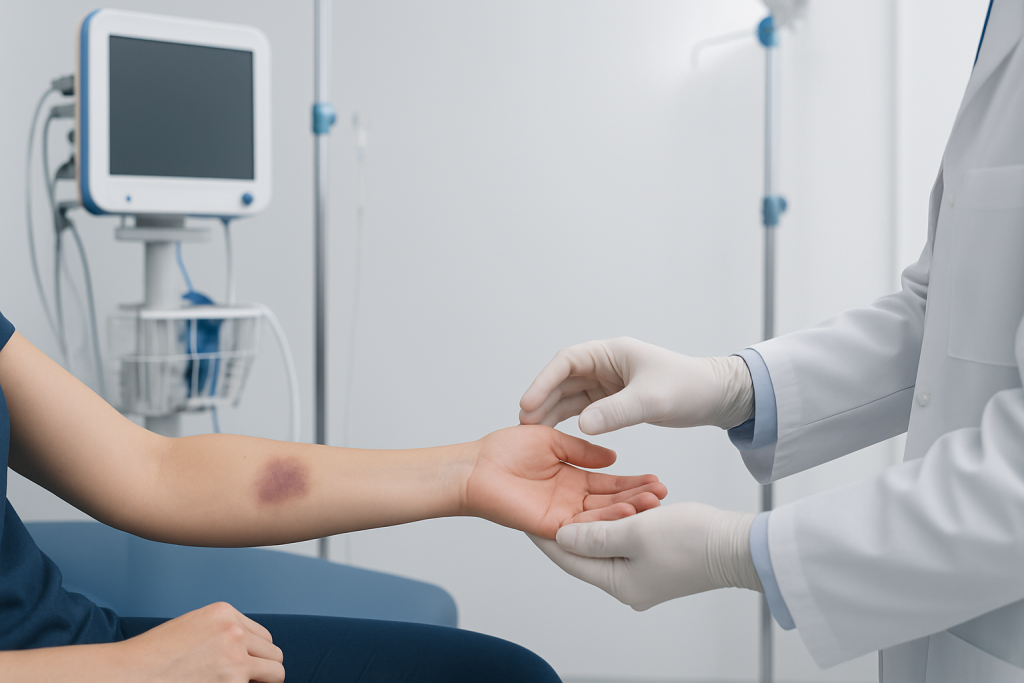
Ecchymosis usually begins as a noticeable area of skin discoloration that does not blanch, or turn white, when pressed. It may feel sore to the touch, mildly swollen, or warm in the early stage. The skin above the bruise is usually intact, unlike a cut or open wound.
The color often changes as healing progresses. A bruise may start red or dark purple, then shift toward blue, green, yellow, or brown before fading. Some bruises remain visible longer than others, especially on the legs, in older adults, or after larger injuries.
Features that may suggest more than an ordinary bruise include:
- Bruises that appear without remembered trauma
- Multiple bruises in unusual places, such as the torso or back
- Very large bruises that expand over time
- Bruising with frequent nosebleeds, gum bleeding, or prolonged bleeding from small cuts
- Bruising along with dizziness, weakness, or significant pain
Causes & Risk Factors
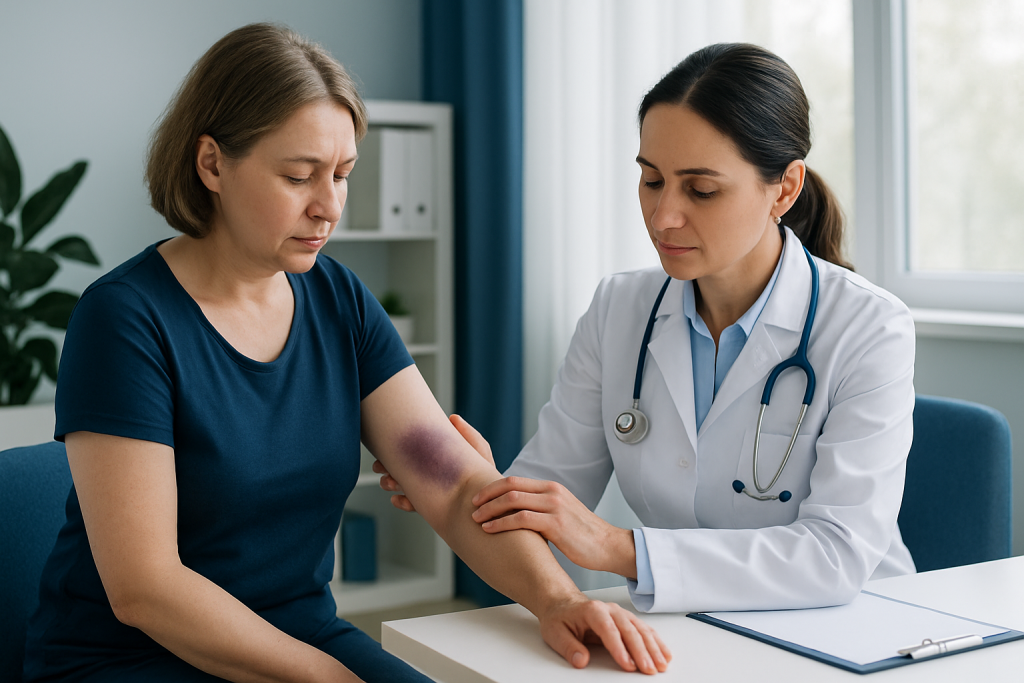
The most common reason for ecchymosis is simple trauma, such as bumping into furniture, a fall, exercise, or pressure from tight clothing or medical devices. Even a small impact can cause a visible bruise if a vessel close to the skin breaks.
Age can also play a role. As skin becomes thinner and the protective layer of fat decreases, blood vessels may be easier to injure. Sun-damaged skin and repeated minor knocks can make bruising more noticeable as well.
Several factors may increase the chance of ecchymosis:
- Blood-thinning medicines, including anticoagulants and antiplatelet agents
- Regular use of some pain relievers or anti-inflammatory medicines
- Alcohol overuse, which can affect clotting and liver function
- Vitamin deficiencies, especially when nutrition is poor
- Blood disorders, liver disease, or platelet problems
- Recent surgery, injections, or dental work
In a broader health workup, clinicians also consider inherited bleeding disorders, autoimmune conditions, and less common vessel fragility syndromes. The goal is not to assume the worst, but to understand whether the bruise fits the person’s health profile.
Diagnosis
Diagnosing ecchymosis usually begins with a medical history and a physical examination. A clinician may ask when the bruise appeared, whether there was an injury, what medicines or supplements are being used, and whether there are other bleeding symptoms. The location, size, and number of bruises provide important clues.
If the bruising seems typical and there is a clear cause, no further testing may be needed. If bruises are frequent, unexplained, or accompanied by other symptoms, the clinician may order blood tests to look at platelet count, clotting function, liver health, or signs of anemia. Additional tests may be considered depending on the situation.
For international patients who seek evaluation after travel, it is helpful to bring a medication list, any discharge papers, and a timeline of when the bruises began. Clear documentation can make the assessment faster and more precise, especially when care has already started in another health system.
Treatment Options
Most ecchymosis does not need specific medical treatment. The body gradually clears the trapped blood on its own. Early comfort measures often include rest, elevation if the bruise is on an arm or leg, and a cold pack wrapped in cloth for short periods during the first day or two.
If the bruise followed a significant injury, treatment may focus on the underlying problem rather than the discoloration itself. That can mean managing a sprain, fracture, wound, or post-procedure recovery. When a medicine is contributing to bruising, the prescribing doctor may review whether an adjustment is appropriate, but medicines should not be stopped without medical guidance.
When ecchymosis is linked to a bleeding disorder, platelet issue, liver condition, or nutritional deficiency, treatment targets that cause. Depending on the diagnosis, a clinician may recommend further testing, dietary changes, medication review, or specialist care. The main principle is to treat the reason the bruise happened, not just the color seen on the skin.
Some bruises can be managed safely at home, but persistent or unexplained bruising deserves an evaluation. That is especially true when bruises appear after minor contact, because repeated bruising can be a useful signal that the body needs a closer look.
Prevention & Self-care
Not every bruise can be prevented, but a few practical habits can reduce the chance of ecchymosis. Wearing protective gear during sports, keeping walkways clear, and using good lighting at home can help prevent accidental bumps and falls. For older adults, fall-prevention strategies are especially valuable.
If a person takes medicines that affect clotting, it is important to use them exactly as prescribed and to ask a doctor before adding new over-the-counter products or supplements. Some products can increase bruising risk or interact with blood-thinning treatment. A medication review is a simple but often useful step.
General self-care for an ordinary bruise includes:
- Applying a cold pack during the first 24 to 48 hours
- Resting the affected area when possible
- Elevating the limb if swelling is present
- Avoiding direct pressure or vigorous massage on the bruise
- Watching for changes in size, pain, or associated bleeding symptoms
Good nutrition also supports normal healing. A varied diet with enough protein, vitamins, and fluids can help the body recover, particularly after illness or surgery. If a person is bruising easily and eating poorly, that combination should be discussed with a clinician.
When to See a Doctor
Medical advice is appropriate when ecchymosis appears without a clear reason, keeps returning, or is much larger than expected. A doctor should also be consulted if bruising happens along with heavy menstrual bleeding, frequent nosebleeds, bleeding gums, blood in the urine or stool, or prolonged bleeding from cuts.
Prompt assessment is especially important if the bruise follows a head injury, is associated with severe pain or swelling, or occurs in someone taking blood-thinning medication. New bruising in a person with liver disease, a known bleeding disorder, or a recent change in medicines also deserves review.
For travelers and international patients, it is sensible to seek care before a planned trip if a bruise is enlarging, causing functional limitation, or appearing after an operation or procedure. Acibadem Health Point’s multidisciplinary specialists and JCI-accredited hospitals can help diagnose and treat ecchymosis for international patients when a more detailed evaluation is needed.
Living With Easy Bruising
Some people learn they bruise more easily than others and never develop a serious problem. In those cases, the most useful approach is awareness: knowing what counts as a typical bruise, keeping track of new patterns, and sharing that information during routine checkups. A simple photo record can help if bruising is intermittent.
If bruising is linked to a long-term condition or medicine, the goal is usually to reduce risk rather than eliminate every bruise. That may include safer movement habits, regular follow-up, and clear communication before procedures, dental work, or travel. Small planning steps can make a meaningful difference.
Ecchymosis is common, but it is also a helpful sign. Most of the time it reflects a minor injury that is already healing. When it does not fit that pattern, it is worth discussing with a clinician so the cause can be understood and managed appropriately.
FAQ
Below are answers to common questions about ecchymosis, especially for people trying to decide whether a bruise is ordinary or worth checking.
Frequently asked questions
Is ecchymosis the same as a bruise?
Yes. Ecchymosis is the medical term for a bruise caused by blood leaking under the skin. The visible color change is the part most people notice first.
How long does ecchymosis usually last?
That depends on the size and cause of the bruise, as well as the person’s age and general health. Many bruises fade over one to two weeks, but some last longer, especially after larger injuries or in older adults.
Why do some people bruise more easily than others?
Bruising can be influenced by age, skin thickness, medicines, nutrition, and underlying medical conditions. Some people also bruise more easily because of inherited traits or repeated minor bumps they may not remember.
Can a bruise be serious?
Most bruises are not serious. A bruise is more concerning when it appears without injury, grows quickly, happens often, or comes with other bleeding symptoms or severe pain.
Should ecchymosis be treated with heat or cold?
Cold is usually preferred early on, because it can help limit swelling and discomfort. Heat is generally avoided at first, since it may increase blood flow to the area while the bruise is still fresh.
When should someone get blood tests for bruising?
Blood tests are often considered when bruising is frequent, unexplained, unusually large, or accompanied by other bleeding signs. A clinician will decide which tests are most appropriate based on the person’s history and examination.
References
- MedlinePlus
- Merck Manual Consumer Version
- National Health Service (NHS)
- Mayo Clinic
This article is for general information only and is not a substitute for professional medical advice. Please consult a qualified doctor about your individual situation.
Explore treatments in Turkey — costs, top hospitals & a free quote
JCI-accredited · board-certified surgeons · reply within 24h
Add us as a Preferred Source to see more of our trusted health content across Google Search, AI Overviews and Discover.