Does Red Light Therapy Work? Benefits and Evidence

Key Takeaways
- Red light therapy may help certain skin, pain, and healing concerns, but it is not a cure-all.
- Results depend on the condition, device quality, treatment settings, and consistency.
- Safety matters, especially for people with eye disease, light sensitivity, or a history of skin cancer.
- Home devices vary widely, so medical guidance can help avoid wasted time and unsafe use.
- People traveling for care should ask about diagnosis, treatment goals, and follow-up before starting therapy.
Red light therapy is a noninvasive treatment that uses specific wavelengths of light to affect body tissues. Some uses are supported by research, while others are still being studied, so expectations should be realistic and guided by a qualified clinician.
Overview
Red light therapy is often discussed as a simple, low-risk way to support healing, ease discomfort, or improve skin appearance. It uses low-level red or near-infrared light, usually delivered through panels, lamps, or medical devices. In medical settings, it is also described as photobiomodulation.
The question most people ask is not whether the therapy sounds appealing, but whether it truly works. The careful answer is: sometimes, for specific uses, and not equally well for every person or every condition. Some benefits are supported by clinical research, while other claims are still based on early studies, mixed results, or marketing language rather than firm evidence.
That distinction matters for patients who are deciding whether to buy a home device, travel for treatment, or add it to a broader care plan. A qualified doctor can help determine whether red light therapy is reasonable for a particular concern, how it fits with other treatments, and what kind of improvement is realistic.
What It May Help With
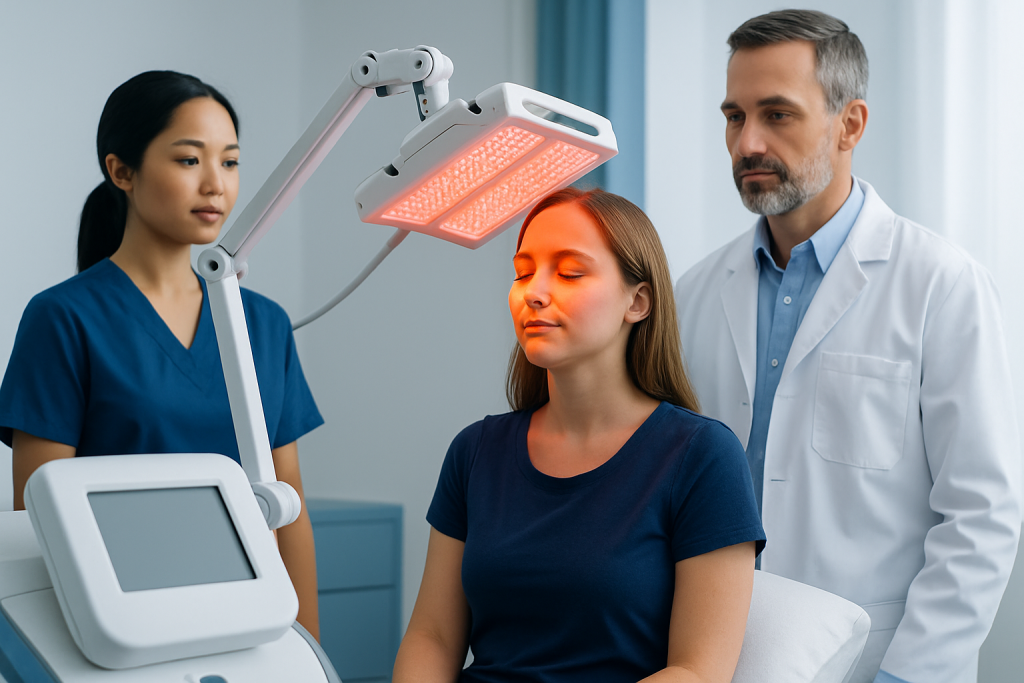
Red light therapy is most often discussed in relation to skin health, wound recovery, inflammation, and pain. In some clinical settings, it is used to support healing after procedures or to help certain skin concerns respond more calmly. Some people also look into it for hair thinning, sore joints, or muscle recovery after exercise.
The strength of evidence varies by condition. It tends to be more promising when used for clearly defined purposes and under professional guidance, rather than as a general wellness tool. A person hoping for dramatic, immediate change may be disappointed; a person seeking modest, gradual support may find it more useful.
- Skin rejuvenation and texture concerns
- Acne-related inflammation in some cases
- Minor wound healing support under medical supervision
- Temporary relief for some pain or stiffness complaints
- Hair loss management as part of a broader plan
It is important to remember that “may help” does not mean “will help.” The condition being treated, how advanced it is, and whether the underlying cause has been addressed all influence the outcome. For international patients, this is especially important because the treatment plan should be clear before travel, so time and expectations are well matched to the likely benefit.
How It Works

Red light therapy aims to deliver light energy to the skin and underlying tissues at wavelengths that are thought to affect cell activity. Researchers believe this may influence processes involved in inflammation, circulation, and cellular repair. In simple terms, the light is not heating the tissue in the way a heat lamp would; it is intended to trigger biological responses in cells.
Different devices use different settings, and that matters. Wavelength, intensity, distance from the skin, treatment time, and session frequency can all change the experience and the outcome. A device that is too weak may do little, while one that is used improperly may irritate the skin or eyes.
Because of this, the therapy is best understood as a medical tool rather than a general household wellness trend. Patients often benefit from an explanation of what the device is meant to do, how long a course may last, and what signs would suggest the plan is or is not helping.
Symptoms and Conditions People Ask About
People usually turn to red light therapy because they are dealing with symptoms that are persistent, visible, or frustratingly slow to improve. These may include facial redness, breakouts, fine lines, sore muscles, joint stiffness, or hair shedding. Some patients also seek it after procedures or injuries when they want a gentle adjunct to standard care.
It is useful to separate the symptom from the diagnosis. For example, “pain” can come from muscle strain, arthritis, nerve irritation, or another condition entirely. “Hair loss” may reflect stress, thyroid disease, iron deficiency, genetics, or scalp inflammation. Red light therapy may play a role in certain situations, but it should not delay proper evaluation.
When a symptom has a new, rapidly worsening, or unexplained pattern, medical review is more important than any device. A short consultation can help decide whether the concern is likely to respond to light-based treatment or whether another approach is more appropriate.
Causes and Risk Factors
Red light therapy itself does not cause the underlying condition it is meant to address, but several factors influence whether it is likely to work. The most important is the accuracy of the diagnosis. A skin problem, pain issue, or hair concern that has not been properly identified may not improve with light treatment alone.
Risk factors for poor results include inconsistent use, unrealistic expectations, poor-quality consumer devices, and choosing therapy for a problem that actually needs medication, surgery, physical therapy, or a different dermatologic approach. People with light sensitivity, eye disease, or a history of photosensitivity reactions need extra caution. Those with a personal history of skin cancer should speak with a doctor before using any light-based device on exposed skin.
International patients sometimes arrive with devices recommended by friends or purchased online, but without a diagnosis attached. In that situation, the best starting point is a clinical assessment. A clear medical explanation is what turns a trendy device into a meaningful part of care, or shows that it is not the right tool at all.
Diagnosis and Medical Evaluation
There is no single test for deciding whether red light therapy “works.” Instead, clinicians evaluate the condition being treated, the severity of symptoms, and whether the patient is a good candidate for light-based care. For skin concerns, this may include a visual examination and a review of medical history. For pain or hair loss, the assessment may be broader and may involve laboratory tests or other imaging when needed.
A good evaluation also includes practical questions: What is the goal? Is the aim to reduce pain, improve appearance, support recovery, or slow progression? How will progress be measured? These questions matter because light therapy often works best as part of a structured plan, not as an isolated experiment.
For patients traveling from another country, it helps to bring previous records, medication lists, and any photos or test results. That can shorten the time needed to reach a diagnosis and make treatment decisions more precise. It also helps the specialist explain whether therapy should be started immediately, continued elsewhere, or replaced with a different option.
Treatment Options and What to Expect
If a doctor recommends red light therapy, the plan usually depends on the condition being treated. Sessions may be scheduled over several weeks, and progress is often gradual rather than dramatic. Some people notice subtle changes first, such as less tenderness, calmer skin, or improved tolerance during recovery.
In many cases, red light therapy is used alongside other treatments rather than on its own. For example, skin conditions may also require topical medications, oral medicines, or careful skincare. Pain conditions may respond better when light therapy is paired with physical rehabilitation, posture work, or anti-inflammatory strategies. Hair concerns may need a full evaluation to identify hormonal, nutritional, or genetic contributors.
The setting matters too. Medical-grade equipment is usually chosen and supervised with more precision than consumer devices. That does not mean home devices are never useful, but it does mean patients should be cautious about promises that sound too broad or too fast. A sensible treatment plan should include what improvement would look like, how long it should take, and when the plan should be reassessed.
Acibadem Health Point’s multidisciplinary specialists and JCI-accredited hospitals diagnose and treat this condition for international patients, with care planning designed to be clear before travel and practical during follow-up.
Prevention and Self-care
There is no need to “prepare” for red light therapy in a complicated way, but a few simple habits can make the experience safer and more worthwhile. Following the exact instructions for a supervised device is important, especially for distance from the skin, session length, and eye protection. Using a device more often or longer than recommended does not necessarily improve results.
Self-care also means keeping the bigger picture in mind. A person using light therapy for skin may still need sunscreen, gentle cleansing, and medically appropriate products. Someone using it for pain may benefit from movement, stretching, sleep support, and treatment of the underlying cause. Someone using it for hair loss may need nutrition review, hormone evaluation, or prescription therapy.
- Do not use a device over irritated, infected, or unexplained skin without medical advice.
- Protect the eyes unless a clinician says otherwise and the device instructions are explicit.
- Stop use and seek advice if burning, rash, headache, or worsening symptoms occur.
- Choose devices and treatment plans from reliable medical sources rather than only online reviews.
Patients recovering abroad should also plan how follow-up will happen after returning home. A treatment diary, photos, and the device settings used can help the local doctor or remote specialist assess whether the therapy is actually contributing to progress.
When to See a Doctor
Medical advice is recommended before starting red light therapy if the person has eye disease, a history of photosensitivity, active skin cancer, a seizure disorder triggered by light, or a complex medical condition that could be affected by treatment. It is also wise to speak with a clinician if the device is being considered for a problem that has not yet been diagnosed.
Prompt review is especially important when symptoms are new, rapidly changing, painful, or associated with other concerns such as fever, swelling, unexplained weight loss, or sudden hair shedding. These patterns may point to a condition that needs more than light therapy. In those cases, waiting to see if a device helps can delay the right treatment.
Even when red light therapy is appropriate, the best results usually come from a plan that is personalized, monitored, and adjusted when needed. A qualified doctor can help determine whether the therapy is likely to be useful, safe, and worth the time and expense.
Frequently asked questions
Does red light therapy actually work?
It can work for some specific uses, such as selected skin concerns, certain pain complaints, and some recovery goals. The evidence is not equally strong for every condition, so results are not guaranteed. A doctor can help match the treatment to the problem being treated.
Is red light therapy the same as a tanning bed or heat lamp?
No. Red light therapy uses specific wavelengths and is not intended to tan the skin or provide heat in the same way a lamp would. The goal is to influence cell activity, not to create a tanning effect.
How long does it take to see results?
That depends on the condition, the device, and how consistently it is used. Some people notice gradual changes over several weeks, while others do not respond. If there is no clear progress, the treatment plan should be reviewed.
Can red light therapy be used at home?
Some devices are sold for home use, but quality and settings vary widely. Home use is safest when it follows a diagnosis and clear instructions from a clinician. Buying a device without medical guidance can lead to poor results or misuse.
Are there side effects?
Side effects are usually mild when the therapy is used correctly, but skin irritation, headache, or eye discomfort can happen. People with light sensitivity, eye conditions, or a history of skin cancer should ask a doctor before starting. Any worsening symptom should be checked promptly.
Can it replace medicine or other treatments?
Usually not. Red light therapy is often best used as part of a broader treatment plan, not as a substitute for proven medical care. If symptoms have an underlying cause, that cause still needs proper evaluation and treatment.
References
- National Center for Complementary and Integrative Health
- U.S. Food and Drug Administration
- American Academy of Dermatology
- Mayo Clinic
- Cochrane Library
This article is for general information only and is not a substitute for professional medical advice. Please consult a qualified doctor about your individual situation.
Hair transplant in Turkey — costs, graft counts & a free assessment
JCI-accredited · board-certified surgeons · reply within 24h
Add us as a Preferred Source to see more of our trusted health content across Google Search, AI Overviews and Discover.