Chest Press

Key Takeaways
- The chest press mainly works the chest, front shoulders, and triceps.
- Good setup and controlled movement matter more than lifting heavy weight.
- Different chest press variations can suit beginners, home workouts, or rehabilitation plans.
- Pain, dizziness, or unusual shortness of breath during exercise should be assessed by a clinician.
- People with shoulder, neck, or chest pain should get personalized advice before continuing training.
The chest press is a common strength-training movement used to build pushing strength in the chest, shoulders, and arms. With the right technique and load, it can support fitness goals while lowering the risk of strain.
Overview
The chest press is one of the most familiar pushing exercises in strength training. In its simplest form, a person presses weight away from the body while lying on a bench, seated on a machine, or using dumbbells or resistance bands. The movement looks straightforward, but its value is broader than building the chest alone: it also helps train shoulder control, arm strength, and upper-body coordination.
For many people, the chest press becomes part of a general fitness routine. For others, it is a more specific tool used in sports conditioning, rehabilitation, or a structured return to activity after illness or injury. The exercise can be adapted to different strength levels, which makes it useful for beginners and experienced lifters alike.
When the chest press is discussed in a health setting, technique matters just as much as ambition. A patient who is recovering from a shoulder problem, for example, may need a different hand position, range of motion, or machine setup than someone training for muscle growth. That is why individualized guidance is often more helpful than copying a routine from a video or gym floor.
For international patients planning care away from home, exercise questions can also come up after surgery, during rehabilitation, or when managing chronic pain. In those situations, the chest press may be safe, modified, or temporarily avoided depending on the medical context and the advice of a qualified clinician.
What the Chest Press Works
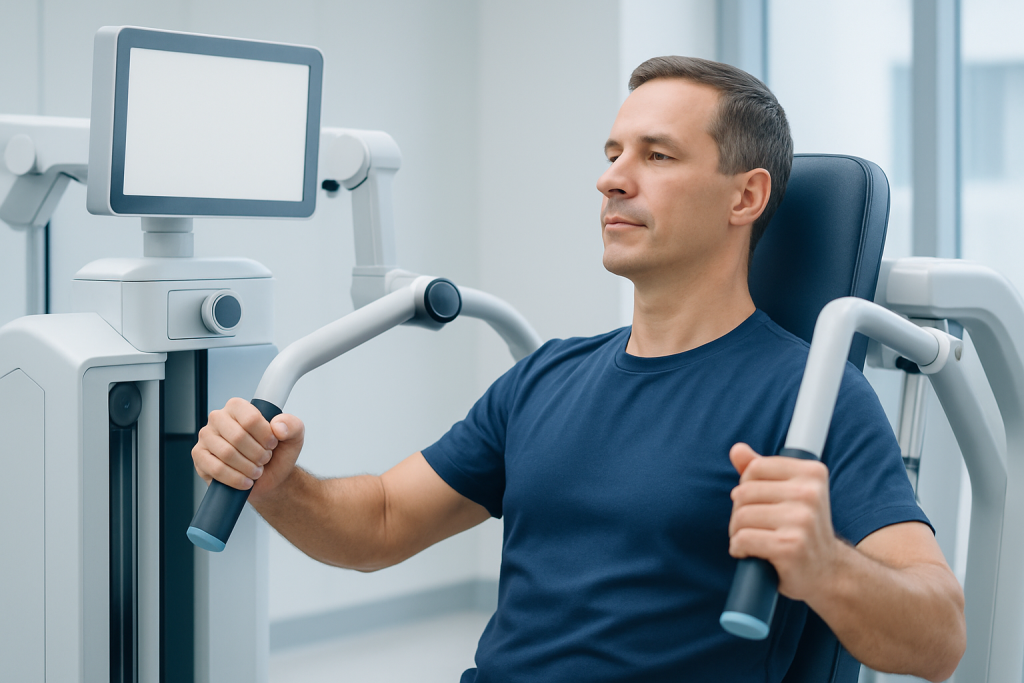
The primary muscles involved in a chest press are the pectoral muscles, which cover much of the front of the chest. The front part of the shoulders assists with the movement, and the triceps help extend the elbows as the weight is pushed away from the body. The upper back and core also contribute by stabilizing posture and controlling the movement path.
Because several muscle groups are working together, the chest press is useful for everyday pushing actions. These include pushing open a heavy door, moving objects across a table, or supporting body weight during certain sports and floor exercises. It can also help improve general upper-body strength, which may support posture and functional independence in daily life.
People often choose the chest press over more complex lifts because it is easier to learn and can be adjusted more precisely. Machines provide a guided path, while free weights and bands allow more natural motion and stabilization demands. Each version has benefits, and the best one depends on the person’s goals, experience, and any joint limitations.
- Chest muscles: main power source for the push
- Front shoulders: assist with shoulder flexion and pressing
- Triceps: help straighten the elbows
- Core and upper back: stabilize the body during the lift
Common Symptoms and Sensations During the Exercise

A well-performed chest press should feel like controlled effort in the chest, shoulders, and arms. Muscle fatigue, a warm sensation in the working muscles, and mild next-day soreness can be normal, especially after increasing weight or trying a new variation. A steady breathing rhythm and smooth movement are usually signs that the exercise is being done safely.
Not every uncomfortable sensation is a problem, but some signals deserve attention. Sharp pain in the shoulder, chest, neck, or elbow is not typical and may mean the technique needs to be changed or the exercise should be paused. A clicking feeling with pain, a sudden loss of strength, or a feeling that the shoulder is “slipping” should also be assessed.
It is also important to distinguish muscular effort from symptoms that could point to a medical issue. Chest pressure, unusual shortness of breath, lightheadedness, nausea, or pain spreading to the arm, jaw, or back should not be ignored. If these occur, exercise should stop and medical advice should be sought promptly.
People returning to training after injury or surgery may notice that one side feels weaker, tighter, or less stable. That can be expected during recovery, but it should be discussed with a physiotherapist or physician so the exercise can be adjusted safely rather than stopped without guidance.
Causes & Risk Factors for Poor Form or Discomfort
Most chest press problems come from technique, load selection, or training too quickly. Lifting too much weight often causes the shoulders to roll forward, the elbows to flare excessively, or the lower back to arch in an effort to compensate. These patterns may increase stress on the shoulder joint and the soft tissues around it.
Risk is also higher when warm-up is skipped, fatigue is ignored, or the exercise is repeated too often without recovery. A person who trains chest muscles aggressively but neglects the upper back may develop muscle imbalance, making the shoulders less comfortable during pressing movements. Limited shoulder mobility or previous injury can add another layer of difficulty.
Certain medical conditions may change how the chest press should be approached. These include rotator cuff problems, frozen shoulder, neck pain with nerve irritation, sternum discomfort, recent chest surgery, and some cardiovascular conditions where exertion needs medical review. In such cases, a clinician may advise temporary modification, lighter resistance, or a different exercise altogether.
For travelers seeking evaluation abroad, the key concern is not just whether the chest press can be done, but whether it is appropriate right now. A well-run sports medicine or rehabilitation team will consider the person’s diagnosis, stage of recovery, and goals before recommending a return-to-exercise plan.
Diagnosis: How Clinicians Evaluate Chest Press Pain or Limitation
If the chest press causes pain, weakness, or instability, a clinician will usually begin with a detailed history. They may ask where the discomfort is located, when it started, whether it appears only during pressing, and whether it also happens at rest or during daily activities. The exact type of exercise, the amount of weight used, and any recent changes in training are often important clues.
A physical examination may follow, focusing on shoulder range of motion, strength, tenderness, posture, and movement patterns. The clinician may compare both sides to see whether one shoulder or arm is compensating. In some cases, specific tests help identify whether the problem is coming from the rotator cuff, the chest wall, the elbow, the neck, or another structure.
Imaging is not always necessary, but it may be used when a tear, joint injury, or another structural problem is suspected. X-rays, ultrasound, or MRI can help clarify the cause when symptoms are persistent or when rehabilitation is not progressing as expected. If chest symptoms suggest a non-musculoskeletal cause, broader medical evaluation may be needed rather than focusing only on the exercise.
For international patients, a clear diagnosis is especially useful because it helps avoid repeated guesswork after returning home. A good care plan should explain what to do, what to avoid, how long recovery may take, and which signs would mean the exercise needs to be reassessed.
Treatment Options and Training Modifications
Treatment depends on the cause of symptoms. If the issue is muscle soreness or mild overuse, the person may benefit from reducing load, improving technique, allowing recovery time, and restarting gradually. If pain is related to a tendon, shoulder joint, or neck problem, a more structured rehabilitation plan may be needed.
Physical therapy is often central to recovery when the chest press is no longer comfortable. A therapist may work on posture, mobility, scapular control, and gradual strengthening of the chest, back, and shoulder muscles. In some cases, the exercise is temporarily changed to a machine press, incline variation, floor press, push-up, or resistance-band movement so that the joint is loaded in a more tolerable way.
Some practical modifications can make the exercise safer for many people:
- Use a lighter weight and slow the movement down
- Keep the shoulder blades supported and avoid over-arching the back
- Choose a pain-free range of motion rather than forcing depth
- Keep wrists aligned and elbows from flaring excessively
- Rest between sessions so irritated tissue has time to recover
Medication is not usually the main solution for exercise-related pain, and any drug use should follow a clinician’s advice. If there is a significant injury, a systemic health problem, or a condition affecting the heart or lungs, treatment may need to extend beyond exercise modification and rehabilitation.
Prevention & Self-care
Good prevention starts before the first repetition. A brief warm-up that raises body temperature and prepares the shoulders can improve comfort and control. Starting with a manageable load is more helpful than trying to match another person’s weight or rushing to a personal best.
Self-care also means paying attention to recovery. Adequate rest between pressing workouts, balanced training of the back muscles, and regular mobility work can reduce the chance of overuse. Many people do better when they treat strength training as a long-term habit rather than a test of maximum effort on every session.
Simple habits often make the biggest difference:
- Learn the setup from a qualified trainer or therapist
- Increase resistance gradually
- Stop if pain feels sharp, unusual, or worsening
- Balance chest work with upper-back exercises
- Keep breathing steady instead of holding the breath for too long
People recovering far from home may want written guidance they can follow after travel, especially if they are resuming exercise in a new gym or rehabilitation setting. Clear instructions reduce the chance of repeating a movement too early or too aggressively.
When to See a Doctor
Medical advice is sensible if chest press pain lasts beyond a few days, keeps returning, or limits everyday activities. It is also important to seek assessment when strength drops suddenly, the shoulder feels unstable, or there is swelling, bruising, or a clear injury event. A health professional can help determine whether this is simple overuse or something that needs imaging or treatment.
Anyone who experiences chest pressure, faintness, significant breathlessness, or pain radiating beyond the muscles being used should stop exercising and obtain prompt medical attention. These symptoms are not the same as ordinary training fatigue and should not be brushed aside as a normal workout response.
It is especially wise to check with a doctor before continuing chest press training if there is a history of heart disease, shoulder surgery, repetitive strain injury, or unexplained upper-body pain. For international patients, a coordinated assessment can be helpful because it allows diagnosis, rehabilitation planning, and follow-up instructions to be aligned before travel or after arrival. Acibadem Health Point’s multidisciplinary specialists and JCI-accredited hospitals diagnose and treat this condition for international patients.
When the exercise is guided by the right plan, the chest press can remain a useful and safe part of fitness. The most reliable progress usually comes from patience, correct form, and medical guidance when the body sends a warning sign.
Frequently asked questions
What muscles does the chest press work?
The chest press mainly works the chest muscles, especially the pectorals. The front shoulders and triceps also assist, while the upper back and core help stabilize the body during the movement.
Is the chest press suitable for beginners?
Yes, many beginners can learn the chest press safely when the weight is light and the technique is supervised. Machine versions are often easier to control at first, while free weights may require more balance and coordination.
Should the chest press hurt?
A working effort in the muscles is normal, but sharp pain is not. Pain in the shoulder, neck, or chest means the exercise should be stopped and assessed, especially if the symptom is unusual or persistent.
Which is better: machine, barbell, or dumbbell chest press?
None is universally best; the right choice depends on goals, experience, and joint comfort. Machines offer more stability, barbells allow heavier loading, and dumbbells often provide a more natural range of motion.
Can someone do chest press exercises after a shoulder injury?
Sometimes, but only with individualized guidance. The exercise may need to be modified, shortened in range, or delayed until the shoulder is ready for loading.
When should a doctor be involved?
A doctor should be consulted if pain persists, strength suddenly changes, or there are symptoms such as chest pressure, shortness of breath, or dizziness. Medical review is also important after an injury or when returning to exercise after surgery.
References
- MedlinePlus
- American Council on Exercise
- American Academy of Orthopaedic Surgeons
- National Institute of Arthritis and Musculoskeletal and Skin Diseases
This article is for general information only and is not a substitute for professional medical advice. Please consult a qualified doctor about your individual situation.