Which Parts of the Brain Control Swallowing?
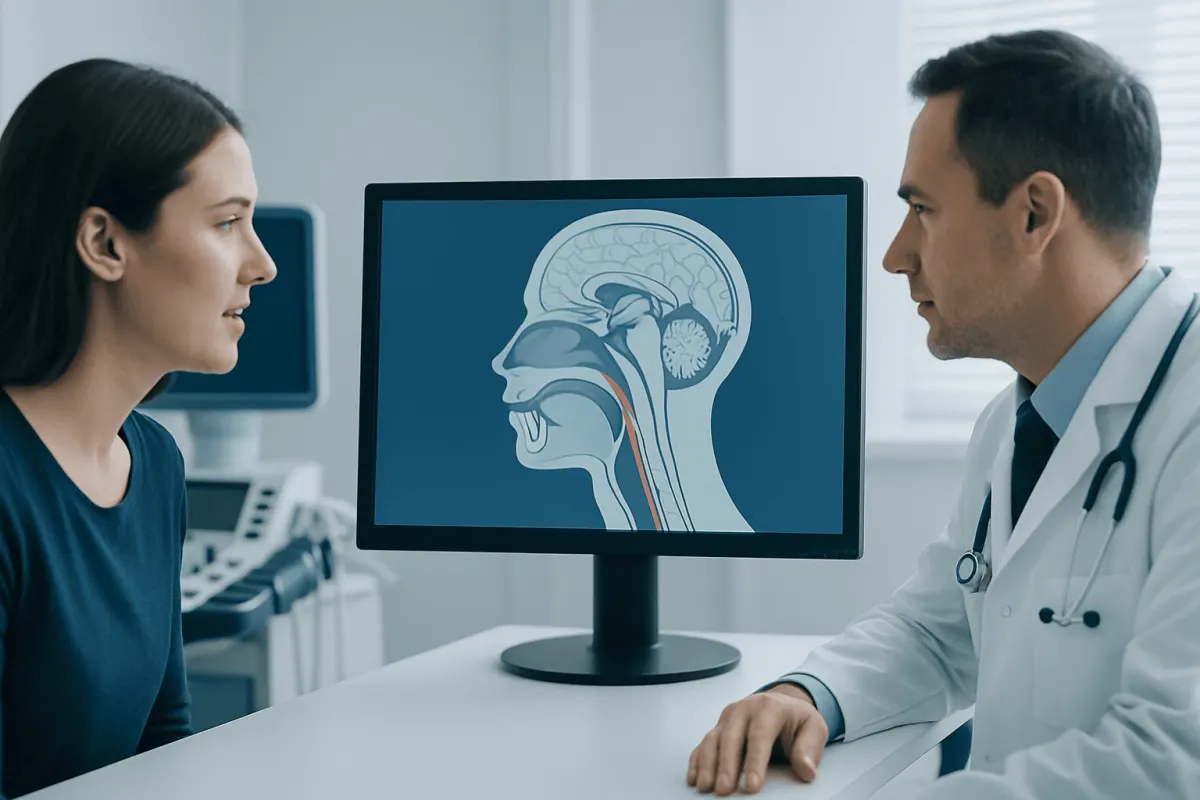
Swallowing is controlled by a coordinated network rather than one single brain area. The brainstem organizes the automatic swallowing pattern, while regions of the cerebral cortex, basal ganglia, cerebellum, and cranial nerves help start, shape, and safely complete each swallow.
Overview: the brain network behind swallowing
What part of the brain controls swallowing? The short answer is that the brainstem controls the core automatic swallowing reflex, especially through connected nerve centers in the medulla and pons. However, swallowing is not governed by one small “swallowing spot”: the cerebral cortex, basal ganglia, cerebellum, sensory nerves, muscles, and cranial nerves work together as a network.
Most people occasionally cough, feel that food went down awkwardly, or notice a brief sensation of difficulty swallowing when eating too quickly, talking while eating, or having a dry mouth. These isolated episodes are commonly harmless. Repeated difficulty, choking, pain, food sticking, wet-sounding voice after meals, or unexplained weight loss should be medically reviewed, particularly if symptoms are new or worsening.
Swallowing is medically called deglutition. It moves saliva, liquids, food, and medicines from the mouth to the stomach while protecting the airway. This requires precisely timed activity: the tongue propels material backward, the throat muscles move it downward, the vocal folds close, and the upper esophageal sphincter opens so material can enter the esophagus.
How a swallow happens
Swallowing has overlapping phases. During the oral phase, a person chews food, mixes it with saliva, and uses the tongue to form and move a bolus, or small mass of food, toward the back of the mouth. This stage is largely voluntary and depends on attention, sensation, and coordinated facial, jaw, tongue, and mouth movements.
Once the bolus reaches the throat, the pharyngeal phase begins. It is fast and mainly automatic. Sensory signals trigger the brainstem swallowing network, which coordinates closure of the airway, elevation of the larynx, movement of the pharyngeal muscles, and opening of the upper esophageal sphincter. This timing helps prevent material from entering the windpipe.
In the esophageal phase, wave-like muscle contractions carry food down the esophagus to the stomach. This phase is regulated largely by the enteric nervous system and autonomic nerves, with input from the brain. A symptom that feels like food is sticking lower in the chest may therefore have an esophageal rather than a brain-related cause.
- Voluntary preparation: chewing and moving food in the mouth.
- Automatic airway protection: rapid throat and larynx movements.
- Esophageal transport: movement of material from the throat to the stomach.
Which brain areas and nerves are involved?

The most important automatic swallowing centers lie in the lower brainstem, particularly the medulla. Scientists often describe this interconnected circuitry as the swallowing central pattern generator. It receives sensory information from the mouth and throat, then sends carefully sequenced signals to the muscles involved in swallowing.
The cerebral cortex helps plan and start a swallow, especially through areas involved in movement and sensation near the front and side of each hemisphere. The insula, cingulate cortex, and other connecting networks also contribute to awareness, coordination, and adjustment of swallowing. This is why a person can decide to swallow saliva or pause briefly before swallowing.
The basal ganglia and cerebellum help regulate the speed, force, timing, and coordination of movement. Disorders that affect these structures may make swallowing slower or less well coordinated. The brain communicates with swallowing muscles through several cranial nerves, including the trigeminal, facial, glossopharyngeal, vagus, accessory, and hypoglossal nerves.
Because the system is distributed, difficulty swallowing can result from problems in the brain, cranial nerves, throat muscles, neuromuscular junction, esophagus, or structures of the mouth and throat. A symptom alone does not identify the cause, which is why a clinical assessment is important when difficulties persist.
Why swallowing can become difficult
Difficulty swallowing is called dysphagia. It may occur when a neurological condition affects brain control, sensation, muscles, or nerve signals. A stroke is a common neurological cause of new swallowing difficulty, particularly when it affects the brainstem or movement-control regions of the brain. Parkinson’s disease, multiple sclerosis, dementia, traumatic brain injury, brain tumors, and motor neuron disorders can also affect swallowing in some people.
Not all dysphagia is neurological. Reflux-related irritation, narrowing or inflammation of the esophagus, allergies, infections, enlarged tonsils, dental problems, dry mouth, medicines, or head and neck conditions can contribute. Some people mainly have difficulty with solids, while others struggle with liquids or cough with both. These details can help guide assessment.
Normal aging may slightly slow swallowing and reduce muscle reserve, but significant swallowing difficulty should not simply be accepted as an inevitable part of getting older. Evaluation can identify treatable causes and strategies to lower the risk of dehydration, poor nutrition, or aspiration, which occurs when material enters the airway.
Brain-related swallowing symptoms may improve with recovery, rehabilitation, and targeted management, depending on the underlying condition. Early recognition is useful because swallowing plans can often be adapted to a person’s needs while further investigations are arranged.
Signs that suggest a swallowing problem
Symptoms vary according to the phase of swallowing that is affected. Problems in the mouth or throat may cause coughing or choking during meals, a feeling that food is remaining in the throat, repeated swallowing to clear one mouthful, drooling, or a gurgly or wet voice after eating or drinking. Some people may avoid certain textures because they feel difficult to manage.
Symptoms involving the esophagus can include a sensation of food sticking in the chest or lower throat, regurgitation, heartburn, or discomfort after swallowing. Painful swallowing is called odynophagia and may need a different type of evaluation from painless difficulty swallowing.
Occasional coughing with a drink does not necessarily mean that someone has dysphagia. However, recurrent coughing with meals, chest infections without a clear explanation, changes in eating habits, dehydration, or unintended weight loss are reasons to speak with a doctor. Some people can aspirate without coughing, so the absence of cough does not always rule out a swallowing problem.
- Coughing, choking, or throat clearing during meals
- Food or tablets feeling stuck
- Voice changes after swallowing
- Longer meal times or fatigue while eating
- Weight loss, dehydration, or repeated respiratory infections
How doctors assess swallowing and brain-related causes
A doctor usually begins by asking when symptoms started, whether they are progressing, which foods or liquids cause difficulty, and whether there are related neurological or digestive symptoms. A physical examination may include checks of speech, facial movement, tongue strength, gag and cough responses, coordination, and signs of dehydration or nutritional difficulty.
A speech and language therapist, also called a speech-language pathologist in some settings, may perform a bedside swallowing assessment. They observe posture, mouth and tongue movement, voice quality, cough, and the person’s ability to manage carefully selected food or fluid textures. This assessment helps determine whether more detailed testing is needed.
Common instrumental tests include a videofluoroscopic swallowing study, sometimes called a modified barium swallow, and fiberoptic endoscopic evaluation of swallowing. These tests show how food and liquid move through the mouth and throat and whether material enters the airway. Depending on symptoms, doctors may also request brain imaging, ENT assessment, upper endoscopy, or tests of esophageal function.
The goal is not only to find a diagnosis. Assessment also helps clinicians recommend safe, individualized steps related to posture, texture, swallowing techniques, oral care, rehabilitation, and treatment of the underlying condition. A doctor should advise before a person makes major dietary texture changes on their own.
Treatment, rehabilitation, and practical self-care
Treatment depends on the cause and on which phase of swallowing is affected. If a neurological illness or event is responsible, care may include management of that condition alongside swallowing rehabilitation. A trained swallowing therapist can teach exercises and compensatory techniques designed for the individual’s pattern of difficulty.
Recommendations may include sitting fully upright for meals, eating slowly, taking small bites or sips, minimizing distractions, and remaining upright after eating when appropriate. Oral hygiene is also important, especially for people at risk of aspiration, because keeping the mouth clean can reduce the amount of bacteria that could enter the lungs if aspiration occurs.
Some people benefit from temporary changes in food texture or fluid consistency after a professional assessment. These changes should be individualized, as overly restrictive diets can reduce enjoyment of food or make hydration more difficult. Treatment may also address reflux, dental issues, inflammation, medication effects, or esophageal disorders when these are contributing.
For people needing specialist assessment, Acıbadem Health Point’s multidisciplinary specialists and JCI-accredited hospitals diagnose and treat neurological and swallowing-related conditions for international patients. Care may involve neurology, ENT, gastroenterology, rehabilitation, nutrition, and speech and swallowing specialists, depending on the findings.
When to seek medical care
Emergency medical help is needed for sudden trouble swallowing accompanied by facial drooping, new weakness or numbness on one side, slurred speech, confusion, severe dizziness, loss of balance, or a sudden severe headache. These may be signs of stroke and should be treated as urgent, even if symptoms improve quickly.
Urgent assessment is also appropriate if a person cannot swallow saliva, has significant breathing difficulty, feels that food is completely stuck, or develops severe chest pain after swallowing. Care should not be delayed when choking has not resolved or when there is concern that an object or food has obstructed the airway.
A non-emergency medical appointment is advisable for recurrent coughing or choking while eating, persistent sensation of food sticking, progressive symptoms, pain on swallowing, unexplained weight loss, dehydration, or repeated chest infections. A doctor can determine whether the likely source is neurological, throat-related, or esophageal and arrange the appropriate tests.
For symptoms that are mild but ongoing, keeping a brief record can be helpful. Notes may include the foods or drinks involved, timing of symptoms, coughing, voice changes, heartburn, and any associated weakness or speech changes. This information can help make the consultation more focused and useful.
Frequently asked questions
01Is swallowing controlled by the left or right side of the brain?
Both sides of the brain contribute to swallowing, and the brainstem coordinates the automatic reflex. One-sided brain injuries can still affect swallowing because the network is complex and different people may rely more on one side for certain functions. The pattern of difficulty should be assessed individually.
02Can anxiety cause difficulty swallowing?
Anxiety can create a sensation of throat tightness, dry mouth, or awareness of swallowing, which may make swallowing feel uncomfortable. However, persistent, progressive, or meal-related swallowing difficulty should not automatically be attributed to anxiety. A clinician can help exclude physical causes when symptoms continue.
03Why do people cough when swallowing water?
Coughing can occur when liquid moves toward the airway before the swallowing reflex is fully coordinated. A single occasional cough is common, especially when drinking quickly. Frequent coughing with liquids, choking, or a wet voice after drinking should be evaluated.
04Can a stroke affect swallowing even if speech is normal?
Yes. A stroke can affect the parts of the brain and nerve pathways involved in swallowing without causing obvious speech changes. New swallowing difficulty, especially when sudden, needs urgent assessment because stroke symptoms can vary.
05Can swallowing difficulties improve after a brain injury?
Improvement is possible, particularly when the underlying condition stabilizes and rehabilitation begins early when appropriate. Recovery varies with the location and extent of injury, overall health, and the specific swallowing pattern. A swallowing specialist can monitor progress and adjust the care plan.
06Which doctor should a person see for trouble swallowing?
A primary care doctor can provide an initial assessment and direct referral when needed. Depending on symptoms, care may involve a neurologist, ENT specialist, gastroenterologist, speech and swallowing therapist, or dietitian. Sudden symptoms with possible stroke signs require emergency care rather than a routine appointment.
This article is for general information only and is not a substitute for professional medical advice. Please consult a qualified doctor about your individual situation.
Medical weight-loss options in Turkey — costs & eligibility
JCI-accredited · board-certified surgeons · reply within 24h
Add us as a Preferred Source to see more of our trusted health content across Google Search, AI Overviews and Discover.