When Do Babies Get Kneecaps?

Key Takeaways
- Babies are born with kneecaps, but they are mostly cartilage at first.
- The kneecaps gradually turn to bone during early childhood through a normal process called ossification.
- A child’s walking pattern or knee shape usually changes for many normal reasons and does not always signal a problem.
- Pain, swelling, limping, or an obvious injury deserves medical attention.
- If families are unsure about a child’s bone development, a pediatrician or orthopedic specialist can evaluate it calmly and clearly.
Babies do have kneecaps, but they start as soft cartilage rather than fully formed bone. Over the first years of life, these structures slowly ossify, becoming more like the kneecaps seen in older children and adults.
Overview
When do babies get kneecaps? The short answer is: they already have them at birth, but not in the hard, fully bony form most people imagine. A baby’s kneecap, or patella, begins as cartilage, a flexible tissue that is much softer than bone.
As the child grows, the kneecap slowly ossifies, meaning it turns from cartilage into bone in stages. This is a normal part of development and usually happens over the first several years of life rather than all at once.
For parents, this can be surprising because a baby’s knees may feel different from an adult’s knees and do not show the same bony shape on an X-ray early on. That difference is expected and, by itself, is not a sign that anything is wrong.
What Babies Actually Have at Birth
The patella starts forming before birth, but in newborns it is mainly made of cartilage. Cartilage is firm enough to help the joint function, yet flexible enough to support rapid growth. This early stage allows the knee to move comfortably as the infant learns to kick, roll, crawl, stand, and eventually walk.
Because cartilage does not show up the same way as bone on imaging, a baby’s kneecap may not be visible on a standard X-ray in the first months of life. That can lead to the mistaken idea that babies do not have kneecaps at all. In reality, the structure is present; it is simply immature.
This developmental pattern is part of normal pediatric anatomy. Many parts of a child’s skeleton mature gradually, and the patella is one of the best examples of how growth and movement work together in early life.
How Kneecaps Develop Over Time
The process of turning cartilage into bone is called ossification. For the kneecap, this happens after birth and usually becomes more noticeable in early childhood. The exact timing can vary from one child to another, which is another reason there is no single exact day or month when kneecaps “appear.”
In general, the patella continues to mature across infancy and early childhood, with the bony center becoming easier to detect as the child grows. Even then, the kneecap is still developing and remodeling as part of normal bone growth.
Parents sometimes notice that children’s knees look different at different ages. That is expected. A toddler’s gait, posture, and knee alignment can change a great deal as muscles strengthen, balance improves, and bones lengthen.
Signs That Are Normal — and Signs That Deserve Attention
Most of the time, ordinary changes in a child’s knee development are not cause for concern. Babies and toddlers may bend their knees differently, appear knock-kneed for a while, or move in ways that reflect normal growth rather than a problem with the patella itself.
What usually matters more is whether the child is comfortable and using the leg normally. Mild differences in shape or movement are often part of typical development, especially when both sides are similar and the child is active without pain.
- Normal: gradual changes in walking pattern during growth
- Normal: knees that look soft or rounded in infancy
- Normal: no visible kneecap on early imaging
- Needs attention: pain, swelling, redness, or warmth around the knee
- Needs attention: limping, refusal to bear weight, or sudden loss of movement
- Needs attention: injury, fever, or a knee that looks visibly out of place
Causes & Risk Factors for Concerns About Knee Development
Most babies develop kneecaps normally. When families worry about the knees, the concern is usually not about the absence of a patella, but about whether the knee is developing in the expected way. Growth variation, family traits, and temporary alignment differences can all influence how a child’s knees look and function.
Less commonly, medical conditions can affect bone growth, joint shape, or movement. These may include developmental differences in the skeleton, nutritional problems that affect bone health, or injuries that occur after birth. A doctor will look at the whole child rather than focusing on the kneecap alone.
Risk factors for concern are not the same as risk factors for disease. A child may simply have a family pattern of flexible joints or bowing/knock-knee that improves over time. In other cases, persistent pain, poor growth, or delayed motor milestones may prompt a closer evaluation.
How Doctors Check Knee Development
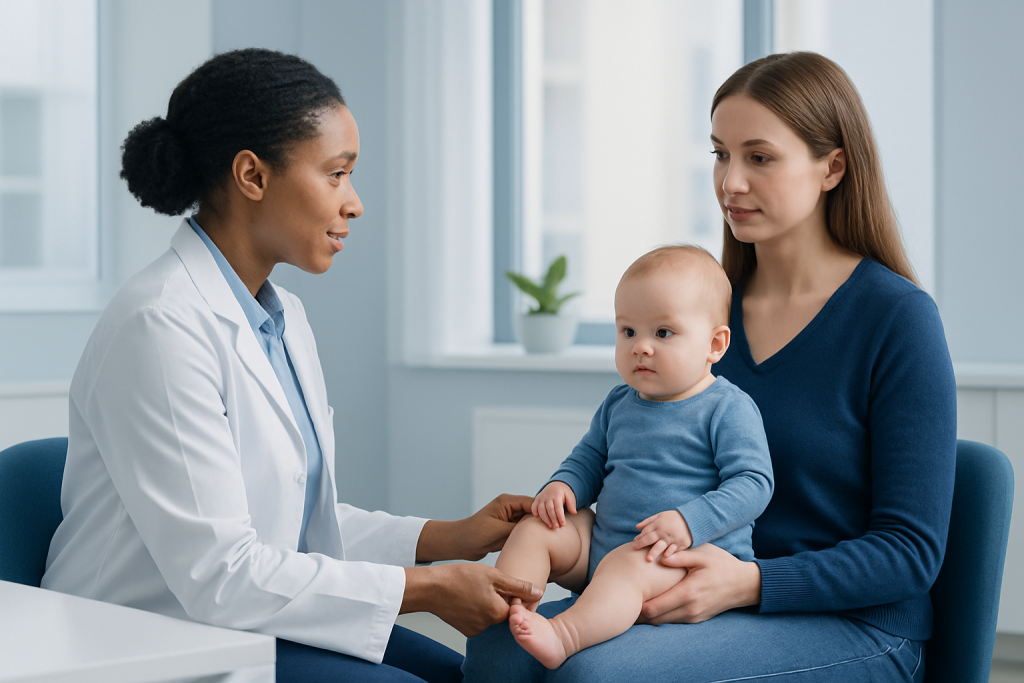
A pediatrician usually begins with a history and physical examination. The doctor may ask when the child started crawling or walking, whether one knee seems different from the other, and whether there has been any pain, swelling, or recent injury.
If needed, an orthopedic specialist may examine alignment, movement, and stability. In many cases, this is enough to reassure families. Imaging tests are not always necessary, especially when the child is otherwise healthy and the exam is normal.
When imaging is helpful, X-rays or other scans may be used to look at bone development, joint position, or possible injury. Because the kneecap is still cartilage in very young children, doctors interpret these images in the context of age and development rather than expecting an adult-like patella.
Treatment Options
Typical kneecap development does not need treatment. The body’s growth process usually takes care of the change from cartilage to bone on its own. For most families, the best approach is observation, routine checkups, and attention to the child’s comfort and mobility.
If a doctor finds a specific issue, treatment depends on the cause. Some children may need simple monitoring, while others may benefit from physical therapy, supportive care, bracing, or treatment of an underlying condition. Surgery is uncommon and would be considered only for particular structural problems or injuries.
Parents traveling for specialized orthopedic evaluation often appreciate having a clear plan before they arrive home. In a well-coordinated care setting, specialists can explain whether the concern is part of normal growth or something that needs follow-up, making it easier for families to manage care across countries and time zones.
Prevention & Self-care
There is no way to “create” kneecaps, because they develop naturally as part of growth. Still, families can support healthy bone and joint development by helping children eat a balanced diet, stay active, and attend routine pediatric visits.
Safe movement matters more than trying to correct every visible variation. Babies and young children learn through rolling, crawling, standing, and walking, and these activities help muscles support the growing skeleton. Well-fitting shoes for older toddlers, a safe home environment, and age-appropriate play also reduce the risk of injury.
If a child has a medical condition affecting bone health, a doctor may recommend targeted nutrition, monitoring, or specialist care. Families should avoid starting supplements or therapies on their own without medical guidance, especially for infants and young children.
When to See a Doctor
Families should seek medical advice if a child has knee pain, swelling, a limp, repeated falls, or trouble using the leg normally. A sudden change after a bump or injury should also be assessed, even if the child seems only mildly bothered at first.
It is also reasonable to ask questions during routine well-child visits if the knees look unusual or if motor development seems delayed. Most of the time, the answer is reassuring, and early evaluation can prevent unnecessary worry.
If a family is pursuing an orthopedic opinion from abroad, clear records, photos of the gait, and prior imaging reports can help the specialist understand the concern quickly. Acibadem Health Point’s multidisciplinary specialists and JCI-accredited hospitals diagnose and treat bone and joint conditions for international patients in a coordinated, patient-centered way.
A Reassuring Final Note
Babies do have kneecaps, but they begin life as cartilage and gradually harden into bone during childhood. This is a normal developmental process, not a missing body part that suddenly appears later.
For most children, the shape and feel of the knees change naturally as they grow. When something seems unusual, a pediatrician or orthopedic specialist can help distinguish normal development from a problem that needs attention.
Understanding that kneecaps develop over time can make those early knee changes feel much less mysterious. With the right guidance, families can follow a child’s growth with confidence.
Frequently asked questions
01When do babies get kneecaps?
Babies are born with kneecaps, but they are made mostly of cartilage at first. The kneecap gradually turns to bone during early childhood through a normal growth process called ossification.
02Why can’t doctors always see a baby’s kneecap on an X-ray?
Very young babies have kneecaps that are still cartilage, and cartilage does not show up on X-rays the same way bone does. That is why the patella may be hard to see early on even though it is present.
03Is it normal for a baby’s knees to look soft or round?
Yes, that is usually normal. Infants have a lot of cartilage and body fat around the joints, so their knees may not have the sharp bony outline seen in older children or adults.
04Can a child walk without kneecaps?
A child does not lack kneecaps; the kneecaps are simply still developing. Walking, crawling, and standing are all part of normal growth and help the muscles and bones mature together.
05What knee symptoms are not normal in a baby or toddler?
Pain, swelling, redness, limping, refusal to bear weight, or a sudden change after an injury should be checked by a doctor. These symptoms are not usually explained by normal kneecap development alone.
06Do all children develop kneecaps at the same age?
No, the timing can vary somewhat from child to child. Doctors look at the overall pattern of growth, comfort, and movement rather than expecting every child to develop in exactly the same way.
This article is for general information only and is not a substitute for professional medical advice. Please consult a qualified doctor about your individual situation.
Joint and spine care in Turkey — expert assessment & treatment
JCI-accredited · board-certified surgeons · reply within 24h
Add us as a Preferred Source to see more of our trusted health content across Google Search, AI Overviews and Discover.