What’s the Difference Between Liposuction and Tummy Tuck?

Liposuction and a tummy tuck both change abdominal contours, but they address different concerns. Liposuction removes localized fat through small incisions, while a tummy tuck removes loose skin and can tighten separated abdominal muscles as well as remove some fat.
Overview: liposuction and tummy tuck side by side
What’s the difference between liposuction and tummy tuck? Liposuction removes pockets of fat beneath the skin to improve body contours, whereas a tummy tuck removes excess abdominal skin and can tighten the abdominal wall when muscles have separated or stretched. A person may be a candidate for one procedure, the other, or in selected cases a combination of both.
Although both procedures are often discussed in relation to the abdomen, they are not interchangeable. The difference between liposuction and tummy tuck is mainly the tissue being treated: liposuction targets fat, while abdominoplasty targets loose skin and the deeper abdominal wall as well as fat that may be removed with the skin.
| Feature | Liposuction | Tummy tuck (abdominoplasty) |
|---|---|---|
| Main purpose | Reduces localized fat deposits | Removes loose skin and reshapes the abdomen |
| Skin tightening | Limited; relies on the skin’s natural elasticity | Directly removes excess skin |
| Muscle repair | No | May repair separated abdominal muscles |
| Incisions | Usually small incisions | Typically a longer lower-abdominal incision, with possible incision around the navel |
| Recovery needs | Often shorter, depending on the treated area and amount removed | Usually longer, with more limits on bending, lifting, and strenuous activity |
| Best suited to | Stable weight, localized fat, and reasonably firm skin | Excess skin, skin folds, abdominal laxity, or muscle separation |
Neither operation is designed for major weight reduction. A consultation with a qualified plastic surgeon is important because body shape, skin quality, medical conditions, prior operations, smoking status, and future pregnancy plans all influence whether surgery is appropriate.
How a clinician tells the difference between the two needs
A clinician begins by listening to the person’s goals and examining the abdomen while standing and lying down. They assess where fullness comes from, whether the skin retracts when it is lifted or pinched, and whether loose skin hangs or folds over the lower abdomen. They also consider scars from previous operations, such as cesarean delivery or abdominal surgery.
Skin elasticity is especially important for liposuction. When skin has good elasticity, it may contract around a smaller fat layer after surgery. If the skin is significantly loose, removing fat alone can leave the area appearing lax or uneven. In that situation, a tummy tuck may be more suitable because it physically removes skin rather than relying on it to tighten.
The examination may also look for diastasis recti, a widening of the connective tissue between the paired abdominal muscles. This is common after pregnancy and can also occur after substantial weight changes. It may create a persistent abdominal bulge even in a person with little excess fat. Liposuction cannot correct muscle separation; abdominal muscle repair may be considered during a tummy tuck when clinically appropriate.
A surgeon also evaluates general surgical safety. This includes current weight stability, diabetes control, circulation, heart or lung conditions, medications, clotting history, and nicotine use. Patients should disclose all supplements and medicines, as some can affect bleeding, healing, or anesthesia safety.
What to do for each case: fat, loose skin, or both
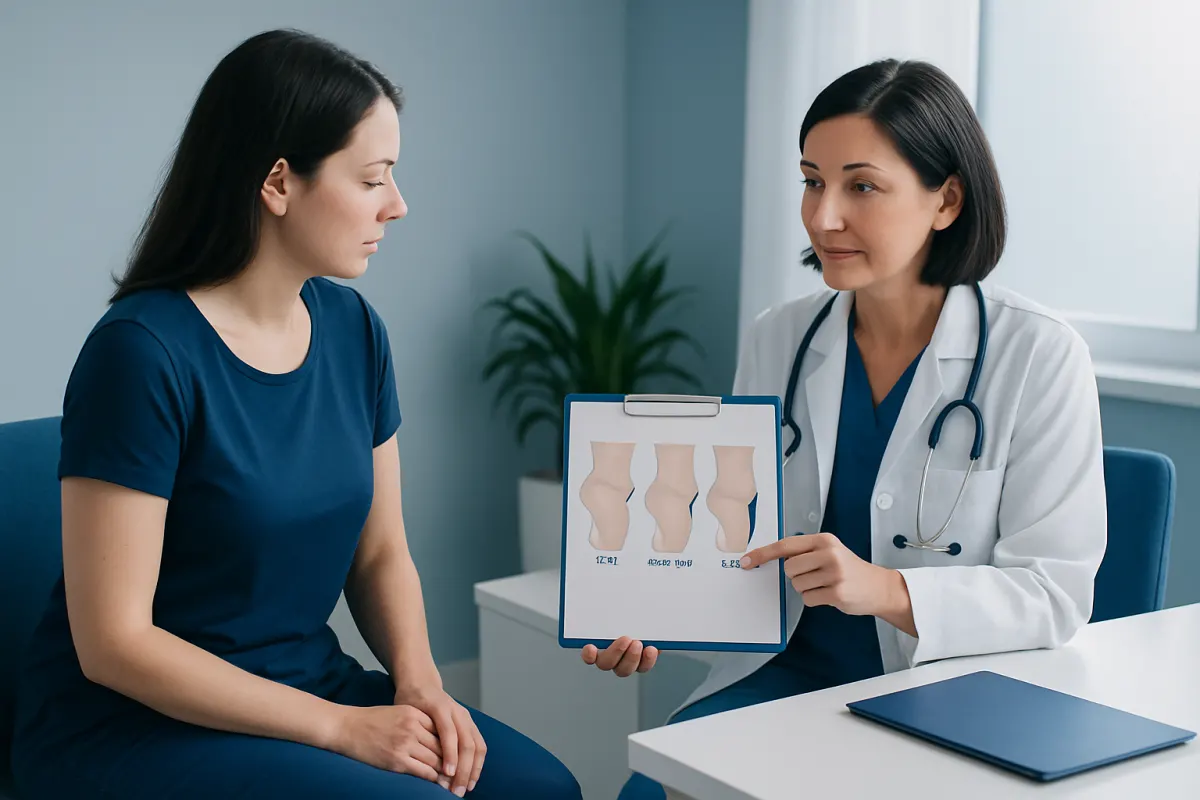
For a person whose main concern is a small-to-moderate area of diet- and exercise-resistant fat, with little loose skin, liposuction may be discussed. It can be used on the abdomen and other areas, such as the flanks, thighs, upper arms, back, or under the chin. The procedure is intended to refine shape rather than change overall health or replace weight management.
For a person with excess abdominal skin, a lower-abdominal overhang, stretch-related laxity, or a bulge related to muscle separation, a tummy tuck may better match the concern. A full abdominoplasty generally treats the central and lower abdomen. Depending on the individual anatomy, a surgeon may discuss a mini tummy tuck or another approach, but the appropriate technique cannot be determined from photos or symptoms alone.
Some people have both unwanted fat and substantial loose skin. In carefully selected patients, liposuction may be performed with a tummy tuck or staged separately. Combining procedures can offer more comprehensive contouring, but it can also increase operative complexity and recovery demands. The decision should be individualized after a full safety assessment.
Lipo 360 usually refers to liposuction performed around the torso, often including the abdomen, flanks, waist, and back. Therefore, what’s the difference between lipo 360 and tummy tuck? Lipo 360 treats circumferential fat distribution; it does not remove a large amount of loose skin or repair abdominal muscles. If skin laxity is marked, lipo 360 alone may not produce the desired contour.
Is it better to get lipo or a tummy tuck?
Neither procedure is universally better. The better option is the one that addresses the main anatomical concern safely and aligns with realistic goals. Liposuction is usually more relevant for localized fat with good skin tone, while a tummy tuck is usually more relevant for loose skin and abdominal wall laxity.
People sometimes ask which is better, liposuction or tummy tuck, after pregnancy or weight loss. Pregnancy can stretch skin and separate abdominal muscles, so a tummy tuck may be considered more often when these changes are the primary concern. However, people who may become pregnant in the future may choose to postpone abdominal contouring surgery, because pregnancy can alter the results.
A stable body weight is generally helpful before either procedure. Ongoing large weight fluctuations may affect contours and skin laxity after surgery. A clinician may recommend reaching a sustainable weight, managing medical conditions, stopping nicotine products in advance, and discussing plans for pregnancy before making a surgical decision.
The price difference between liposuction and tummy tuck varies widely by country, facility, anesthesia needs, surgical extent, and recovery requirements. It should not be used as the main measure of suitability. A written consultation plan should explain the proposed procedure, expected recovery, possible additional costs, risks, and alternatives.
Recovery, discomfort, and long-term changes
What is more painful, a tummy tuck or liposuction? Recovery from a tummy tuck is often more uncomfortable and restrictive because it involves a longer incision, skin removal, and sometimes muscle repair. Liposuction can still cause bruising, swelling, soreness, fluid drainage, and numbness, but recovery is often less extensive when a limited area is treated.
After either procedure, swelling can temporarily obscure the final contour. Compression garments may be recommended for a defined period, depending on the surgeon’s protocol. Patients should follow instructions about walking, wound care, showering, driving, lifting, work, exercise, and follow-up appointments. Early gentle movement is commonly encouraged to support circulation, while strenuous activities are usually delayed.
What happens 10 years after liposuction? Fat cells removed by liposuction do not typically return in the treated area, but remaining fat cells can enlarge with weight gain. Aging, hormonal changes, pregnancy, and changes in muscle tone or skin elasticity can also alter body contours over time. Long-term satisfaction is often supported by stable weight, regular activity, adequate nutrition, and avoidance of smoking.
What happens if you lose 20 lbs after a tummy tuck? The result may still look improved, but further weight loss can create new skin looseness or change the shape of the abdomen because the skin and tissues continue to respond to body-weight changes. The extent of change differs from person to person. Anyone considering a substantial weight-loss plan should discuss timing with their surgeon before surgery.
Benefits, limits, and possible risks
Possible benefits of liposuction include improved contour in selected areas and better fit of clothing. Possible benefits of tummy tuck surgery include removal of excess skin, a flatter lower abdomen, and improvement in abdominal wall contour when muscle repair is performed. Results vary, and no procedure can create perfect symmetry or stop normal aging.
Both are surgical procedures and carry potential risks. These include bleeding, infection, fluid collections, delayed wound healing, unfavorable scars, changes in sensation, asymmetry, contour irregularities, anesthesia-related complications, and blood clots. Tummy tuck surgery can involve a higher risk of wound-healing problems because of the larger incision and tissue movement.
Risk can be increased by smoking or vaping nicotine, uncontrolled diabetes, poor nutrition, certain medications, obesity, prior abdominal operations, and conditions that affect circulation or clotting. An accredited surgical setting, appropriate anesthesia care, and careful preoperative planning are important safety considerations.
Patients should ask about the expected scar location, recovery milestones, the possibility of revision surgery, and how complications would be managed. Photos may help communicate goals, but they cannot guarantee that one person’s outcome can be reproduced for another.
When to seek medical care
Anyone considering liposuction or a tummy tuck should arrange a consultation with a board-qualified plastic surgeon or another appropriately trained specialist. A clinician can distinguish cosmetic concerns from conditions that may need medical assessment, such as a hernia, unexplained abdominal swelling, persistent pain, or a mass.
After surgery, urgent medical evaluation is needed for chest pain, shortness of breath, fainting, one-sided leg swelling or pain, heavy bleeding, rapidly worsening swelling, fever, worsening redness, pus-like drainage, or severe pain that is not controlled by the prescribed plan. These symptoms do not always mean a serious complication, but prompt assessment is important.
For non-urgent concerns, patients should contact their surgical team if an incision opens, swelling does not gradually improve, numbness becomes more troublesome, or the contour appears uneven after the expected early healing period. Follow-up care allows the team to check healing and provide individualized guidance.
Acıbadem Health Point’s multidisciplinary specialists and JCI-accredited hospitals diagnose and treat aesthetic and reconstructive concerns for international patients, with care plans based on individual assessment and surgical safety.
Frequently asked questions
01What is liposuction and tummy tuck surgery?
Liposuction is a surgical body-contouring procedure that removes localized fat through a thin tube called a cannula. A tummy tuck, or abdominoplasty, removes excess abdominal skin and may tighten separated abdominal muscles. They can sometimes be performed together, but they serve different purposes.
02Can liposuction remove loose skin on the stomach?
Liposuction does not directly remove loose skin. It depends on the skin’s ability to contract after fat removal, which is more likely when skin elasticity is good. If there is significant laxity or an abdominal skin fold, a tummy tuck may be more appropriate.
03Can a tummy tuck remove all abdominal fat?
No. A tummy tuck is not a weight-loss procedure and does not remove all fat from the abdomen. It can remove some tissue with the excised skin, and liposuction may be considered for localized fat in selected patients.
04How long should someone wait after pregnancy before considering a tummy tuck?
The appropriate timing depends on physical recovery, weight stability, breastfeeding status, overall health, and future pregnancy plans. Many surgeons advise waiting until the body has recovered and weight has stabilized. A personalized consultation is needed to determine safe timing.
05Will liposuction results last if a person gains weight?
The fat cells removed during liposuction are permanently removed, but remaining fat cells can enlarge with weight gain. Weight changes may also affect untreated areas of the body. Maintaining a stable weight helps preserve contour results.
06Is a tummy tuck safe after cesarean delivery?
A previous cesarean delivery does not automatically prevent a tummy tuck, but the scar and internal healing must be assessed. Timing and technique depend on the person’s recovery, health, and surgical history. A qualified surgeon can explain the relevant considerations.
This article is for general information only and is not a substitute for professional medical advice. Please consult a qualified doctor about your individual situation.
Explore treatments in Turkey — costs, top hospitals & a free quote
JCI-accredited · board-certified surgeons · reply within 24h
Add us as a Preferred Source to see more of our trusted health content across Google Search, AI Overviews and Discover.