What Is Viral Rash Baby? A Complete Medical Guide

Key Takeaways
- A viral rash in a baby is often part of the body’s response to a common infection.
- The rash may appear with fever, runny nose, irritability, or after the fever improves.
- Most viral rashes are self-limited and improve with supportive care.
- Dehydration, breathing difficulty, poor feeding, or unusual sleepiness are reasons to seek medical advice.
- A doctor may help distinguish a viral rash from allergic, bacterial, or urgent causes.
A viral rash baby usually means a skin rash that appears during or after a common viral infection in an infant. Most viral rashes are short-lived and mild, but the pattern of the rash and the child’s overall symptoms help determine whether medical evaluation is needed.
Overview
When parents search for viral rash baby, they are usually trying to understand a rash that appears while an infant is dealing with a virus. In simple terms, a viral rash is a skin eruption caused by the body’s reaction to a viral infection, rather than by a food, soap, or insect bite. In babies, it often shows up as pink, red, or blotchy spots that can spread over the trunk, face, or limbs.
Most viral rashes are not dangerous on their own and tend to fade as the infection settles. The challenge is that many different illnesses can look similar at first glance, so the baby’s age, temperature, feeding pattern, and general behavior matter just as much as the rash itself.
For families who are away from home or traveling internationally, this can feel especially uncertain. A well-informed pediatric review can help decide whether a baby simply needs observation and comfort care, or whether the rash deserves an in-person examination.
Symptoms
Viral rashes can look different from one baby to another, but they often share a few common features. The rash may be flat, raised, faint, or more vivid, and it can appear suddenly or develop gradually during the course of a feverish illness.
Common accompanying symptoms include:
- Fever or a recent fever
- Runny nose, cough, or mild congestion
- Irritability or fussiness
- Reduced appetite
- Loose stools or vomiting in some cases
- Rash that begins on the trunk and spreads outward
Some viral illnesses create a rash after the baby seems to be improving, which can be confusing for families. Others cause a rash alongside red eyes, sore throat signs, mouth irritation, or swollen glands. The exact pattern can offer clues, but it does not replace a medical examination when the baby is very young or not acting like usual.
Causes & Risk Factors
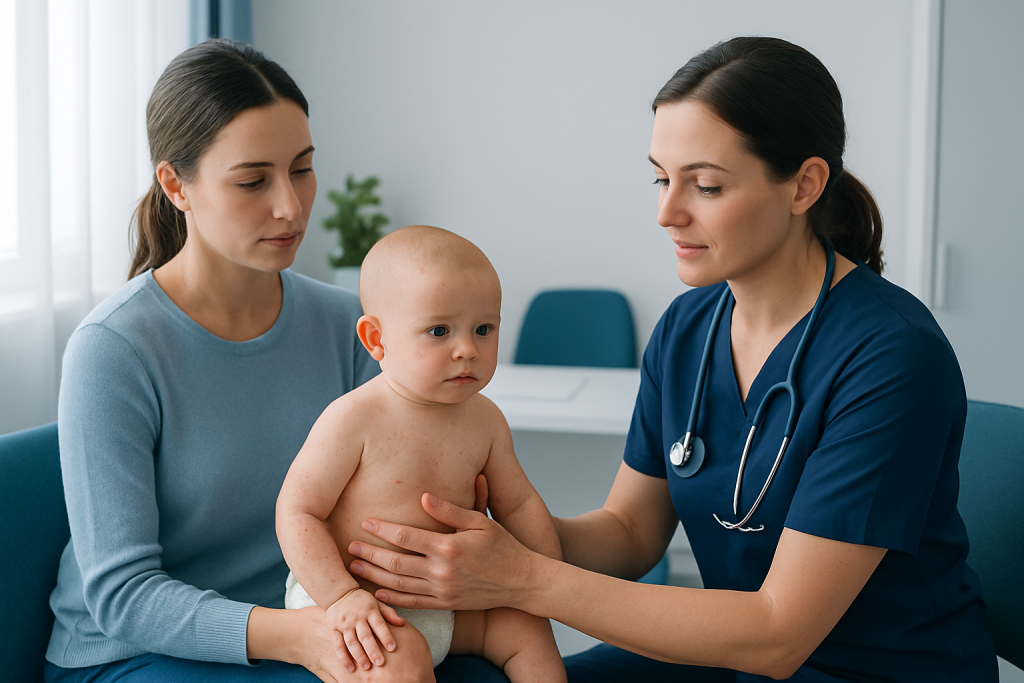
A viral rash is not a diagnosis by itself; it is a skin response that can happen with many infections. Different viruses affect the skin in different ways, sometimes directly and sometimes through the immune response that follows the infection.
Viruses commonly associated with rashes in babies include those that cause roseola, hand-foot-and-mouth disease, enteroviral illnesses, and some respiratory viruses. A baby may also develop a rash during or after a nonspecific viral fever, even when the exact virus is not identified.
Factors that can make viral rashes more likely to be noticed or more concerning include:
- Young age, especially in newborns and small infants
- Recent contact with siblings or caregivers who have an infection
- Exposure to daycare or crowded indoor settings
- Immature immune defenses
- Difficulty staying hydrated during illness
It is also important to remember that not every rash with a fever is viral. Allergic reactions, eczema, heat rash, bacterial infections, and occasional urgent conditions can look similar at first, which is why careful observation matters.
Diagnosis
Doctors usually diagnose a viral rash by combining the rash appearance with the baby’s overall symptoms and medical history. A single photo or description may not be enough, because many childhood rashes overlap in appearance.
During an evaluation, a clinician may ask when the rash started, whether the baby had a fever, whether the rash blanches when pressed, and whether there are other symptoms such as cough, mouth sores, vomiting, or feeding difficulty. They may also check hydration, breathing, alertness, and the baby’s age and vaccination history.
Most cases do not need advanced testing. However, if the baby is very young, appears unwell, has high or persistent fever, or the rash has an unusual pattern, the doctor may recommend blood tests, urine testing, or other studies to rule out more serious causes. The goal is not to label the rash quickly, but to make sure the baby is safe.
Treatment Options
There is no universal medicine that “cures” a viral rash, because the rash improves when the underlying infection resolves. Treatment is usually supportive and focused on keeping the baby comfortable, hydrated, and closely observed.
Common approaches may include:
- Offering frequent breast milk or formula feeds to support hydration
- Using fever comfort measures advised by a pediatrician
- Dressing the baby in soft, breathable clothing
- Keeping the skin clean and avoiding harsh soaps or fragranced products
- Monitoring for changes in feeding, alertness, or breathing
If the rash is itchy or the baby seems especially uncomfortable, a doctor may suggest additional care based on the cause. Antibiotics do not treat viral rashes unless there is a separate bacterial infection. Parents should avoid starting new creams or medicines without guidance, especially in infants, because baby skin is sensitive and reactions can be confusing.
Prevention & Self-care
Families cannot prevent every viral infection, but they can reduce exposure and support recovery. Hand hygiene remains one of the simplest and most useful steps, especially when older siblings, relatives, or childcare contacts have respiratory symptoms.
At home, self-care is mainly about watching the baby’s overall condition rather than focusing only on the rash. Parents can track wet diapers, feeding frequency, temperature trends, and whether the baby is more alert or more tired than usual. A rash that looks dramatic on the skin may still be part of a routine, self-limited illness if the baby is otherwise well.
Helpful measures include:
- Keeping the baby hydrated with regular feeds
- Avoiding overheating and heavy clothing
- Using only gentle, fragrance-free skin products if needed
- Following vaccination schedules to reduce certain viral illnesses
- Staying home and minimizing contact with others when the baby is sick, as advised by a clinician
For international families, it can be wise to keep a record of the baby’s symptoms, photos of the rash, and any medicines already given. That information can make a remote or in-person consultation more efficient if medical review becomes necessary.
When to See a Doctor
Most viral rashes improve without complications, but babies should be assessed promptly if the rash appears with signs that suggest the child may be more than mildly ill. Age matters: newborns and very young infants deserve a lower threshold for medical evaluation.
Seek medical advice if the baby has trouble breathing, is unusually sleepy, is hard to wake, feeds poorly, has fewer wet diapers, develops a high or persistent fever, or seems to be in pain. Medical review is also important if the rash includes purple spots that do not fade with pressure, swelling of the lips or face, blisters, or involvement of the eyes or mouth.
Parents should also contact a doctor if the rash is spreading quickly, if the diagnosis is uncertain, or if the baby has a chronic health condition or weakened immunity. When families are traveling, a qualified pediatric team can help decide whether the situation can be monitored or whether the baby needs immediate in-person care. Acibadem Health Point’s multidisciplinary specialists and JCI-accredited hospitals diagnose and treat this condition for international patients, with attention to clear communication and continuity of care.
Recovery and What to Expect
Recovery usually follows the course of the infection itself. In many babies, the fever eases first and the rash then begins to fade over the next several days. The skin may become lighter, drier, or slightly flaky before returning to normal.
Parents often notice that the baby’s energy and appetite improve before the rash disappears completely. That pattern is reassuring, provided the child continues to drink adequately and does not develop new symptoms. If the rash lingers, changes shape, or keeps returning, the baby should be reassessed to confirm that the cause is truly viral.
Follow-up is especially useful when the family is coordinating care across countries. A clear discharge plan, written symptom guidance, and photos taken during the illness can help the baby’s regular pediatrician or a local clinician continue care smoothly.
Frequently asked questions
01What does viral rash baby usually mean?
It usually refers to a rash that appears during or after a viral illness in an infant. The rash is often part of the body’s response to infection and may come with fever, congestion, or fussiness.
02How can parents tell if a baby’s rash is viral?
A viral rash often happens alongside cold-like symptoms or a recent fever and may spread over the body in a typical pattern. Even so, similar-looking rashes can have other causes, so a doctor may be needed if the baby is very young or unwell.
03Does a viral rash in babies need antibiotics?
Usually not, because antibiotics do not treat viruses. Treatment is generally supportive unless a doctor finds a separate bacterial infection.
04Can a baby with a viral rash go to daycare?
It depends on the illness, fever status, and daycare policies. A baby who still has fever, poor feeding, or is not feeling well should usually stay home until a clinician says it is reasonable to return.
05How long does a viral rash usually last in babies?
The rash often improves over several days as the infection resolves, though the exact timing depends on the virus and the baby’s overall health. If it lasts longer than expected or changes in appearance, medical advice is sensible.
06When is a baby’s rash an emergency?
Urgent help is needed if the baby has breathing trouble, purple non-blanching spots, severe sleepiness, seizures, signs of dehydration, or swelling of the face or lips. Newborns and very young infants with fever should also be assessed promptly.
This article is for general information only and is not a substitute for professional medical advice. Please consult a qualified doctor about your individual situation.
Explore treatments in Turkey — costs, top hospitals & a free quote
JCI-accredited · board-certified surgeons · reply within 24h
Add us as a Preferred Source to see more of our trusted health content across Google Search, AI Overviews and Discover.