

What Is Uterus Anteverted Means? A Complete Medical Guide

Key Takeaways
- An anteverted uterus is a forward-tilting uterus and is often a normal anatomical variation.
- It usually does not cause symptoms and does not need treatment by itself.
- Imaging or a pelvic exam may identify uterine position during routine evaluation.
- Symptoms such as pain, heavy bleeding, or fertility concerns may point to another condition that should be checked.
- Treatment, if needed, focuses on the underlying cause rather than the uterine position alone.
An anteverted uterus is a common and usually normal uterine position in which the uterus tilts forward toward the bladder. This guide explains what uterus anteverted means, how it is found, and when it matters for health or fertility.
Overview
When someone asks what uterus anteverted means, the simplest answer is that the uterus tilts forward toward the bladder instead of leaning backward toward the spine. For many women, this is just a normal anatomical shape, not a disease or a sign that something is wrong.
The uterus can sit in slightly different positions from person to person. An anteverted uterus is one of the most common positions. It is often discovered during a pelvic examination, ultrasound, or evaluation for another reason, such as menstrual symptoms, pregnancy care, or fertility assessment.
Because the term sounds technical, it can create unnecessary worry. In most cases, an anteverted uterus does not need treatment and does not affect daily life, sexual health, or the ability to become pregnant. What matters more is whether there are any related symptoms or other conditions that need attention.
Symptoms

By itself, an anteverted uterus usually causes no symptoms. Many women never know their uterus tilts forward until a clinician mentions it during an exam or imaging test.
If symptoms are present, they are often linked to another condition rather than the uterine position itself. Common concerns that may lead someone to seek medical advice include pelvic pain, painful periods, unusually heavy bleeding, pain during intercourse, or difficulty becoming pregnant.
It is helpful to separate an anatomical finding from a symptom. A forward-tilting uterus is generally a description of position, while pain, bleeding changes, or fertility problems deserve a broader evaluation to look for causes such as fibroids, endometriosis, adenomyosis, pelvic inflammatory disease, or hormonal imbalance.
Causes & Risk Factors
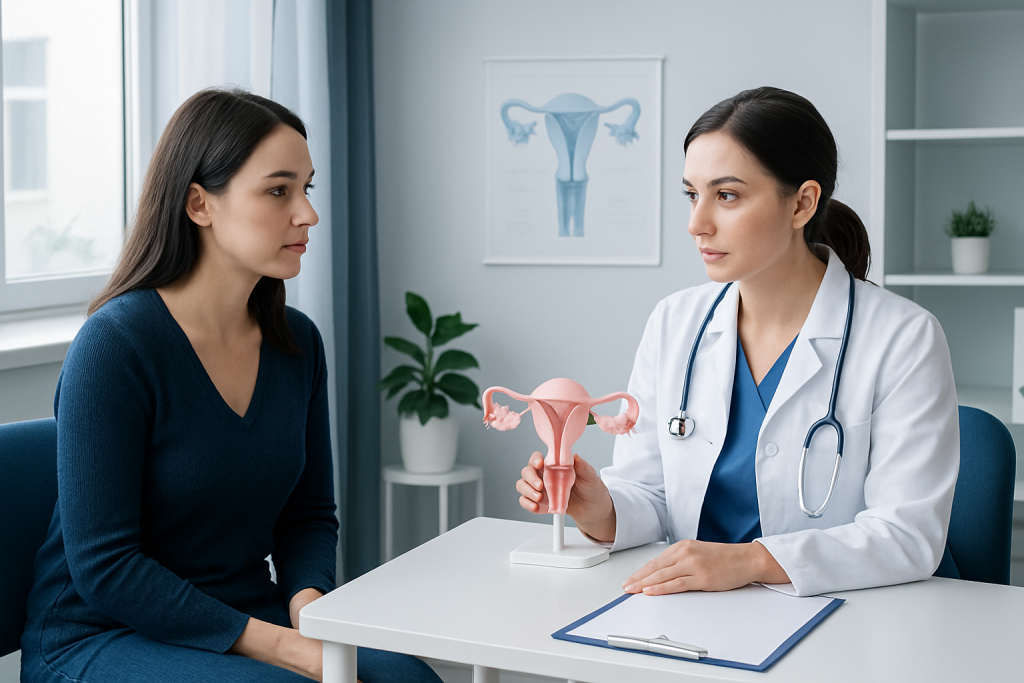
An anteverted uterus is often present from birth and simply reflects natural variation in pelvic anatomy. In that sense, it is not usually “caused” by lifestyle choices or an illness.
Some women may notice changes in uterine position over time due to pregnancy, childbirth, pelvic ligaments, or the support structures around the uterus. Scarring, pelvic masses, fibroids, and endometriosis can also influence how the uterus sits, although these conditions typically cause other findings as well.
Risk factors are not the same as causes, and many people with an anteverted uterus have none of the following. Still, a clinician may look more closely when there is a history of:
- Pelvic surgery or scarring
- Endometriosis or fibroids
- Repeated pelvic infections
- Pregnancy-related changes in pelvic support
- Unexplained pelvic pain or bleeding
Diagnosis
An anteverted uterus may be identified during a routine gynecologic examination. In many cases, a clinician can estimate uterine position by feeling the uterus through the abdomen and pelvis during a bimanual exam.
Ultrasound is commonly used when more detail is needed. It helps confirm the uterine position and also checks for fibroids, ovarian cysts, adenomyosis, or other structural findings that could explain symptoms. Other imaging tests are reserved for specific situations and are not necessary for everyone.
Diagnosis is usually straightforward, but the important question is not only where the uterus sits. A careful medical history helps determine whether the person is having symptoms that suggest another diagnosis. That broader assessment is what guides next steps.
Treatment Options
An anteverted uterus alone does not need treatment. If it is an incidental finding and the person feels well, no procedure or medication is typically required.
When symptoms are present, treatment depends on the underlying cause rather than the uterine position. For example, heavy menstrual bleeding may be managed differently from endometriosis-related pain or fibroids. The care plan should match the actual condition identified during evaluation.
Possible treatment approaches may include:
- Watchful waiting when the finding is normal and symptoms are absent
- Medication for pain, bleeding, or hormone-related conditions
- Treatment for infections if they are present
- Procedures or surgery for fibroids, adhesions, or other structural problems when appropriate
For women seeking fertility care, an anteverted uterus alone usually does not prevent conception. If pregnancy is delayed, clinicians typically look for other factors involving ovulation, tubes, sperm health, age, and uterine or pelvic conditions.
Prevention & Self-care
An anteverted uterus cannot usually be prevented because it is often a natural part of anatomy. Self-care is therefore less about changing uterine position and more about supporting overall gynecologic health.
Tracking menstrual cycles can help identify patterns that deserve medical review, especially if bleeding becomes heavier, cycles become irregular, or pain worsens over time. Gentle exercise, stress management, and adequate rest can support general well-being, although they do not change uterine orientation.
For women planning care from another country, it can help to bring previous ultrasound reports, surgical history, and menstrual notes when seeing a new specialist. Clear records make it easier to avoid duplicate testing and focus on what matters most.
When to See a Doctor
Medical review is sensible if a woman has pelvic pain, heavy or prolonged periods, pain with intercourse, or trouble conceiving. These symptoms may not be caused by an anteverted uterus itself, but they can signal conditions that should be assessed.
It is also appropriate to seek care if there is bleeding after sex, bleeding between periods, fever with Common Causes and Care" class="ahp-ilk">pelvic discomfort, or sudden severe pain. These symptoms do not mean an emergency in every case, but they should not be ignored.
Women who are unsure what an ultrasound report means can ask for a plain-language explanation from a gynecologist. If international care is being considered, multidisciplinary specialists and JCI-accredited hospitals such as Acibadem Health Point can help diagnose and treat gynecologic concerns for patients traveling from abroad.
Frequently asked questions
01What does uterus anteverted means in simple terms?
It means the uterus tilts forward toward the bladder. This is a common normal variation and is not usually a medical problem on its own.
02Is an anteverted uterus normal?
Yes, it is often completely normal. Many women have an anteverted uterus without any symptoms or health concerns.
03Can an anteverted uterus cause pain?
Usually it does not. If pain is present, doctors often look for another cause such as endometriosis, fibroids, or infection.
04Does an anteverted uterus affect fertility?
By itself, it usually does not affect fertility. If conception is delayed, the clinician will typically look for other reproductive factors and pelvic conditions.
05How is an anteverted uterus diagnosed?
It may be noted during a pelvic exam or confirmed with ultrasound. The test is often done while evaluating symptoms or for routine gynecologic care.
06Does an anteverted uterus need treatment?
Not usually. Treatment is only needed if there is another condition causing symptoms, such as fibroids or endometriosis.
This article is for general information only and is not a substitute for professional medical advice. Please consult a qualified doctor about your individual situation.
Joint and spine care in Turkey — expert assessment & treatment
JCI-accredited · board-certified surgeons · reply within 24h
Add us as a Preferred Source to see more of our trusted health content across Google Search, AI Overviews and Discover.


