What Is Swollen Thyroid? A Complete Medical Guide

Key Takeaways
- A swollen thyroid is an enlarged thyroid gland, not a diagnosis by itself.
- Common causes include iodine imbalance, thyroid nodules, autoimmune disease, and thyroiditis.
- Symptoms can include a visible neck lump, pressure, swallowing changes, and hormone-related signs.
- Diagnosis usually involves a physical exam, blood tests, and thyroid imaging.
- Treatment depends on the cause and may range from monitoring to medicine or surgery.
A swollen thyroid usually means the thyroid gland is enlarged, a condition often called a goiter. It can happen with normal thyroid function, an overactive or underactive thyroid, nodules, inflammation, or iodine-related problems.
Overview
A swollen thyroid means the thyroid gland has become larger than expected. The thyroid sits at the front of the neck and helps regulate many body functions through hormone production, so enlargement can sometimes be noticed as a fullness at the base of the neck or a sense of pressure in the throat.
People often search for “swollen thyroid” when they see a neck lump, feel discomfort while swallowing, or are told during an exam that the thyroid is enlarged. The word itself does not describe one single disease. In medical practice, it is usually a starting point for asking a more precise question: why is the gland enlarged, and is it affecting hormone levels or nearby structures?
Some thyroid enlargements are small and found only on examination or imaging. Others are more visible and may be associated with symptoms such as hoarseness, coughing, shortness of breath, or changes in energy, weight, and temperature tolerance. The next steps depend on whether the thyroid is functioning normally, underactive, or overactive, and whether there are nodules, inflammation, or other changes.
Symptoms
A swollen thyroid may be painless or may cause local symptoms from pressure in the neck. A person might notice a visible bulge near the lower part of the neck, tightness around a collar, or discomfort when turning the head. Some people first detect the change in a mirror or when a clinician feels the neck during a routine visit.
When enlargement is linked to hormone imbalance, broader symptoms can appear. An underactive thyroid may cause fatigue, constipation, dry skin, feeling cold, weight gain, or slowed thinking. An overactive thyroid may lead to palpitations, tremor, heat intolerance, anxiety, loose stools, or unintended weight loss.
- Visible fullness at the front of the neck
- Neck pressure or tightness
- Difficulty swallowing
- Hoarseness or voice change
- Shortness of breath, especially when lying down
- Symptoms of low or high thyroid hormone levels
Symptoms alone cannot determine the cause. A small enlargement can still be medically important, while a larger one may be harmless if carefully evaluated. That is why any new or changing thyroid swelling deserves proper assessment rather than guesswork.
Causes & Risk Factors

Several different conditions can lead to a swollen thyroid. In some parts of the world, the most common reason is iodine deficiency, since iodine is needed to make thyroid hormones. In other cases, the gland enlarges because it is working harder than usual, or because the tissue itself is inflamed, nodular, or affected by autoimmune disease.
Common causes include goiter from iodine imbalance, Graves’ disease, Hashimoto’s thyroiditis, thyroid nodules, thyroid cysts, and thyroiditis. Less commonly, enlargement may occur with thyroid cancer, certain medications, inherited conditions, or pituitary disorders that alter thyroid signaling. Sometimes more than one factor is present.
Risk can be higher in people with a family history of thyroid disease, autoimmune conditions, pregnancy or recent childbirth, prior neck radiation, older age, or a history of iodine deficiency. Certain medicines, such as some heart or psychiatric drugs, can also affect thyroid function in susceptible people. Because the thyroid responds to many internal and environmental influences, a careful history is often as important as the physical exam.
Diagnosis
Evaluation usually begins with a clinician asking when the swelling was noticed, whether it is changing, and whether there are symptoms of thyroid imbalance or pressure in the neck. During the physical exam, the neck is inspected and felt for size, tenderness, texture, and the presence of nodules. The examiner may also look for signs that suggest overactive or underactive thyroid function.
Blood tests are commonly used to measure thyroid-stimulating hormone (TSH) and, when needed, free T4 and other thyroid markers. These tests help show whether the gland is producing too much hormone, too little, or a normal amount. If inflammation or autoimmune disease is suspected, additional laboratory tests may be ordered.
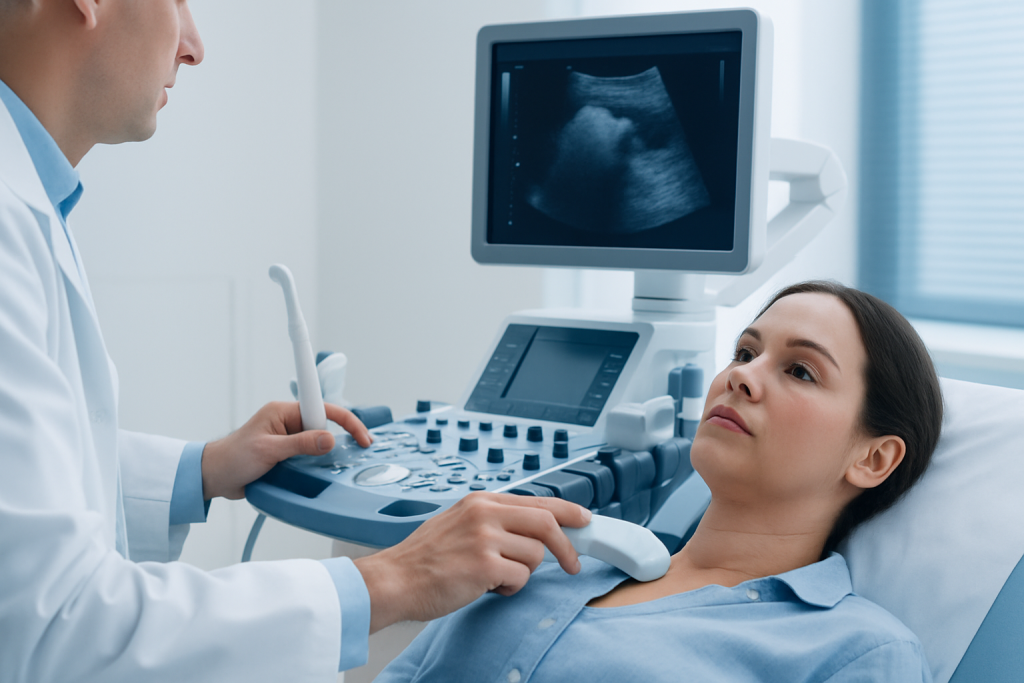
Imaging helps clarify the structure of the gland. A thyroid ultrasound is often the first scan because it can show enlargement, nodules, cysts, and features that may require closer follow-up. In selected situations, a radioactive iodine uptake scan, CT, MRI, or a fine-needle aspiration biopsy may be recommended to better understand the cause or rule out cancer.
Treatment Options
Treatment is tailored to the cause rather than the size alone. If the thyroid is mildly enlarged and hormone tests are normal, careful observation may be enough. This is especially true when ultrasound shows a stable pattern and there are no troubling symptoms.
When hormone levels are abnormal, treatment aims to restore balance. An underactive thyroid is commonly managed with hormone replacement, while an overactive thyroid may require medicines that reduce hormone production or block its effects. Some cases of thyroiditis improve with time and supportive care, though the approach depends on the exact type of inflammation.
For nodules, cysts, or goiters causing pressure symptoms, procedures may be considered. These can include draining a cyst, removing a suspicious nodule for biopsy, or surgery to reduce a large goiter. In some cases, radioactive iodine treatment may be appropriate for an overactive or enlarged thyroid, depending on the underlying condition and the patient’s overall health.
People seeking care from another country often benefit from a plan that combines diagnosis, treatment selection, and coordinated follow-up. That is particularly helpful when tests need to be timed, imaging results must be reviewed together, or recovery will continue at home with an international provider.
Prevention & Self-care
Not every swollen thyroid can be prevented, but some causes can be reduced through sensible habits and timely medical attention. Using iodized salt in regions where iodine deficiency is common may help support normal thyroid health, although excessive iodine is not recommended. It is also wise to avoid unverified supplements marketed for “thyroid support,” because some contain ingredients that can disturb thyroid function.
Self-care is mainly about monitoring and consistency. People with known thyroid disease should take prescribed medication as directed, keep follow-up appointments, and report new symptoms such as neck pressure, palpitations, or unexplained fatigue. If a clinician recommends repeat blood work or ultrasound, staying on schedule helps catch changes early.
- Keep regular follow-up if there is a history of thyroid disease
- Use iodine responsibly; more is not always better
- Do not start or stop thyroid-related medicines without medical advice
- Seek prompt review if a neck lump grows or becomes painful
- Note new symptoms such as voice change, swallowing difficulty, or breathing discomfort
For patients traveling for treatment, it helps to bring previous laboratory results, imaging discs or reports, medication lists, and a short timeline of symptoms. This makes it easier for the specialist team to understand what has already been done and what should happen next.
When to See a Doctor
Any new thyroid swelling should be assessed by a qualified clinician, especially if it is persistent, enlarging, or associated with symptoms. A doctor should also be seen if there are signs of hormone imbalance, such as persistent fatigue, heat intolerance, tremor, weight change, constipation, or a racing heartbeat. Even when symptoms are mild, an evaluation can clarify whether the enlargement needs treatment or only monitoring.
Urgent medical attention is appropriate if swelling is accompanied by trouble breathing, significant trouble swallowing, sudden voice changes, or rapid enlargement of the neck. Painful swelling with fever or marked tenderness also needs prompt review, as it may indicate thyroid inflammation or another condition requiring faster treatment.
If the swelling is confirmed to be from a thyroid condition, an endocrinologist is often the most helpful specialist to guide next steps. In complex cases, multidisciplinary care may be useful, and Acibadem Health Point’s multidisciplinary specialists and JCI-accredited hospitals diagnose and treat thyroid conditions for international patients in a coordinated way.
Frequently asked questions
01Is a swollen thyroid the same as a goiter?
Often, yes. Goiter is the medical term for an enlarged thyroid gland, which is one common meaning of “swollen thyroid.” However, a swollen thyroid can also be described when the gland is enlarged for a specific reason such as nodules, inflammation, or an autoimmune condition.
02Can a swollen thyroid go away on its own?
Sometimes it can improve if the cause is temporary, such as certain forms of thyroiditis. In other cases, enlargement remains stable or needs treatment, so it should not be assumed to disappear without evaluation.
03Does a swollen thyroid always mean abnormal thyroid hormones?
No. The thyroid can be enlarged while hormone tests are normal. Blood work is still important because it helps show whether the gland is underactive, overactive, or functioning normally.
04What tests are usually done first?
A clinician typically starts with a neck exam and thyroid blood tests such as TSH, then may order an ultrasound. If a nodule looks suspicious or the cause is unclear, further imaging or a biopsy may be recommended.
05When is surgery needed for a swollen thyroid?
Surgery is considered when the enlargement causes pressure symptoms, when a nodule is suspicious, or when other treatments are not suitable. The decision depends on the cause, the size of the gland, and the patient’s overall health.
06Can stress cause a swollen thyroid?
Stress does not usually directly enlarge the thyroid, but it can affect how symptoms are noticed and may coexist with thyroid disease. If a neck swelling is present, it should still be medically evaluated rather than attributed to stress alone.
This article is for general information only and is not a substitute for professional medical advice. Please consult a qualified doctor about your individual situation.
Medical weight-loss options in Turkey — costs & eligibility
JCI-accredited · board-certified surgeons · reply within 24h
Add us as a Preferred Source to see more of our trusted health content across Google Search, AI Overviews and Discover.