What Is Phaco Cataract Extraction? A Complete Medical Guide

Key Takeaways
- Phaco cataract extraction is the most common modern technique for removing a cataract.
- The procedure uses a small incision, ultrasound energy, and an intraocular lens implant.
- Blurred vision, glare, and difficulty with night driving are common signs that cataracts may be affecting daily life.
- An eye examination is needed to confirm whether cataract surgery is appropriate and to plan lens selection.
- Recovery is usually straightforward, but patients should follow aftercare instructions and attend follow-up visits.
- People traveling for treatment should plan for pre-op testing, postoperative checks, and safe return travel around medical advice.
Phaco cataract extraction is a standard, minimally invasive cataract surgery that uses ultrasound energy to break up and remove the clouded natural lens, then replaces it with an artificial intraocular lens. It is commonly recommended when cataracts begin to interfere with daily activities such as reading, driving, or seeing in low light.
Overview
Phaco cataract extraction, also called phacoemulsification, is a modern operation used to remove a cataract from the eye. In simple terms, the surgeon breaks the cloudy natural lens into tiny pieces with ultrasound energy, removes those pieces through a very small incision, and places a clear artificial lens in the same position.
This procedure is widely used because it is efficient, precise, and usually associated with a relatively quick recovery. For many people, it is the point at which everyday life becomes easier again: road signs are clearer, faces are easier to recognize, and reading no longer feels like a constant effort.
Cataracts usually develop gradually. Because of that, people sometimes adapt to vision changes without realizing how much the cataract is affecting them. A proper eye assessment helps determine whether surgery is likely to improve vision and quality of life.
Symptoms
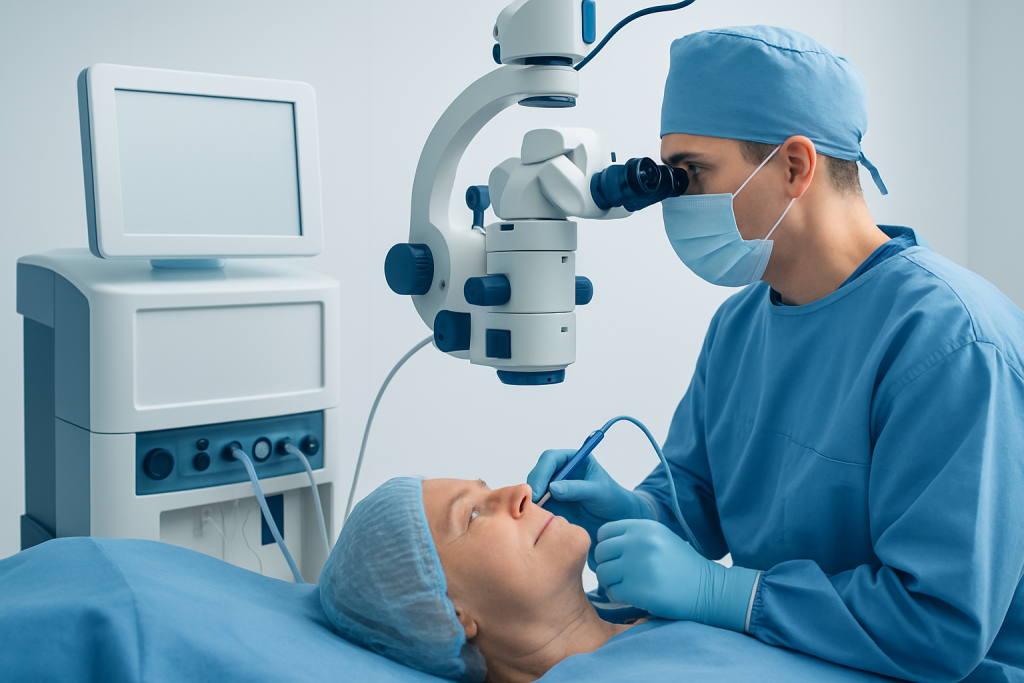
Cataracts do not usually cause pain, redness, or sudden vision loss in their typical early stages. Instead, the changes can feel subtle at first and then become more noticeable over time. Many people describe vision as cloudy, dim, or as if they are looking through a smudged window.
Common symptoms include blurred vision, increased glare from headlights or sunlight, difficulty seeing at night, colors appearing less vivid, and frequent changes in eyeglass prescription. Some people also notice halos around lights or double vision in one eye.
- Blurred or hazy vision
- Glare and sensitivity to bright light
- Difficulty with night driving
- Fading or yellowing of colors
- Needing stronger glasses more often
These symptoms can overlap with other eye conditions, so a full eye exam is important before assuming cataracts are the only cause.
Causes & Risk Factors

The most common cause of cataracts is age-related change in the lens. Over time, proteins in the lens can clump together and scatter light, making vision less clear. This process can happen slowly and may affect one eye more than the other at first.
Other factors can increase the likelihood of developing cataracts earlier or more quickly. These include diabetes, long-term use of corticosteroid medications, eye injury, previous eye surgery, excessive sunlight exposure, smoking, and a family history of cataracts. Some cataracts are present at birth or develop because of other medical conditions.
Although risk factors matter, they do not predict exactly when surgery will be needed. The decision is usually based on how much the cataract is affecting daily tasks, safety, and independence rather than the appearance of the lens alone.
Diagnosis
Diagnosis begins with a detailed eye examination. An ophthalmologist will ask about vision changes, medical history, medications, and how symptoms affect work, reading, driving, or travel. This conversation is important because treatment decisions are based not just on test results, but also on real-life impact.
The eye doctor may check visual acuity, examine the lens with a slit lamp, measure eye pressure, and inspect the retina and optic nerve. In some cases, additional tests are needed to rule out other causes of blurred vision or to prepare for surgery planning.
If surgery is being considered, the eye team will also measure the eye carefully to choose an intraocular lens. For patients traveling from another country, it is helpful to arrange these assessments early so that surgery dates, aftercare, and follow-up visits are coordinated without unnecessary delay.
Treatment Options
When cataracts begin to interfere with daily life, surgery is the main treatment. Phaco cataract extraction is the most common technique. During the procedure, the surgeon creates a small opening in the eye, uses ultrasound to fragment the cloudy lens, removes the fragments, and inserts an artificial lens that stays in place permanently.
The operation is often performed with local anesthesia and may be combined with a mild sedative, depending on the patient and the surgical setting. Most people go home the same day. The exact approach can vary based on the eye’s anatomy, the maturity of the cataract, and whether other eye conditions are present.
Many patients ask whether cataracts can be treated with drops, supplements, or glasses alone. These measures may help with comfort or temporary visual function, but they do not remove the cataract. Glasses can sometimes improve vision for a while, yet surgery is the only way to restore clarity by replacing the cloudy lens.
In some cases, the surgeon may discuss lens options that can affect near, intermediate, or distance vision. The best choice depends on the patient’s eye health, lifestyle, and visual priorities. For international patients, a thoughtful preoperative discussion is especially valuable because lens planning is more difficult to adjust after returning home.
Prevention & Self-care
Not every cataract can be prevented, especially those related to aging. Still, healthy habits can support overall eye health and may help reduce some risk factors associated with earlier cataract formation.
Protecting the eyes from ultraviolet light, stopping smoking, managing diabetes carefully, and having regular eye examinations are sensible steps. People who use corticosteroids for long periods should do so under medical supervision and discuss eye monitoring with their doctor.
For daily life before surgery, practical adjustments can make vision safer and more comfortable. Stronger lighting, anti-glare lenses, and careful attention when driving at night may help. If vision is becoming unreliable, it is safer to limit activities that require sharp sight until an eye specialist has reviewed the situation.
Recovery and Aftercare
Recovery after phaco cataract extraction is often smooth, but healing still needs protection and follow-up. Many people notice clearer vision within days, though vision may continue to settle for several weeks depending on the eye and the type of cataract removed.
After surgery, the eye team usually provides instructions about using prescribed drops, avoiding rubbing the eye, and protecting the eye from dust or accidental pressure. Temporary symptoms such as mild irritation, watery eyes, or light sensitivity can happen as the eye heals.
Patients who are traveling home after surgery should ask their care team when it is safe to fly, drive, or resume normal routines. It is wise to plan enough time near the surgical center for postoperative checks, because follow-up visits help confirm that healing is on track and that the new lens is working as expected.
Acibadem Health Point’s multidisciplinary specialists and JCI-accredited hospitals diagnose and treat cataracts for international patients, with care pathways designed to support both surgery and follow-up planning.
When to See a Doctor
An eye specialist should be seen when vision changes begin to interfere with daily life, even if the symptoms seem mild. Reading, cooking, recognizing faces, walking safely at night, or driving may become harder before the person realizes how much the cataract has progressed.
Prompt medical attention is especially important if vision changes come on suddenly, if there is eye pain, redness, flashes of light, a curtain-like shadow, or a sudden increase in floaters. Those symptoms can suggest another eye problem that needs urgent evaluation.
People considering surgery should also seek individualized advice if they have diabetes, glaucoma, previous eye surgery, or other medical conditions. A qualified ophthalmologist can explain whether phaco cataract extraction is appropriate and what results are realistic for that specific eye.
Frequently asked questions
01What is phaco cataract extraction?
Phaco cataract extraction is a cataract surgery that uses ultrasound energy to break up and remove the cloudy natural lens of the eye. The surgeon then replaces it with an artificial intraocular lens to restore clearer vision.
02Is phaco cataract extraction the same as cataract surgery?
It is one of the main forms of cataract surgery and the technique used most often today. People sometimes use the terms interchangeably, although there are other surgical methods in specific situations.
03How long does recovery usually take?
Many people notice improved vision within a few days, but full healing can take several weeks. The timeline varies depending on the eye’s condition, other health issues, and how closely postoperative instructions are followed.
04Does cataract surgery hurt?
Most patients feel pressure or mild discomfort rather than pain during the procedure because the eye is numbed. Afterward, there may be short-lived irritation or light sensitivity, which usually improves with healing.
05Can both eyes be treated with phaco cataract extraction?
Yes, but surgeons usually operate on one eye at a time and schedule the second eye later if needed. This allows the first eye to heal and helps the doctor plan the second procedure safely.
06Do all cataracts need surgery right away?
No, surgery is usually recommended when cataracts begin to interfere with daily activities or safety. If vision is still manageable, an eye doctor may suggest monitoring and updating glasses for a while.
07What should international patients plan before traveling for cataract surgery?
They should arrange preoperative testing, understand the postoperative drop schedule, and leave time for follow-up visits before returning home. It is also important to confirm travel plans with the surgical team so recovery is not rushed.
This article is for general information only and is not a substitute for professional medical advice. Please consult a qualified doctor about your individual situation.
Explore treatments in Turkey — costs, top hospitals & a free quote
JCI-accredited · board-certified surgeons · reply within 24h
Add us as a Preferred Source to see more of our trusted health content across Google Search, AI Overviews and Discover.