

What Is Sunburn That Blisters? A Complete Medical Guide
- 9 min read
- Published November 27, 2026
Key Takeaways
- Blistering sunburn is a second-degree skin injury, not just a mild burn.
- Do not pop the blisters, since the skin covering them helps protect against infection.
- Cool compresses, gentle cleansing, and moisturizers can ease discomfort while the skin heals.
- Seek medical advice for widespread blisters, dehydration symptoms, infection, or burns involving the face, eyes, or genitals.
- The best treatment is prevention: sunscreen, protective clothing, shade, and avoiding peak sun hours.
Sunburn that blisters is a deeper form of sunburn in which the skin has been damaged enough to form fluid-filled blisters. It usually improves with careful home care, but large areas, severe pain, fever, or signs of infection should be evaluated by a doctor.
Overview
Sunburn that blisters is a sign that ultraviolet (UV) radiation has injured the skin more deeply than a simple red or tender burn. When blistering appears, the outer skin layers and the tissue beneath them have been damaged enough to collect fluid, which is the body’s way of protecting the area while it heals.
This type of sunburn can happen after intense sun exposure, especially on fair or sensitive skin, but it can affect anyone. It is often painful, and the skin may feel hot, tight, swollen, or extremely tender for several days. Although many cases heal at home, blistering should be taken seriously because it increases the risk of dehydration, infection, and uneven healing if the skin is irritated or picked at.
For people traveling, swimming, or spending long periods outdoors, blistering sunburn can disrupt plans and sometimes require medical attention away from home. Knowing what it is, how to care for it, and which warning signs matter helps people make calm, informed decisions about whether self-care is enough or a doctor’s assessment is needed.
Symptoms
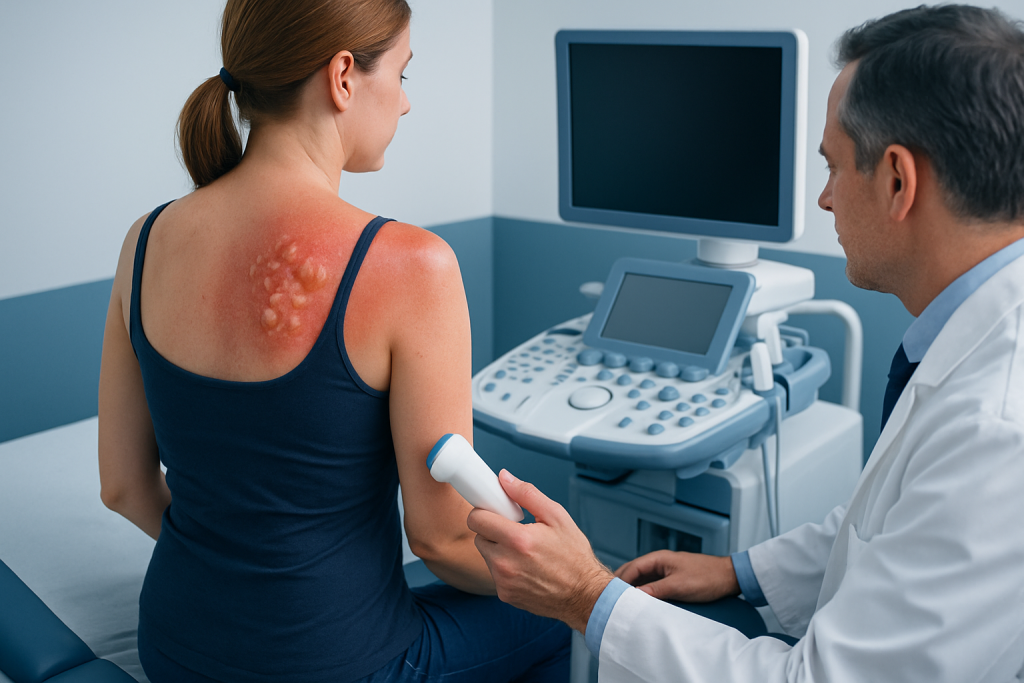
The first signs usually appear within hours after sun exposure, although the skin may continue to worsen over the next day. The affected area often becomes very red, warm, and painful before blisters form. These blisters are small or large fluid-filled pockets that may be clear or slightly cloudy.
Other symptoms can include swelling, throbbing, itching, and tenderness so intense that clothing or shower water feels uncomfortable. In more severe cases, the person may also feel tired, shaky, nauseated, or unwell, especially if the burn covers a large area of skin.
Symptoms that deserve extra attention include:
- Blisters on the face, hands, feet, or genitals
- Fever, chills, dizziness, or headache
- Signs of dehydration such as dry mouth, reduced urination, or weakness
- Increasing redness, pus, or worsening pain around the blisters
If a child, older adult, or someone with a health condition develops blistering sunburn, the threshold for medical advice should be lower, since fluid balance and skin healing can be affected more easily.
Causes & Risk Factors

Blistering sunburn occurs when UV radiation damages skin cells faster than the body can repair them. The injury is not caused only by high temperatures; it is mainly the result of UV exposure from the sun or from artificial sources such as tanning devices. Reflection from water, sand, snow, or concrete can intensify exposure even when the weather feels mild.
Certain factors make blistering more likely. These include fair skin, limited prior sun exposure, being near the equator or at high altitude, spending a long time outdoors, and using sunscreen too late or not reapplying it. Some medicines and skin products can also make skin more sensitive to sunlight.
Risk is higher when people do not recognize how quickly UV damage builds up. A cloudy day, a cool breeze, or time spent driving, sightseeing, or sitting by a window can still lead to significant exposure. For international travelers, changing climates and unfamiliar sun intensity can make the first few days of a trip especially risky if protection habits are not adjusted.
Diagnosis
Sunburn that blisters is usually diagnosed by a doctor through a visual examination and a discussion of recent sun exposure. In many cases, no special test is needed. The main task is to judge how severe the burn is, whether dehydration or infection is present, and whether the skin injury looks typical of sunburn or may be something else.
Doctors may ask about how long the skin was exposed, whether sunscreen was used, any medicines that increase sensitivity, and whether symptoms such as fever, eye pain, vomiting, or severe swelling are present. They will also look for clues that the blistering is spreading unusually, which could suggest another skin condition or a more serious burn.
People seeking care while traveling should bring a list of medications if possible and describe any home treatments already used. This helps the clinician advise on safe wound care and on whether follow-up is needed after returning home.
Treatment Options
Treatment focuses on comfort, protecting the skin barrier, and preventing infection while the area heals. Cool compresses or a cool bath can reduce heat and pain, but ice should not be placed directly on the skin. Gentle patting dry is preferred after washing, and mild, fragrance-free moisturizers may help if the skin is intact.
Blisters should generally be left alone. Popping them can open the skin to bacteria and slow healing. If a blister breaks on its own, the area should be washed gently with clean water and mild soap, then covered with a non-stick dressing. A doctor may recommend specific wound care if the blister is large, painful, or in a sensitive location.
Pain relief may be needed, and a clinician can help choose an appropriate option based on age, medical history, and other medicines. Drinking enough fluids is also important, particularly if the sunburn is extensive or the person has been sweating or feeling unwell.
Medical treatment may be needed when the burn is severe, when the skin is infected, or when pain and swelling are difficult to control. In those situations, a doctor may assess for complications and advise a more structured wound-care plan rather than relying only on home remedies.
Prevention & Self-care
Prevention works best when it becomes part of the day’s routine rather than an afterthought. Broad-spectrum sunscreen, protective clothing, a wide-brimmed hat, and sunglasses all help reduce UV injury. Shade matters too, especially during the hours when sunlight is strongest.
Self-care after a burn should be simple and gentle. The skin should be kept out of the sun until it has healed, and loose clothing can help avoid friction. It is best to avoid peeling skin, heavy scrubbing, numbing sprays, and home remedies that may irritate the area. Moisturizers or aloe-based products may be soothing if they are fragrance-free and tolerated well.
Travelers can lower risk by checking the local UV index, carrying sunscreen in a day bag, and reapplying after swimming or sweating. When a trip includes beaches, mountain activities, or long outdoor transfers, planning sun protection ahead of time can prevent a painful interruption to the itinerary.
Helpful habits include:
- Applying sunscreen before going outside
- Reapplying as directed on the label and after water exposure
- Choosing clothing that covers shoulders, chest, and legs when possible
- Taking breaks in shade or indoors during peak sun
When to See a Doctor
Medical evaluation is a good idea when blistering sunburn is widespread, very painful, or affecting a child, older adult, or person with a chronic medical condition. A doctor should also be seen if the face, eyes, hands, feet, or genitals are involved, since these areas may need more careful assessment.
Urgent care is appropriate if there are signs of infection such as increasing redness, warmth, pus, or red streaks; if the person has a high fever; or if they feel faint, confused, or unable to drink enough fluids. Medical review is also important when the skin injury is not clearly sunburn, when there is a chemical exposure, or when the burn followed tanning bed use.
People recovering far from home should not hesitate to seek local medical help, especially if travel plans make it hard to monitor symptoms closely. If a specialist opinion is needed, Acibadem Health Point’s multidisciplinary specialists and JCI-accredited hospitals diagnose and treat this condition for international patients, with care coordinated around safe recovery and follow-up.
Recovery and Healing
Most blistering sunburn improves gradually over several days to two weeks, depending on the depth of injury and the size of the affected area. The skin may peel as it heals, and temporary color changes are common. This can look dramatic, but it is often part of the normal recovery process.
The healing phase is a time to protect the area from further irritation. Sun exposure, scratching, and tight clothing can prolong discomfort and make the skin more vulnerable. If the person must go outdoors, the healing skin should be covered carefully once the blistered area is no longer open and raw.
If the sunburn keeps recurring, it may be a sign that daily sun habits need to change. Repeated severe burns add up over time and increase long-term skin damage, so prevention is not only about comfort today but also about skin health in the years ahead.
Frequently asked questions
01What exactly is sunburn that blisters?
It is a more severe sunburn in which the skin damage is deep enough to cause fluid-filled blisters. These blisters are the body’s protective response while the skin heals. It usually means the burn needs more careful care than a mild red sunburn.
02Should blisters from sunburn be popped?
No, they should generally be left intact. The blister roof helps protect the area from infection and supports healing. If a blister breaks on its own, the skin should be cleaned gently and covered with a non-stick dressing.
03How long does blistering sunburn take to heal?
Many cases begin to improve over several days, but full healing can take one to two weeks or longer if the burn is large. The skin may peel as it recovers. Healing time depends on how deep the injury is and whether the area gets irritated again.
04Can sunburn that blisters cause fever or chills?
Yes, severe sunburn can sometimes be accompanied by fever, chills, or feeling generally unwell. These symptoms are more concerning when the burn is extensive or when dehydration is present. A doctor should evaluate those symptoms, especially if they are getting worse.
05What is the safest way to treat blistering sunburn at home?
Cool the skin gently, keep it clean, stay hydrated, and avoid popping the blisters. Loose clothing and fragrance-free moisturizers may help reduce irritation. If pain is severe, the area is widespread, or infection seems possible, medical advice is important.
06How can future blistering sunburn be prevented?
Use broad-spectrum sunscreen, wear protective clothing, and seek shade during strong sun. Reapply sunscreen as directed, especially after swimming or sweating. Checking the UV index and planning for reflection from water, sand, or snow can also help reduce risk.
This article is for general information only and is not a substitute for professional medical advice. Please consult a qualified doctor about your individual situation.
Persistent digestive symptoms? Get evaluated in Turkey
JCI-accredited · board-certified surgeons · reply within 24h
Add us as a Preferred Source to see more of our trusted health content across Google Search, AI Overviews and Discover.



How can we help you today?
Meet an Acibadem specialist by secure video, before you travel.
Book a video visit