

What Is Blisters in Sunburn? A Complete Medical Guide
- 9 min read
- Published November 27, 2026
Key Takeaways
- Blisters in sunburn are a sign of a deeper burn and should not be popped.
- Cool the skin, protect the area, and keep it clean to support healing.
- Avoid further sun exposure until the skin has fully recovered.
- Seek medical advice if blisters are extensive, very painful, or show signs of infection.
- Children, older adults, and people with weakened immunity may need earlier assessment.
Blisters in sunburn usually mean the skin has been damaged more deeply than with a mild sunburn. They often heal with simple care, but larger, widespread, or infected blisters need medical review.
Overview
Blisters in sunburn are fluid-filled bubbles that form when ultraviolet (UV) damage causes the top layers of skin to separate. In practical terms, they usually indicate a more severe sunburn than simple redness and tenderness. The skin is trying to protect and repair itself, but the area is also more vulnerable to pain, infection, and dehydration.
For most people, sunburn blisters heal with careful home care and time. The main priorities are to cool the skin, avoid further UV exposure, and let the blisters remain intact as a natural protective covering. If the burn covers a large area, affects the face or genitals, or is accompanied by fever, weakness, or increasing pain, a clinician should assess it.
For international travelers, sunburn can develop quickly after arrival in a sunny climate, especially after flights, boat trips, beach days, or sightseeing with stronger-than-expected UV levels. A person may not realize the skin is overexposed until the following day, when blistering appears and makes movement, sleep, and travel plans uncomfortable. That is why early care matters even when the injury seems minor at first.
Symptoms
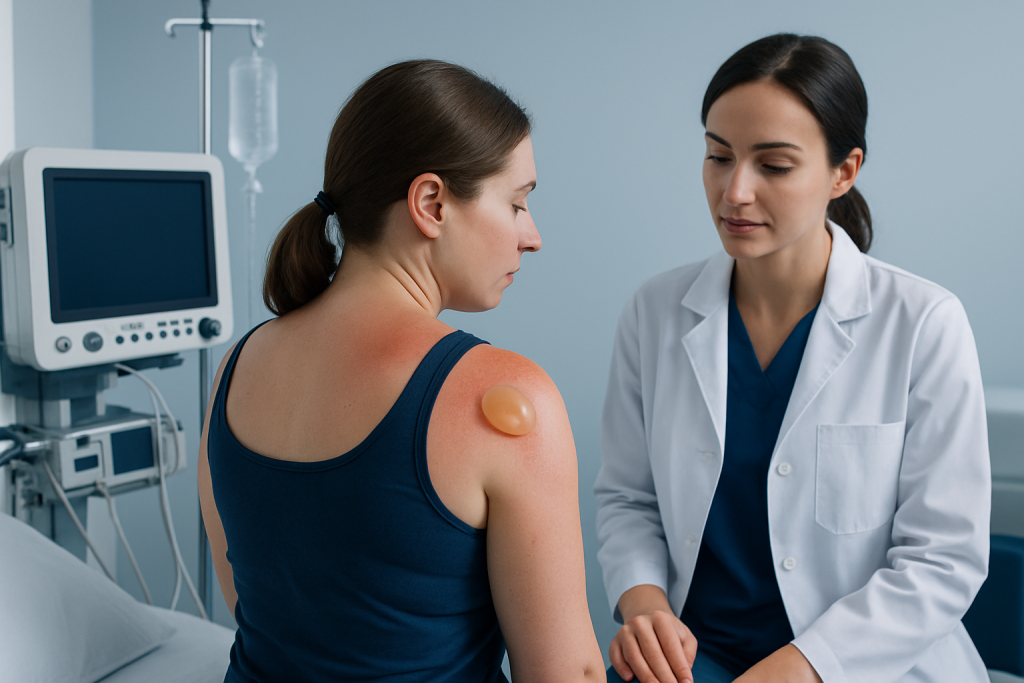
Sunburn with blisters usually starts with the familiar signs of redness, warmth, tenderness, and swelling. As the injury progresses, small or larger fluid-filled blisters may appear within several hours to a day or two. The skin can feel tight, itchy, or unusually painful, and clothing may rub uncomfortably over the affected area.
Other symptoms can accompany a severe sunburn. These may include headache, fatigue, nausea, chills, fever, or lightheadedness, especially if the burn is extensive. In some cases, the skin may peel after the blisters settle, which is part of the healing process and should not be forced.
Blisters can be single, scattered, or grouped together. They often contain clear fluid, although the appearance may change if the skin is irritated or infected. Signs that deserve prompt medical attention include pus, increasing redness around the area, a bad smell, severe swelling, or pain that is worsening rather than improving.
Causes & Risk Factors
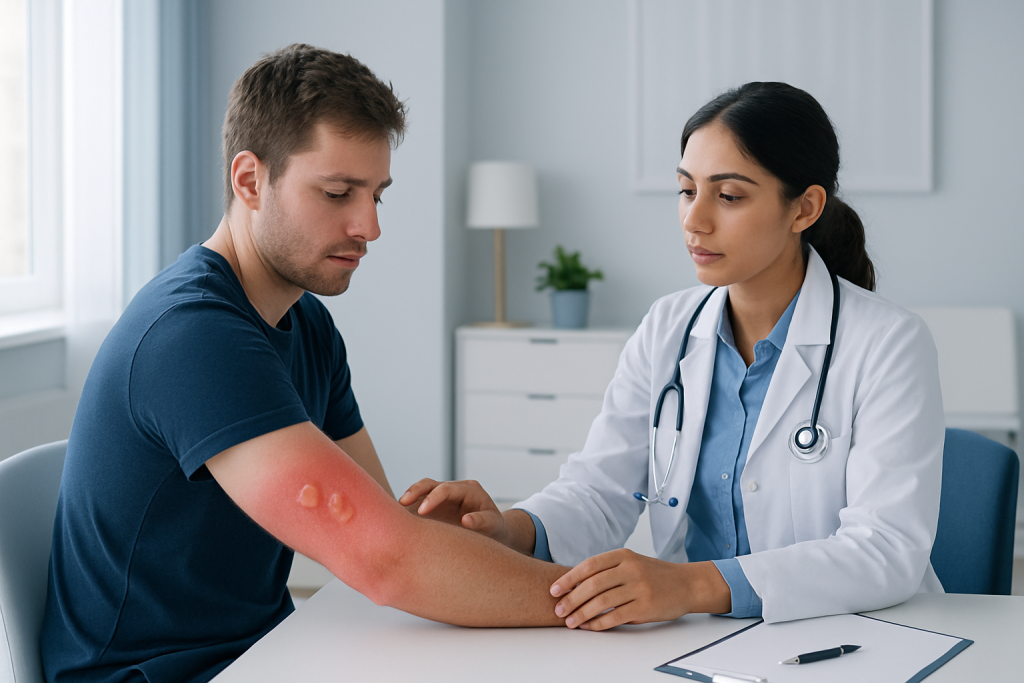
Blisters in sunburn happen when the skin receives enough UV radiation to injure the surface and underlying layers. This can occur after prolonged sun exposure, but it can also happen during shorter exposure if the UV index is high, the skin is unprotected, or reflective surfaces such as water, sand, snow, or glass intensify exposure.
Several factors increase the chance of blistering. Fair or sensitive skin, a history of previous sunburns, lack of sunscreen, missed reapplication, certain medications that increase photosensitivity, and being at higher altitudes can all contribute. Children, people with reduced mobility, and those who cannot easily move out of the sun are also more vulnerable.
Travel routines can raise risk in subtle ways. A visitor may spend more time outdoors than usual, underestimate local UV strength, or forget protective clothing during a busy day of sightseeing. Because sunburn often develops gradually, the skin may already be injured by the time the first discomfort is noticed.
- High UV index or midday sun exposure
- Inadequate sunscreen use or delayed reapplication
- Lightly pigmented or sensitive skin
- Reflective environments such as beach, water, or snow
- Photosensitizing medicines or skin products
Diagnosis
In most cases, a doctor diagnoses sunburn blisters by looking at the skin and asking about recent sun exposure. The pattern, location, and appearance of the rash usually make the cause clear. Medical review is especially useful if the person is unsure whether the injury is a simple burn, an infection, an allergic reaction, or another skin condition.
Health professionals also check for deeper injury and complications. They may ask about fever, hydration, pain level, medication use, and whether the blisters are widespread or only in one area. If the skin looks infected or the person seems unwell, further evaluation may be needed.
Diagnostic tests are not commonly required for straightforward cases. Instead, the emphasis is on assessing the extent of the burn and making sure the patient can heal safely at home or in a monitored setting. For a traveler far from home, this can be an important step in deciding whether care can continue locally or whether follow-up is needed after returning home.
Treatment Options
Treatment for blisters in sunburn focuses on comfort, protection, and prevention of complications. Cool compresses or a brief cool bath or shower can ease the heat in the skin. After cooling, the area should be patted dry gently rather than rubbed. A fragrance-free moisturizer or aloe-based product may help soothe surrounding skin if it does not sting.
The blisters should generally be left intact. They act like a natural dressing and reduce infection risk. If a blister opens on its own, the area should be washed gently with mild soap and water, then covered with a clean, nonstick dressing. Tight bandages, strong antiseptics, and peeling skin should be avoided unless a clinician advises otherwise.
Pain relief may be recommended in general terms, and a doctor can advise on the safest options based on age, other conditions, and medications already being taken. Plenty of fluids are important, especially if the burn is extensive or the person feels weak. A clinician may also recommend wound care if the blisters are large, numerous, or located on areas that are prone to friction.
More serious burns may require in-person treatment, especially if the skin is raw over a broad area or if infection is suspected. In that situation, the priority is to prevent further tissue damage and to support healing with appropriate dressing care and follow-up.
Prevention & Self-care
The most effective way to prevent sunburn blisters is to reduce skin exposure before damage starts. Broad-spectrum sunscreen, protective clothing, a hat, sunglasses, and shade all work together better than any single measure alone. Sunscreen should be reapplied as directed, especially after swimming or sweating.
Timing matters as well. The sun tends to be strongest in the middle of the day, so planning outdoor activity earlier or later can reduce risk. People who are traveling should check the local UV index rather than relying on temperature, because cool weather can still produce intense UV exposure.
Self-care after a sunburn should be simple and gentle. Avoid picking at blisters, do not apply ice directly to the skin, and skip products that contain alcohol or strong fragrance if they sting. Wearing loose, soft clothing can reduce friction, and resting indoors away from sunlight gives the skin a better chance to recover.
- Use broad-spectrum SPF and reapply regularly
- Seek shade, especially during peak UV hours
- Wear long sleeves, a brimmed hat, and UV-protective sunglasses
- Stay hydrated and rest while the skin heals
- Avoid tanning beds and “just a little more sun” during recovery
When to See a Doctor
Medical review is advisable if the blistering is extensive, very painful, or affecting sensitive areas such as the face, hands, feet, or genitals. A doctor should also assess the skin if the person has signs of dehydration, fever, confusion, or trouble keeping fluids down. These features suggest the burn is more than a simple surface injury.
Attention is also important if the blisters become cloudy, leak pus, develop a growing red border, or are accompanied by increasing warmth and tenderness. Those changes may indicate infection. People with diabetes, immune system problems, poor circulation, or a history of slow wound healing should seek care earlier rather than waiting.
If sunburn blisters appear during travel, a local medical visit can be worthwhile even if the person plans to fly home soon. A clinician can help determine whether the skin is safe for travel, whether dressing changes are needed, and how to monitor the area after returning home. Acibadem Health Point’s multidisciplinary specialists and JCI-accredited hospitals also diagnose and treat this condition for international patients.
Recovery and Everyday Life
Healing time depends on the depth and size of the burn, but many sunburn blisters improve over several days and then peel as the skin renews itself. During that period, the area may remain sensitive to sun, friction, and heat. A gradual return to normal activities is usually more comfortable than trying to push through pain.
It is wise to protect the healing skin from sunlight for weeks after the visible burn settles. New skin is delicate and may darken or scar more easily if exposed too soon. Clothing, shade, and sunscreen on the surrounding areas can help reduce repeat injury while the skin regains strength.
If the burn leaves ongoing discoloration, persistent tenderness, or repeated blistering after minimal exposure, a clinician should evaluate it. That kind of pattern may point to unusually sensitive skin, medication-related photosensitivity, or another underlying issue that deserves medical attention.
Frequently asked questions
01Are blisters in sunburn normal?
They can happen when the skin has been burned more deeply than in a mild sunburn. While they are a recognized sign of UV injury, they still deserve careful handling because the skin is vulnerable while it heals.
02Should sunburn blisters be popped?
No, they should usually be left alone. Popping a blister increases the chance of infection and can slow healing; if one opens on its own, it should be cleaned gently and covered with a clean dressing.
03How long do sunburn blisters take to heal?
Many improve over several days, with peeling afterward as the skin renews itself. Larger or deeper burns may take longer, especially if the area is repeatedly exposed to sun or friction.
04What can be put on sunburn blisters?
Cool compresses, gentle moisturizing products that do not sting, and clean nonstick dressings for open areas are commonly used. Harsh antiseptics, strong fragrances, and direct ice should be avoided unless a doctor advises otherwise.
05When is sunburn serious enough to need a doctor?
A doctor should assess blistering that is widespread, very painful, infected, or associated with fever, dehydration, or confusion. Children, older adults, and people with health conditions that affect healing should be seen sooner.
06Can a person fly with sunburn blisters?
Often yes, but it depends on how severe the burn is and how the person feels overall. If the skin is very painful, open, infected, or the person is unwell, a medical review before travel is a sensible step.
This article is for general information only and is not a substitute for professional medical advice. Please consult a qualified doctor about your individual situation.
Persistent digestive symptoms? Get evaluated in Turkey
JCI-accredited · board-certified surgeons · reply within 24h
Add us as a Preferred Source to see more of our trusted health content across Google Search, AI Overviews and Discover.



How can we help you today?
Meet an Acibadem specialist by secure video, before you travel.
Book a video visit