What Is Skin Tone Chart? A Complete Medical Guide

Key Takeaways
- A skin tone chart is a reference tool, not a diagnostic test.
- Skin tone describes surface color, while undertone refers to the subtle hue beneath the skin.
- Sun exposure, lighting, and health changes can affect how skin tone appears.
- Charts are often used in makeup, color matching, and some dermatology settings.
- Sudden or uneven skin color changes should be checked by a qualified doctor.
A skin tone chart is a visual guide used to describe a person’s skin color range and, in some contexts, their undertone. It can help with cosmetic choices, but it is not a medical diagnosis and should be used alongside professional guidance when skin changes are concerning.
Overview
A skin tone chart is a visual reference that helps people describe or compare skin color in a more organized way. It is commonly used in cosmetics, fashion, photography, and sometimes in medical and dermatology discussions when clinicians need a shared way to document complexion.
In everyday use, the chart helps answer a simple question: “What shade of skin does this person have, and what undertone seems to be present?” That can be useful when choosing foundation, concealer, sunscreen products, or clothing colors. In a clinical setting, however, skin tone is only one part of a broader skin assessment and should never be used alone to judge health.
It is also important to separate appearance from identity. Skin tone charts are tools for visual reference, not labels of value or fixed categories. Skin color can look different depending on lighting, season, sun exposure, hydration, and even the device used to view an image.
Skin Tone, Undertone, and Why the Difference Matters

People often use “skin tone” and “undertone” as if they mean the same thing, but they do not. Skin tone usually refers to the visible surface color of the skin, such as fair, light, medium, tan, deep, or rich. Undertone is the subtle color beneath the surface, often described as cool, warm, or neutral.
This difference matters because two people with a similar surface tone may still need very different makeup shades or clothing colors. A person with a warm undertone may look better in golden or peach-based shades, while someone with a cool undertone may suit pink or blue-based tones more naturally.
From a health perspective, undertone is not a medical marker by itself. But changes in undertone-like appearance, such as unusual yellowing, grayness, or redness, can sometimes signal an underlying issue and deserve attention if they are new or persistent.
Common Ways a Skin Tone Chart Is Organized
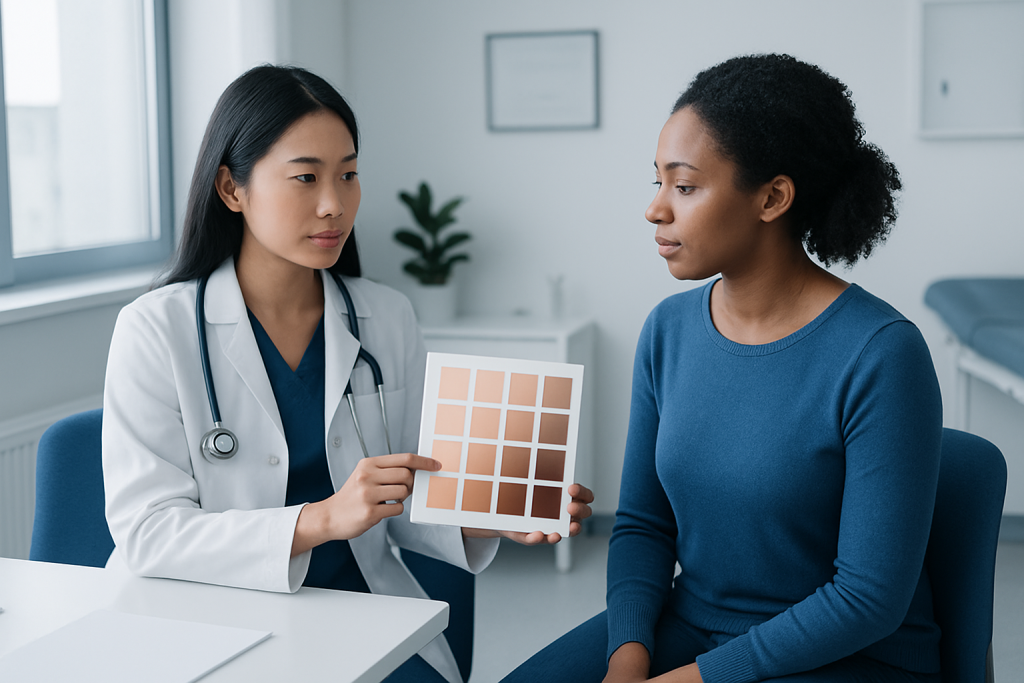
Skin tone charts are not fully standardized, which means one chart may look different from another. Some use broad categories such as fair, light, medium, olive, tan, brown, and deep. Others are more detailed and add undertone cues, such as pink, neutral beige, golden, or red-brown.
In dermatology and cosmetics, charts may also include practical descriptions that help match products more accurately. For example, a foundation chart may group tones by depth and undertone together, since both affect how a color appears on the skin.
- Depth: how light or dark the skin appears
- Undertone: the subtle color family beneath the surface
- Surface features: freckles, redness, hyperpigmentation, or tanning
- Lighting conditions: natural daylight versus indoor lighting
Because these factors vary, a chart should be treated as a guide. A professional color match often works best when the skin is assessed in natural light and with attention to the whole face, neck, and chest.
How Skin Tone Is Assessed in Practice
There is no single perfect method for identifying skin tone. Many people start with a visual comparison against a chart, often looking at the jawline or inner arm in natural light. Others check which jewelry metal seems to harmonize better, or how their skin reacts visually to white, cream, or bright-colored clothing.
Still, these common tips can be misleading. Sun exposure may darken the outer skin, while redness, acne, or post-inflammatory marks may distort the overall appearance. For that reason, a dermatology visit or professional color consultation can be more accurate than self-assessment alone.
In clinic-based settings, the focus is usually not on placing a person into a rigid category. Instead, the clinician may note whether the skin is pale, erythematous, yellow-tinged, hyperpigmented, hypopigmented, or evenly pigmented, depending on the question being addressed. This helps the provider understand what is normal for that individual and what may be changing.
When a Skin Tone Chart Is Useful
A skin tone chart can be practical in several everyday situations. It helps people choose makeup shades more confidently, compare foundation options, and identify colors that complement their complexion. It may also be useful for hair color decisions, wardrobe planning, and photography or media work where accurate color balance matters.
In some dermatology contexts, a tone chart or color reference can support communication about pigmentation changes, scars, or treatment response. For international patients, this may be especially helpful when care teams are working across languages and need a clear visual reference during consultations, follow-up visits, or remote discussions before travel.
That said, charts are most useful when they are used as a starting point. A person’s skin can change with age, hormones, medications, sun exposure, and skin conditions, so a match that once seemed correct may not remain accurate over time.
When Skin Color Changes May Reflect a Health Issue
Most variation in skin tone is normal and harmless. Even so, a new or unexplained change in color can sometimes point to a medical concern. For example, sudden pallor may occur with anemia or poor circulation, yellowing can be associated with jaundice, bluish discoloration may relate to low oxygen, and patchy darkening or lightening can occur with several skin disorders.
Inflammation, eczema, psoriasis, vitiligo, fungal infections, medication reactions, and hormone-related conditions can also alter how the skin looks. In darker skin tones, these changes may be easier to miss or may appear differently than in lighter skin, which is one reason careful examination is so important.
If skin color changes are accompanied by fatigue, shortness of breath, fever, itching, pain, swelling, or a rash, the person should be evaluated by a qualified doctor. A chart cannot determine the cause of a symptom, but it can help describe what has changed.
How to Use a Skin Tone Chart Safely for Personal Care
For personal use, a skin tone chart works best when viewed as one part of self-observation rather than a rulebook. The most reliable comparison is usually made in daylight, without heavy makeup, after the skin has been cleansed and allowed to settle. It can also help to compare the face with the neck and chest, since these areas may differ in tone.
When buying cosmetics, it is often wiser to test several shades rather than relying on the label alone. Product names like “ivory,” “beige,” or “mocha” are not consistent across brands. A shade that looks right on the hand may look very different once blended along the jawline.
- Check tone in natural light whenever possible
- Compare product shades on the jawline, not just the wrist
- Reassess after seasonal tanning or skin treatments
- Watch for irritation, as color match should not come at the cost of skin comfort
If there is irritation, persistent redness, or breakouts after using a product chosen by chart matching, it may be a sign that the formula is not suitable for that skin type.
When to See a Doctor
A skin tone chart is helpful for appearance-related decisions, but it cannot replace medical evaluation. A doctor or dermatologist should be consulted if skin color changes are sudden, unexplained, spreading, painful, or linked with other symptoms. This is especially important if the change is accompanied by itching, bleeding, fever, weight loss, tiredness, or swelling.
People who notice new patches of pigment loss, darkening, yellowing, bruising without clear injury, or color changes after a medication should seek professional advice. Those with chronic skin conditions may also benefit from a specialist review if their usual pattern changes or if treatments are no longer working as expected.
For patients traveling from abroad, coordinated dermatology care can help streamline diagnosis, photography, follow-up, and treatment planning before and after the trip. Acibadem Health Point’s multidisciplinary specialists and JCI-accredited hospitals diagnose and treat skin conditions for international patients with this kind of continuity in mind.
Frequently asked questions
01What is a skin tone chart used for?
A skin tone chart is used to compare and describe skin color in a structured way. People often use it for makeup matching, wardrobe choices, photography, and general color reference. In medical settings, it may help with communication, but it is not a diagnostic test.
02How is skin tone different from undertone?
Skin tone refers to the visible depth of the skin, such as fair, medium, or deep. Undertone describes the subtle color beneath the surface, usually grouped as cool, warm, or neutral. Both can affect how colors look on the skin.
03Can a skin tone chart tell if someone is healthy?
No, a skin tone chart cannot determine overall health. It may help notice visible changes, but it does not explain why those changes occurred. New, persistent, or unusual discoloration should be reviewed by a doctor.
04Why do skin tone charts look different from one brand to another?
There is no single universal standard for skin tone charts. Different brands and professionals may organize color depth and undertones in different ways. Lighting, camera settings, and product formulation can also change how the chart appears.
05How can someone find their skin tone at home?
A simple way is to compare the face or jawline with a chart in natural daylight and without heavy makeup. It can also help to observe which shades of clothing or makeup blend best with the skin. If there is uncertainty, a professional consultation is usually more reliable.
06Should darker skin tones be assessed differently?
Yes, skin conditions can appear differently across all skin tones, and some changes are easier to miss in deeper complexions. A careful assessment that considers the person’s usual baseline is important. If there is a new color change, medical review is advisable.
This article is for general information only and is not a substitute for professional medical advice. Please consult a qualified doctor about your individual situation.
Explore treatments in Turkey — costs, top hospitals & a free quote
JCI-accredited · board-certified surgeons · reply within 24h
Add us as a Preferred Source to see more of our trusted health content across Google Search, AI Overviews and Discover.