What Is Rash Pregnancy Puppp? A Complete Medical Guide

Key Takeaways
- PUPPP is a pregnancy-related rash that most often starts in the third trimester.
- It is usually intensely itchy, but it is not dangerous to the baby in most cases.
- The rash often begins in stretch marks and may spread to the thighs, buttocks, or arms.
- Diagnosis is mainly clinical, but a doctor may order tests to exclude other pregnancy-related skin conditions.
- Treatment focuses on easing itching and protecting the skin until delivery.
- New or severe rashes in pregnancy should always be discussed with a healthcare professional.
Rash pregnancy PUPPP is a common, harmless but very itchy skin condition that can appear during late pregnancy, usually on the abdomen and stretch marks. It does not affect the baby in most cases, but it can be uncomfortable and should be checked by a doctor to confirm the diagnosis and rule out other causes of itching or rash in pregnancy.
Overview
Rash pregnancy PUPPP is the common shorthand for a skin condition called pruritic urticarial papules and plaques of pregnancy. It usually appears in the last weeks of pregnancy, begins as an itchy rash on the abdomen, and can spread to nearby areas such as the thighs, buttocks, or arms. Although the name sounds complex, the condition is generally self-limited and resolves after delivery.
For many expectant parents, the challenge is not danger but discomfort. The itch can be intense enough to disturb sleep, make clothes feel irritating, and add stress at a time when rest matters. A careful medical assessment helps confirm that the rash is PUPPP and not another pregnancy-related problem that needs different care.
Because skin changes during pregnancy can look similar to one another, the most useful first step is a clear evaluation rather than self-diagnosis. This is especially true for Myomectomy Recovery: Healing Time, Activity Limits, and Fertility Planning" class="ahp-ilk">Myomectomy Recovery for International Patients: The Usual Travel Timeline" class="ahp-ilk">international patients who may be balancing travel, changing routines, and limited access to their usual obstetric team. A doctor can explain what is happening, what can be safely used for relief, and when follow-up is needed.
Symptoms

PUPPP usually starts with small, red, itchy bumps that may cluster within stretch marks on the abdomen. These bumps can merge into larger raised patches or plaques, and the itching is often stronger than the visible rash suggests. The belly button is commonly spared, which can help clinicians distinguish PUPPP from some other rashes of pregnancy.
As the condition progresses, the rash may extend to the sides of the trunk, the buttocks, the thighs, and sometimes the arms or legs. The skin can look inflamed, but blisters are not typical. Many people notice that the itching worsens at night or after heat, sweating, or friction from clothing.
Common features include:
- Itchy red bumps or plaques, often starting in stretch marks
- Rash that spreads beyond the abdomen in some cases
- Sleep disturbance from persistent itching
- Skin irritation without fever or general illness in most cases
Any rash with blistering, yellow crusting, marked swelling, pain, or itching that seems generalized rather than localized should be evaluated promptly, because those features may point to a different diagnosis.
Causes & Risk Factors
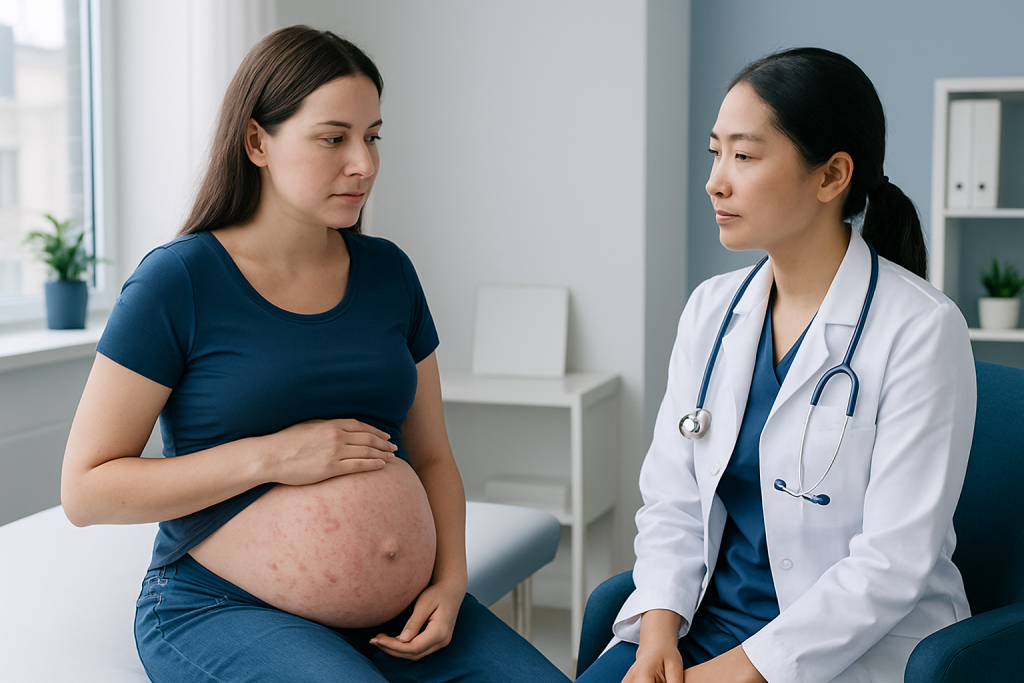
The exact cause of PUPPP is not fully understood. It is thought to be related to stretching of the skin and immune changes that happen during pregnancy, especially in the third trimester. The rash often appears in first pregnancies more than later ones, which suggests that the body’s response to stretched abdominal skin may play a role.
Certain patterns are seen more often in people who develop PUPPP. A larger abdominal size, rapid skin stretching, and carrying multiples may increase the chance of developing the rash, although PUPPP can also occur in pregnancies without these factors. It is not caused by poor hygiene, a food reaction, or a sign that the person did something wrong.
Risk factors that may be associated with PUPPP include:
- First pregnancy
- Late pregnancy, particularly the third trimester
- More significant abdominal stretching
- Multiple gestation, such as twins
Importantly, PUPPP is different from more serious pregnancy-related skin or liver conditions. That is why a medical review matters, even when the rash seems straightforward.
Diagnosis
Diagnosis is usually based on the appearance of the rash, the location on the body, and the stage of pregnancy. A clinician will ask when the itching began, where the rash started, whether the belly button is involved, and whether there are any other symptoms such as fever, jaundice, dark urine, or reduced fetal movements. Those details help separate PUPPP from other causes of itching in pregnancy.
In many cases, no special test is needed. If the presentation is not typical, a doctor may order blood tests or other evaluations to exclude conditions such as cholestasis of pregnancy, eczema, contact dermatitis, or less common autoimmune skin disorders. Occasionally, a skin biopsy is considered when the diagnosis remains unclear.
The goal is not to label the rash quickly, but to make sure the right problem is being treated. For someone receiving care away from home, photographs of the rash, a timeline of symptoms, and a summary of current prenatal care can be very helpful during the consultation.
Treatment Options
Treatment for PUPPP is aimed at reducing itching and protecting the skin until the rash fades, usually after childbirth. Because the condition is self-limited, care is generally supportive rather than aggressive. A doctor may recommend soothing topical products, moisturizers, or other pregnancy-appropriate options based on the severity of symptoms.
Common approaches may include:
- Fragrance-free emollients or moisturizers
- Cool compresses or lukewarm showers
- Topical corticosteroids for inflamed areas when recommended by a clinician
- Oral antihistamines that are considered appropriate in pregnancy, if advised by the doctor
Some people need stronger symptom control when the rash is severe or sleep is being disrupted. In such cases, a physician may consider additional treatment after reviewing pregnancy status, other medications, and overall health. Any medicine used in pregnancy should be discussed with an obstetrician or dermatologist to make sure it is suitable.
It is worth noting that the rash often improves after delivery, though temporary flare-ups can happen in the immediate postpartum period. When care is coordinated across countries or between hospitals, keeping a simple record of what helped and what was prescribed can make follow-up smoother.
Prevention & Self-care
There is no guaranteed way to prevent PUPPP, but gentle skin care may reduce irritation and make symptoms easier to manage. The practical goal is to calm inflammation and avoid triggers that can make itching feel worse. Simple changes often help more than people expect.
Helpful self-care steps include:
- Wearing loose, breathable cotton clothing
- Avoiding hot showers and harsh soaps
- Using fragrance-free moisturizers regularly
- Patting the skin dry instead of rubbing
- Keeping the bedroom cool at night
- Trying cool compresses on the itchy areas
Scratching can break the skin and lead to irritation or infection, so keeping nails short and using distraction techniques at bedtime may help. If itching becomes difficult to control, the person should not simply endure it; a clinician can suggest safer options during pregnancy.
When to See a Doctor
Any new rash in pregnancy deserves medical attention, especially if it is widespread, rapidly changing, or accompanied by other symptoms. PUPPP is usually benign, but many other pregnancy-related conditions can look similar at first glance. A timely assessment is the safest way to protect both mother and baby.
Medical care should be sought promptly if there is:
- Severe or generalized itching, especially without a clear rash
- Blistering, pain, fever, or signs of skin infection
- Yellowing of the skin or eyes, dark urine, or pale stools
- Decreased fetal movement
- Rash around the eyes, mouth, or widespread hives with breathing symptoms
For travelers and international patients, it helps to seek evaluation before symptoms become disruptive, rather than waiting for a planned return home. If specialized assessment is needed, Acibadem Health Point’s multidisciplinary specialists and JCI-accredited hospitals diagnose and treat pregnancy-related skin conditions for international patients with coordinated care.
In short, rash pregnancy PUPPP is usually uncomfortable rather than dangerous, but it still deserves proper medical review. Clear diagnosis, symptom relief, and reassurance can make the final stage of pregnancy far easier to navigate.
Living With PUPPP During Pregnancy and Recovery
Day-to-day life with PUPPP often centers on comfort management. Sleep, hydration, and skin-friendly routines can all help a person cope while waiting for the rash to settle. If the itching is interfering with work, rest, or emotional well-being, that burden should be mentioned during the prenatal visit.
After delivery, symptoms usually fade gradually. In the meantime, postpartum follow-up is useful if the rash does not improve as expected, spreads, or develops features that were not present before. Keeping a few photos of the rash and a list of what was tried can help the next clinician understand the course of the condition quickly.
For many patients, the main reassurance is that PUPPP is temporary. With the right support, most people can focus on the final weeks of pregnancy and recovery without the rash becoming the center of the experience.
Frequently asked questions
01What is rash pregnancy PUPPP?
Rash pregnancy PUPPP is a pregnancy-related skin condition that causes very itchy red bumps or plaques, usually in the third trimester. It most often starts on the abdomen, especially in stretch marks, and then may spread to nearby areas. It is usually uncomfortable but not dangerous in most pregnancies.
02Does PUPPP harm the baby?
PUPPP itself usually does not harm the baby. The main issue is maternal discomfort, particularly itching and sleep disruption. Because other pregnancy conditions can look similar, a doctor should still confirm the diagnosis.
03How is PUPPP different from cholestasis of pregnancy?
PUPPP is a visible rash, while cholestasis of pregnancy usually causes intense itching without a primary rash. Cholestasis can affect the liver and may require closer monitoring, so it is important not to assume all pregnancy itching is the same. A clinician may order blood tests if the symptoms suggest cholestasis.
04What helps the itching from PUPPP?
Cool compresses, fragrance-free moisturizers, and loose clothing often provide some relief. Doctors may also recommend a pregnancy-appropriate topical steroid or an antihistamine if symptoms are significant. The best choice depends on the person’s pregnancy stage and medical history.
05Will PUPPP go away after delivery?
Yes, PUPPP usually improves after birth and eventually clears on its own. Some people notice a short flare in the early postpartum period before it settles. If symptoms persist or change, a follow-up visit is a good idea.
06Can PUPPP come back in future pregnancies?
It can happen again, but many people do not experience it in later pregnancies. The risk may be different from one pregnancy to the next. A doctor can review any previous rash history when planning care for a future pregnancy.
This article is for general information only and is not a substitute for professional medical advice. Please consult a qualified doctor about your individual situation.
Explore treatments in Turkey — costs, top hospitals & a free quote
JCI-accredited · board-certified surgeons · reply within 24h
Add us as a Preferred Source to see more of our trusted health content across Google Search, AI Overviews and Discover.