How Do I Know If I Have Eyelash Mites?

Key Takeaways
- Eyelash mites are common and often harmless unless they multiply or trigger inflammation.
- Persistent itching, burning, redness, crusting, or a gritty feeling around the eyelids can be clues, but only an eye exam can confirm the cause.
- Symptoms can overlap with dry eye, allergies, and infections, so self-diagnosis is not reliable.
- Treatment usually focuses on eyelid hygiene and, when needed, clinician-directed therapies for Demodex blepharitis.
- A doctor should evaluate symptoms that do not improve, affect vision, or recur often.
Eyelash mites, usually Demodex mites, are tiny organisms that live in hair follicles and oil glands around the eyes. Many people have them without symptoms, but when they overgrow they can contribute to eyelid irritation, crusting, itching, and blepharitis.
Overview
If someone is wondering, how do I know if I have eyelash mites, the short answer is that symptoms alone cannot confirm it. Eyelash mites, most often Demodex mites, are microscopic organisms that normally live in or near the hair follicles and oil glands around the eyelids. Many adults carry them without any problem at all.
They become relevant when the number of mites increases or when the skin and eyelids react to them. In that situation, a person may develop Demodex blepharitis, a type of eyelid inflammation that can feel like dry eye, allergy, or chronic irritation. Because several eye conditions can look similar, the most reliable way to tell is with a professional eye examination.
For someone managing symptoms while also planning care from abroad, the practical question is less about spotting the mites themselves and more about understanding whether the eyelid symptoms need an eye specialist. A clear diagnosis matters because treatment is different from simple redness or seasonal irritation.
Symptoms
Eyelash mites are too small to see without special equipment, so the clues are usually indirect. Common symptoms include itching along the lash line, burning, eyelid redness, a gritty or foreign-body sensation, and crusting at the base of the eyelashes. Some people notice symptoms are worse on waking, after screen use, or during periods of dryness.
Other signs that may point toward Demodex-related eyelid inflammation include lashes that look clumped together, recurrent styes or chalazia, and small cylindrical flakes or “sleeves” around the eyelashes. These flakes are often described by eye clinicians as collarettes and can be an important clue during an exam.
Symptoms do not always stay in one place. Someone may also notice watery eyes, light sensitivity, blurred vision that clears with blinking, or discomfort wearing contact lenses. These features can happen with many eye conditions, which is why pattern and persistence matter more than any single symptom.
- Itching or irritation along the eyelids
- Red, swollen, or tender eyelid edges
- Crusting, flakes, or debris at the lashes
- Burning, stinging, or gritty discomfort
- Recurrent eyelid bumps or styes
- Temporary blur that improves after blinking
Causes & Risk Factors

Demodex mites are part of the normal skin environment for many adults, and they are not automatically a sign of poor hygiene. Problems are more likely when mites multiply or when the eyelid skin barrier becomes irritated. That irritation can lead to inflammation in the lash follicles and nearby oil glands.
Risk may be higher in older adults, because mite numbers tend to increase with age. People with dry eye, rosacea, blepharitis, oily skin conditions, or a history of recurring eyelid inflammation may also be more prone to symptoms. Wearing makeup, contact lenses, or living with ongoing eye surface irritation does not cause mites by itself, but these factors can make the eyelids feel more sensitive.
In international-patient care, it is worth remembering that symptoms can have more than one cause. A traveler may notice eyelid irritation after long flights, climate changes, new cosmetics, or disrupted sleep, yet the underlying issue may still be Demodex blepharitis, allergic eye disease, or dry eye disease. A clinician helps sort out those overlapping possibilities.
Diagnosis
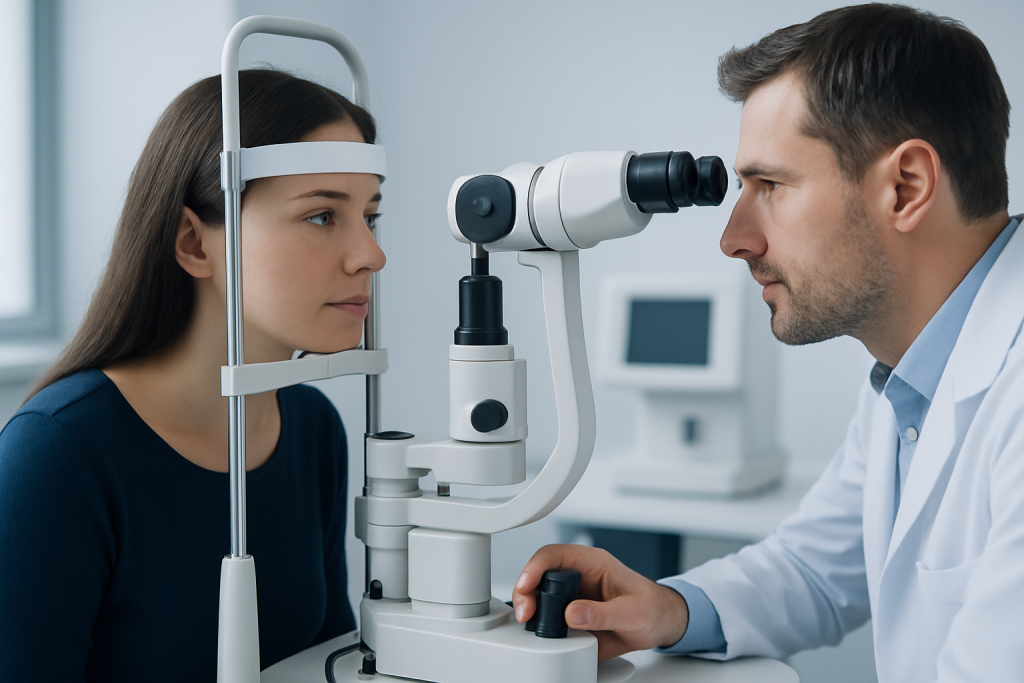
A diagnosis usually starts with a careful history and a slit-lamp examination by an eye doctor. During this exam, the clinician looks closely at the eyelid margin, lashes, and tear film for collarettes, redness, blocked glands, and other signs of inflammation. In many cases, that visual exam is enough to strongly suggest Demodex blepharitis.
If needed, the doctor may gently sample one or more lashes for microscopic evaluation, although this is not always necessary. The bigger goal is to distinguish eyelash mite-related inflammation from conditions such as allergic conjunctivitis, bacterial blepharitis, meibomian gland dysfunction, or dry eye disease. Because those problems can occur together, diagnosis is often more about the full picture than one test result.
For people seeking care while traveling, bringing a list of symptoms, current eye drops, cosmetics, contact lens habits, and past eyelid problems can make the visit more efficient. Photos of the eyelids on bad days can also help the clinician understand how symptoms change over time, especially if the appointment is during a symptom-free period.
Treatment Options
Treatment depends on whether the eyelids are simply harboring mites or whether there is active inflammation. The first step is usually eyelid hygiene, such as warm compresses and careful lid cleaning, as advised by an eye doctor. These measures help remove debris, loosen crusting, and support the eyelid oils that keep the ocular surface comfortable.
When Demodex blepharitis is confirmed, a clinician may recommend therapies specifically aimed at reducing mite burden and calming inflammation. Depending on local availability and the person’s eye findings, treatment may include in-office lid cleaning, prescription eye treatments, or other clinician-directed approaches. The exact plan should be individualized because the right option depends on the severity of symptoms, the condition of the ocular surface, and any coexisting dry eye or rosacea.
It is important not to assume that over-the-counter products are enough for every case. Some home remedies can irritate the eyes if used too aggressively. A qualified eye specialist can advise which steps are helpful and which may make the surface of the eye more sensitive.
- Warm compresses to soften crusting and improve comfort
- Gentle eyelid cleaning as directed by a clinician
- Managing dry eye and meibomian gland dysfunction when present
- Prescription or procedure-based treatment when Demodex is confirmed
- Avoiding eye products that worsen irritation
Prevention & Self-care
There is no realistic way to eliminate every Demodex mite, and that is not the goal. Prevention focuses on keeping the eyelid margins clean, reducing inflammation, and avoiding triggers that make symptoms linger. Consistent, gentle eyelid care is usually more helpful than aggressive scrubbing.
Good habits include removing eye makeup before sleep, replacing old cosmetics, cleaning contact lenses correctly, and following a clinician’s guidance for eyelid hygiene. People with recurring symptoms may benefit from treating associated dry eye or skin conditions, since the eyelids often improve when the surrounding inflammation is controlled.
For patients who travel for treatment, self-care also includes planning for continuity. It helps to bring prescribed drops, confirm follow-up instructions before flying home, and know which symptoms should prompt a local eye review. When care is coordinated well, recovery and monitoring are easier even across borders.
- Clean eyelids gently, not aggressively
- Remove makeup fully each night
- Do not share eye cosmetics or applicators
- Replace mascara and similar products regularly
- Follow-up if symptoms keep returning
When to See a Doctor
An eye doctor should evaluate eyelid symptoms that last more than a short time, keep returning, or do not improve with simple self-care. Persistent redness, crusting, itching, or discomfort can indicate Demodex blepharitis, but they can also signal dry eye, infection, or another eyelid disorder that needs different treatment.
Prompt medical review is especially important if vision changes, significant pain, marked swelling, discharge, light sensitivity, or a new eyelid lump develops. These features do not automatically mean something serious, but they deserve professional assessment so the person can receive the right care early.
Anyone traveling for treatment should seek help before departure if symptoms are worsening, because a stable eye condition is easier to manage across time zones and follow-up visits. Acibadem Health Point’s multidisciplinary specialists and JCI-accredited hospitals diagnose and treat this condition for international patients with coordinated eye care and follow-up planning.
Living With Recurring Eyelid Irritation
People often feel frustrated when eyelid symptoms keep coming back, especially when the eyes look only mildly red but feel persistently uncomfortable. In practice, long-term control usually depends on recognizing patterns, identifying coexisting dry eye or skin disease, and staying consistent with the recommended eyelid routine.
A useful mindset is to treat eyelid care as part of daily eye health rather than a one-time fix. With the right diagnosis, many patients find that symptoms become easier to manage, flare-ups are less disruptive, and routines such as reading, computer work, and wearing contact lenses feel more comfortable again.
If symptoms are affecting work, travel, sleep, or quality of life, that is reason enough to ask for an eye evaluation. Early assessment can shorten the cycle of repeated irritation and help the person understand whether eyelash mites are truly the issue or only one piece of a broader eyelid condition.
There are several reputable sources that discuss eyelid inflammation, Demodex mites, and eye surface disease. These include professional ophthalmology organizations and public health references that guide evidence-based care.
Because symptoms overlap with other eye disorders, patients are best served by clinical evaluation rather than internet-based self-diagnosis. A trained eye specialist can interpret symptoms in context and recommend care that fits the individual’s needs.
Frequently asked questions
01Can I see eyelash mites in the mirror?
No. Eyelash mites are microscopic, so they cannot be seen with the naked eye. What people may notice instead is crusting, lash debris, or irritation along the eyelid margin.
02Are eyelash mites contagious?
Demodex mites can live on the skin and may transfer between close contacts, but they are common and not usually treated like a classic contagious infection. The more important issue is whether they are causing inflammation or symptoms.
03Do eyelash mites mean poor hygiene?
No. Their presence does not automatically mean someone is unclean. Many adults carry these mites as part of the normal skin environment, and symptoms depend on how the eyelids react to them.
04What is the difference between eyelash mites and dry eye?
Dry eye and Demodex blepharitis can feel very similar, with burning, irritation, and blur. An eye doctor looks for signs such as collarettes, eyelid inflammation, and tear film problems to tell them apart or identify when both are present.
05Can eyelash mites go away on their own?
Mild colonization may not cause any symptoms, but ongoing irritation usually does not improve reliably without targeted care. If symptoms persist, a clinician should guide treatment rather than relying on guesswork.
06Should contact lens wearers worry more about eyelash mites?
Contact lens wear does not cause eyelash mites, but irritated eyelids can make lenses feel less comfortable. If symptoms are ongoing, it is wise to pause and ask an eye doctor whether the lenses should be adjusted or temporarily avoided.
This article is for general information only and is not a substitute for professional medical advice. Please consult a qualified doctor about your individual situation.
Hair transplant in Turkey — costs, graft counts & a free assessment
JCI-accredited · board-certified surgeons · reply within 24h
Add us as a Preferred Source to see more of our trusted health content across Google Search, AI Overviews and Discover.